The Great American Eclipse, August 2017

If you’re a North American who isn’t living under a rock you know about #TSE2017—and I could ride my bike there.

Ha ha! JK. I’m not riding my bike 21 miles. But the edge of totality falls across Redmond, Oregon on August 21, 2017 at the northernmost edge of Roberts Field airport, just up the highway from my home in Bend.

Coincidence? I think not. Even the weak Kallawalla mystic would say it’s predictable that I live in the path of totality, a quarter of a century from experiencing my first total solar eclipse.

People ‘round these parts say they remember the Northwest eclipse of 1979—no they don’t. It was clouded out. (Disagree? Let’s see your corona shot. Yeah, I thought so.)

On eclipse day I will not be driving from my house—gridlock will grip highways 97 and 26 on the weekend before August 21st and traffic to the path from all directions will be slower than the Bend Broadband wireless network.

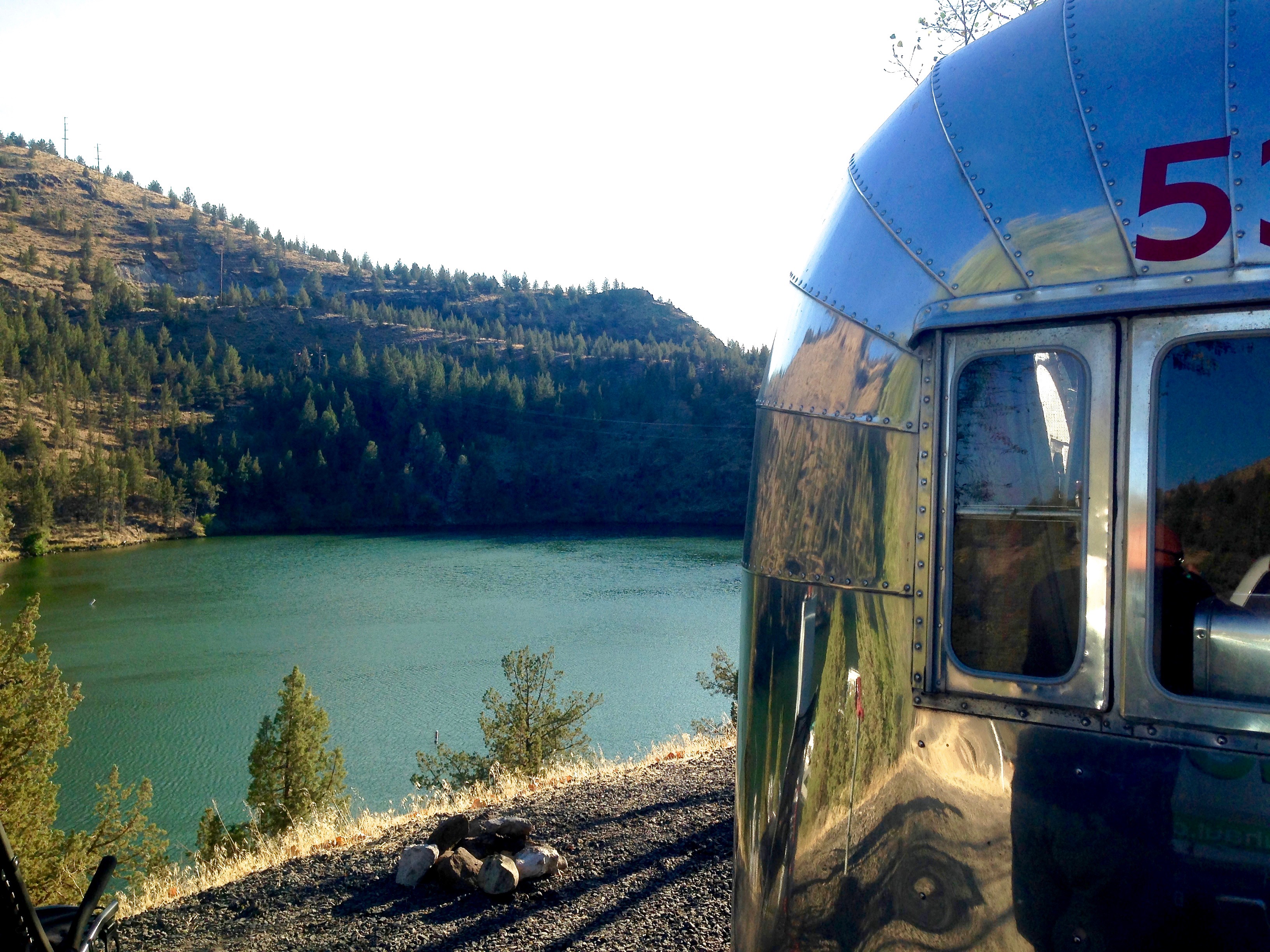
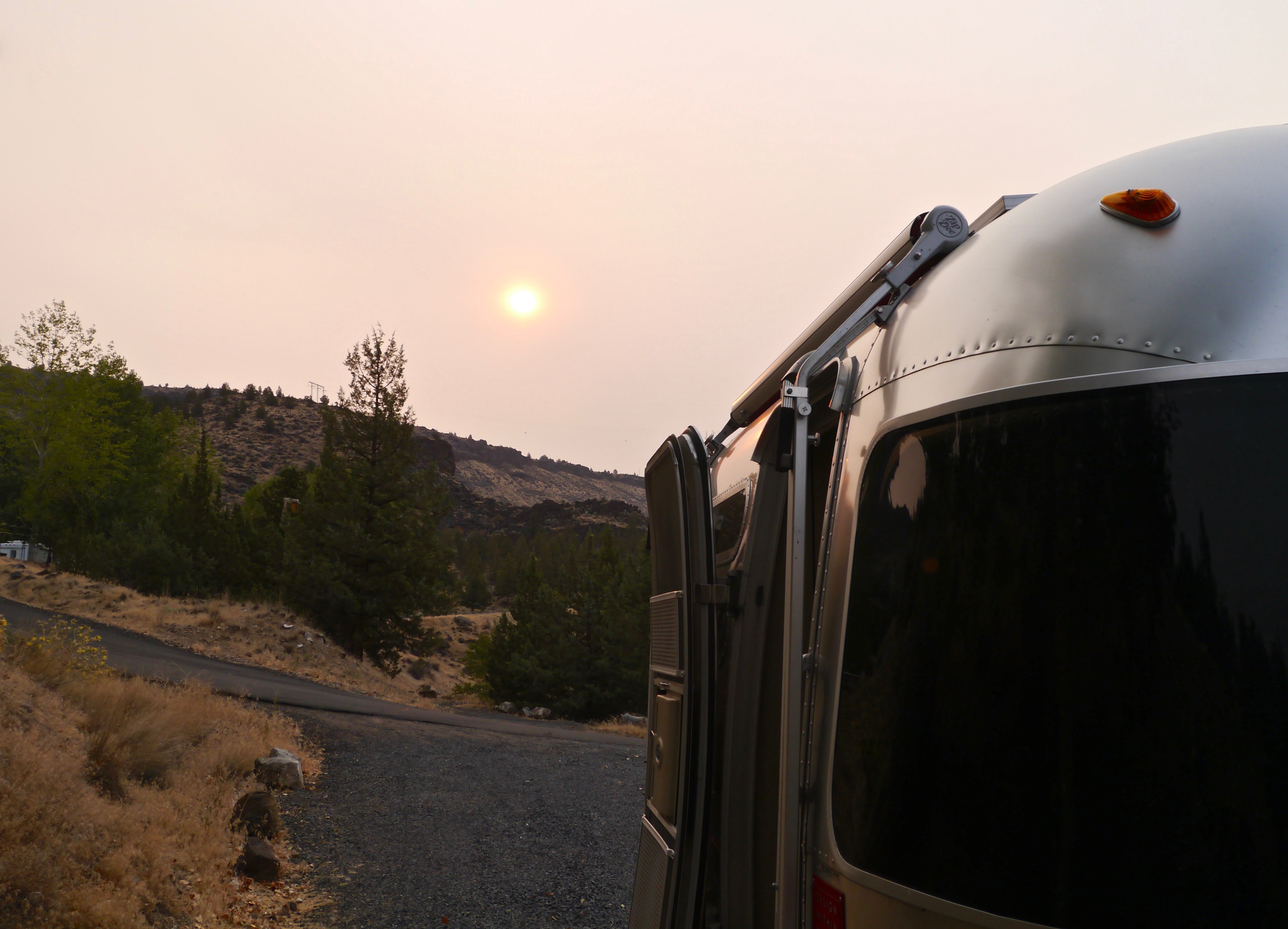
I’ll be at the Oregon Airstream Club Blackout Rally on the shore of Lake Simtustus, the reservoir behind Pelton Dam, in a sea of silver among my fellow Airstreamers.

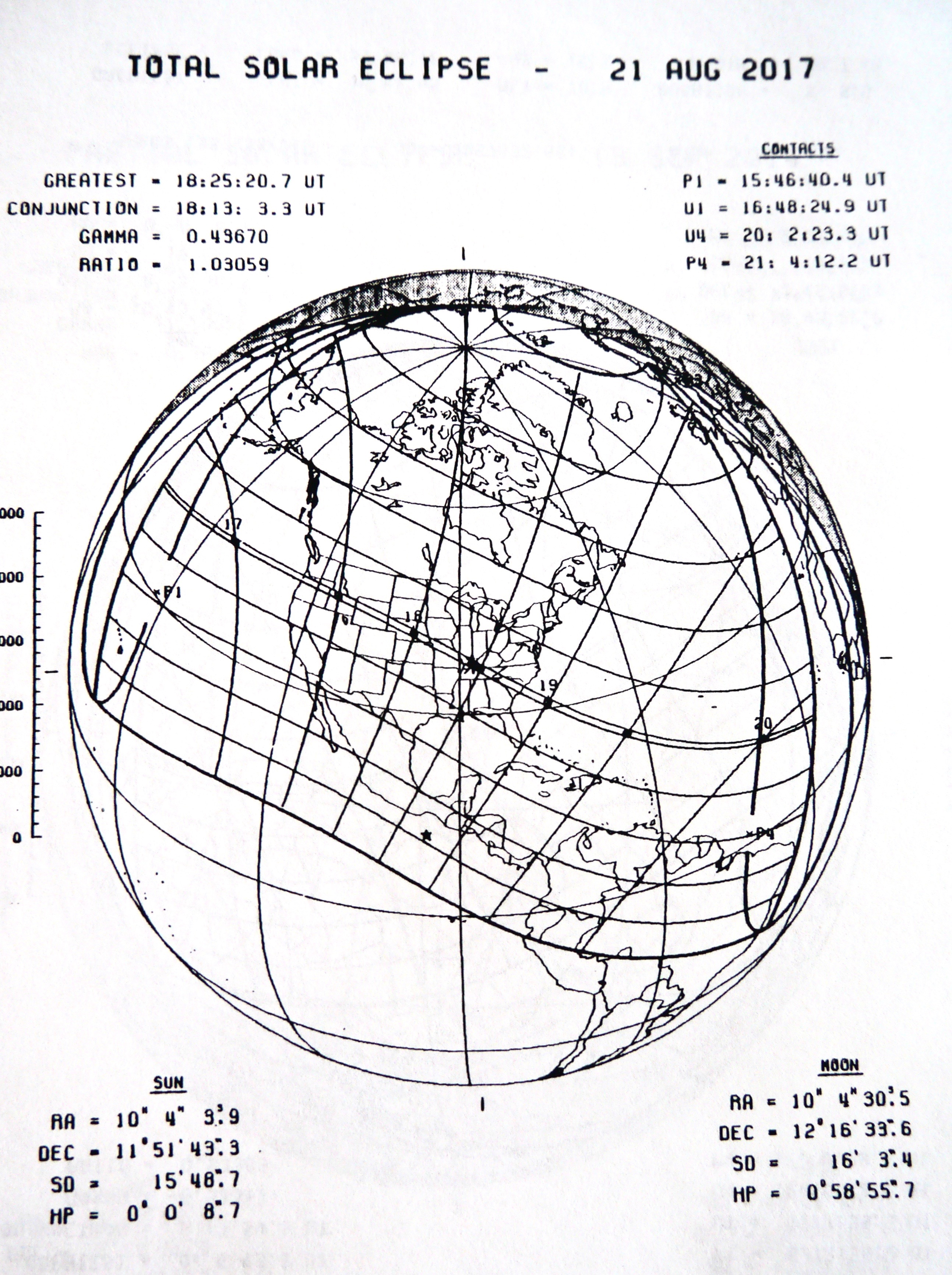
Below: Lake Simtustus site; position of the sun at first contact on August 21; Great American path
 

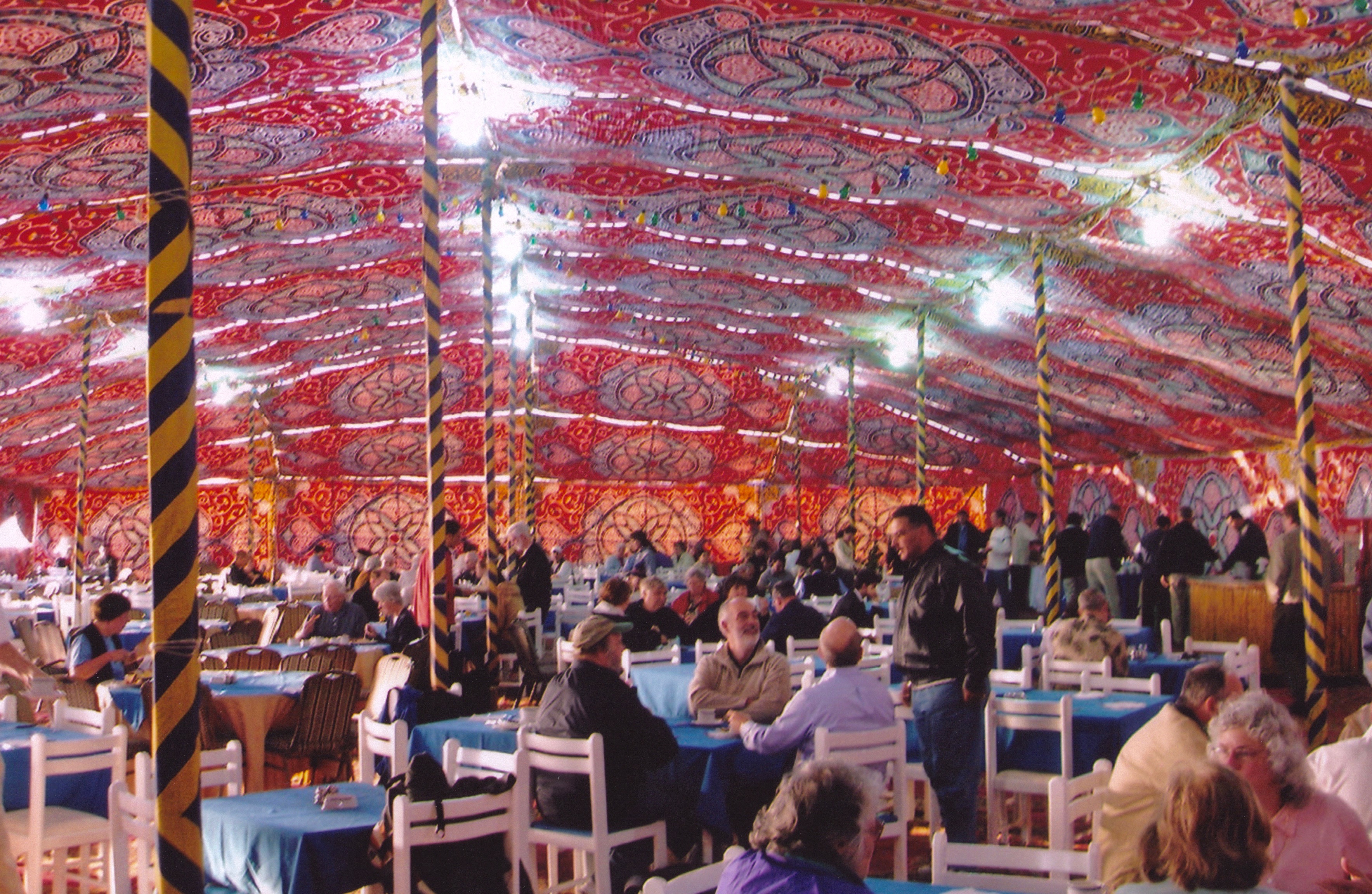
The celebration tent

A giant tapestry-type tent was erected on the beach outside the hotel in Mersa Matruh, and the post-eclipse celebration inside was memorable—woven carpets covered the sand, and table after table was heaped with catered Mediterranean food.

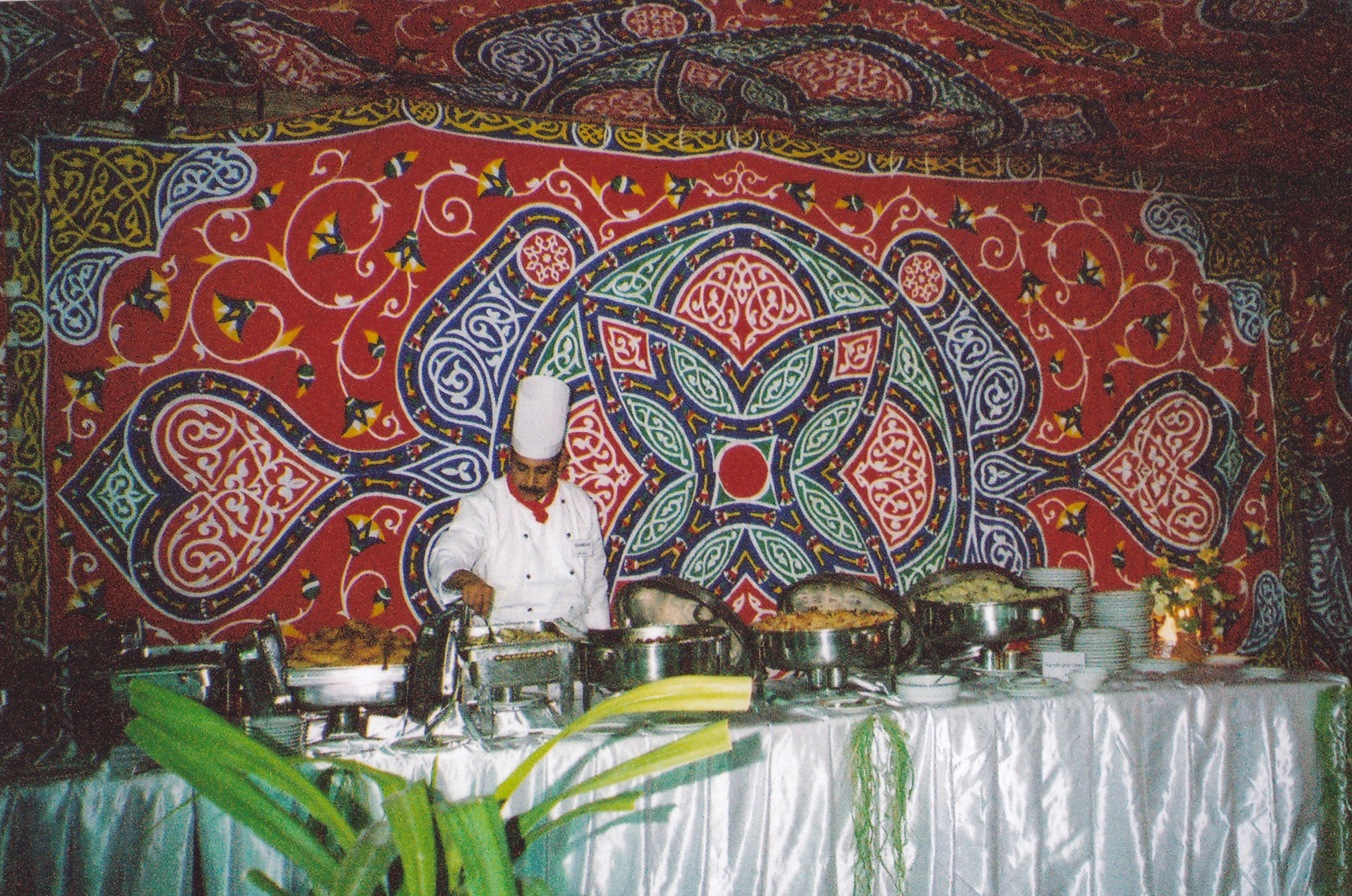
Funny WTF moment: at the cheese and hummus table I pointed to a bowl of chalky grey squares and inquired with a lift of my eyebrows to a man behind the table wearing a chef’s uniform and tall white toque. He just shrugged, so I reached for one and started to put it in my mouth. “No eat!! No eat!!” he screamed, waving me off. I dropped it and ran. I still don’t know what it was.

A dorky DJ spun outdated American records and the frenzied eclipse nerds danced to “YMCA”.

The entire glorious day was a travel memory I wish I could relive, with my Ralph, exactly as it was—except I’d take more photos.

Above: Celebration tent in Mersa Matruh

Below:

Fabulous food

Chasers get down

Inti Jiwaña

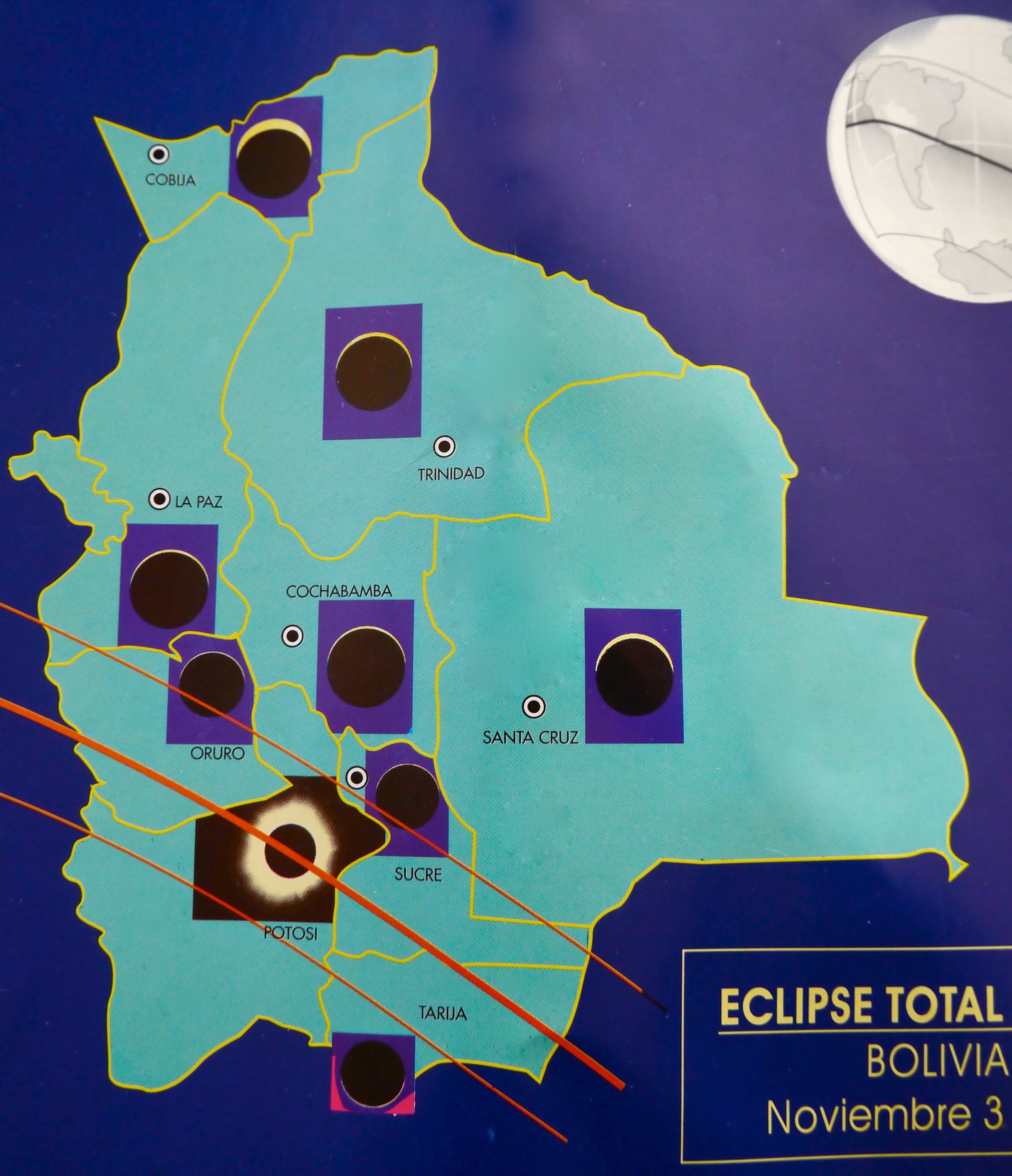
Fast forward three years, three months, and 23 days, when I join an Astronomical League tour through Spears Travel to Bolivia, “the last authentic country”. All the usual suspects were stampeding to South America, including groups with Travel Bug, Sky & Telescope, and Scientific Expeditions.

On October 27, 1994 I flew from Miami on an overnight flight to La Paz next to a cranky gentleman in a grey suit who was irritated about what he perceived to be the abundance of “students” on the flight who were discussing, loudly, degrees above horizon, rock collecting, and whether or not they remembered to bring duct tape. Seated throughout the plane were others of my kind: amateur astronomers. I spotted them immediately in the terminal without a field guide, and some were aggressively On The Spectrum. (I boldly introduced myself to a couple—“pleased to meet you, I’m Rhonda from Oregon,” said I. The woman glowered and replied, “how do you KNOW you’re pleased to meet us? You haven’t met us yet.” This is going to be a long vacation.)

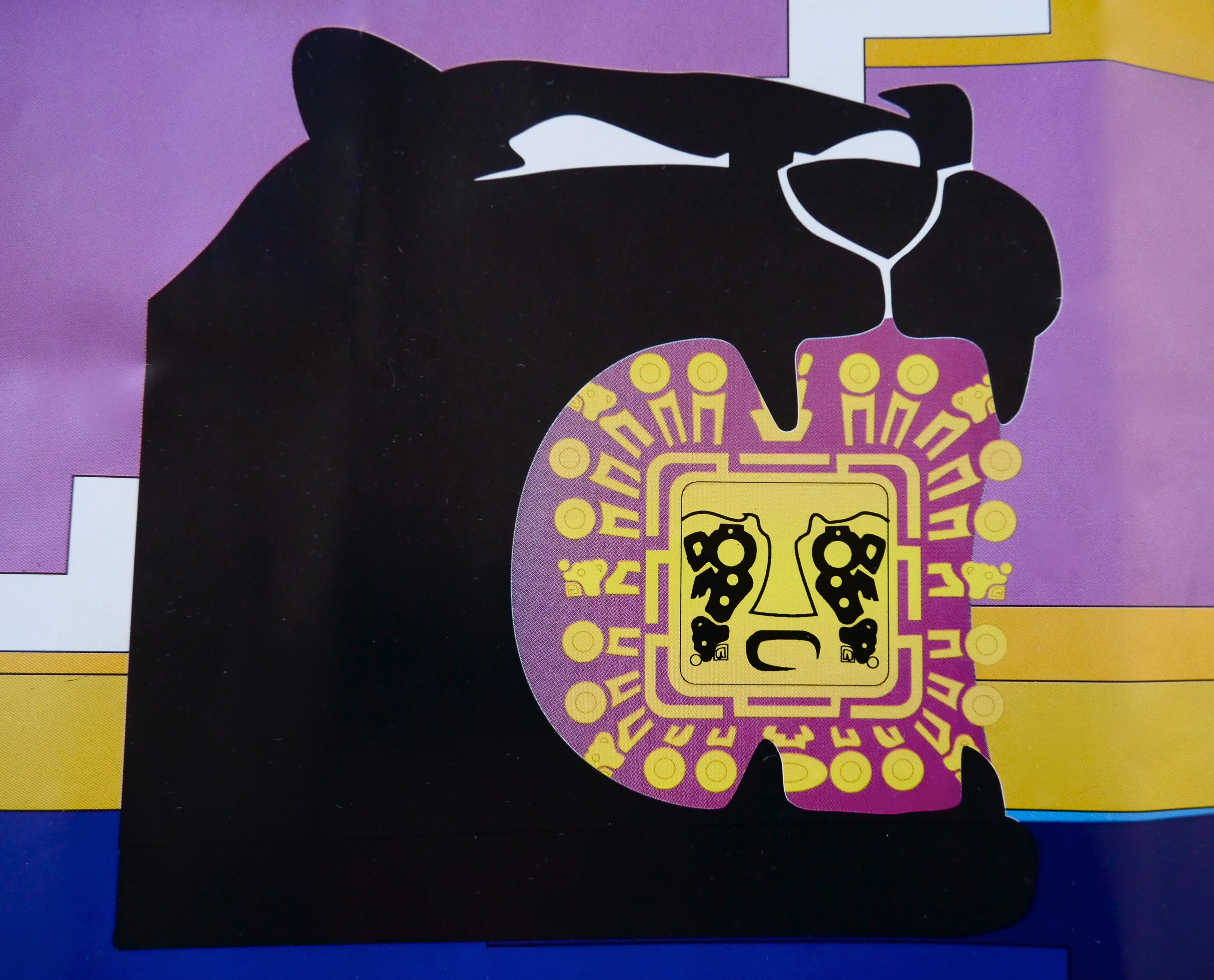
“Intijiwaña”—the Bolivian slogan for the TSE of 1994—means “Death of the Sun”, and reflects the myth imagery and extreme behavior of the average pre-Colombian Andean (who also enjoyed savage games involving decapitation). It was a puma spirit that was once believed to cause all the trouble by swallowing the sun, who must be chased away by screaming children brandishing sticks and beating other animals. (Like a dog who is reinforced to bark at the mailman because the mailman always leaves after a couple of minutes, the Andeans learned that this technique is 100% successful.) In some areas the eclipsing sun was thought to be languishing near death, and native peoples lit wildfires to warm the Earth while the sun was on sick leave. CALM DOWN Bolivia.
Above: Death of the Sun

Below:

Path of totality, 1994

Ancient Bolivian eclipse causes widespread panic

Totality and beyond

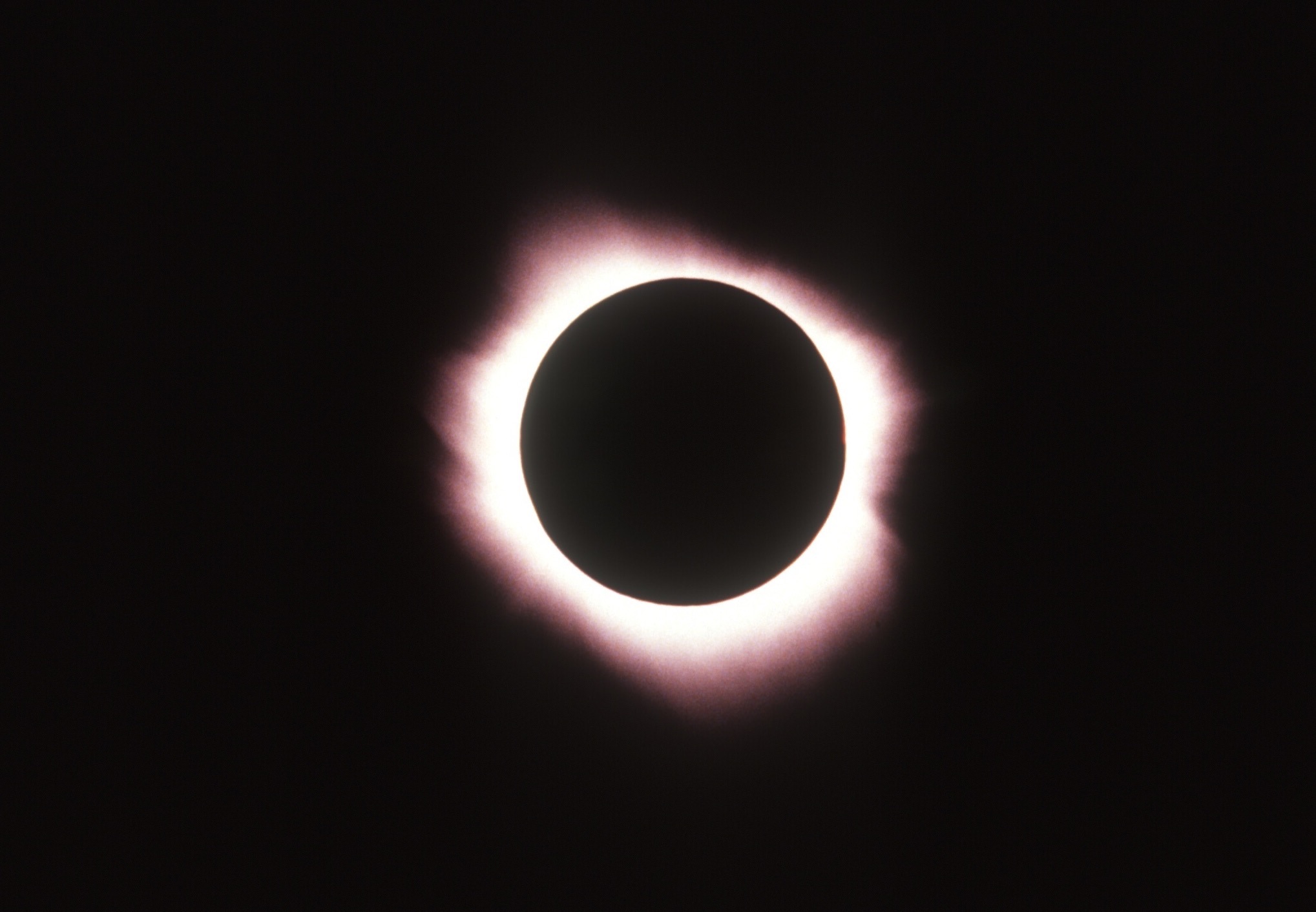
Afraid to damage my eyes, I wore my welder’s glasses too long and missed the beginning of the diamond ring, but whipped them off in time to see totality pop into place. The solar corona quickly brightened to reveal a shocking black hole, delicate white streamers, and red flames of the sun. A splendor, a marvel, a miracle. It seemed to make a sound in my head, and fill the sky. Tears stung my eyes.

My guy and I grabbed a quick smooch for luck (like you do), and he shot a few frenzied photos, but mostly we gawped, wordless. A few people near us whooped and cheered; others stood in stunned silence, grinning. Six minutes and 53 seconds passed in an instant, and at third contact we lunged for the calendar of upcoming eclipses to start planning the next one.

As with all drugs, the first time is the best time and leaves you craving more.

Afterwards we joined a street party where I drank something dark yellow—probably mescal—from a plastic jug being passed among the crowd. Did not die.

My first eclipse experience—from the time we landed in Cabo to the end of fourth contact —was nothing short of magical. Reports of totality included phrases like “for sheer beauty, it ranks among the best”; the large, detailed corona “had a three-dimensional appearance”; a “pink chromosphere wrapped all around the south”; a naked-eye “crimson pair of huge, glowing prominences” extended to the east and west; and “it seemed like someone tied a ghostly bow around the sun.”

A writer in Sky said, after third contact, “The light returned. The wind off the sea returned…everything was as it was before, only everything had changed. Maybe I had changed.”

The Great One as seen from Baja did not disappoint—and it launched a very expensive hobby.

Above: Totality (not my photo)

Below:

Celestial bodies visible during totality on July 11, 1991

Trying to photograph the eclipse. (Tip: don’t bother.)

Thumb’s up at third contact

A toast

Plotting number two

Wait for it

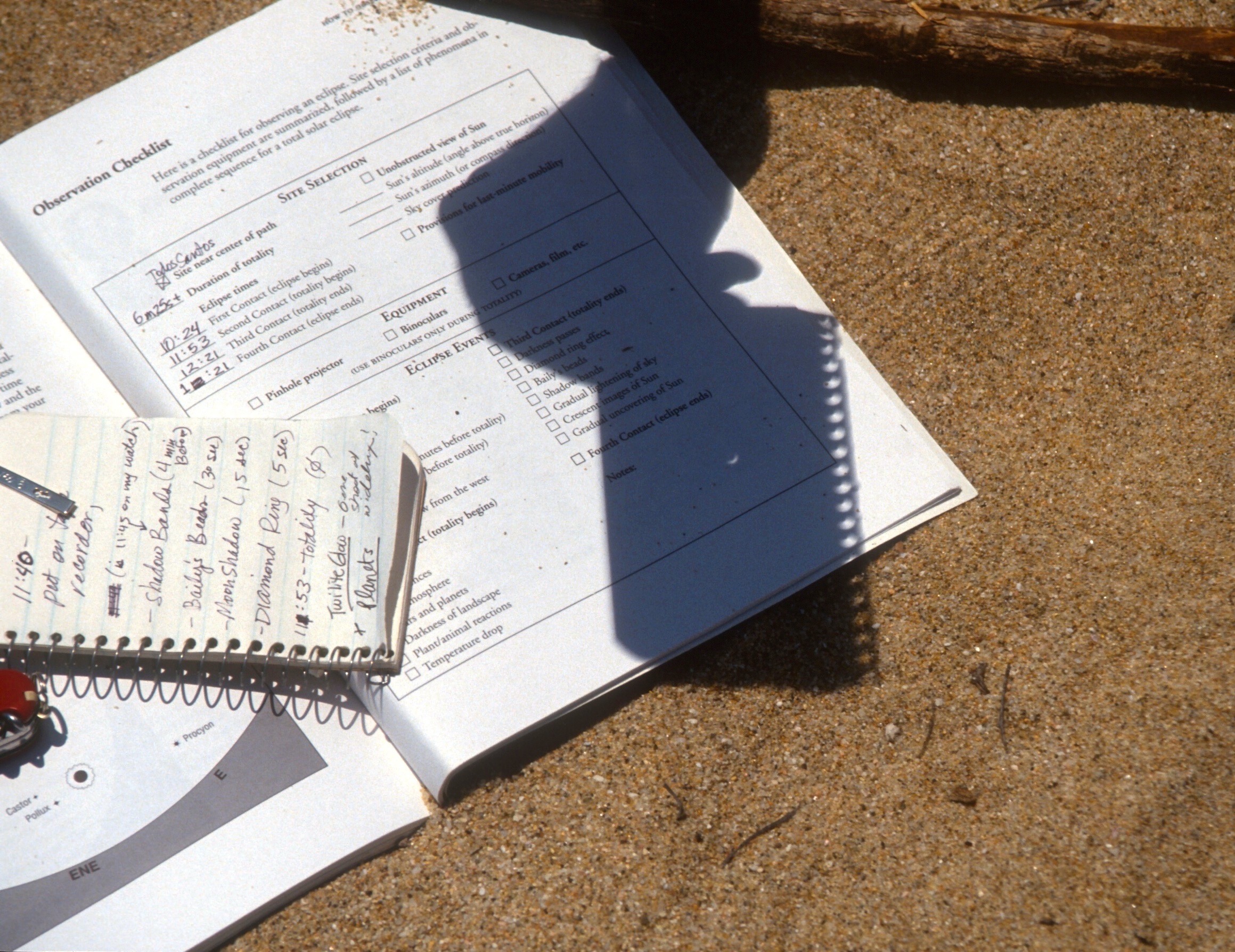
Though it was my first eclipse I was well-prepared with a “shot list” I compiled by studying a copy of that year’s go-to book, Eclipse by Bryan Brewer, purchased from the museum store at the Fleet Science Center in Balboa Park in San Diego.

Pro tip: a TSE can get exciting and disorienting, especially in the final seconds before totality. Always make a list of phenomena to watch for, with the time and duration of each. This page will help you plan.

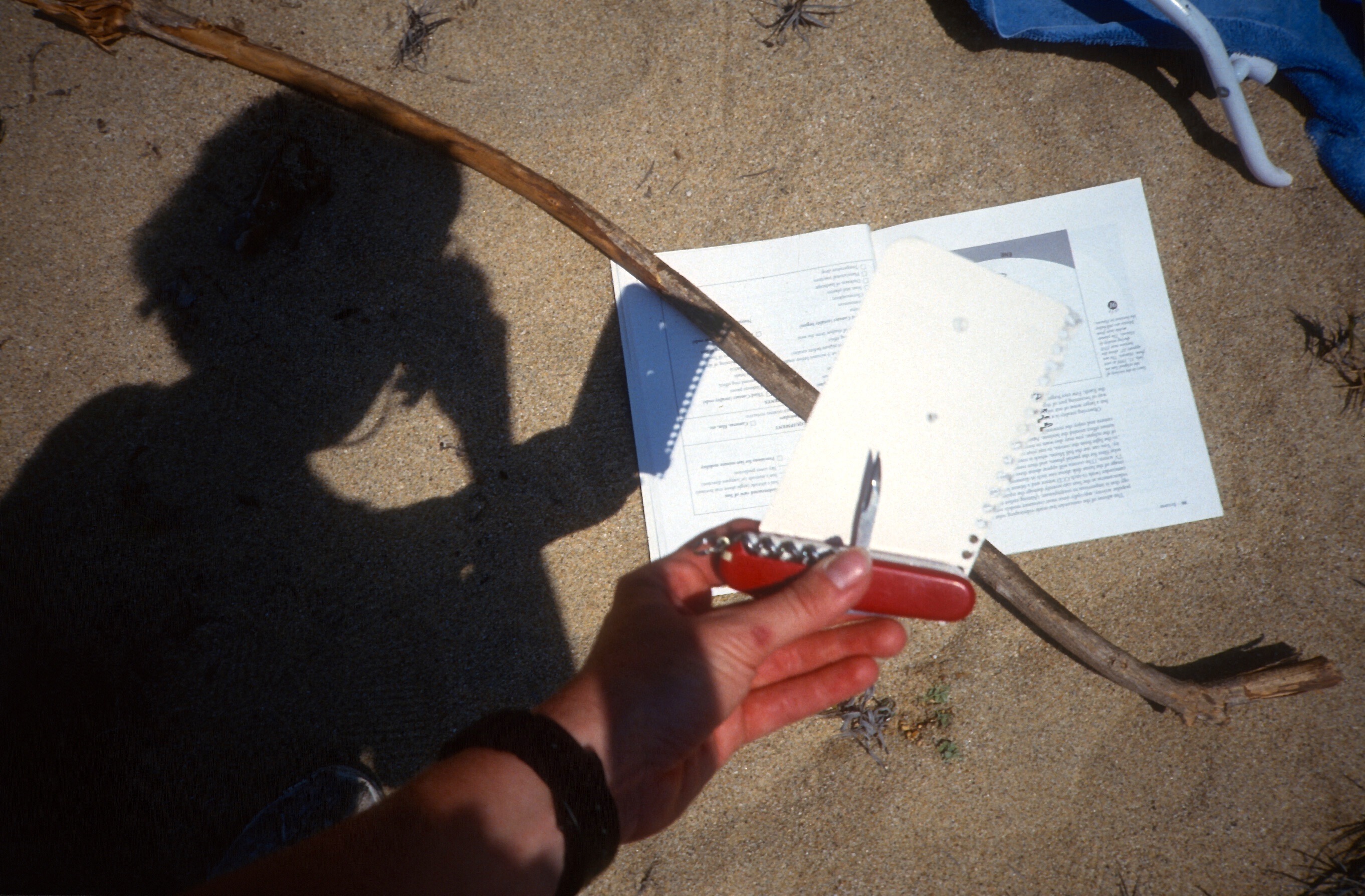
We made pinhole projections, watched in vain for shadow bands on the beach, and felt the gut-deep delicious foreboding as changes in the light and the land grew more pronounced. In the final few minutes before second contact the atmosphere shifted, shimmered, dimmed. It’s an odd quality; not like night, not like day, not like twilight or dawn. To feel our planet and our beloved celestial bodies morph for the first time elicits an instinctive, vague, involuntary dread.

Through my protective glasses I watched the sliver of the sun as it slowly narrowed, and narrowed, and narrowed. Totality was approaching in seconds. We could hear people screaming on the hill as the moon’s shadow sped toward us on the beach.

Above and below: After first contact

Below:

Partial phase waiting

Pinhole projection with observation list

The light (and the locals) getting weird

The first TSE

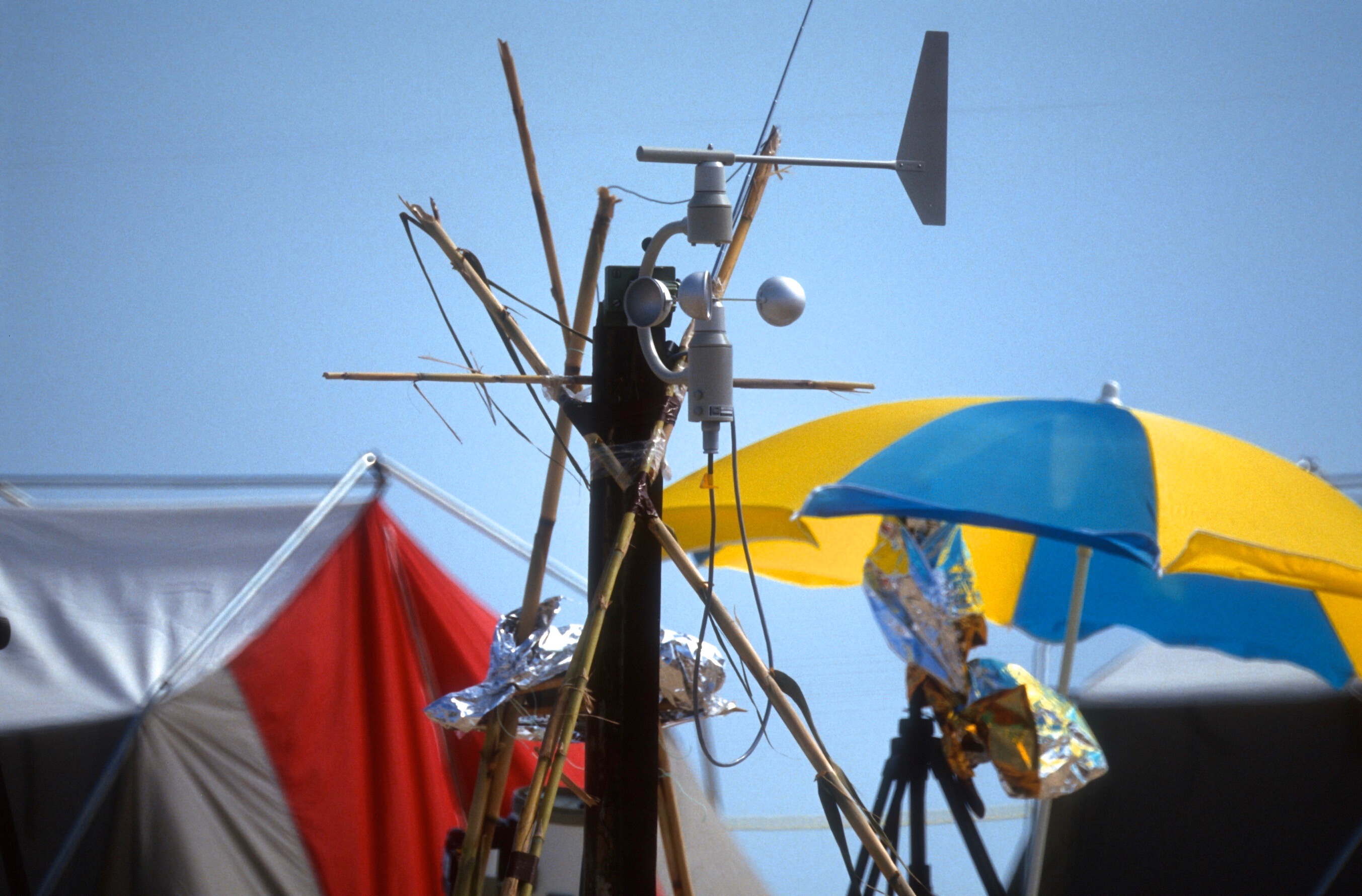
On July 11th we rose early and trekked 15 minutes to the beach where we joined an eclectic group of other nerds, solar astronomers, and cooler party people attending an already-underway private bash, obviously sponsored by one of the astronomy magazines. Mexican caterers weaved their way past expensive telescopes and weather equipment, offering trays of antojitos and bebidas.

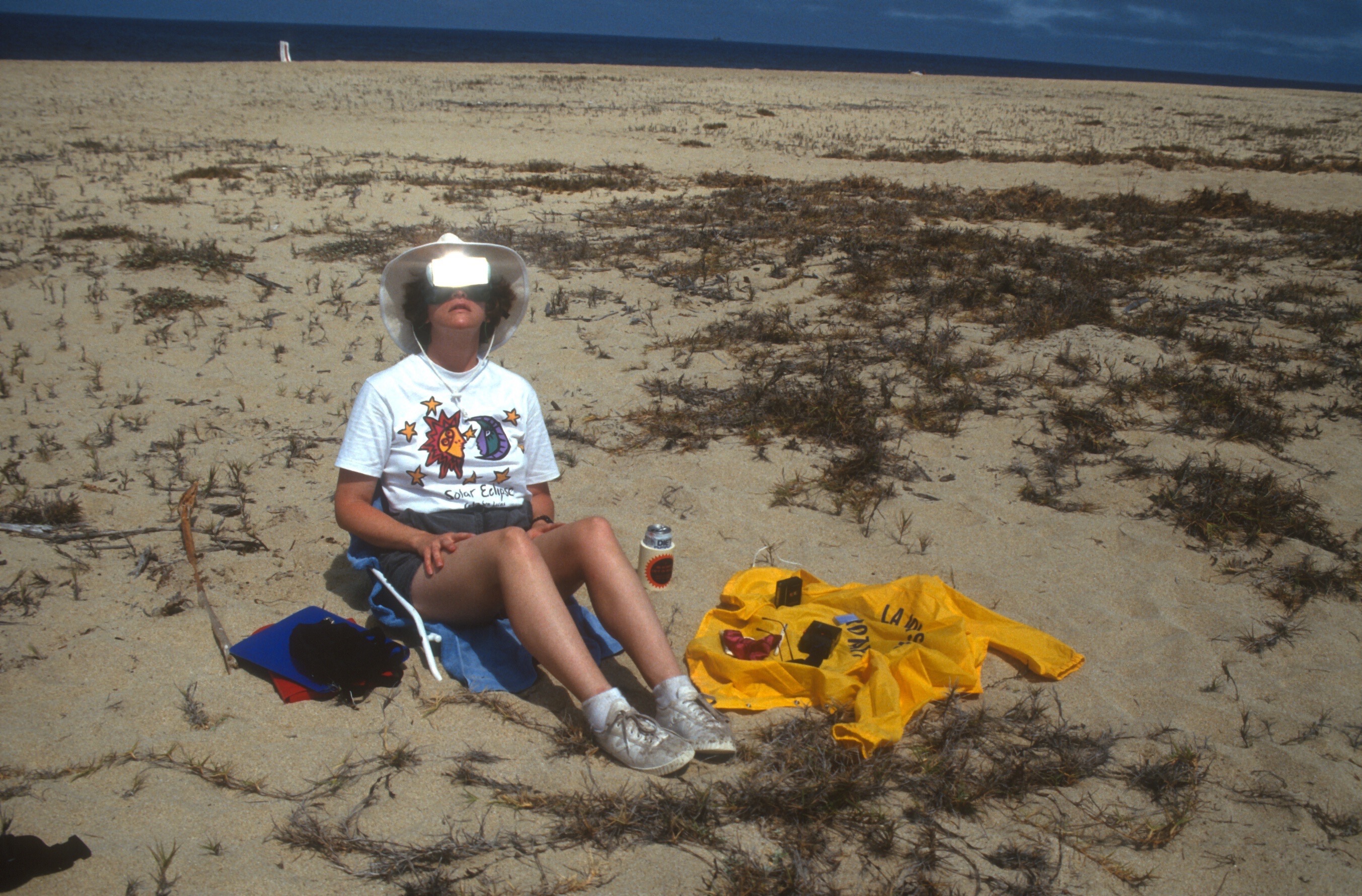
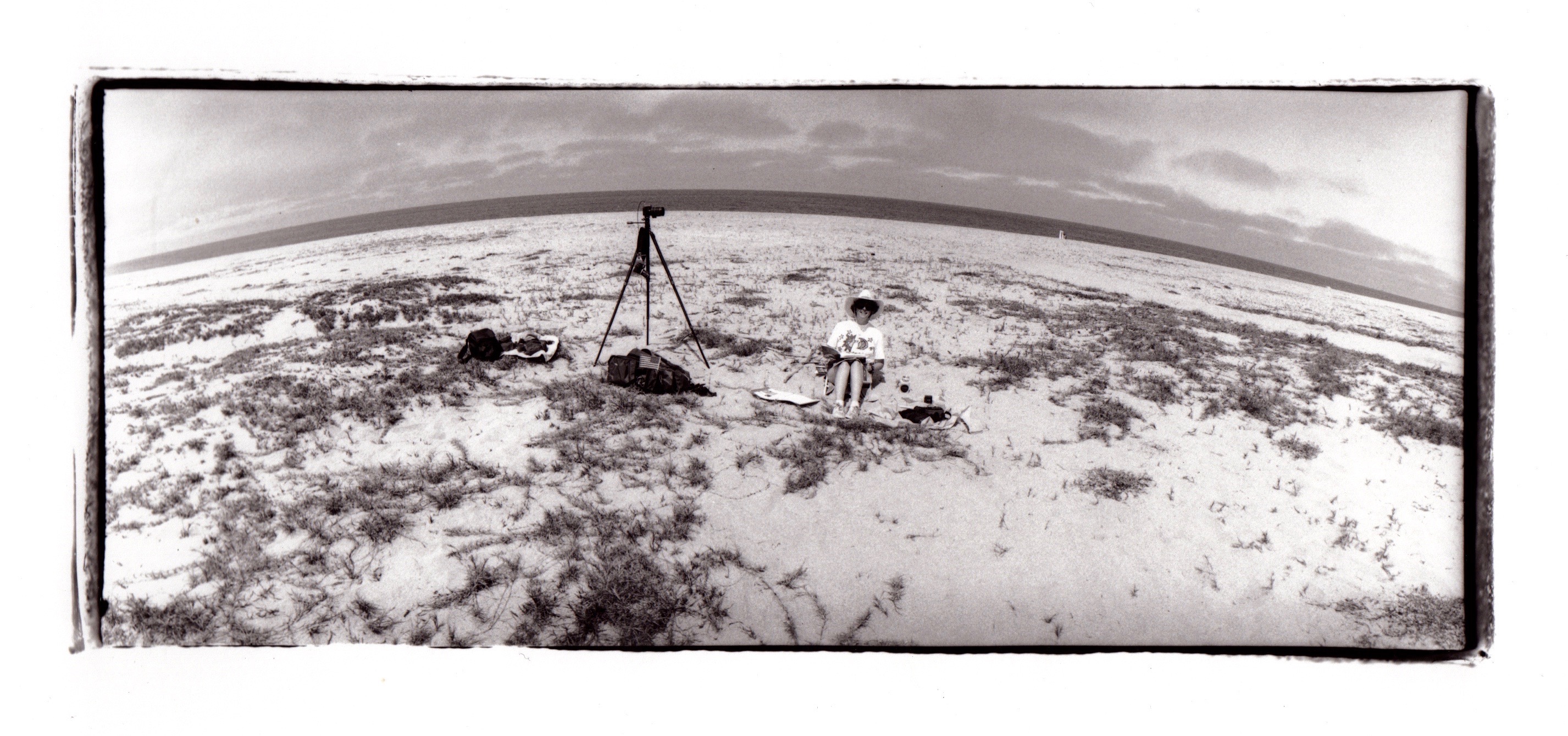
We set up a sparse observing area a few yards away. I brought zero equipment other than my ridiculous-looking #14 welder’s glasses that I purchased from a San Diego safety store, and my photographer boyfriend had one tiny Nikon balanced on a tripod with a screw-on solar filter.

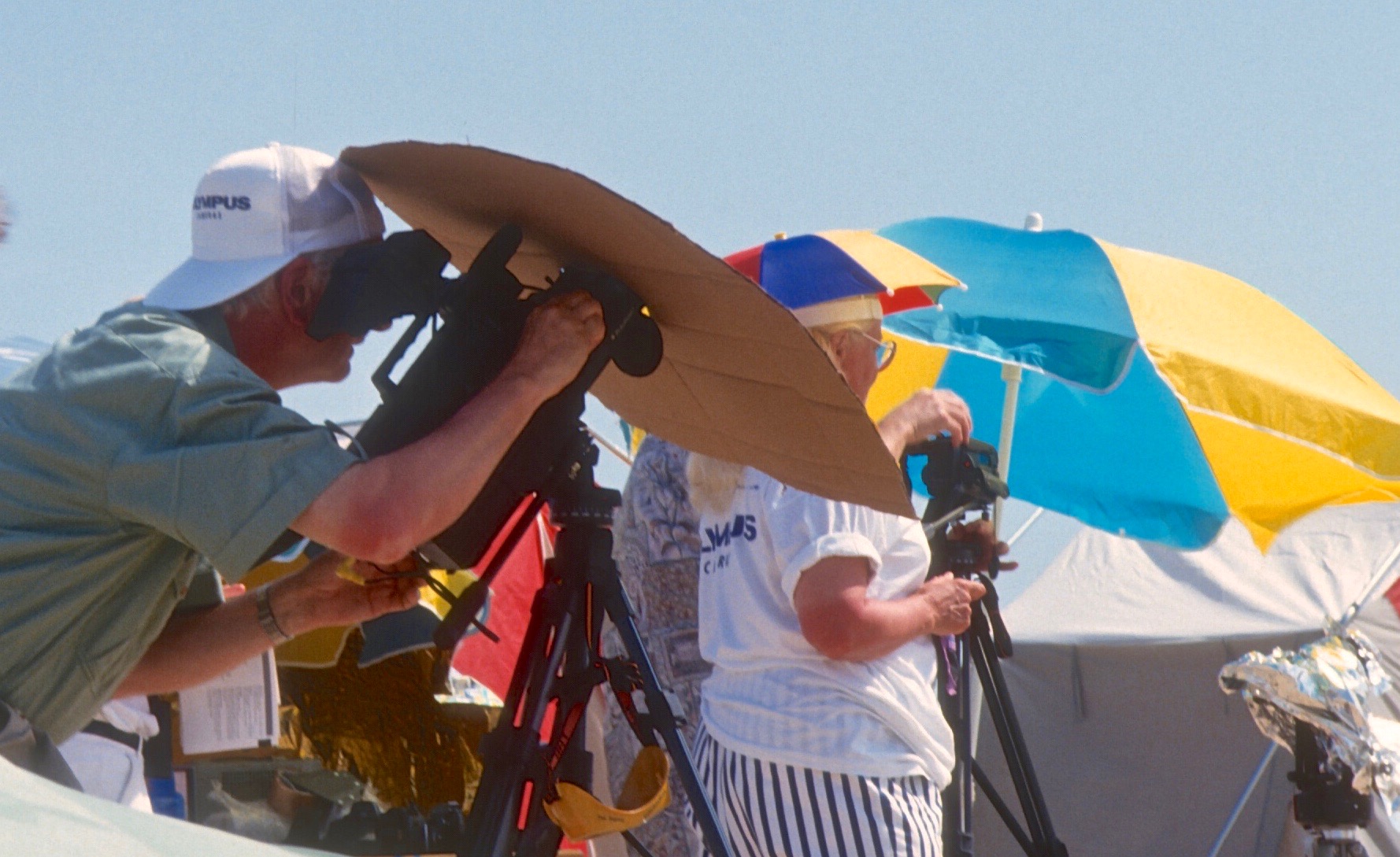
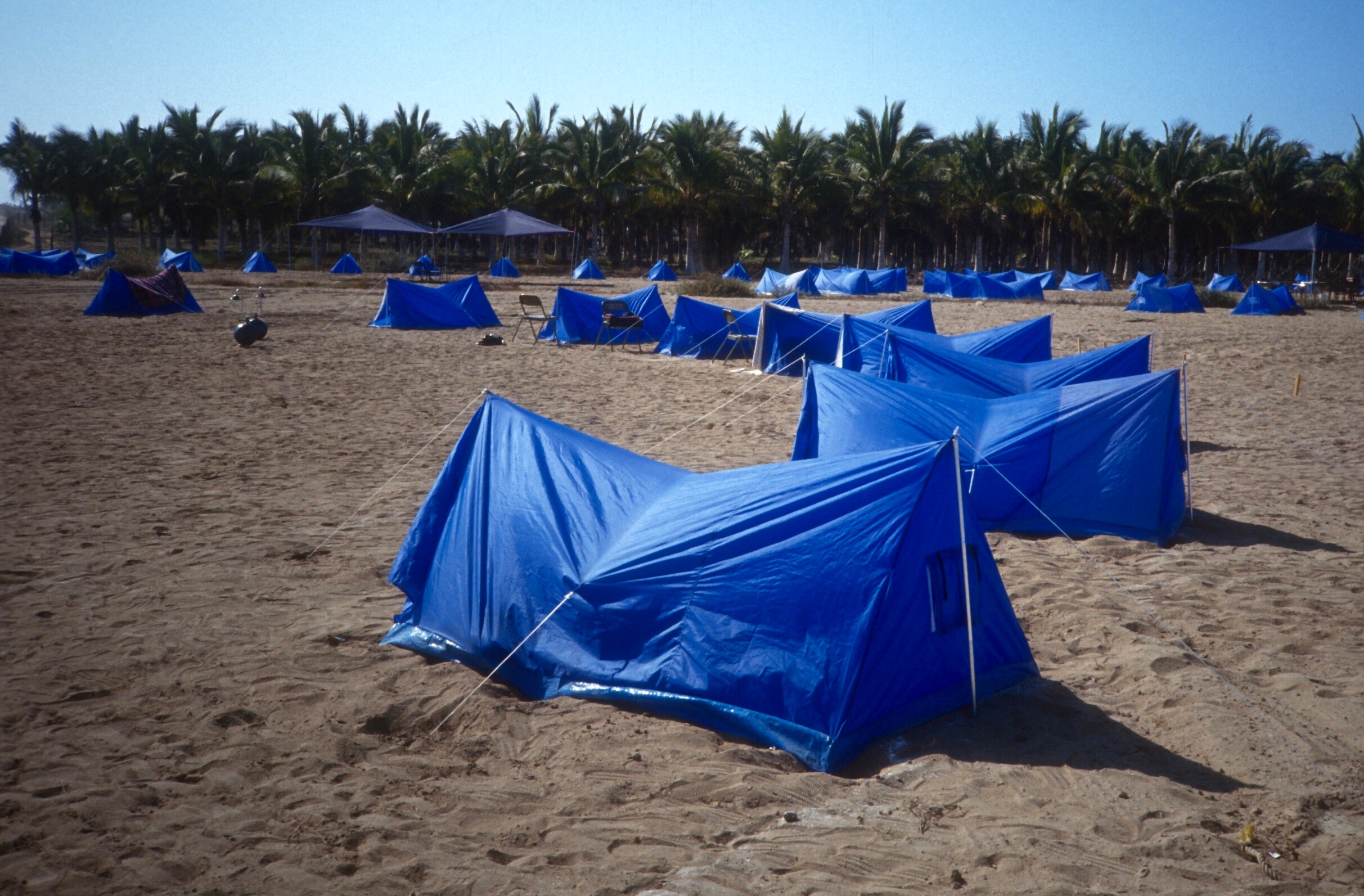
Our gear was in stark contrast to the impedimenta operated by the professional solar astronomers that were there from Germany and Japan. I was amused by the stereotypes in action: the Japanese crew had blue, low-slung, high-tech tents arranged in a circle; the Germans had boxy, upright red and white tents arranged in a square. (I say this in the kindest, least xenophobic way.)

Above: Awaiting totality; photo by Gene Faulkner 1991

Below:

Packing to the beach site

Other people’s party

Red tent, blue tent

Their gear, our gear

Nerd alert

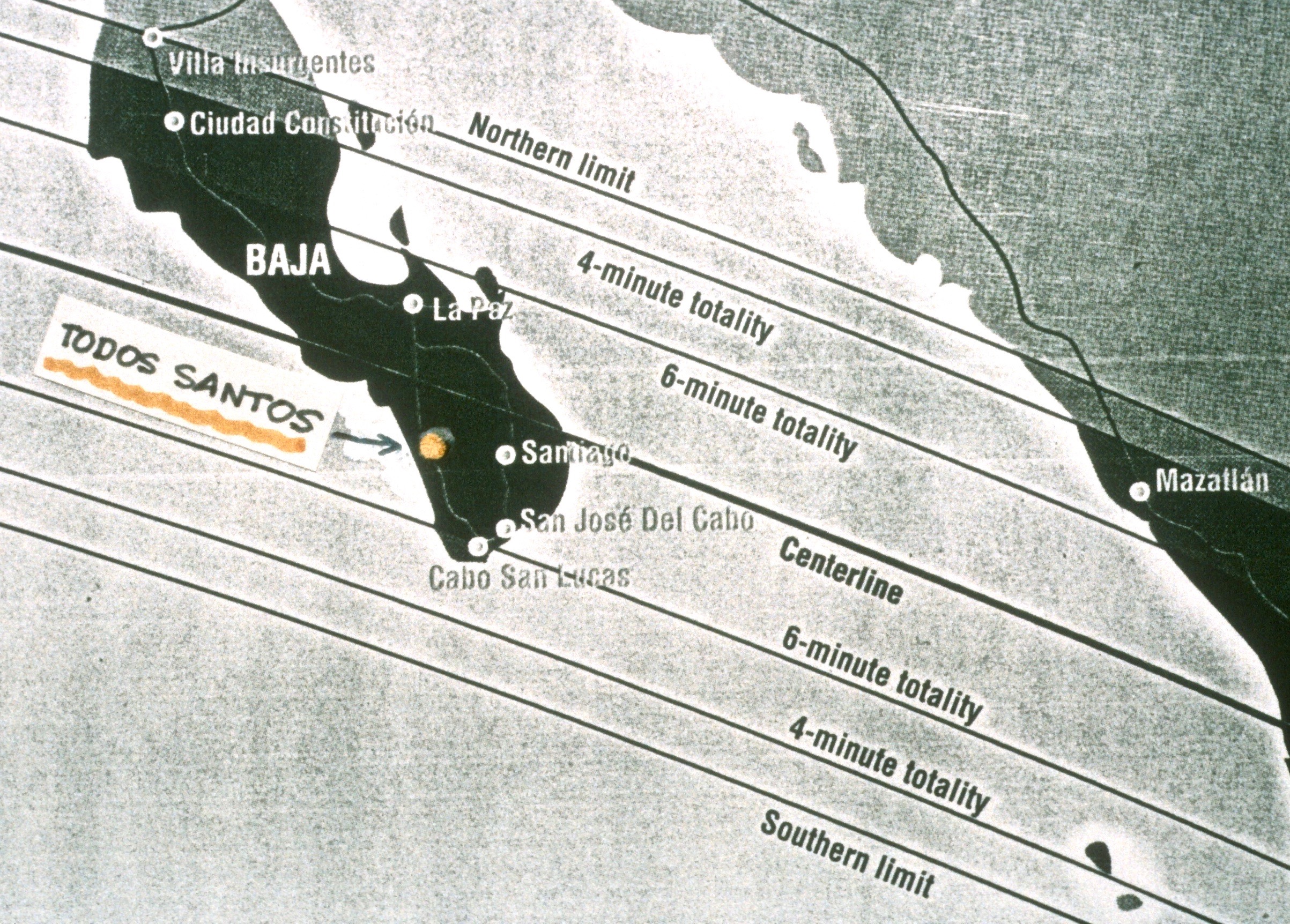
Todos Santos

In the early 90s the little town of Todos Santos (where we observed totality) was a sleepy fishing village; just look at that “arcade”. It was also said to be the alleged home of the original Hotel California of the Eagles song (but so are a dozen others, including the Church of Satan in San Francisco, the Camarillo State Mental Hospital, and, most reasonably, simply the Beverly Hills Hotel that’s pictured on the album cover and where the band hung out).

Since visiting 26 years ago I hear that Todos has gentrified into a tasty little artist’s haven, like Bisbee, Taos, and Jerome, Oregon—with prices to match.

We were lucky to be allowed to camp at El Zapote, a gentle, substance-free co-op where the residents raised organic produce before it was called “artisinal” and puttered around administering acupuncture to their pets and whatever else sweet reclusive hippies do. We never met any of the inhabitants; most were busy practicing the drum circle ceremony they’d perform on eclipse morning, or had fled in terror of the annual aerial malathion-spraying helicopters that were scheduled to fly over that week to bomb their crops.

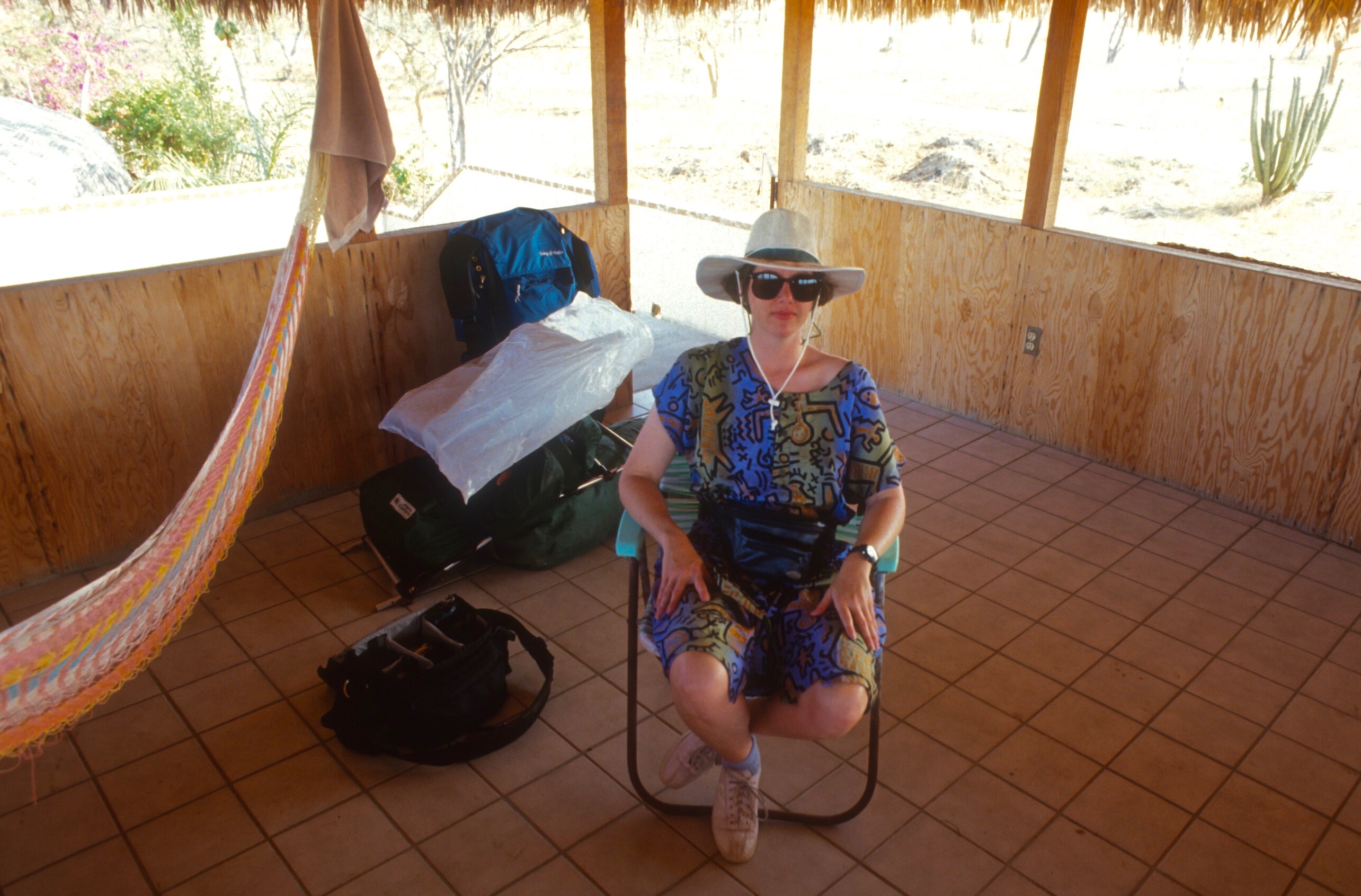
We pitched a tent on the property and paid for access to the bathroom and shade palapa, where we sorted our gear and prepared our packs for eclipse day.

Above: El Zapote campsite

Below:

Todos at night

Kids playing Mexican Pong

Main street corner

El Zapote farm

Margs at the bar, Hotel California

Centerline near Todos Santos

Recuerdos

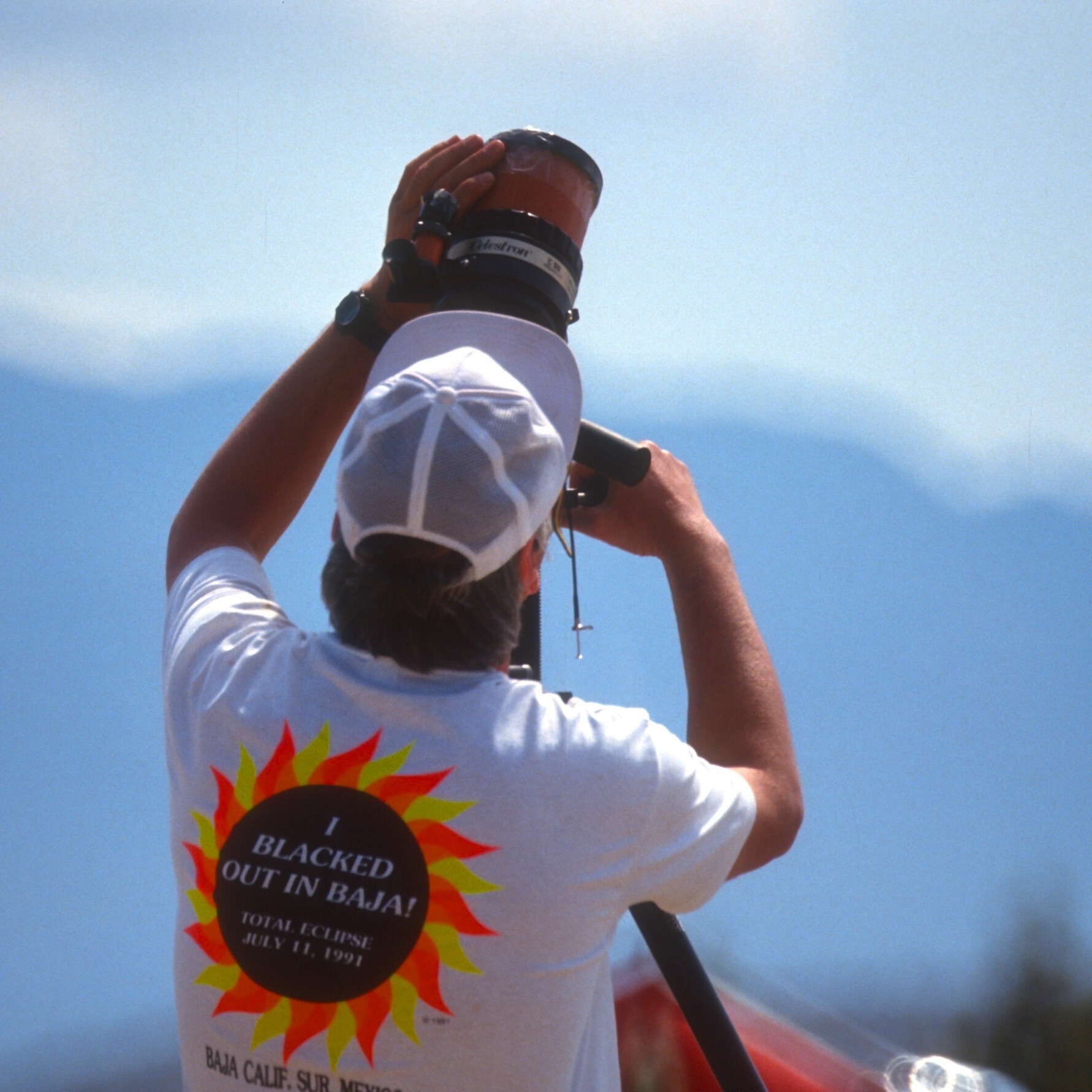
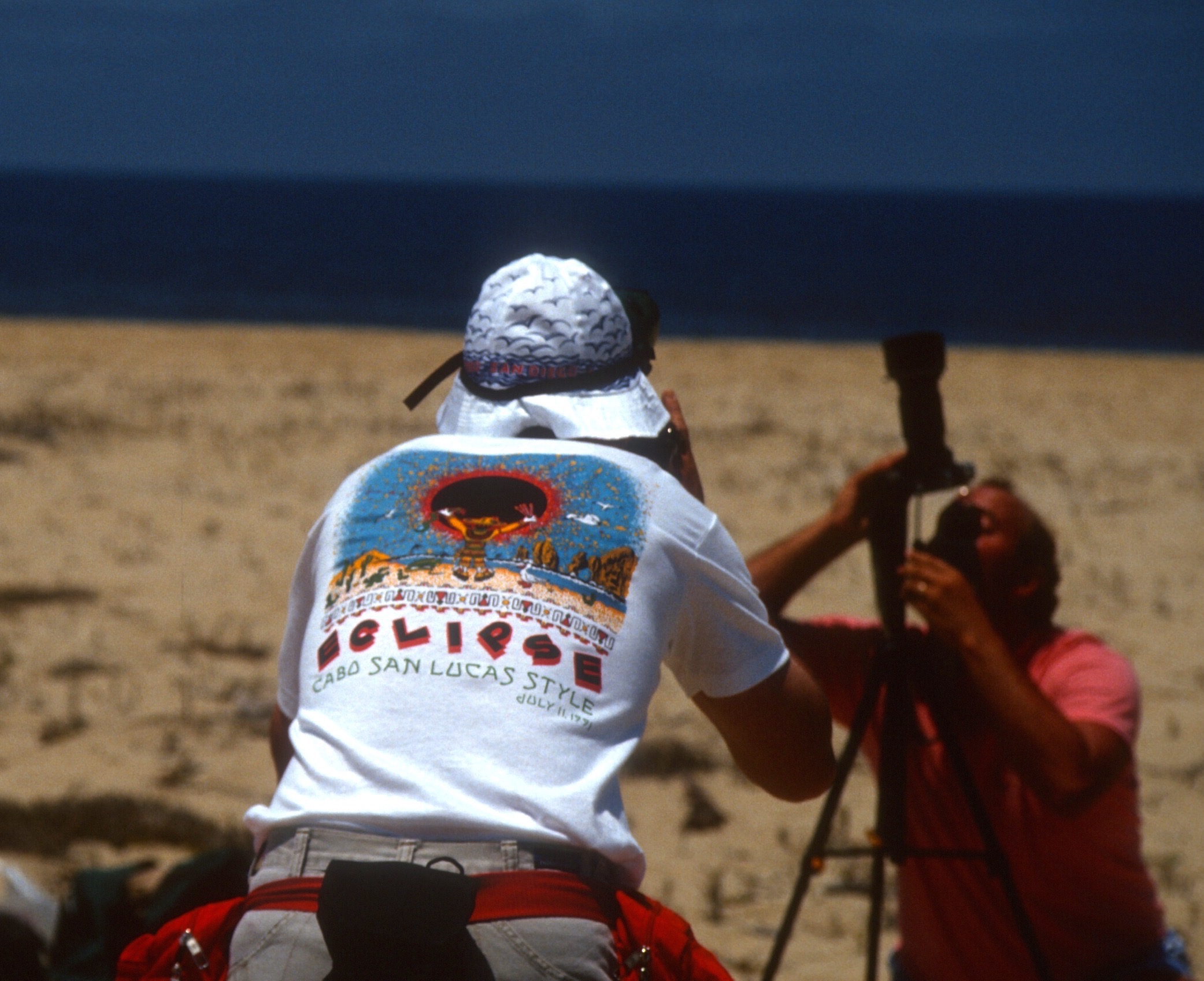
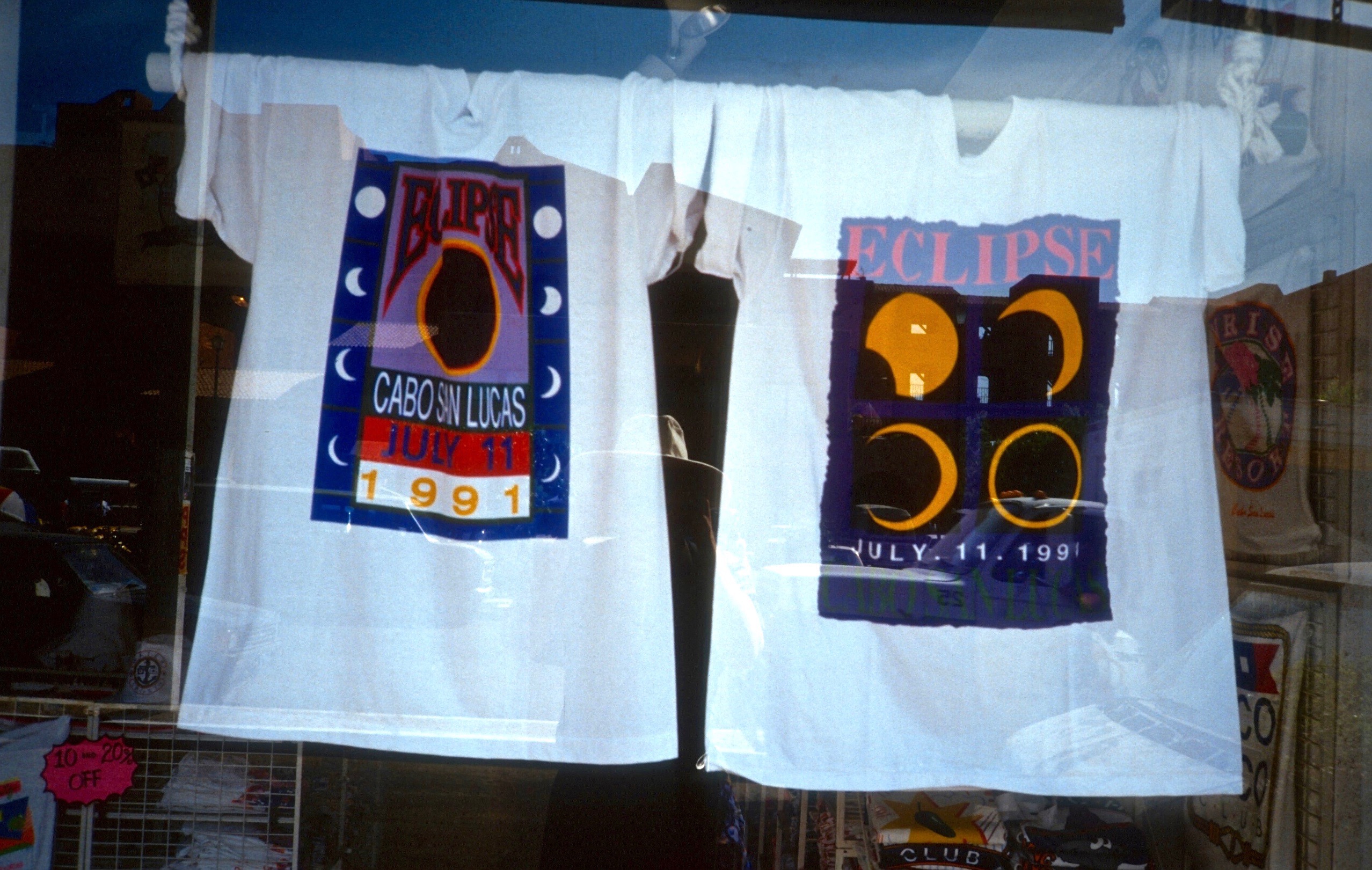
Folks in Cabo know how to make a buck, and the town merchants geared up for the eclipse with a variety of t-shirts and collectibles.

If you view totality in a tourist town, the souvenirs are the best. Local vendors and the government are hip to catering to vacation spenders, and Cabo had its swag DOWN. As an aficionado of dust-collecting trinkets I would be disappointed at each and every subsequent eclipse location; more remote destinations means a profound lack of memorabilia and apparel, and with the exception of Aruba, they all paled compared to what was available in Mexico.

People, people: you have 350 years to prepare for an eclipse. Get your knickknacks and local currency ready. (I’m looking at you Bolivia.) Third world communities never expect the volume of eclipse tourists and there’s never enough folding money to go around. Chasers are forced to scalp bills to each other, or strategize tactics to be first in line at a bank.

Above and below: mugs and stickers and shirts, oh my