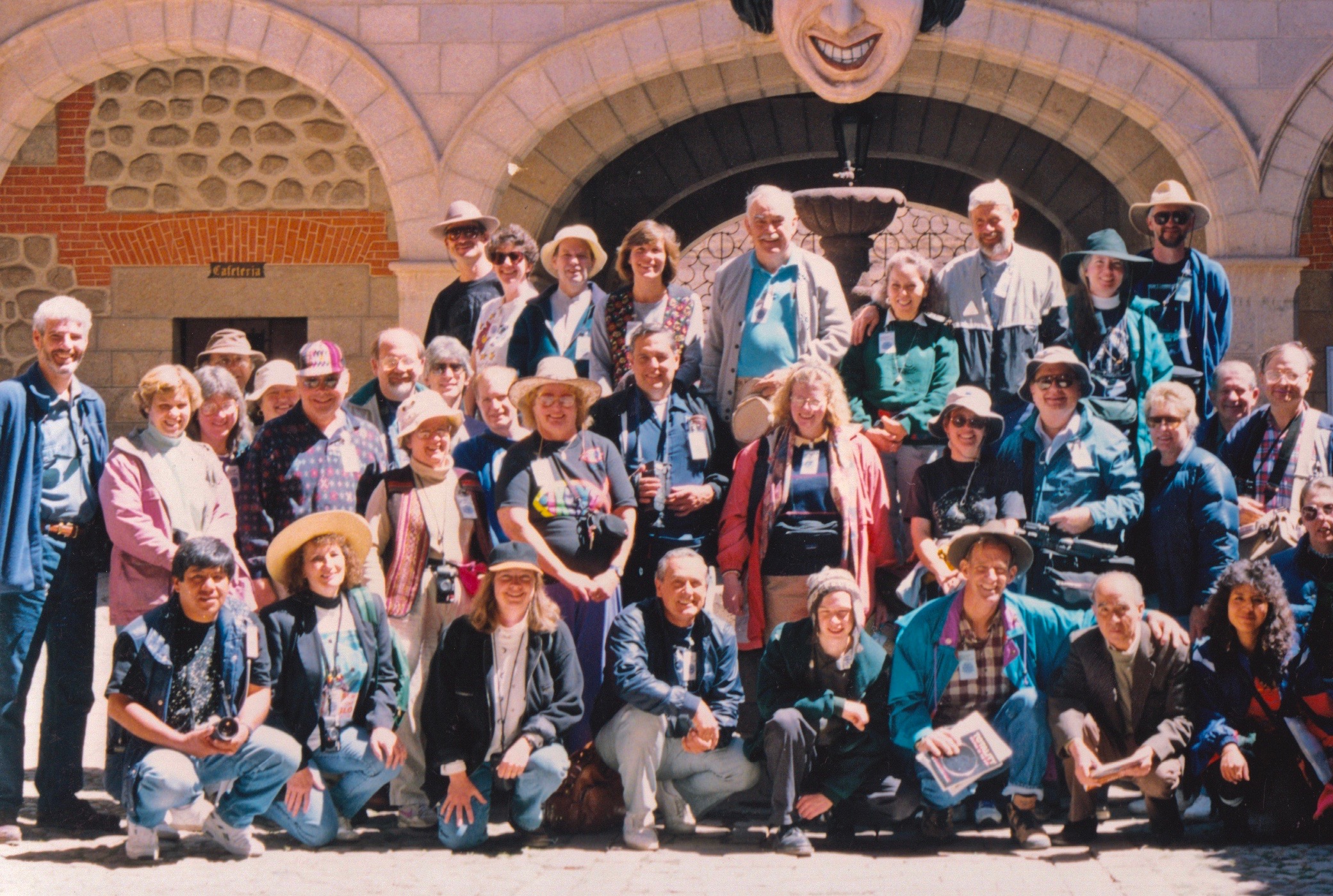
Turistas

Before totality (viewed from the Bolivian Altiplano, the sunniest location on the eclipse track in 1994) we were taken on a whirlwind tour of, like, the whole country—a basic, barren nation with pockets of jaw dropping scenic and cultural beauty and colorful people. The women dress in native fashions: full pleated skirts and thick shawls with a cholita bowler hat worn rakishly on the head. Luis, one of the guides, explained that Bolivia is “simple and poor”, and because of the climate the residents “crave sugar and pork lard, so all the women are huge,” (his word). To their men, that’s a sign of strength and beauty.

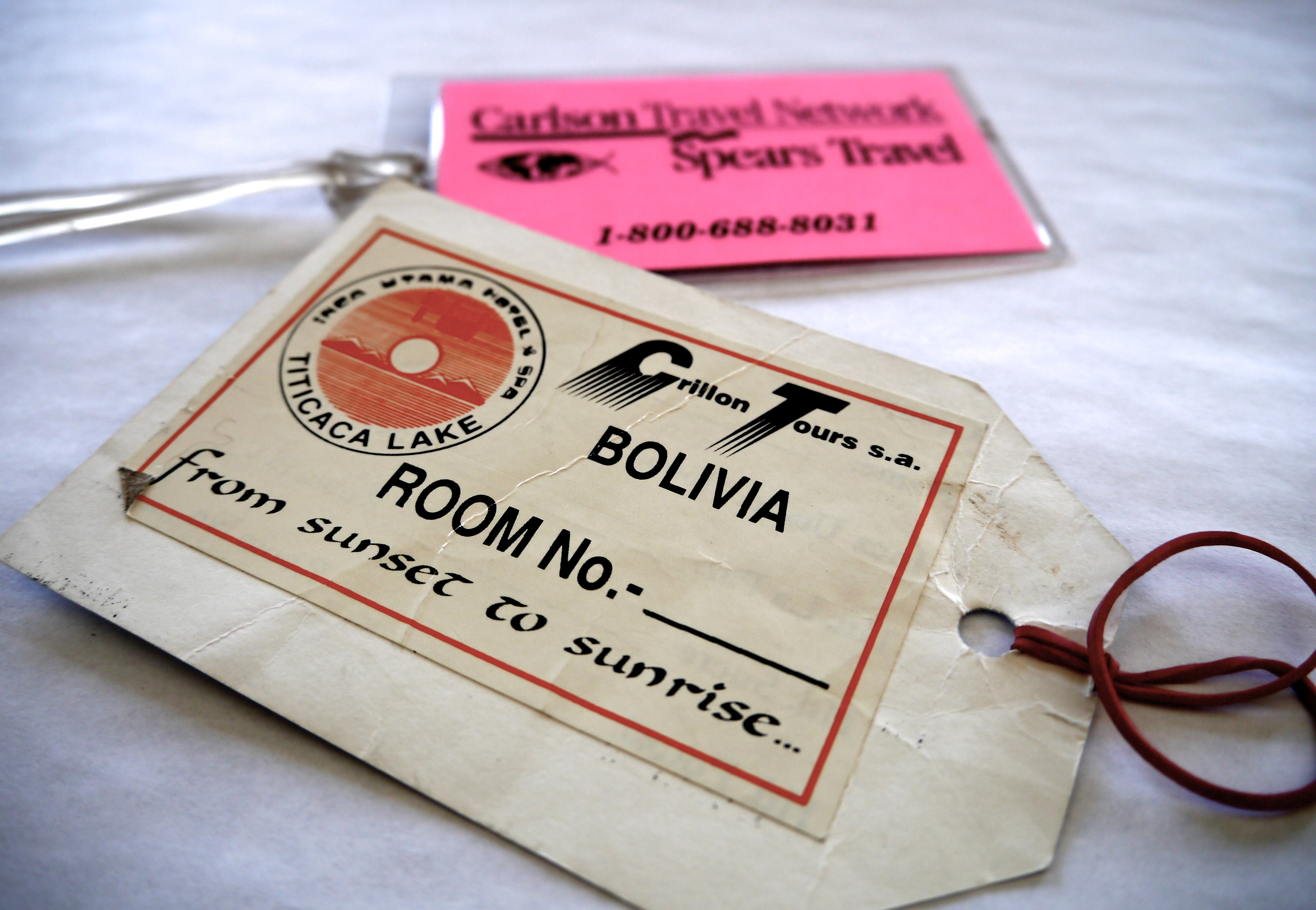
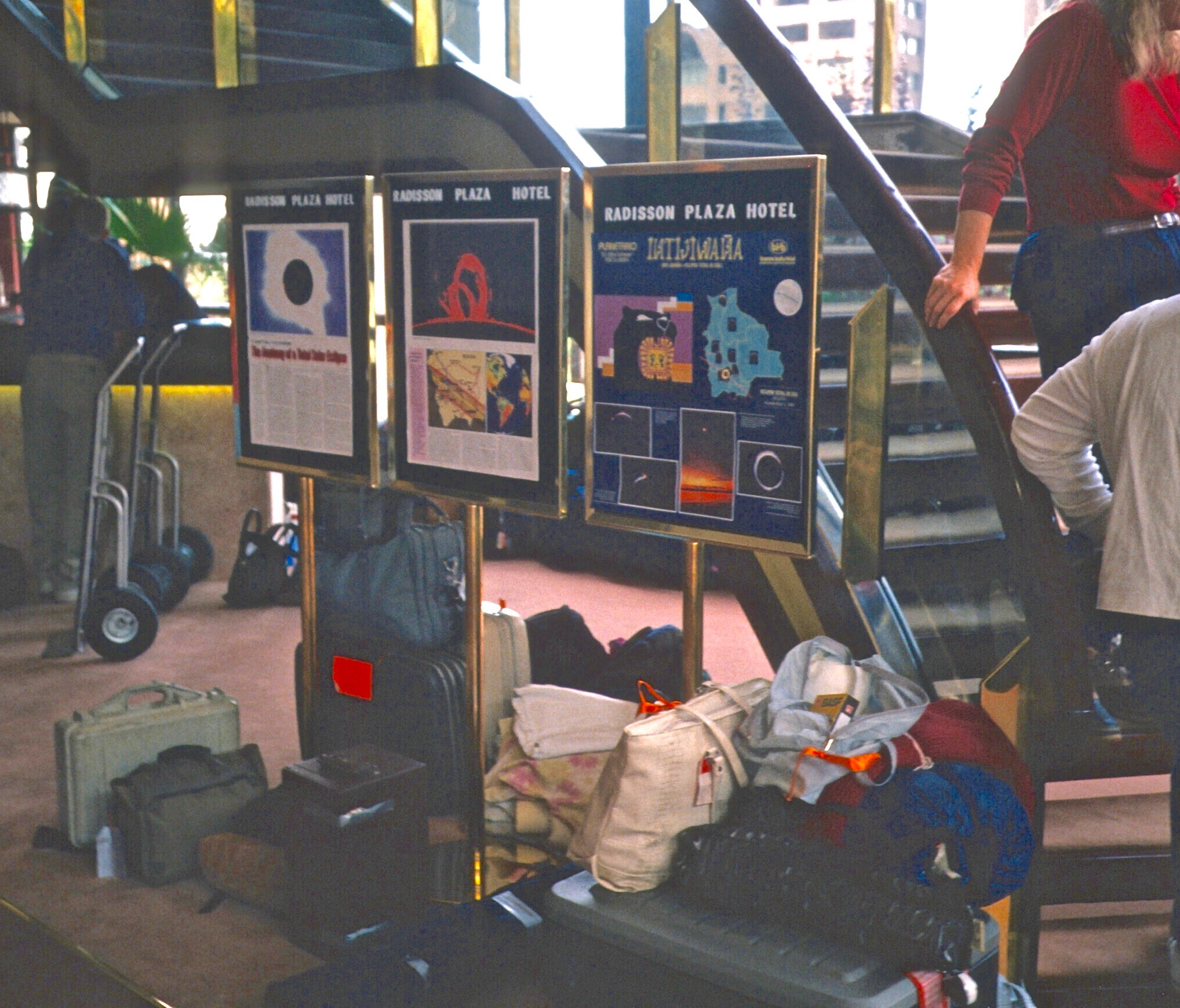
The tour group was put up in a familiar, ultranice Radisson in the big-city capital of La Paz. Throughout the trip Spears Travel made sure we were treated to the very best accommodations Bolivia had to offer. (Read between the lines.) I poked around town, bargaining for alpaca textiles and visiting the spooky witches market to buy lucky totem figures blessed by the brujas with yarn.

I climbed off a bus (after a ride so bumpy that water splashed out of a half-full Nalgene bottle) to explore the ruins at Tiwanaku and stand before the stone Gate of the Sun, believed to be an ancient observatory.

I watched my tour mates heaving over the rail of the hydrofoil jet boat that flew across Lake Titicaca on the way to the fountain of youth on the sacred Isla del Sol. At the car cha’lla blessing at Dark Virgin of Copacabana shrine, vehicles decorated with red, yellow and green flowers—the colors of the Bolivian flag—waited in rows for the priest to sprinkle them with holy water. Beer, champagne and colas were also on hand to acknowledge the earth goddess, Pachamama. (Bolivians believe that our planet is a being to share with and thank—and when you have a drink, you pour a splash on the ground for Mother Earth.) Afterwards, I took part in a little sacred ceremony—a sort of baptism by flowers dipped in the water of Lake Titicaca—and was ordered to repeat, “I will not lie, I will not steal, I will not be lazy,” (the three worst Incan sins). A pisca and gingerale toast sealed the oath.

I had my fortune told by a Kallawalla mystic using “guinea pig x-ray” magic, with dubious results. We gathered in a dark tent late at night; a wizened nut-brown gentleman in robes sat cross-legged in the center. “Who has a question or concern for the mystic?” announced the guide. Of course no one stepped up, so I took one for the team and raised my hand. I was escorted to a place on the ground before the seer and quietly posed a question about my work (how 90s was that). The mystic ruminated and finally said through an interpreter, “you are very worried, but everything will be okay.” The next person stepped up and asked their question. The answer? “You are very worried, but everything will be okay.” Ha! And so on, to everyone.

In Potosi, the worlds highest city, I went into a catacomb piled high with the skulls and bones of the faithful. I saw wild vicuña and flamingoes on the plains. I visited a cemetery by myself on All Souls Day and walked among families restoring the above-ground grave dioramas, strumming guitars and placing flowers for the spirits to enjoy. (“Were the dead grateful?” asked David, the videographer in our group. “I’m sure they were,” I stupidly answered. I got the joke about five minutes later.)

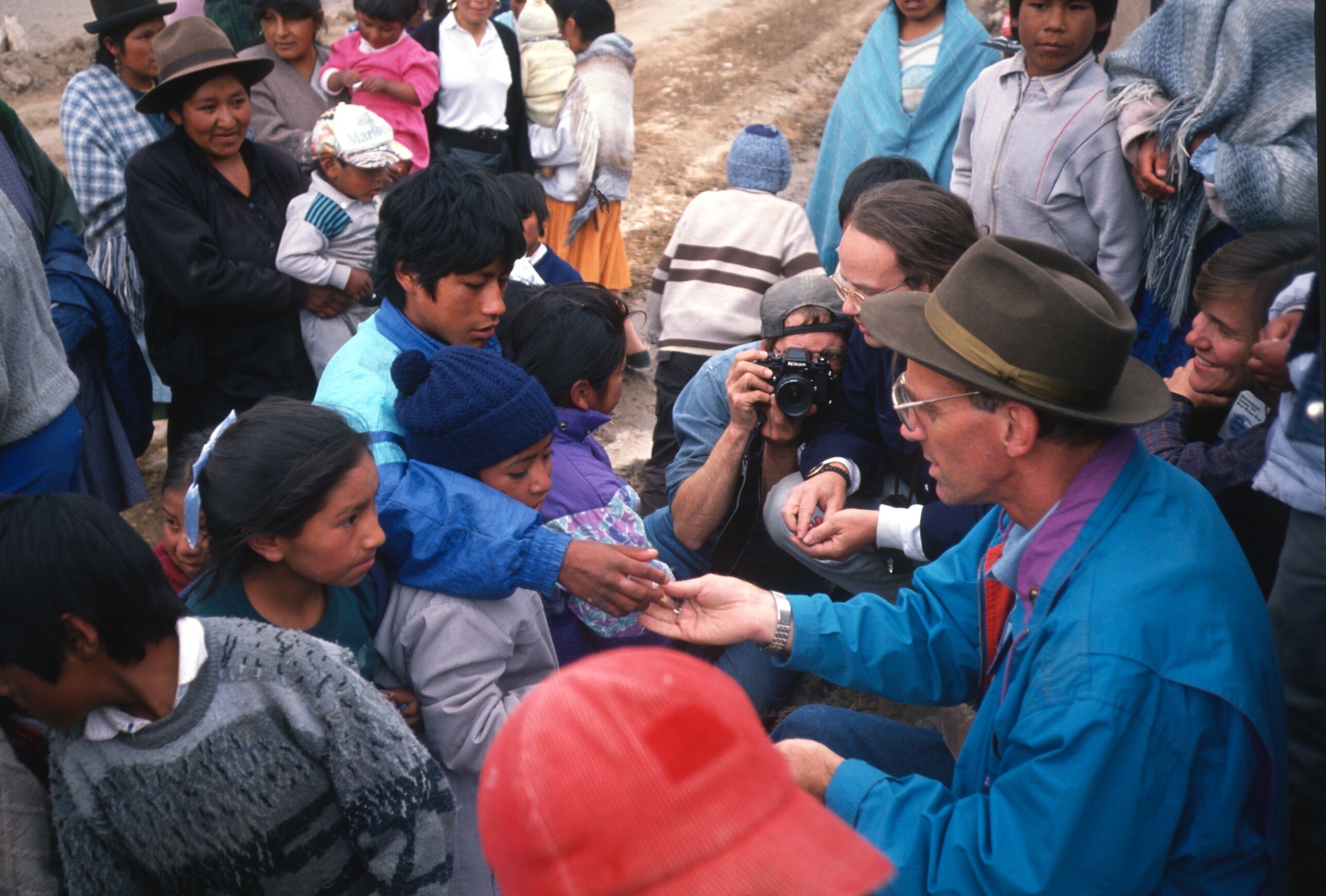
It was an honor to be in the presence of the late Ken Willcox, eclipse coordinator on the tour. Ken made it his business to circulate through our train to the eclipse viewing area and collect small items and anything that we could offer as a school supply—paper, pens, pencils, decks of cards—and distribute them to the children who came running when we stopped on the tracks in the poor villages.

By our final destination in the town of Sucre, the nerds looked less nerdy. Those once pasty and dandruffy and afflicted with altitude sickness at the beginning of the tour were now stronger, buoyant. The men became vital and scruffy, wearing Indiana Jones-style fedoras they found in a market somewhere. Faces were tanned and spirits were high as the travelers joyfully licked ice cream cones while sauntering around Plaza 25 de Mayo square. That night, all enjoyed a fancy farewell dinner, served in a Euro-style restaurant with white linen tablecloths.

Was it the asparagus with cream sauce served at dinner? The ice cream in the square? (Probably not the ubiquitous pollo and jojos, served piping hot from street vendors.) Whatever it was, I would learn that anyone who wasn’t flattened by altitude sickness at the beginning of the journey later contracted a frightening intestinal illness. One unfortunate dude hosted an amoeba so debilitating that he had to be a Boy in a Bubble and underwent a complete immune replacement—a process that took a year from his life.

I fell viciously and unexpectedly ill with dysentery on the flight home. The airline crew allowed me to lay on the floor of the bathroom during the last hour of the flight including WHILE THE PLANE LANDED. I was removed from the airport in a wheelchair, and was bedridden and delirious for two solid weeks.

It was worth it.

Above: Chasers at the mint 

Below: 

(Photography in Bolivia was difficult in 1994; it was generally verboten to take a picture of anything living, not just people and animals. A photo of a potato would take its soul, too—the next day it would surely be rotten inside. I couldn’t resist selfishly capturing certain memories for myself while trying to keep a respectful distance, and I still got in trouble. Once, three teenage girls in yellow and white school uniforms were sitting beneath a statue at the end of a town square; a breathtaking photo opp. They saw me trying to sneak a long shot from the other end of the square—from all that distance away!—and ran. When I put my camera away, they returned. Lesson learned.)

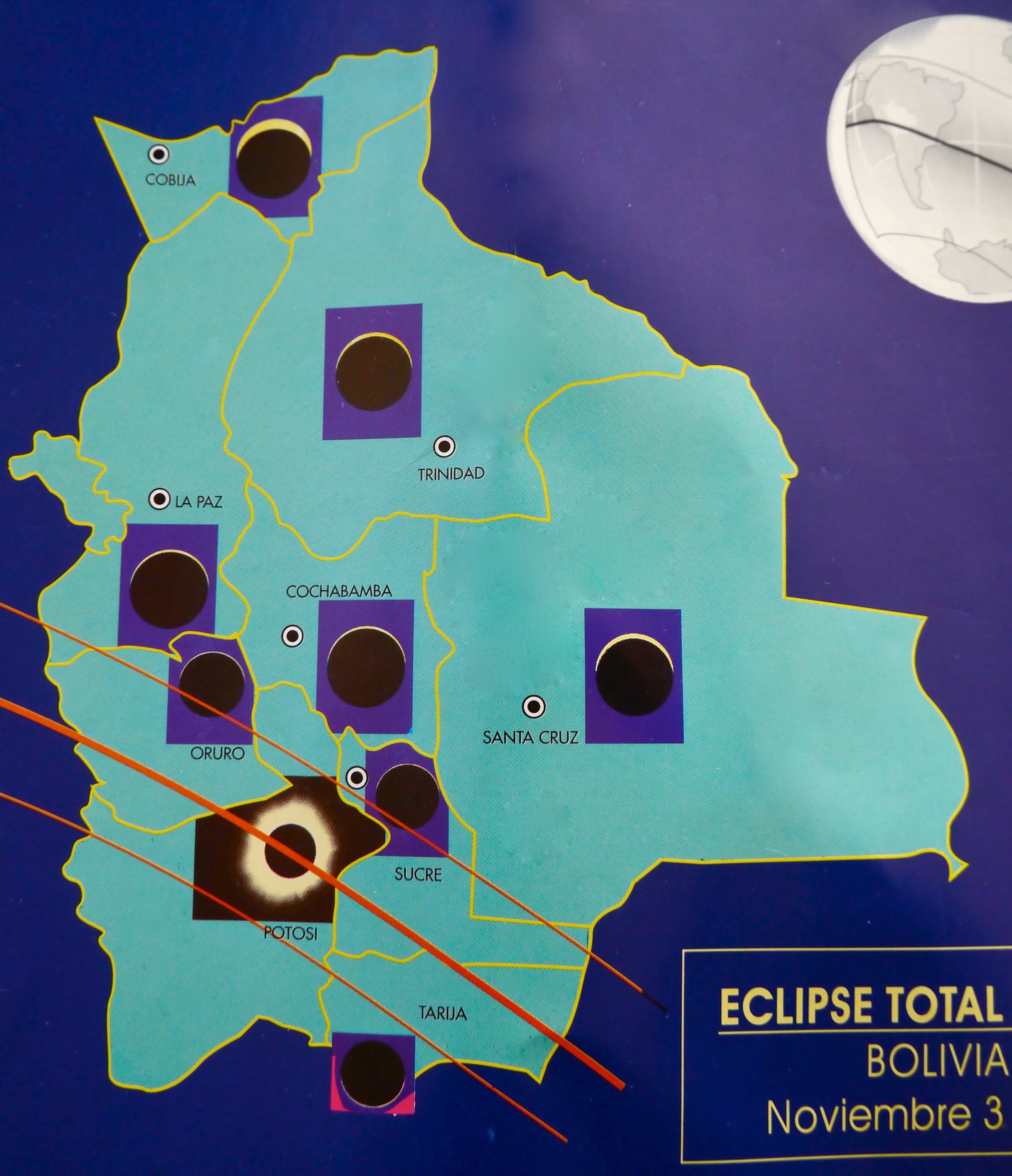
Path of totality 1994

Lake Titicaca 

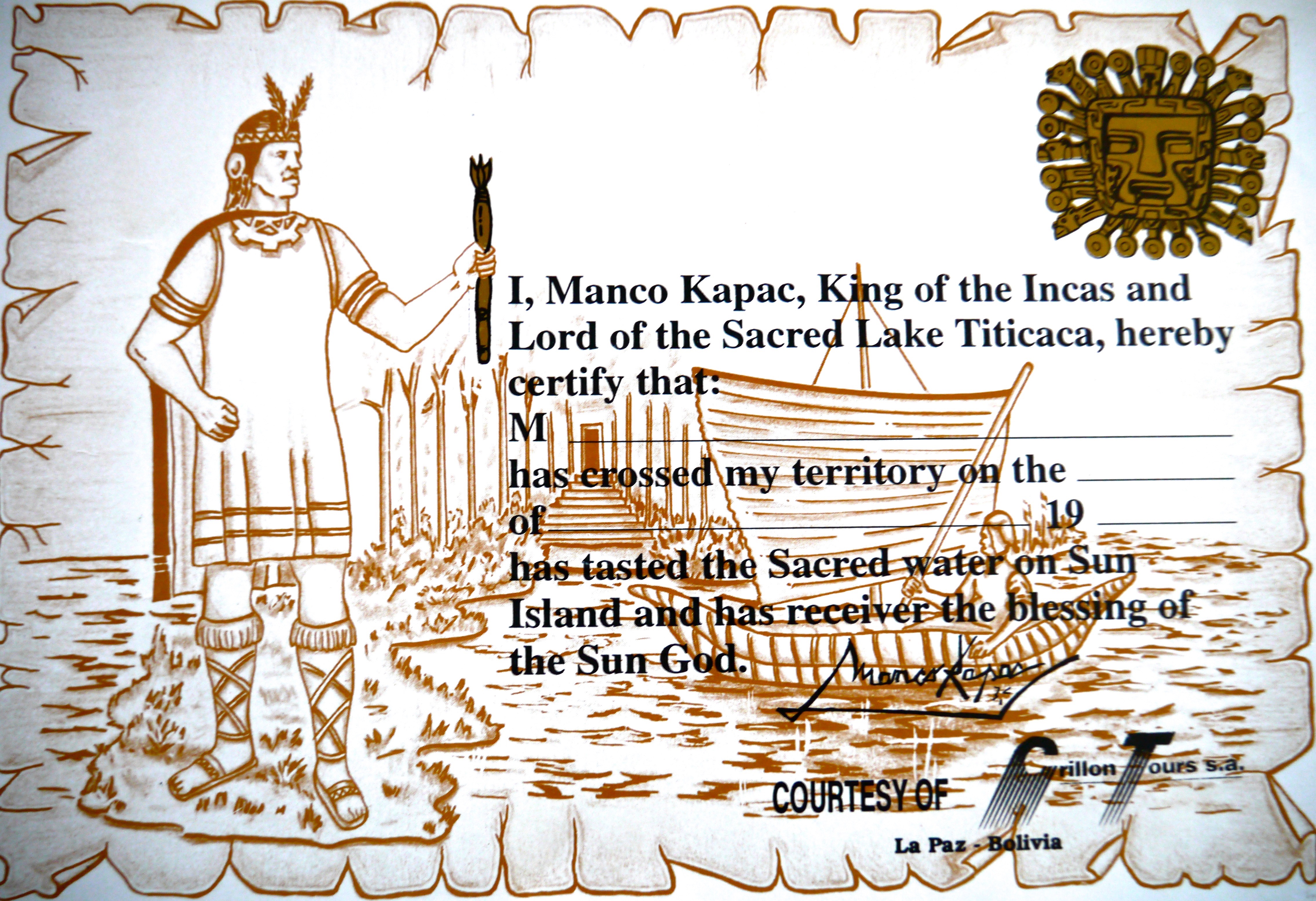
Bonafied by King Manco Kapac

City scenes

Above-ground cemetery tombs

Remote village

Ken and the kids

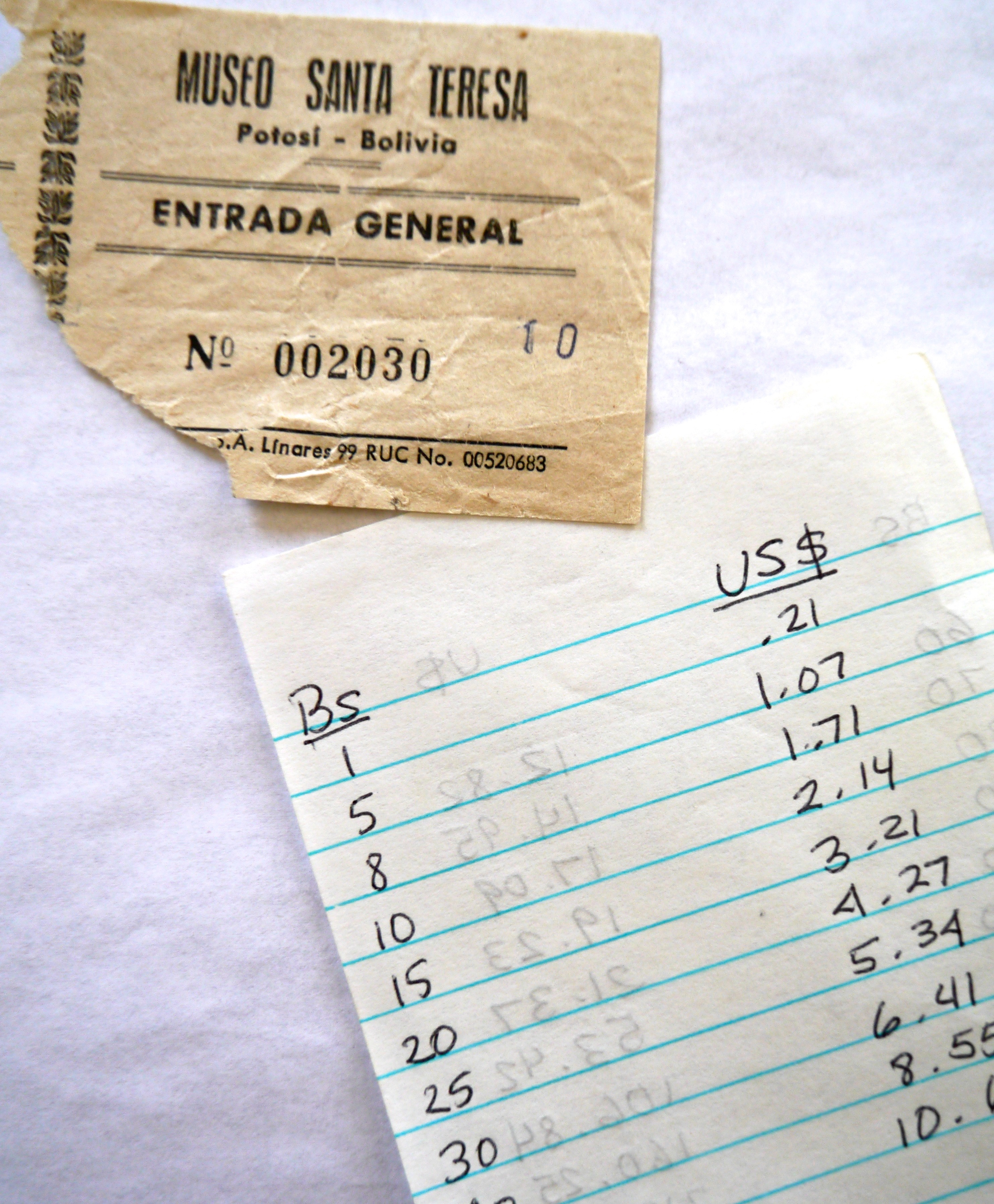
Boliviano converter

Shop lady

Witches market

Cerveza nacional

Climbing toward the Altiplano

(Do you see yourself in these or any photos on this website? I’d love to hear from you.)

The AstroNASAcal League

The Astronomical League tour group convened in El Alto International Airport with our nerdy, overweight luggage filled with telescopes and camera equipment. We towered over the airport personnel, tiny people in riot gear. No photos were allowed. We boarded a bus to our first destination, and immediately noticed the lack of air in the air.

“Remember, when you land there will be 20% less oxygen,” stated the itinerary notes. Miami lies at (duh) sea level; La Paz, at nearly 12,000 feet, is almost twice the height of Denver (with more than 3500 feet in elevation we’d yet to gain that week). “For many visitors, the most challenging aspect to this eclipse will be coping with the significant, if not downright extreme, altitudes they will encounter,” wrote Joel Harris in an article for Astronomy.

I prepared by taking Diamox, the ascent medication acetazolamide. It combats the dangerous and uncomfortable symptoms of altitude sickness, but not the gasping feeling of struggling for oxygen. Coca leaf (the key ingredient in COCAINE) is the local remedy, and travelers are encouraged to chew and/or brew the leaves that can be found piled high in hotel lobbies and offered with elegant silver service teapots and cups to make mate de coca.

Unrelated: According to local documentation, we were present in Bolivia during the Age of Aquarius, when the source of power shifted from the male Himalayas to the female source and central vertex of cosmic energy, Lake Titicaca, where “from now on, the positive energy of the world will be generated.” I knew I felt something other than altitude sickness. (The way this year is going Lake Titicaca better step up her game.)

During the tour were were allowed to see and do things ordinary tourists weren’t allowed to see and do. Public officials appeared out of nowhere to give Ken Willcox, the group astronomer, a laurel and hearty handshake. In Sucre, for instance, the director of the mint delivered a gracious welcome address through an interpreter. He informed Ken that as an honored guest he must autograph “the book of important persons,” a very old and precious registry signed by world leaders and royalty. Ken does—and we discover later that a misunderstanding led them to believe we were from NASA, of which Ken was president.

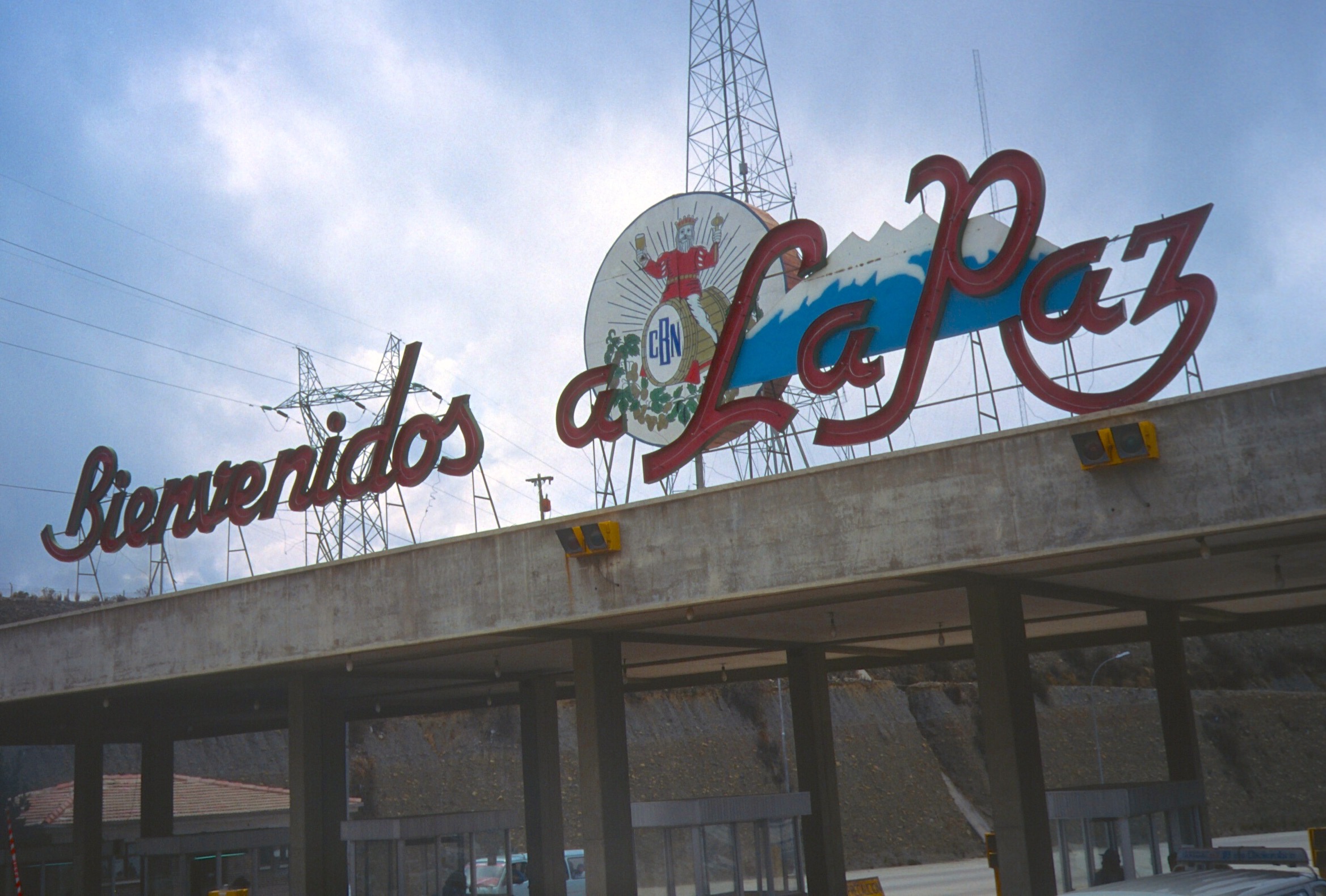
Above: Welcome to La Paz

Below:

Astronomical League tour

Coca leaf tea


Inti Jiwaña

Fast forward three years, three months, and 23 days, when I join an Astronomical League tour through Spears Travel to Bolivia, “the last authentic country”. All the usual suspects were stampeding to South America, including groups with Travel Bug, Sky & Telescope, and Scientific Expeditions.

On October 27, 1994 I flew from Miami on an overnight flight to La Paz next to a cranky gentleman in a grey suit who was irritated about what he perceived to be the abundance of “students” on the flight who were discussing, loudly, degrees above horizon, rock collecting, and whether or not they remembered to bring duct tape. Seated throughout the plane were others of my kind: amateur astronomers. I spotted them immediately in the terminal without a field guide, and some were aggressively On The Spectrum. (I boldly introduced myself to a couple—“pleased to meet you, I’m Rhonda from Oregon,” said I. The woman glowered and replied, “how do you KNOW you’re pleased to meet us? You haven’t met us yet.” This is going to be a long vacation.)

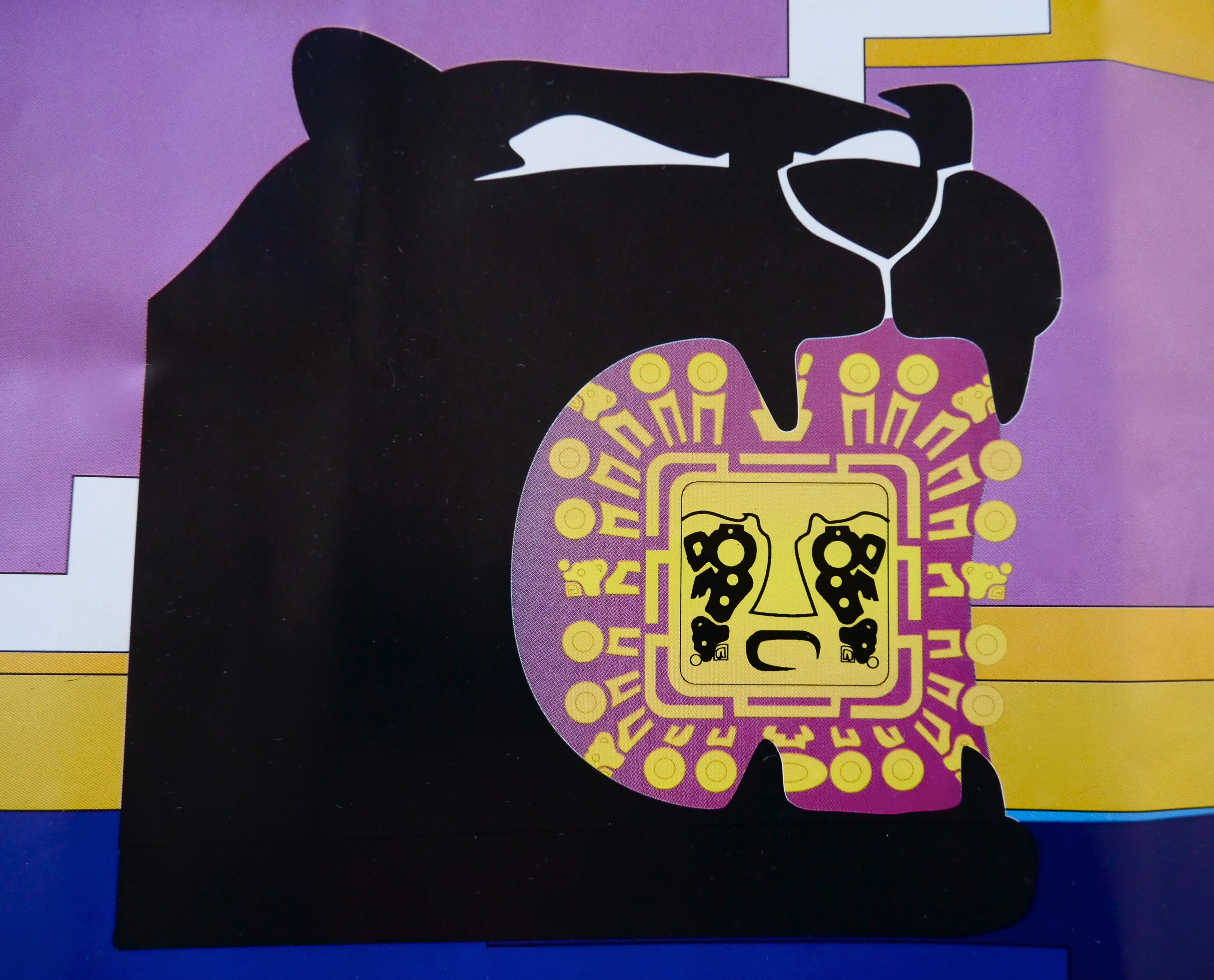
“Intijiwaña”—the Bolivian slogan for the TSE of 1994—means “Death of the Sun”, and reflects the myth imagery and extreme behavior of the average pre-Colombian Andean (who also enjoyed savage games involving decapitation). It was a puma spirit that was once believed to cause all the trouble by swallowing the sun, who must be chased away by screaming children brandishing sticks and beating other animals. (Like a dog who is reinforced to bark at the mailman because the mailman always leaves after a couple of minutes, the Andeans learned that this technique is 100% successful.) In some areas the eclipsing sun was thought to be languishing near death, and native peoples lit wildfires to warm the Earth while the sun was on sick leave. CALM DOWN Bolivia.

Above: Death of the Sun

Below:

Path of totality, 1994

Ancient Bolivian eclipse causes widespread panic

A word about photography.

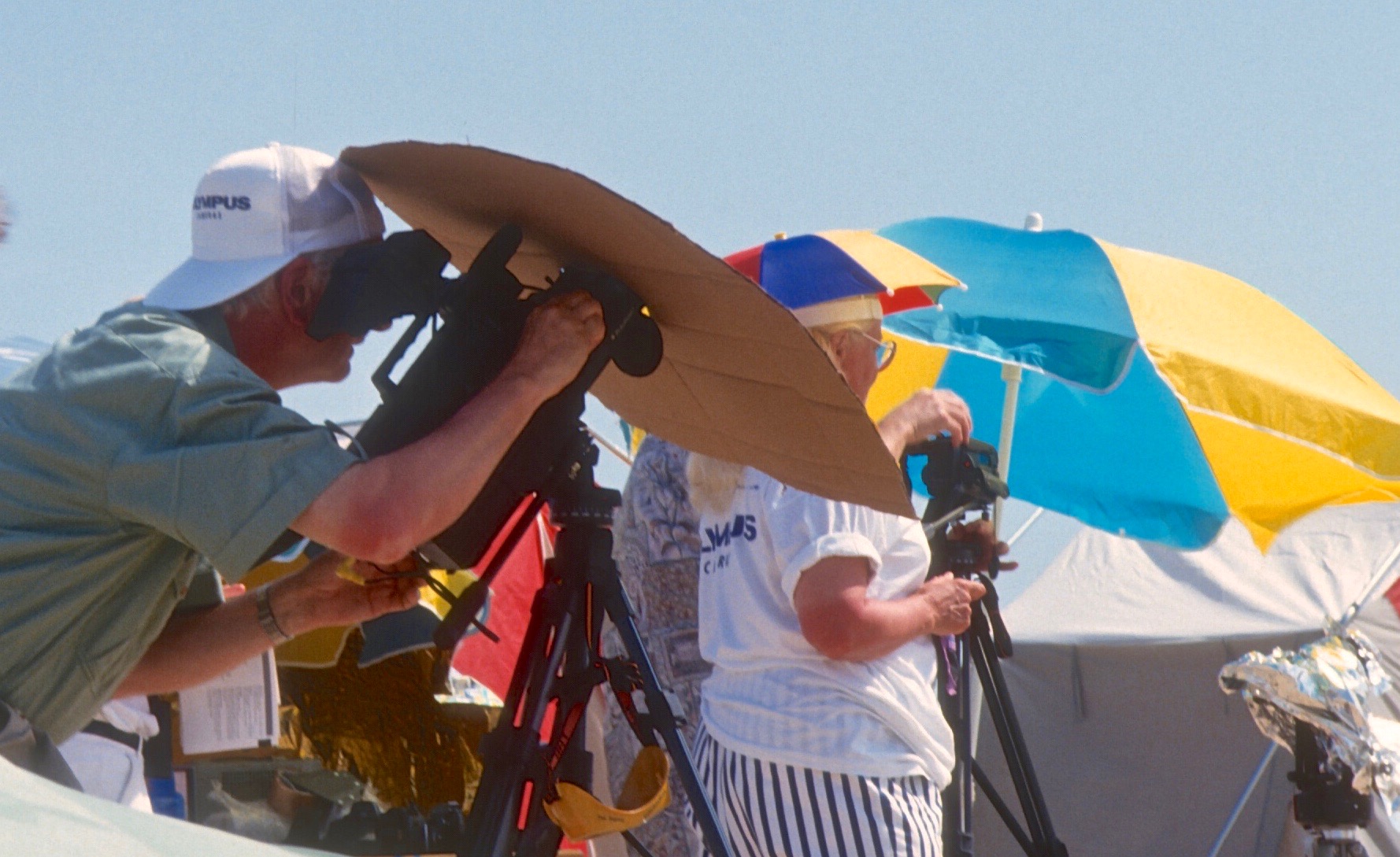
My photographer boyfriend, like all amateurs, tried and failed to capture the image and feeling of totality, though he got some good cookie bites (cast orange by the solar filter). The eclipse is just too far away, too contrasty, and too complex. Unless you’re a pro, it will never fill your camera the way it fills your eyes, heart, and memory.

Some advice for others who will try nonetheless: the only effective way (I’m told) is to expose for the corona, overlay a shot of the black disc of the moon, and create a final image of the two. Right, astrophotographers? Please comment and tell me how you do it, if you care to share.

Fred Espenak, aka “Mr. Eclipse”, offered his photo tips through a recent webinar; a recording may still be available online.

You do have access to “the finest collection of images of a total solar eclipse ever assembled”: order a backcopy of the November 1991 issue of Astronomy’s Great Eclipse Photo Contest.

Mexico epilogue: The boyfriend? He was a character but is now a thing of the past. I moved on to experience five more eclipses with a short parade of subsequent husbands, and ventured out on my own as well. It took three years to save for the next adventure: an unforgettable odyssey in Bolivia.

Above: Non-pro photo of the diamond ring

Below:

Cookie bites (with visible sunspots)

Pro shots: Local photographer Carrizosa (check it out, he got Buzz Aldrin’s autograph); Totality via Fred Espenak; Diamond ring via Snapfish.

Totality and beyond

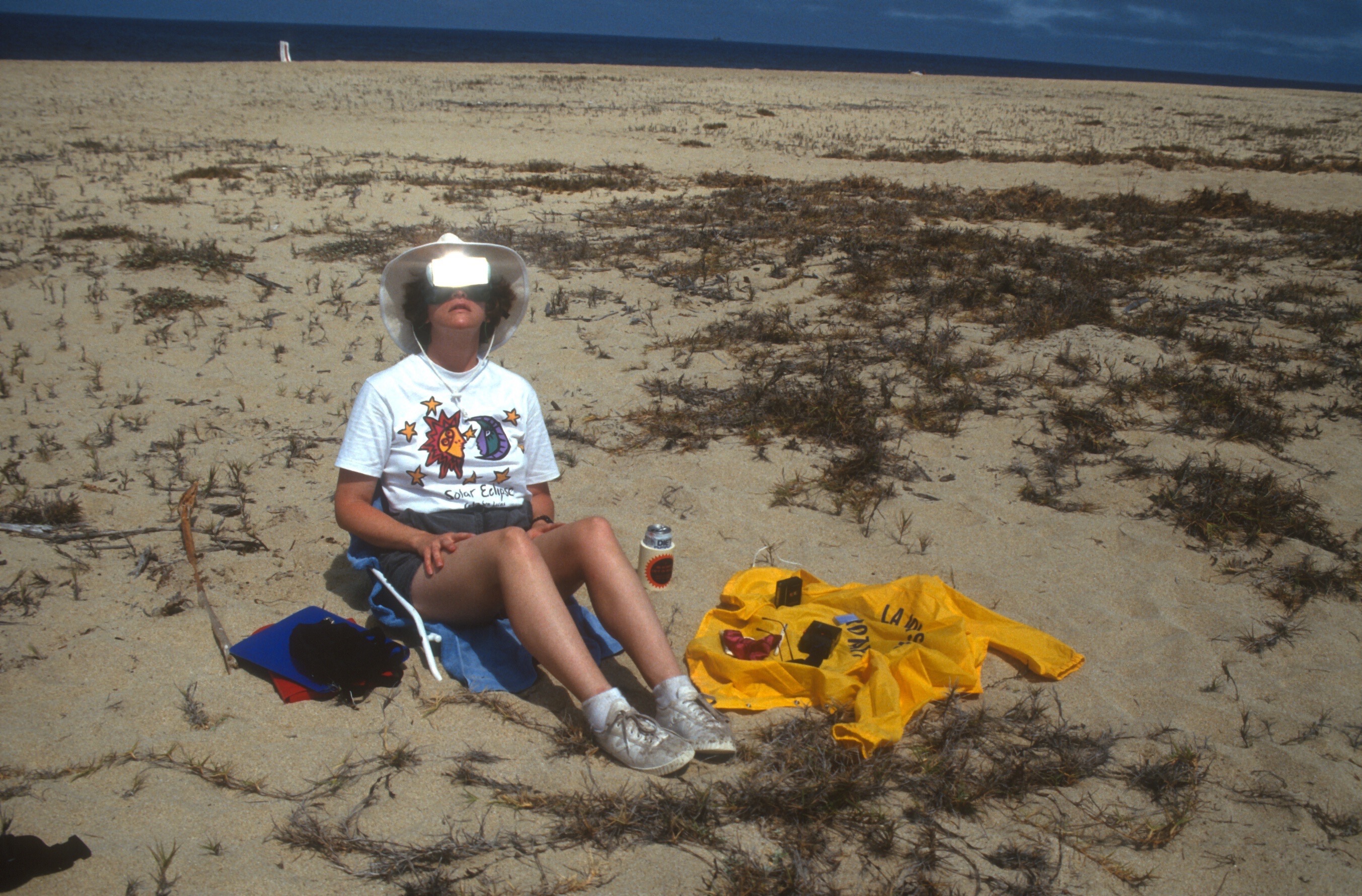
Afraid to damage my eyes, I wore my welder’s glasses too long and missed the beginning of the diamond ring, but whipped them off in time to see totality pop into place. The solar corona quickly brightened to reveal a shocking black hole, delicate white streamers, and red flames of the sun. A splendor, a marvel, a miracle. It seemed to make a sound in my head, and fill the sky. Tears stung my eyes.

My guy and I grabbed a quick smooch for luck (like you do), and he shot a few frenzied photos, but mostly we gawped, wordless. A few people near us whooped and cheered; others stood in stunned silence, grinning. Six minutes and 53 seconds passed in an instant, and at third contact we lunged for the calendar of upcoming eclipses to start planning the next one.

As with all drugs, the first time is the best time and leaves you craving more.

Afterwards we joined a street party where I drank something dark yellow—probably mescal—from a plastic jug being passed among the crowd. Did not die.

My first eclipse experience—from the time we landed in Cabo to the end of fourth contact —was nothing short of magical. Reports of totality included phrases like “for sheer beauty, it ranks among the best”; the large, detailed corona “had a three-dimensional appearance”; a “pink chromosphere wrapped all around the south”; a naked-eye “crimson pair of huge, glowing prominences” extended to the east and west; and “it seemed like someone tied a ghostly bow around the sun.”

A writer in Sky said, after third contact, “The light returned. The wind off the sea returned…everything was as it was before, only everything had changed. Maybe I had changed.”

The Great One as seen from Baja did not disappoint—and it launched a very expensive hobby.

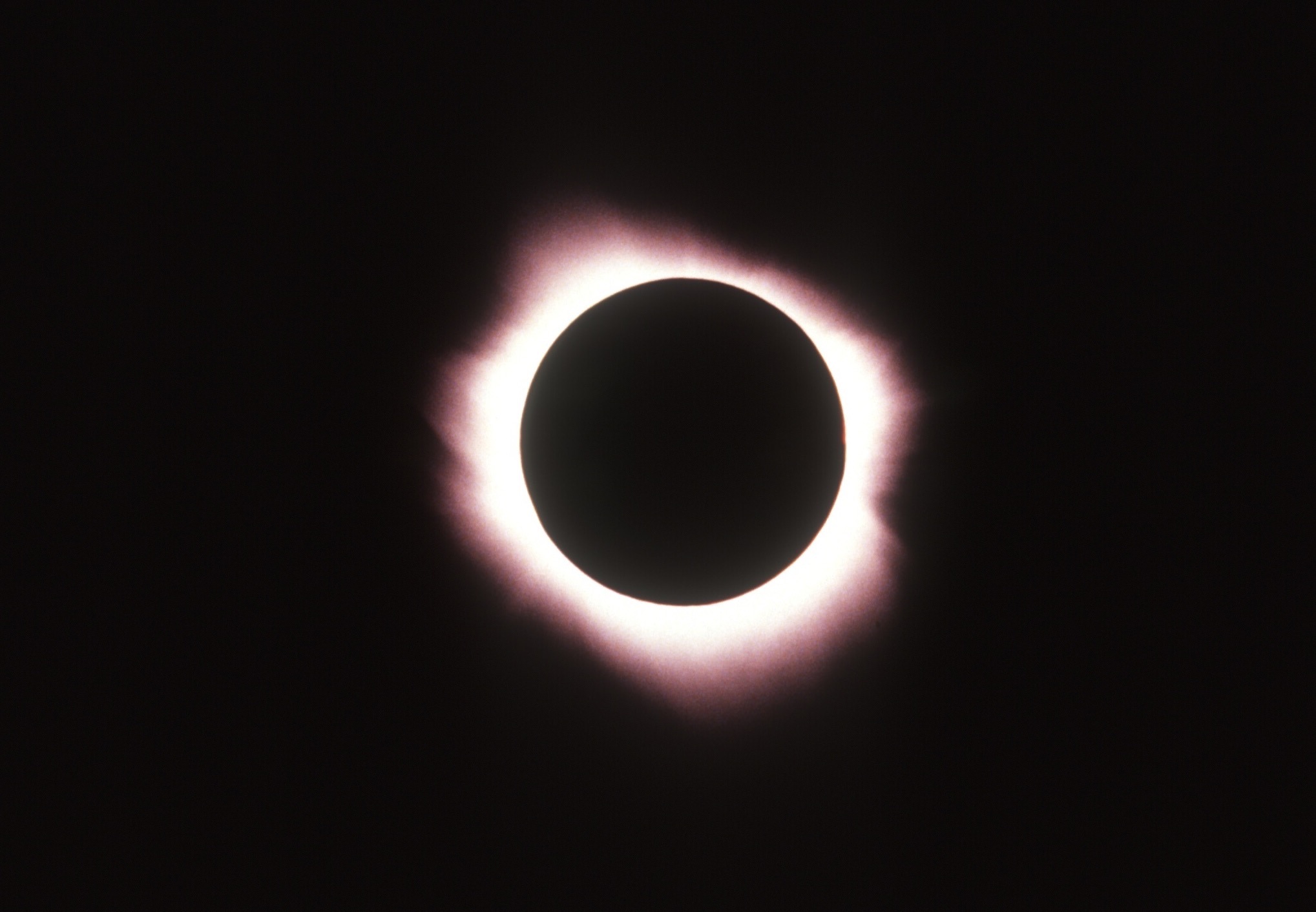
Above: Totality (not my photo)

Below:

Celestial bodies visible during totality on July 11, 1991

Trying to photograph the eclipse. (Tip: don’t bother.)

Thumb’s up at third contact

A toast

Plotting number two

Wait for it

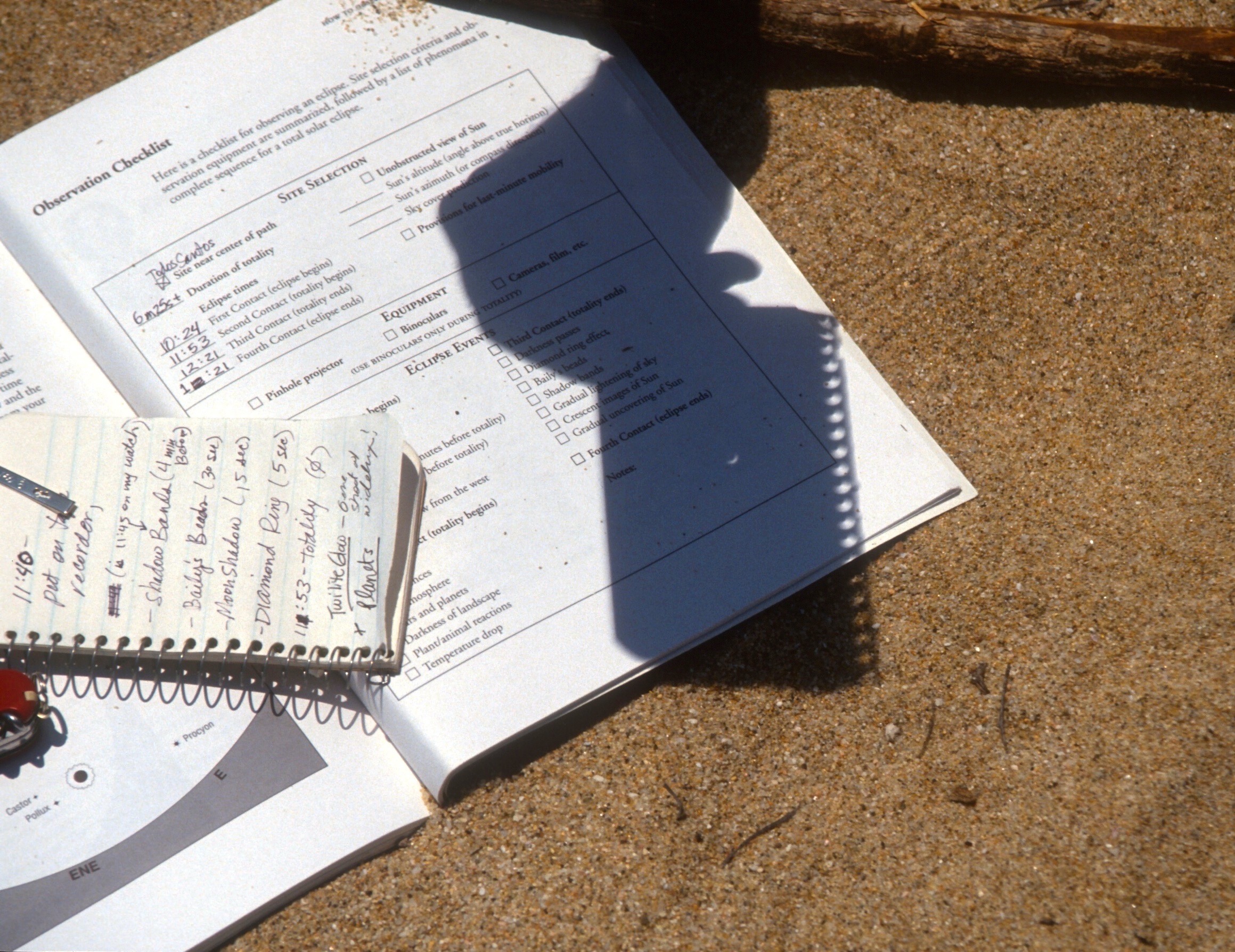
Though it was my first eclipse I was well-prepared with a “shot list” I compiled by studying a copy of that year’s go-to book, Eclipse by Bryan Brewer, purchased from the museum store at the Fleet Science Center in Balboa Park in San Diego.

Pro tip: a TSE can get exciting and disorienting, especially in the final seconds before totality. Always make a list of phenomena to watch for, with the time and duration of each. This page will help you plan.

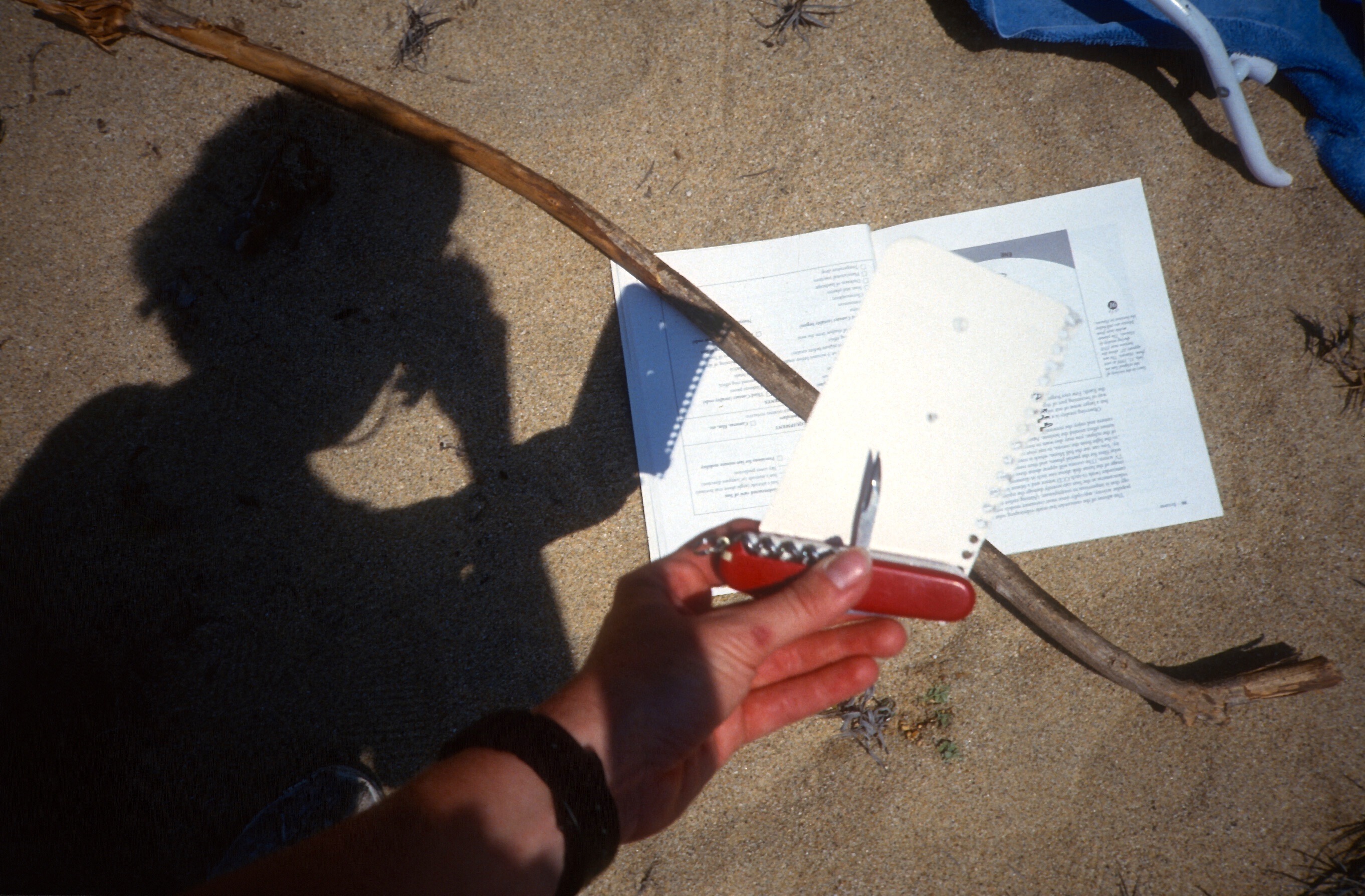
We made pinhole projections, watched in vain for shadow bands on the beach, and felt the gut-deep delicious foreboding as changes in the light and the land grew more pronounced. In the final few minutes before second contact the atmosphere shifted, shimmered, dimmed. It’s an odd quality; not like night, not like day, not like twilight or dawn. To feel our planet and our beloved celestial bodies morph for the first time elicits an instinctive, vague, involuntary dread.

Through my protective glasses I watched the sliver of the sun as it slowly narrowed, and narrowed, and narrowed. Totality was approaching in seconds. We could hear people screaming on the hill as the moon’s shadow sped toward us on the beach.

Above and below: After first contact

Below:

Partial phase waiting

Pinhole projection with observation list

The light (and the locals) getting weird

The first TSE

On July 11th we rose early and trekked 15 minutes to the beach where we joined an eclectic group of other nerds, solar astronomers, and cooler party people attending an already-underway private bash, obviously sponsored by one of the astronomy magazines. Mexican caterers weaved their way past expensive telescopes and weather equipment, offering trays of antojitos and bebidas.

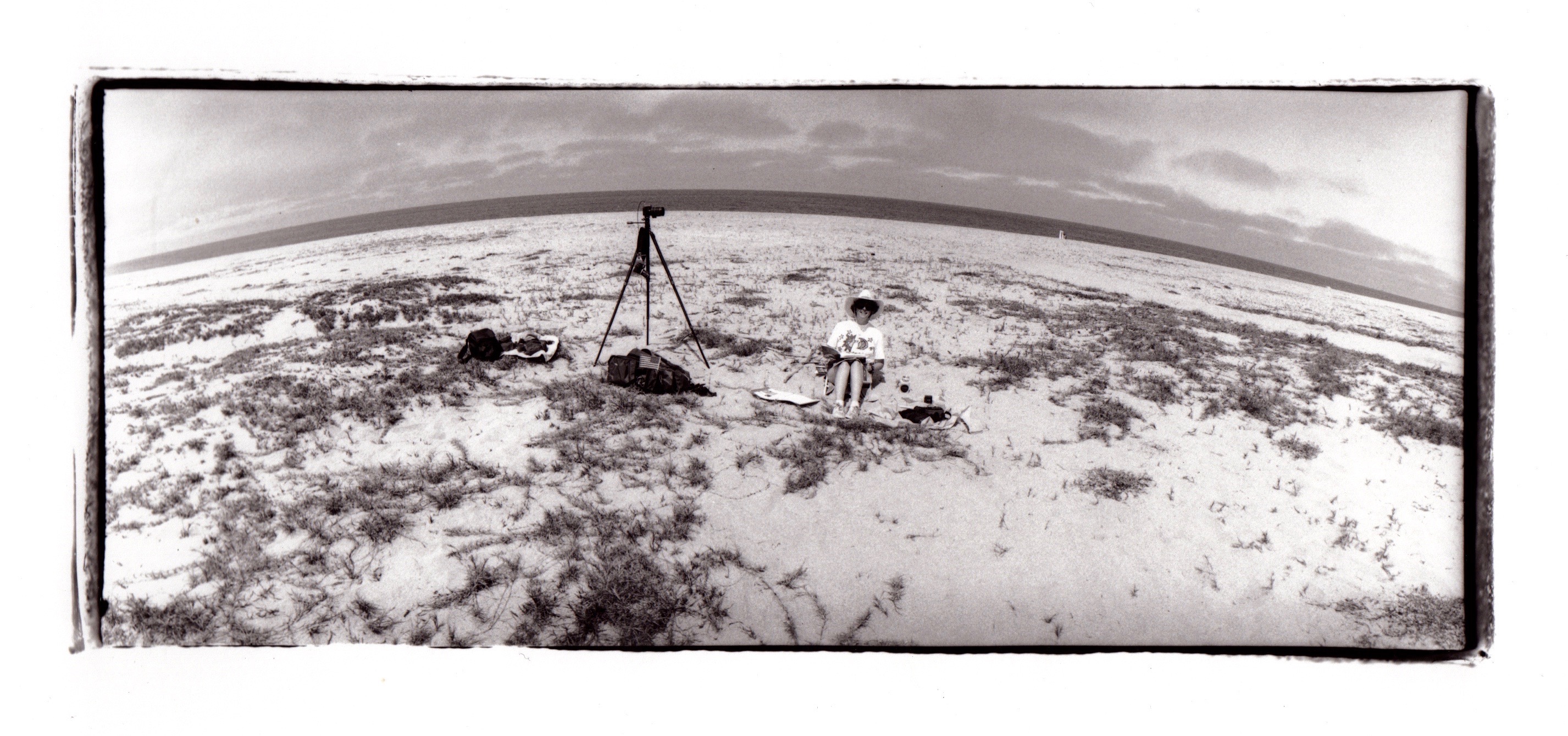
We set up a sparse observing area a few yards away. I brought zero equipment other than my ridiculous-looking #14 welder’s glasses that I purchased from a San Diego safety store, and my photographer boyfriend had one tiny Nikon balanced on a tripod with a screw-on solar filter.

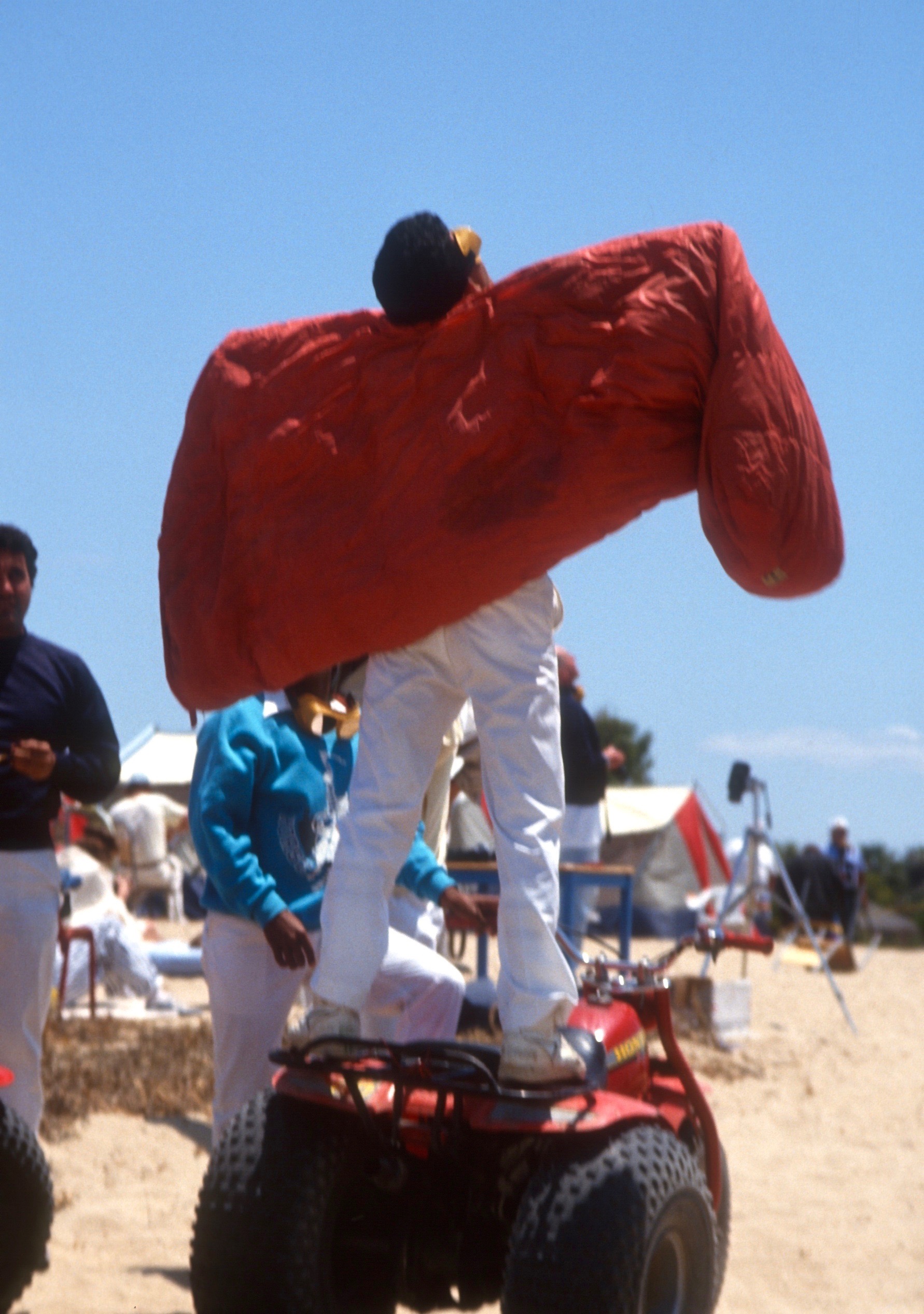
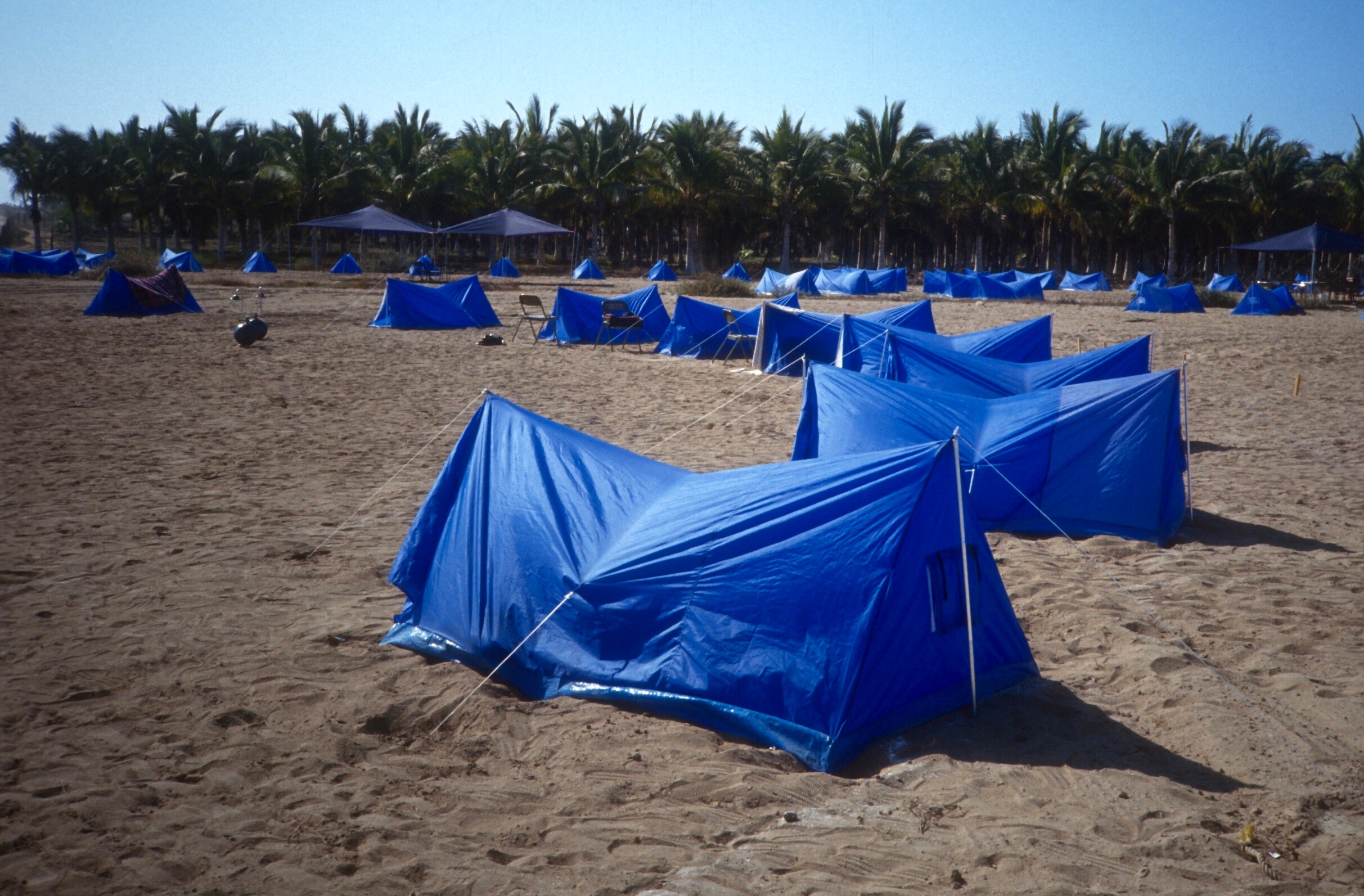
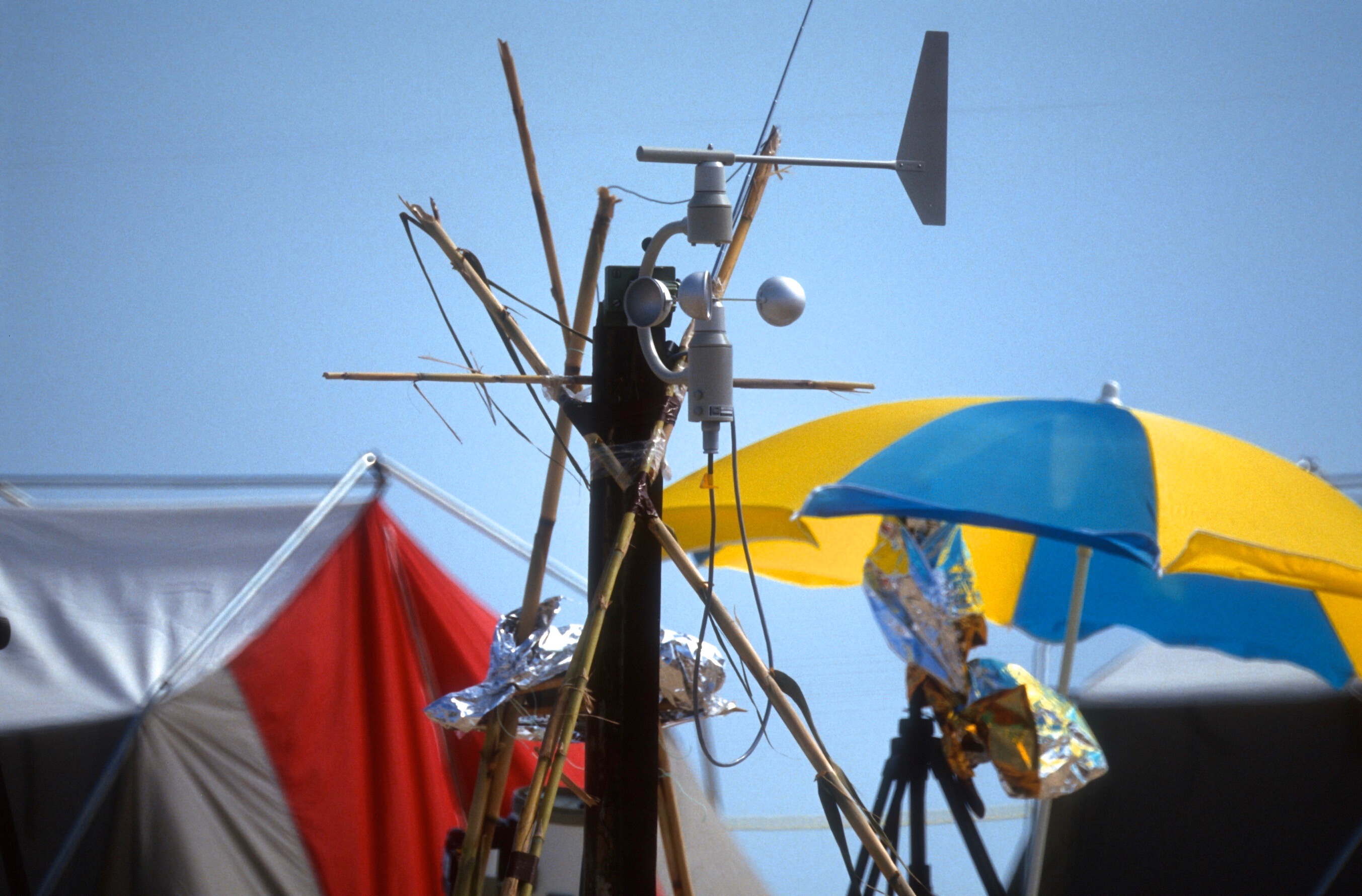
Our gear was in stark contrast to the impedimenta operated by the professional solar astronomers that were there from Germany and Japan. I was amused by the stereotypes in action: the Japanese crew had blue, low-slung, high-tech tents arranged in a circle; the Germans had boxy, upright red and white tents arranged in a square. (I say this in the kindest, least xenophobic way.)

Above: Awaiting totality; photo by Gene Faulkner 1991

Below:

Packing to the beach site

Other people’s party

Red tent, blue tent

Their gear, our gear

Nerd alert

Recuerdos

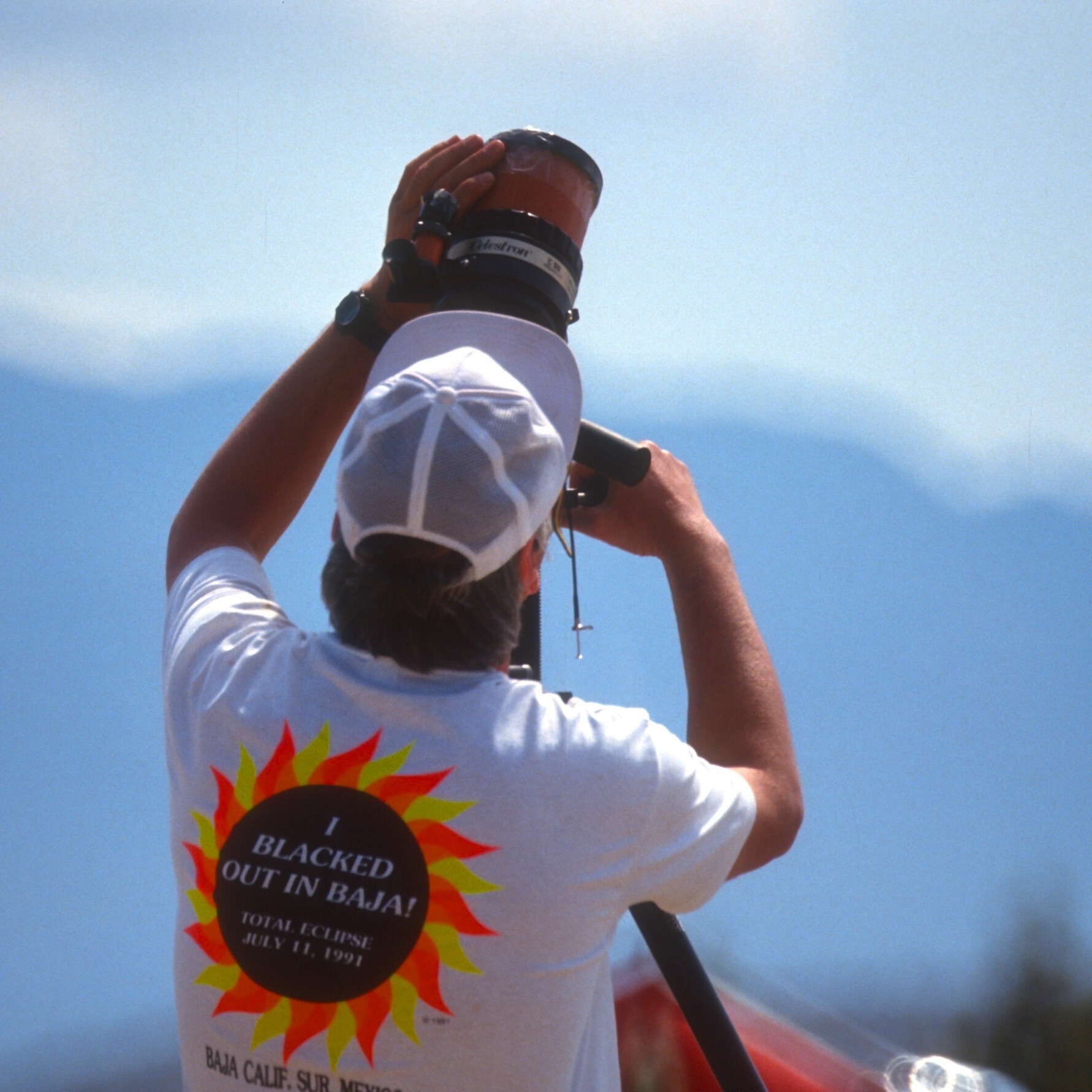
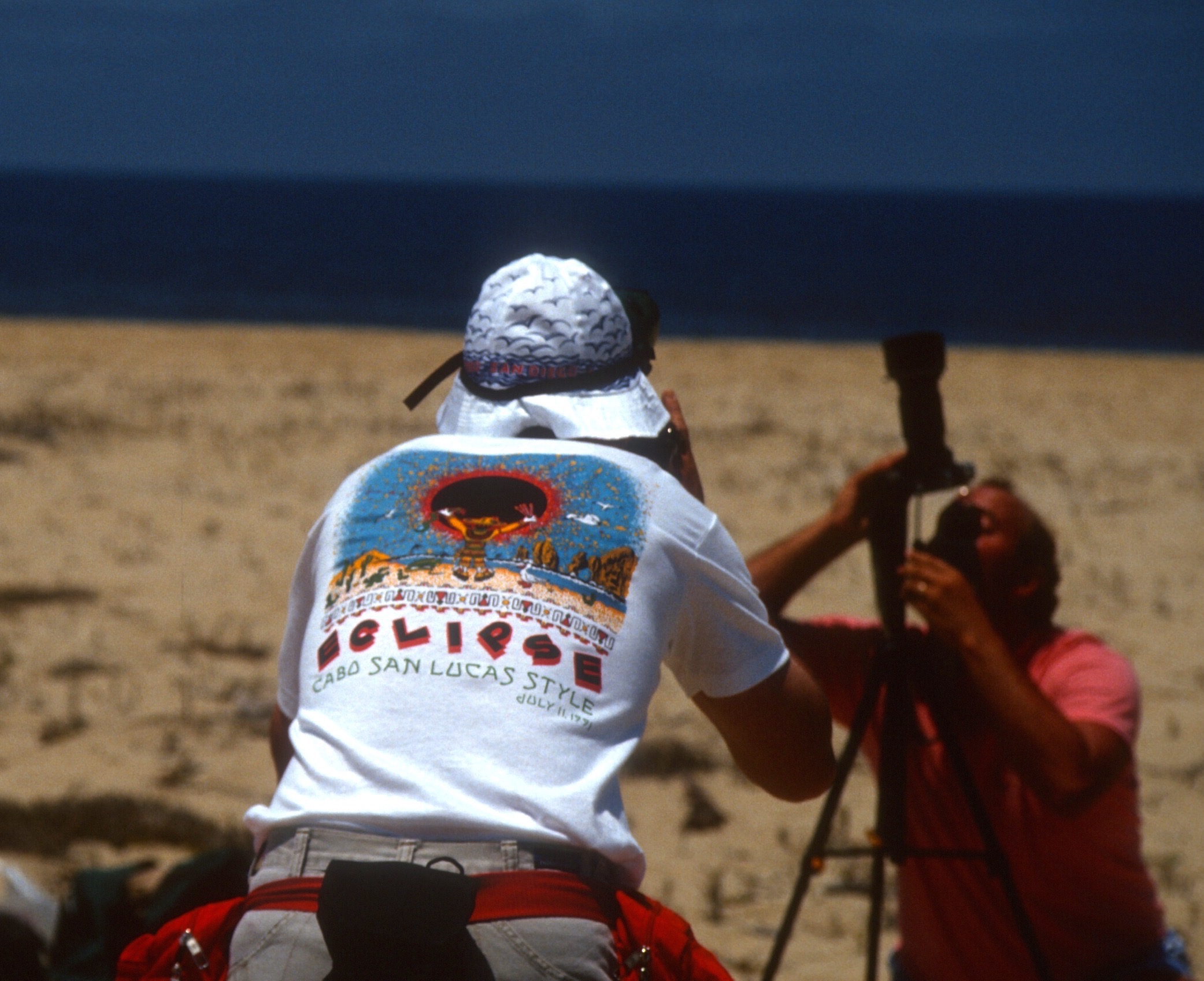
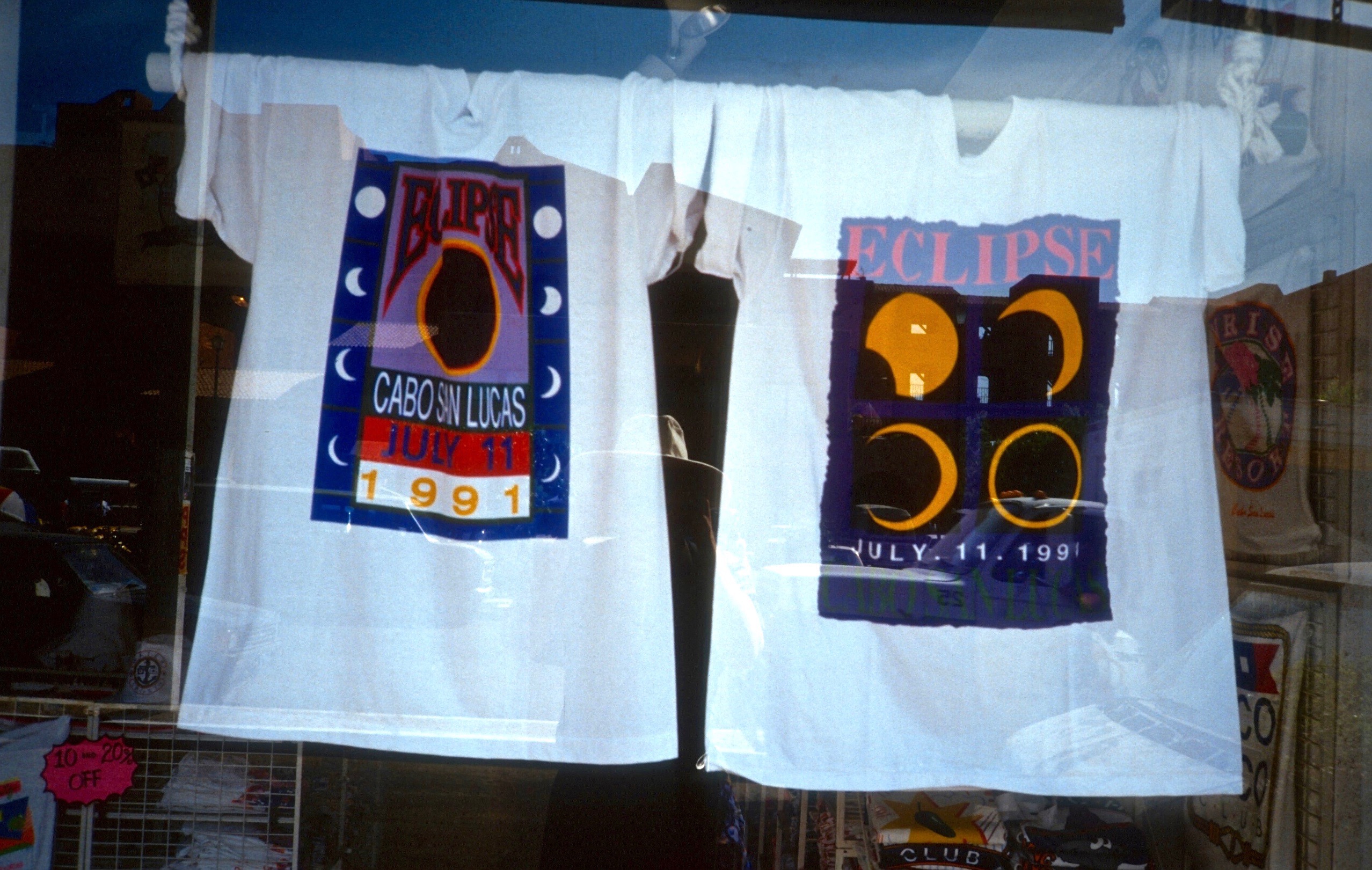
Folks in Cabo know how to make a buck, and the town merchants geared up for the eclipse with a variety of t-shirts and collectibles.

If you view totality in a tourist town, the souvenirs are the best. Local vendors and the government are hip to catering to vacation spenders, and Cabo had its swag DOWN. As an aficionado of dust-collecting trinkets I would be disappointed at each and every subsequent eclipse location; more remote destinations means a profound lack of memorabilia and apparel, and with the exception of Aruba, they all paled compared to what was available in Mexico.

People, people: you have 350 years to prepare for an eclipse. Get your knickknacks and local currency ready. (I’m looking at you Bolivia.) Third world communities never expect the volume of eclipse tourists and there’s never enough folding money to go around. Chasers are forced to scalp bills to each other, or strategize tactics to be first in line at a bank.

Above and below: mugs and stickers and shirts, oh my

Pasaporte, por favor

Step one: find a flight. Check. Step two: now what? Every hotel room had been snapped up months, nay, years ago by tour organizations and more skillful chasers. An entirely different travel agent—children, a travel agent was once the person who Googled your flights before Expedia—tried to secure a place for us to stay.

The Mexican government wisely decreed that no travelers would be allowed to board any aircraft into their country without proof of lodging in hand, to prevent people from doing exactly what we were attempting—show up with our backpacks in Todos Santos and flop where we could.

We eventually made arrangements with a hotel in Cabo San Lucas so we were allowed to enter Mexico, but the centerline was where we needed to be. The hotel in Todos (rumored to be the original Hotel California in the Eagles’ song) was booked to capacity long ago.

There was unsubstantiated hearsay of a condo further north (that required an expensive rental car to get to the eclipse), waiting lists on cruise ships, friends-of-friends with expat ranch houses, and a hotel with bare beachfront for rent. Someone now long forgotten suggested a destination we were delighted to settle on: pitching a tent on the grounds of “El Zapote”, an alternative co-op an hour west of La Paz in Todos Santos, just a short 1/2 mile hike to the water and prime viewing of The Big One.

As it turned out, the expected gridlocked highways and chaotic crowds were overestimated. The Mexican government, various authorities, newspapers and science magazines cautioned that an exaggerated 120,000 tourists would be crushing Mexican resources that week in July. Travelers were advised about stern checkpoints that would allow a random number of visitors past undisclosed points, and warned so strongly against the possibility of being stranded without petrol on a remote Baja road that many chasers were frightened into choosing Hawaii—where the clouds rolled in on July 11 (as well as airborne particulates from volcanic eruption) that obscured totality for many.

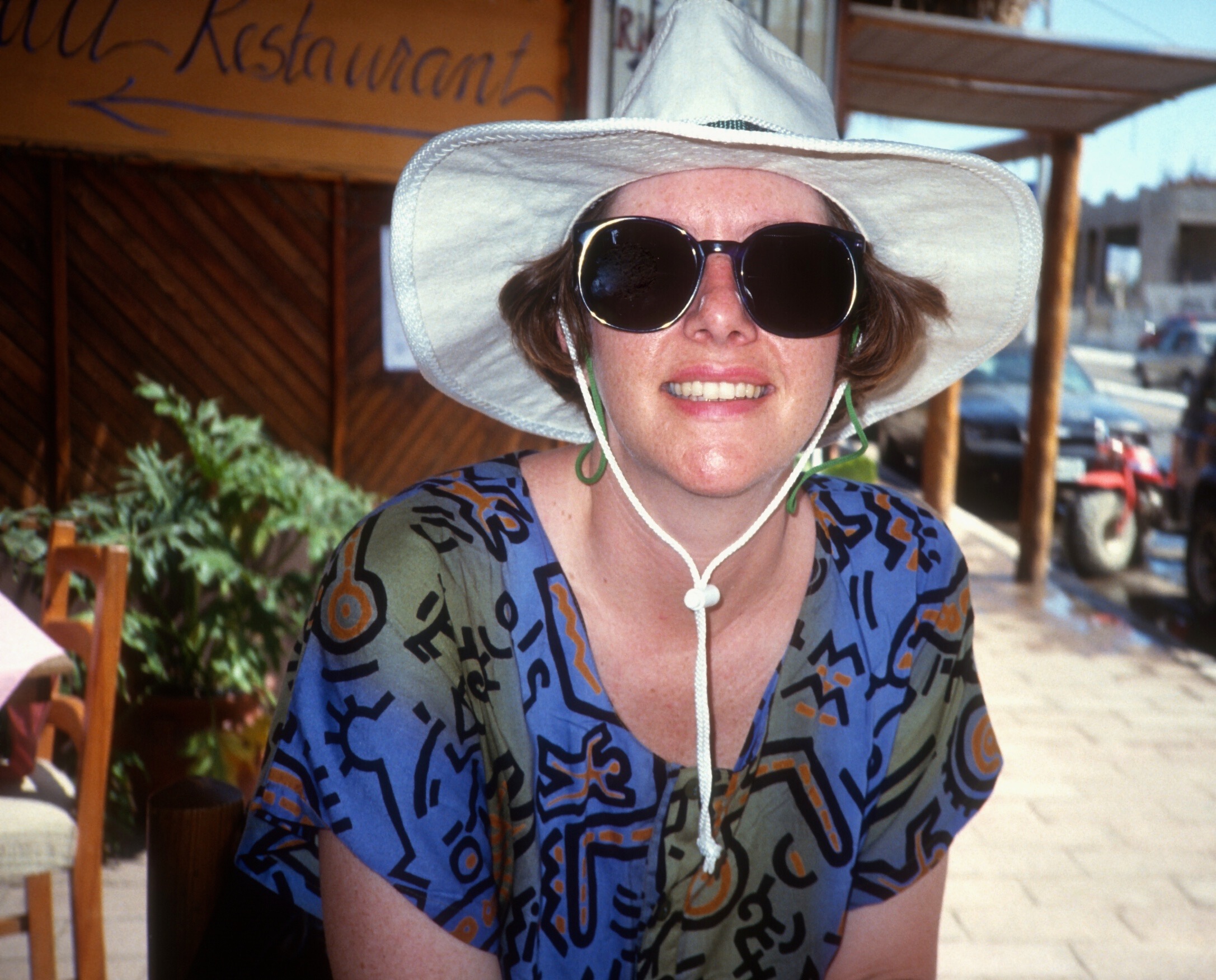
We flew in a couple of days before the eclipse and partied pretty hardy in Cabo, the nearby tourist town. The year of my first TSE I was 26 years old, sporting big 90s eyeglasses, pale legs, and a dweeby mop of curly hair under an unflattering crusher hat.

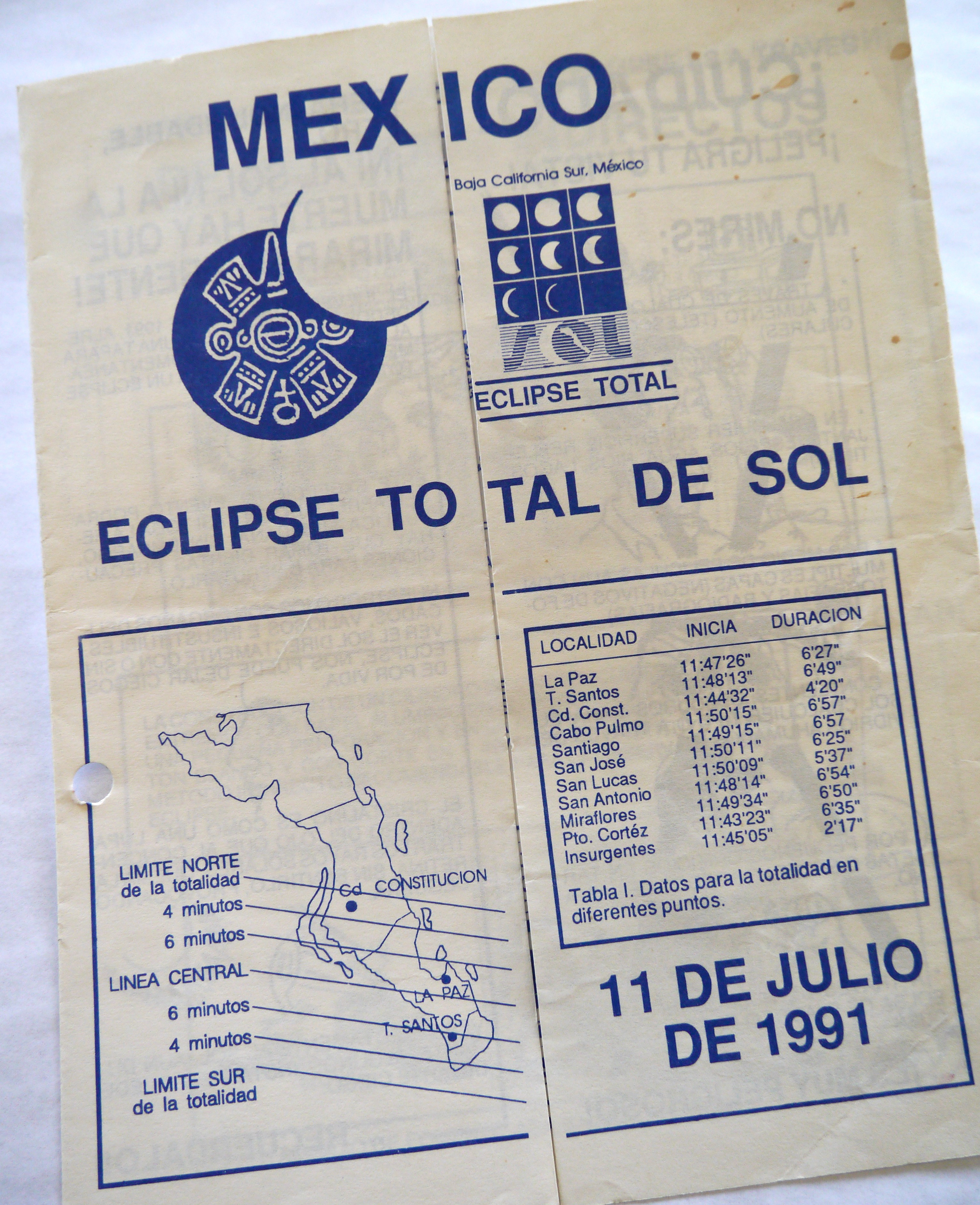
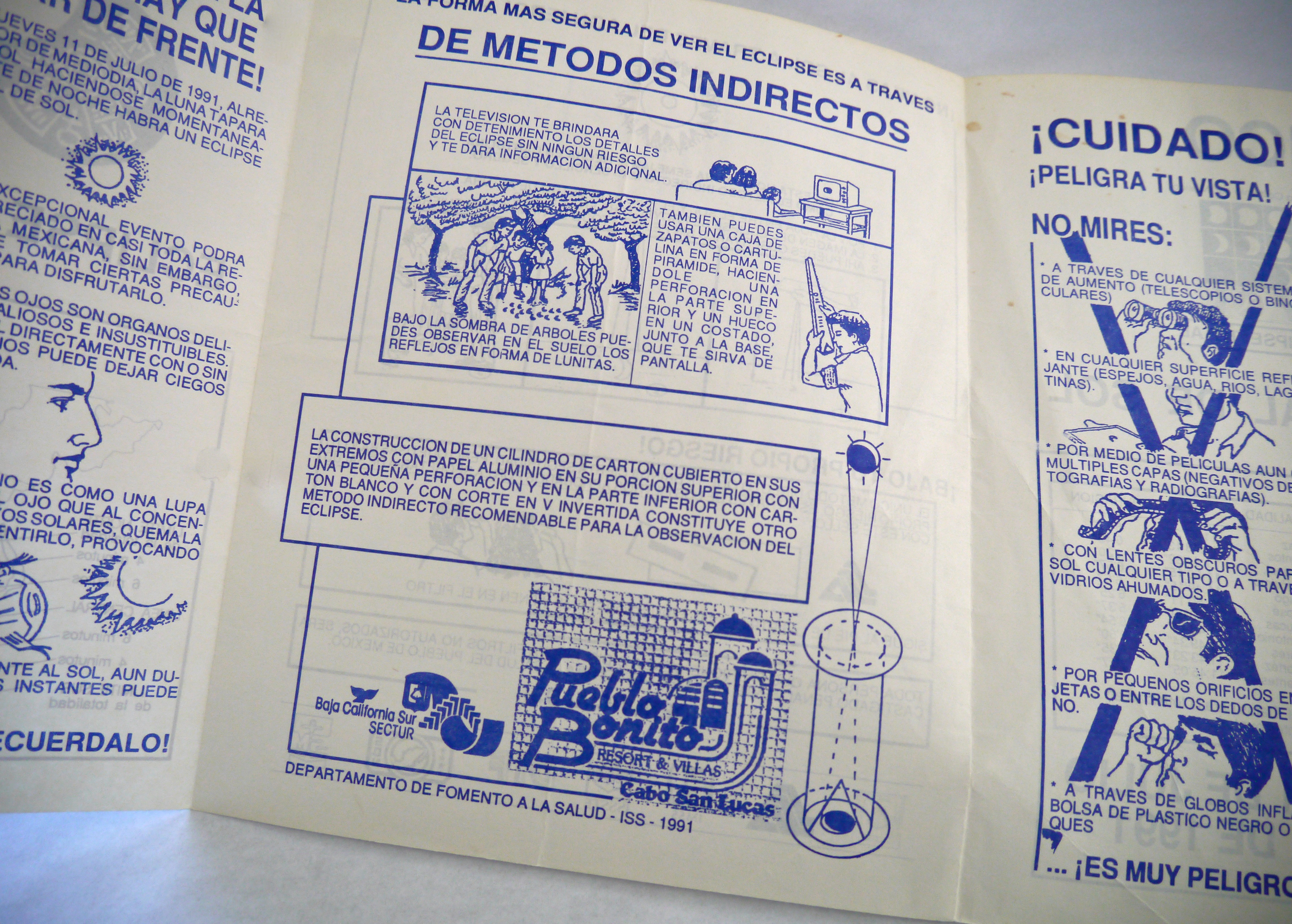
In advance of every eclipse, the local government distributes safety information which is always a hoot to read. “Viewing through balloons and black plastic bags es muy peligroso!”