Eclipse Solaire Totale

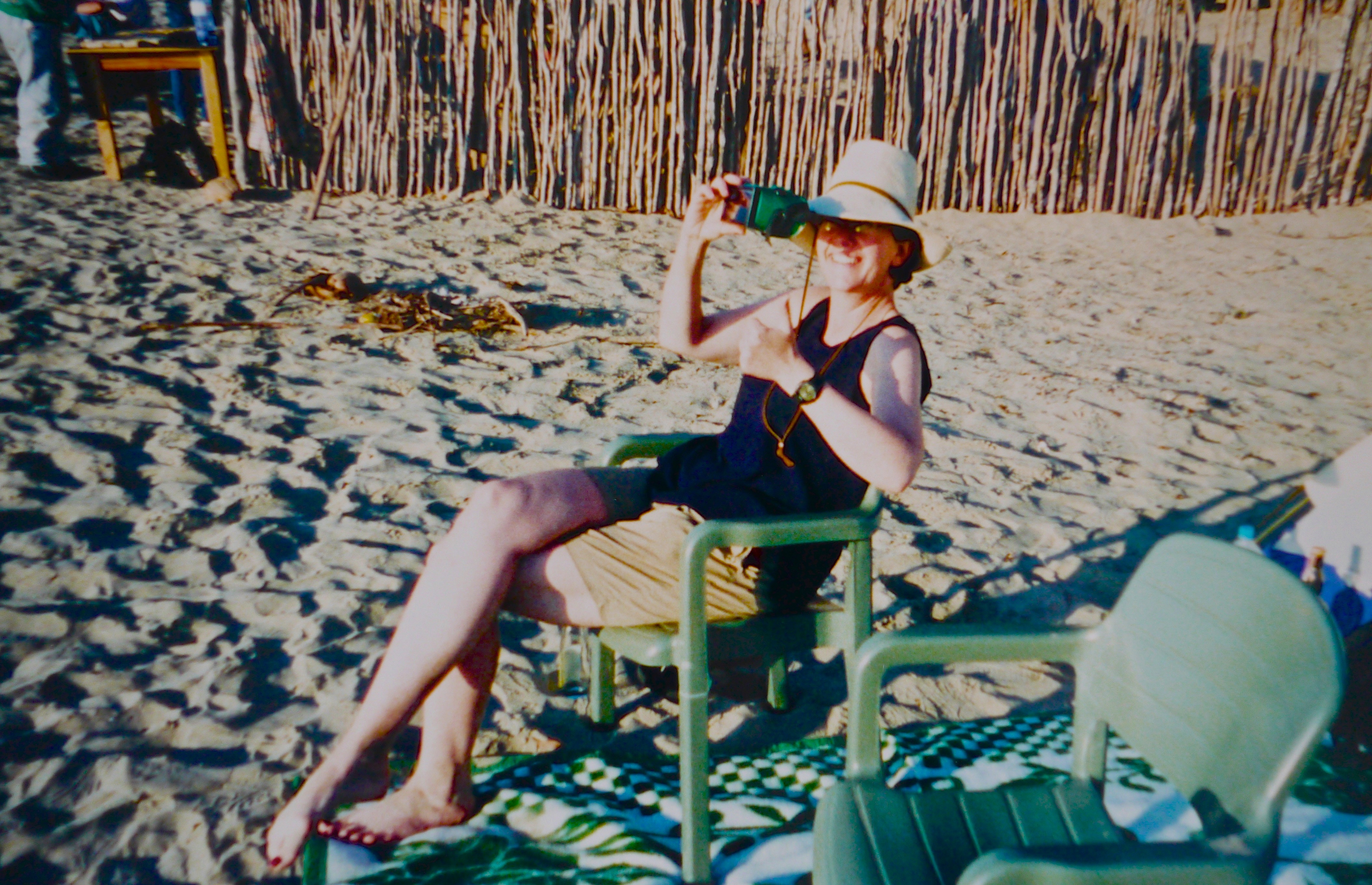
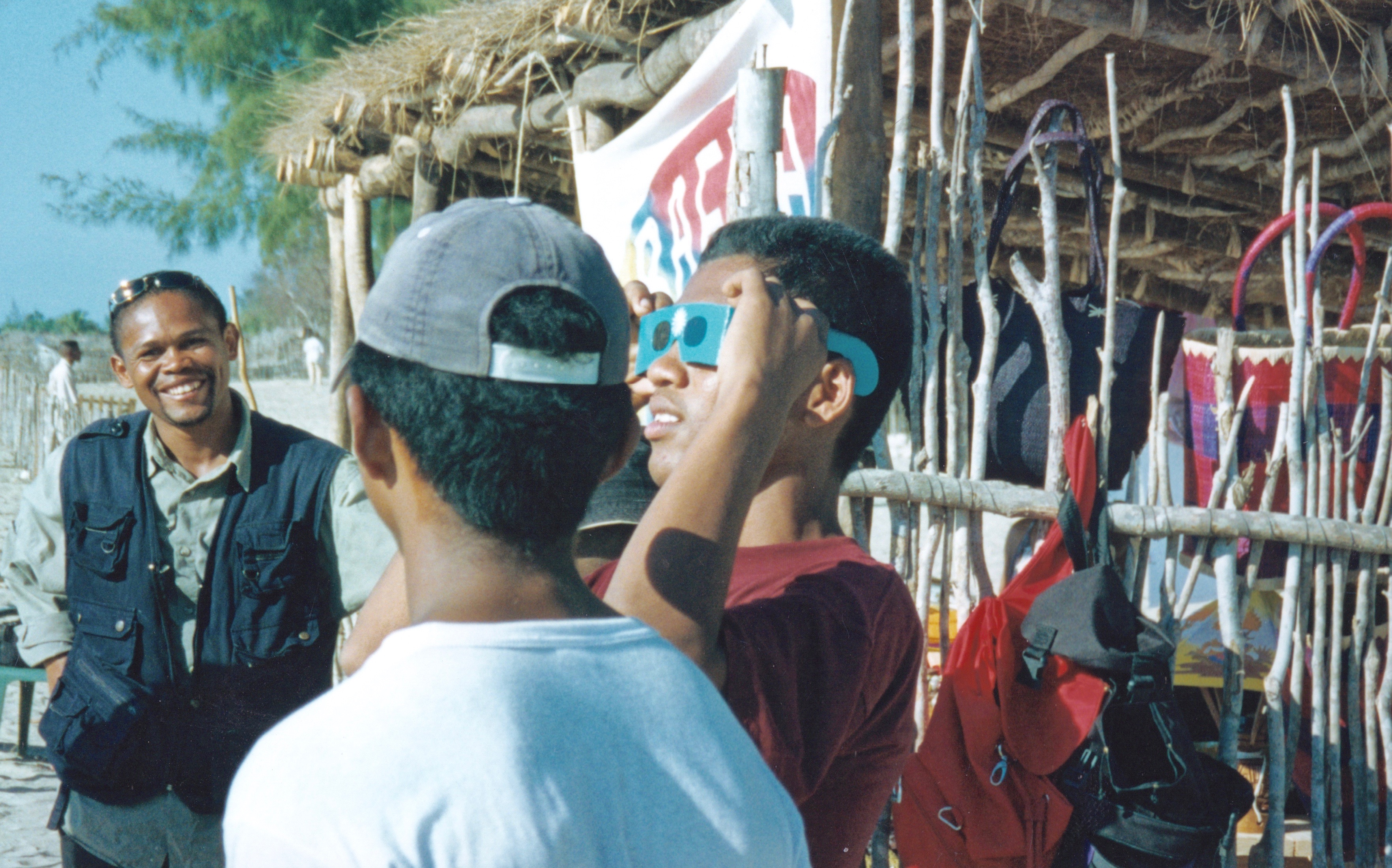
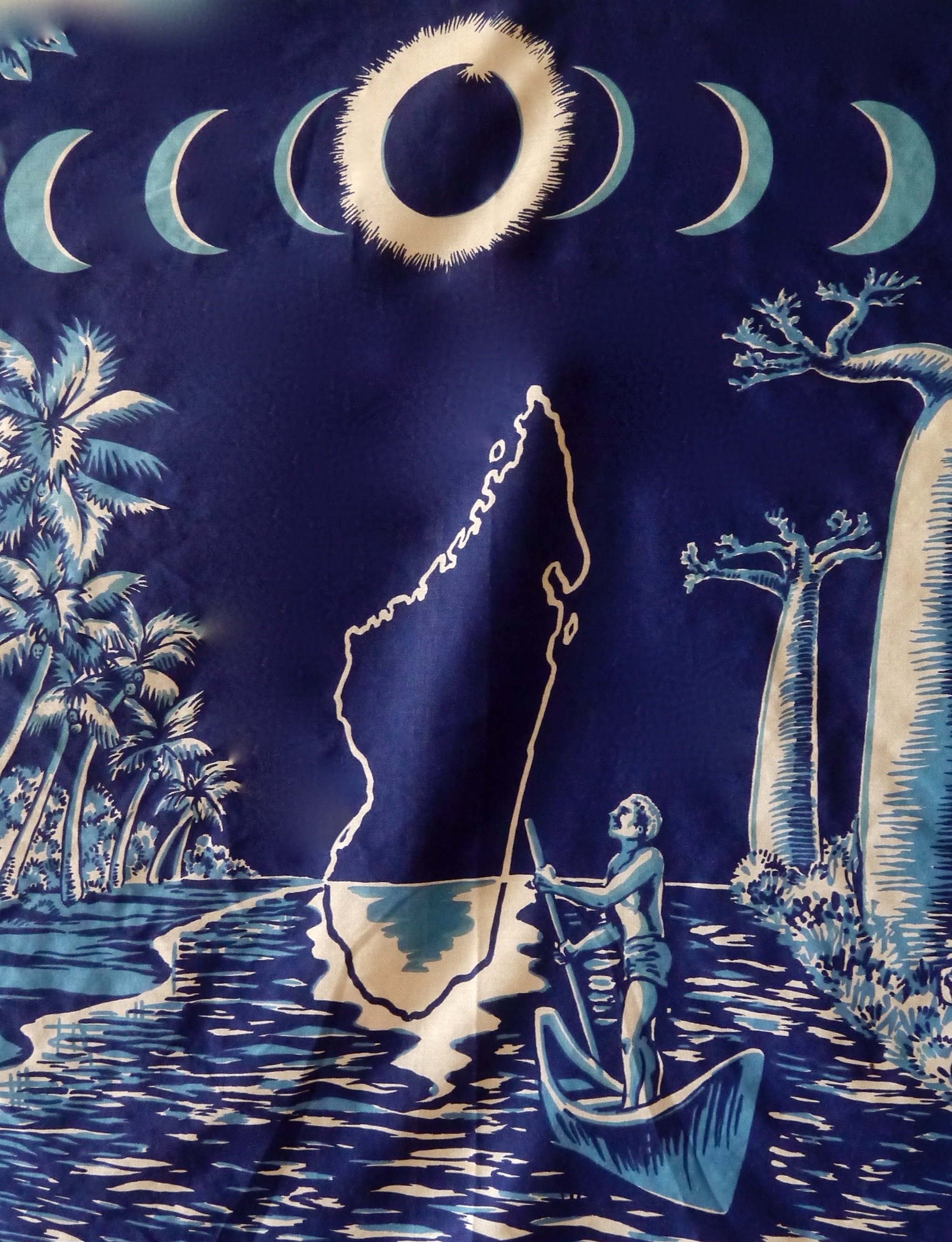
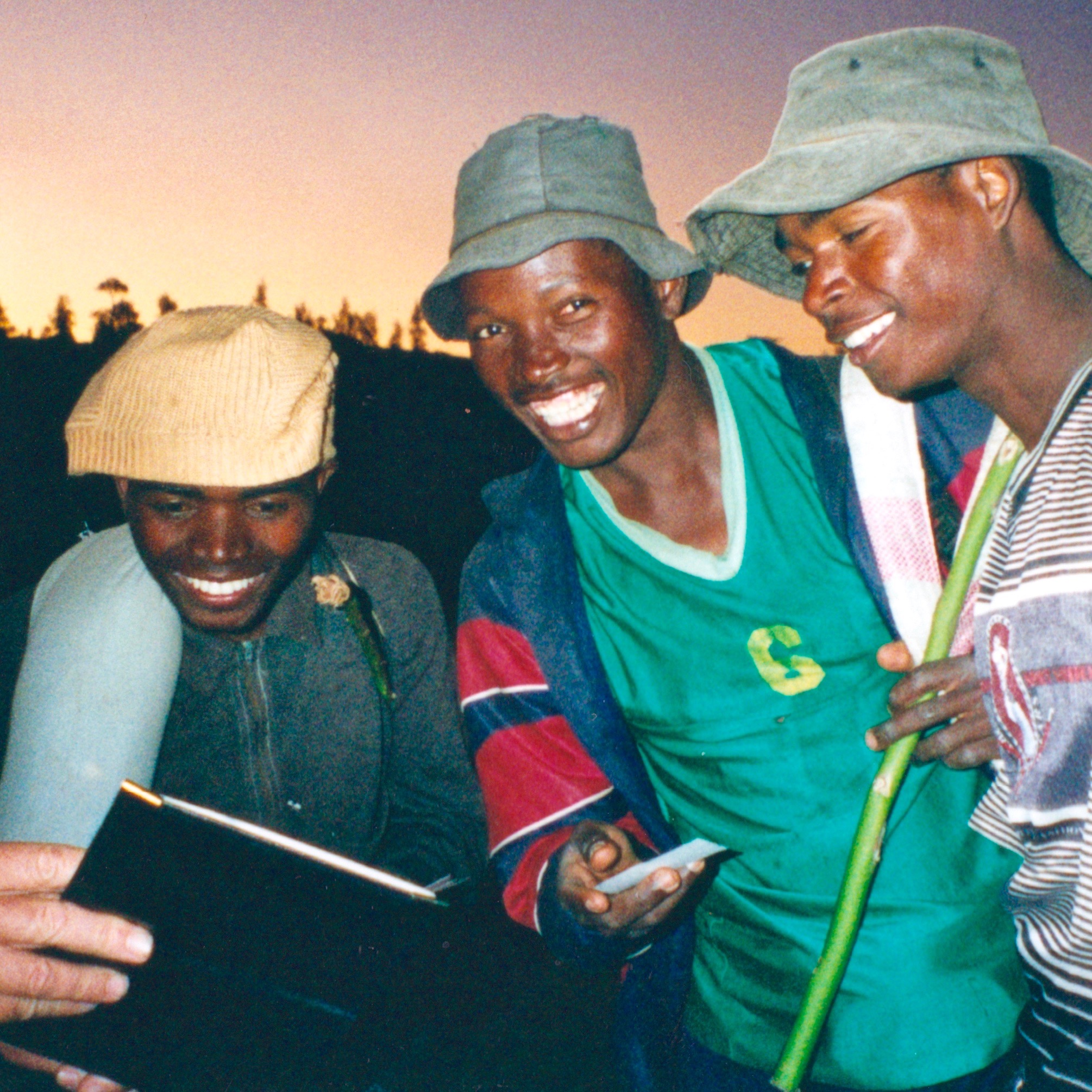
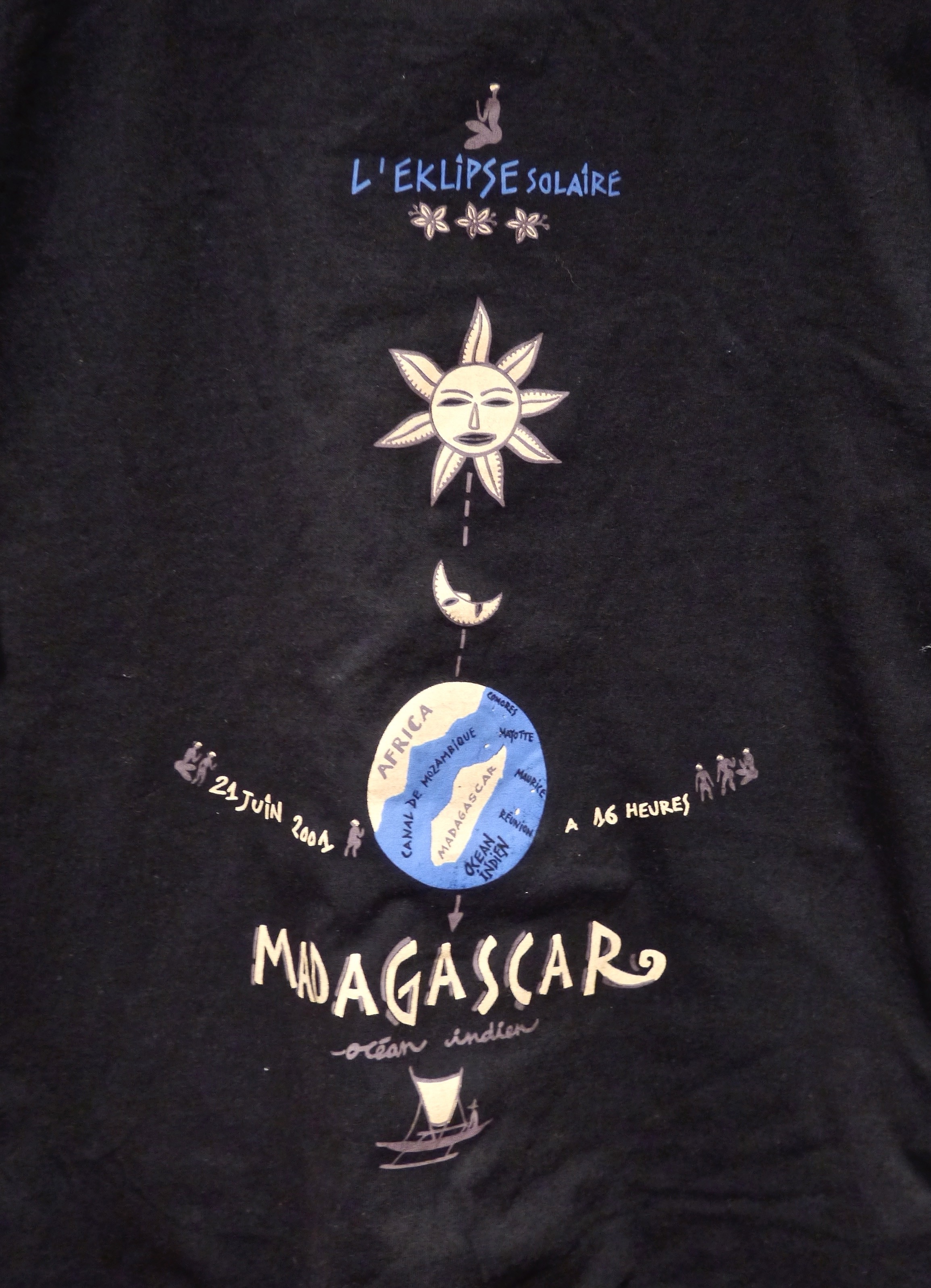
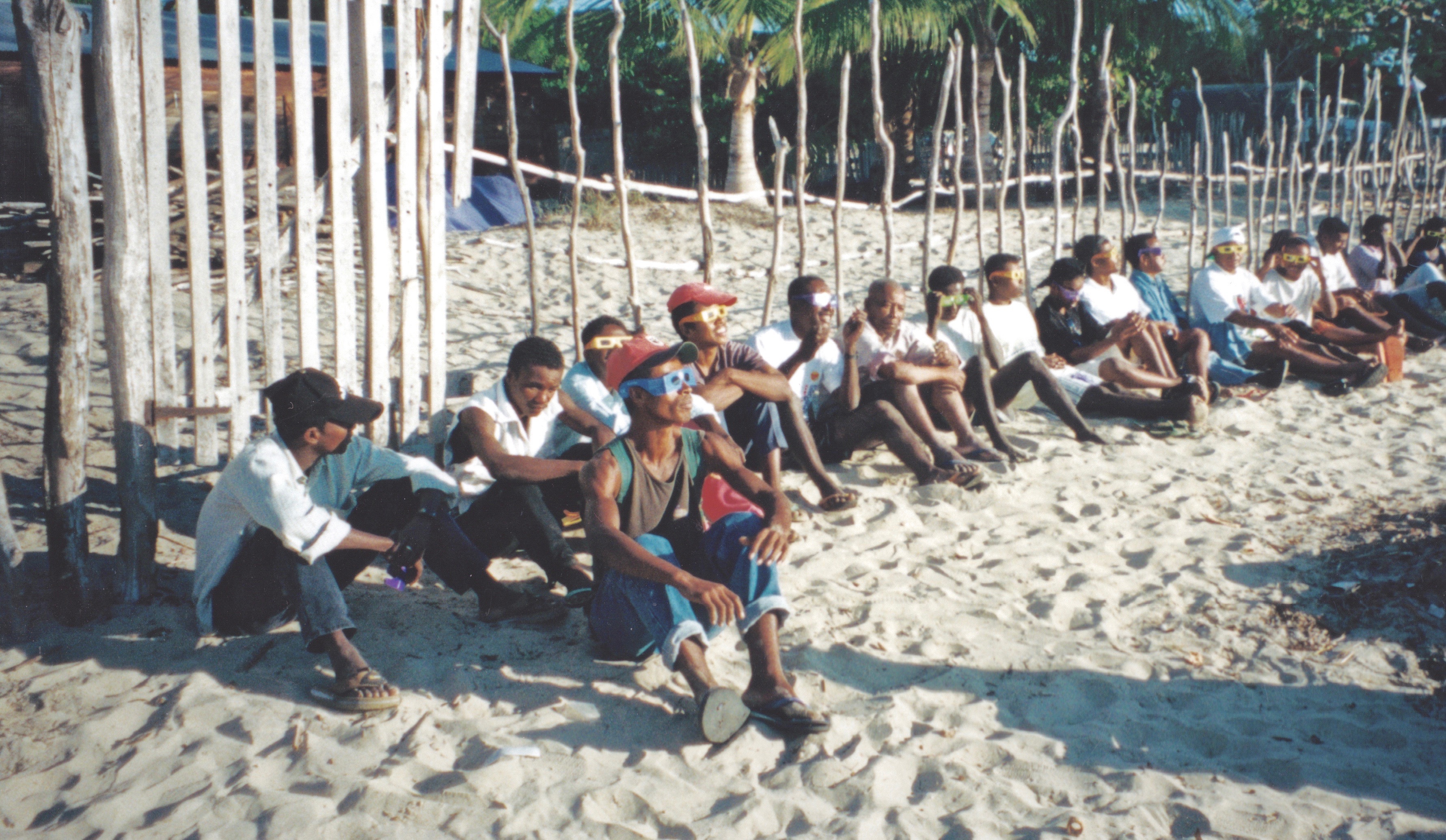
The morning of totality was clear and cool, and sunny beach weather prevailed all day. Locals arrived and chilled, propped against a stick fence on the sand. In broken French, using my souvenir cloth that showed the partial phases, I tried to explain the use and timing of the eclipse shades to some curious Malagasy guys.
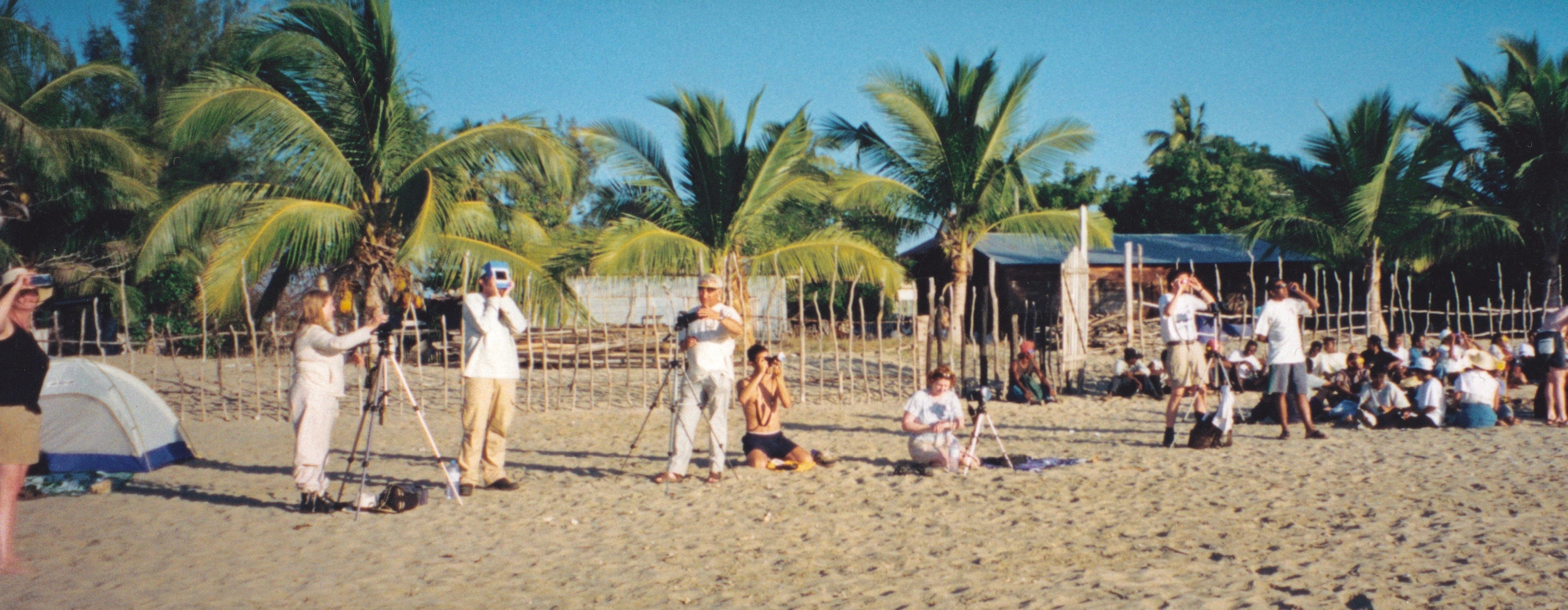
Totality, as always, was sublime.

Sadly, a prime viewing site that attracted 15,000 people—the village near Isalo National Park—was clouded out on June 21. Bam! I’m four for four. (And, I don’t know how I missed it, but the Green Flash was observed as the sun set just minutes from fourth contact. I’ve been watching for the elusive Flash since I lived in San Diego in the 70s, and I’m still zero for zero.)

Above: Late afternoon partial phase

Below:

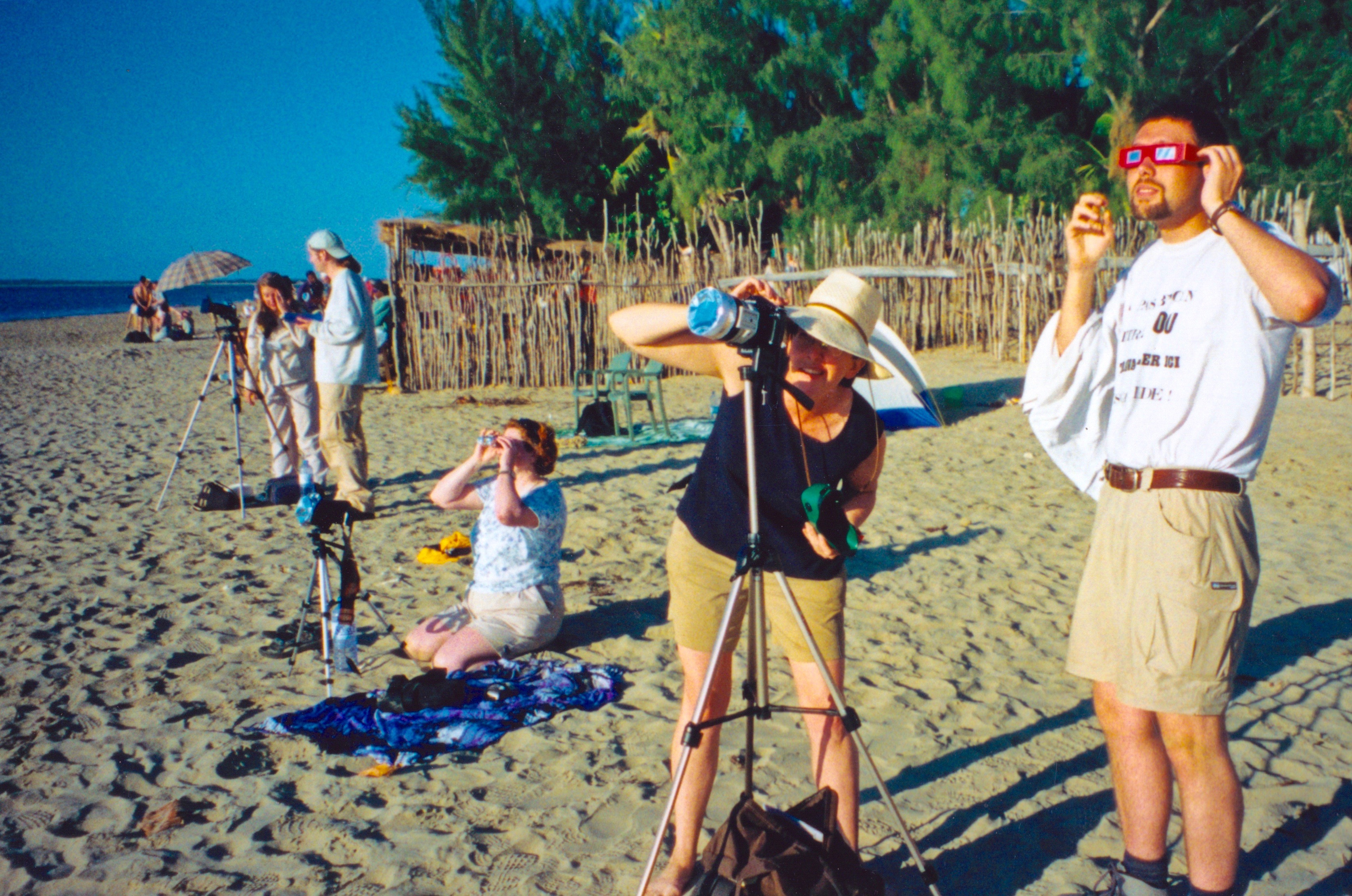
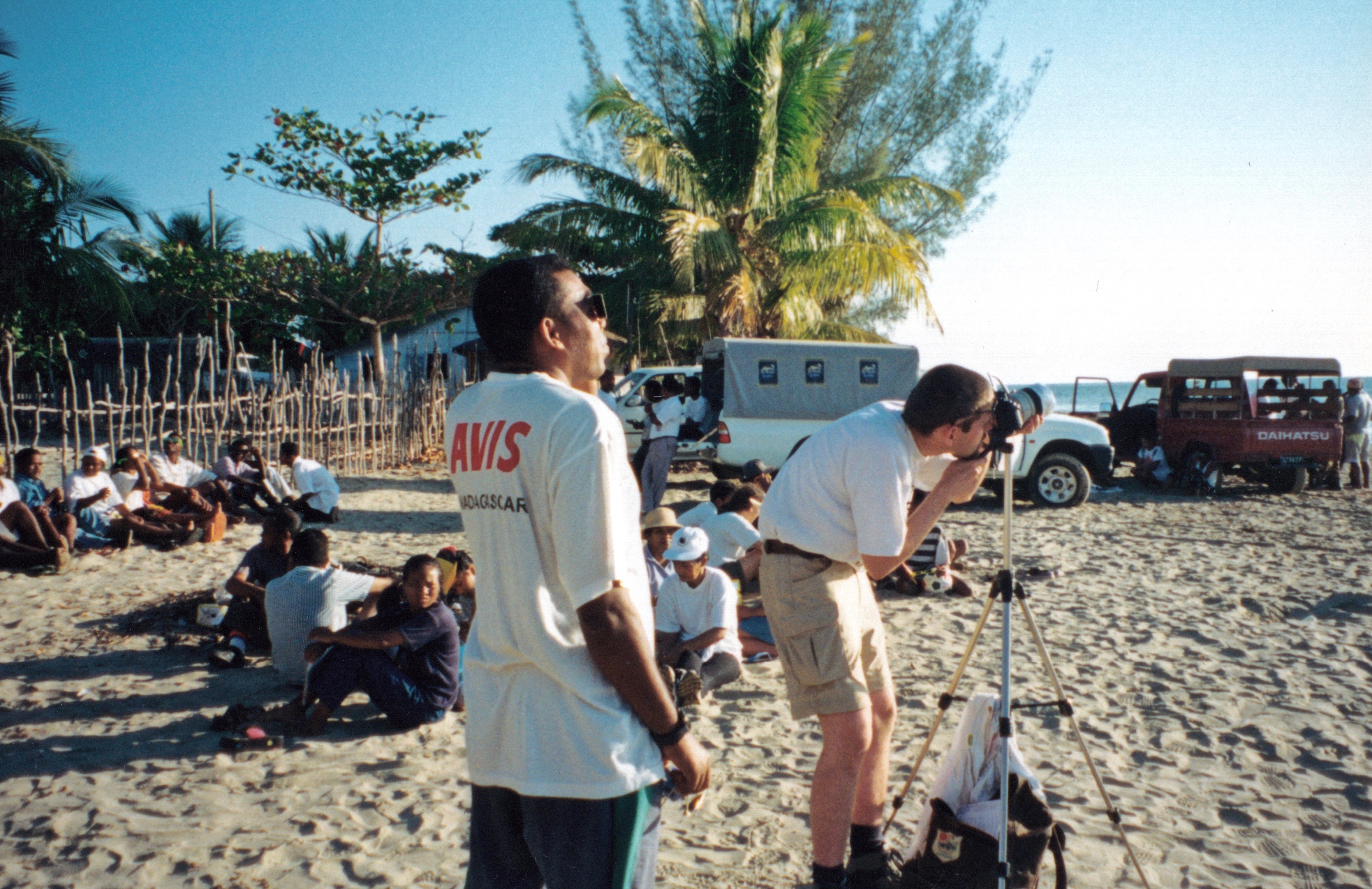
Locals and travelers wait for totality

Samuel makes an appearance

Eclipse tutorial

C’mon Green Flash

Approaching the coast

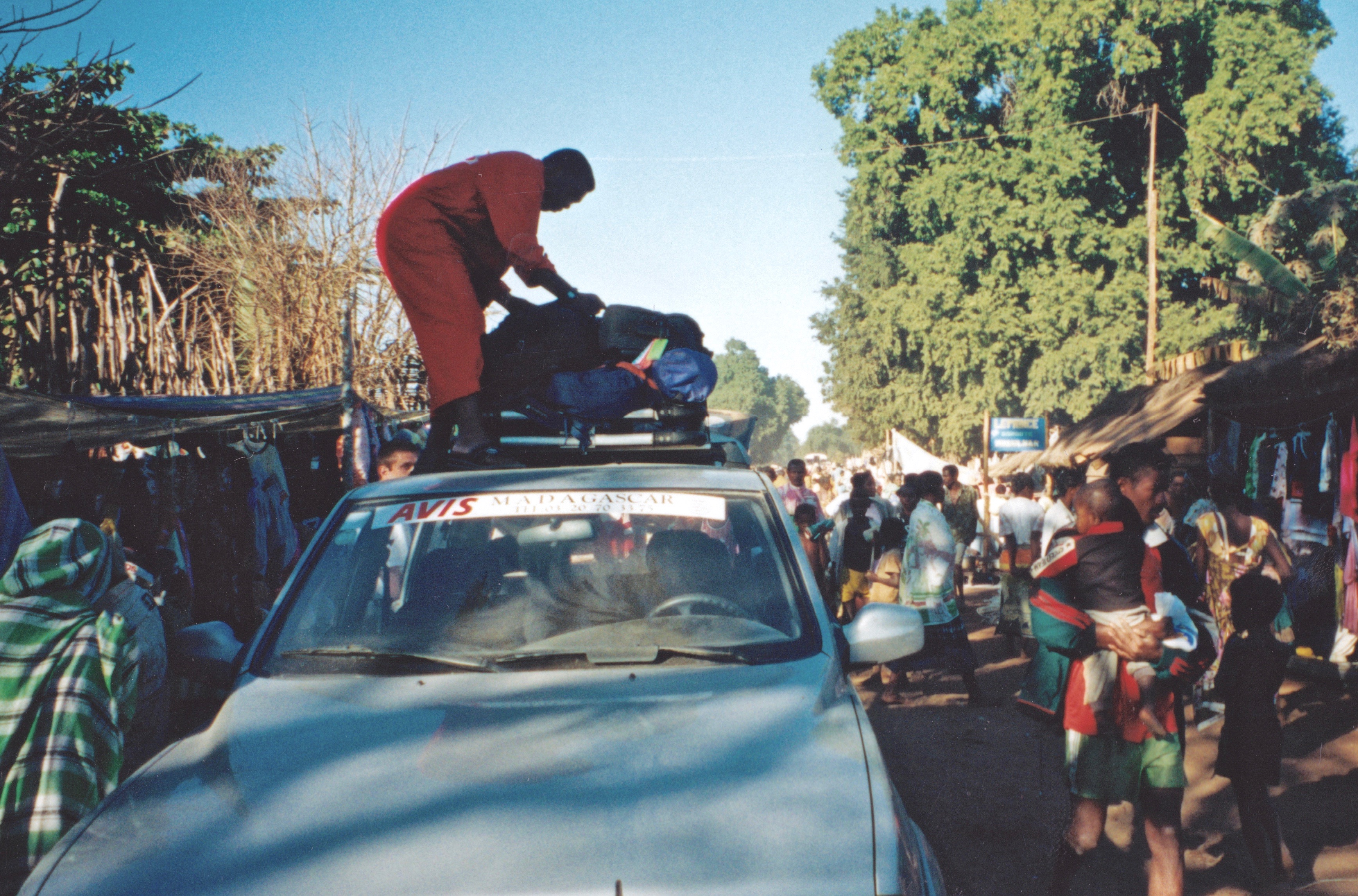
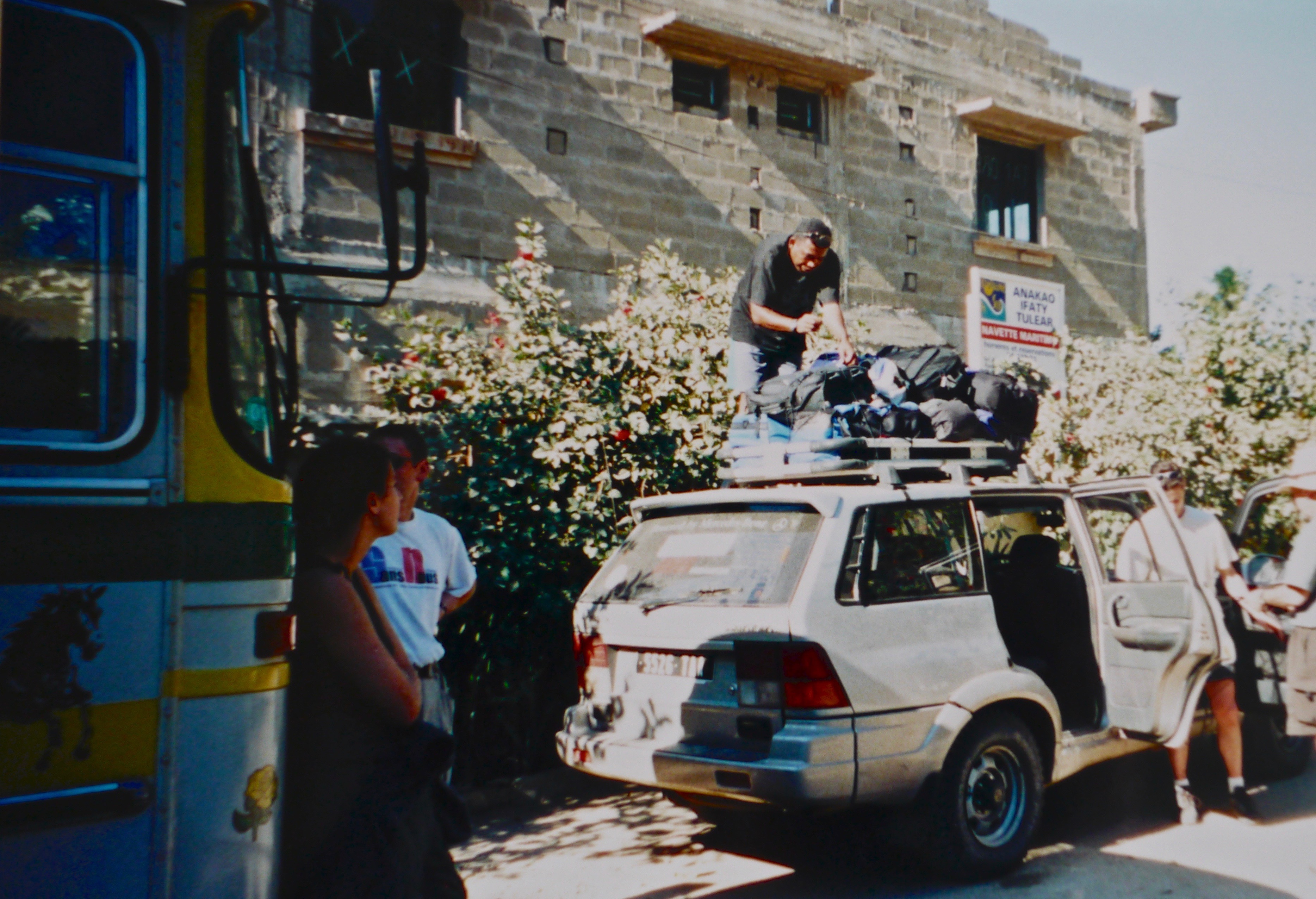
We saw more and more eclipse travelers as we got closer to Morombe (and the centerline town of Ambahikily) on the westbound highway—they’re easy to identify from their awkward gear on roof mount luggage racks.

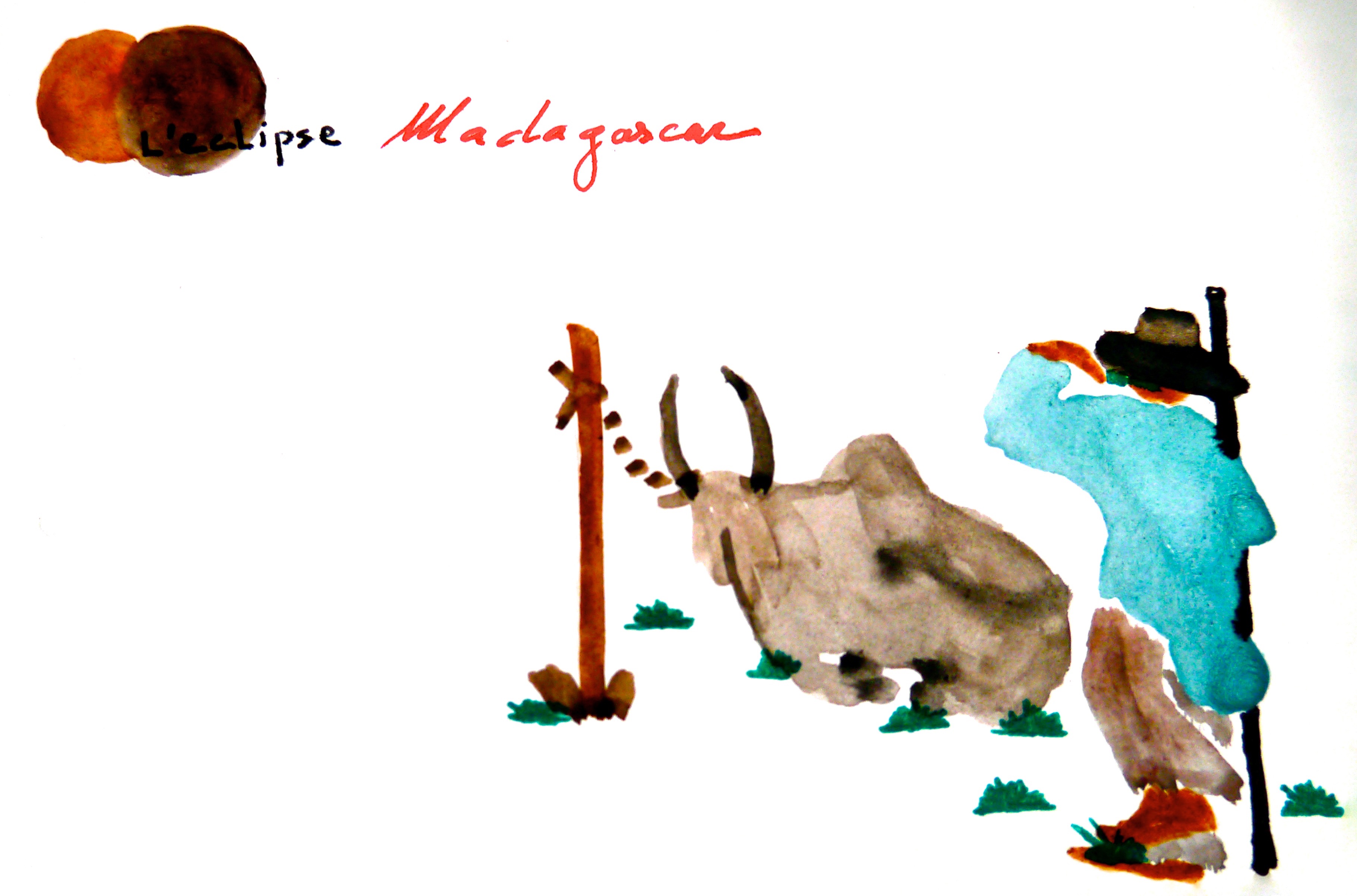
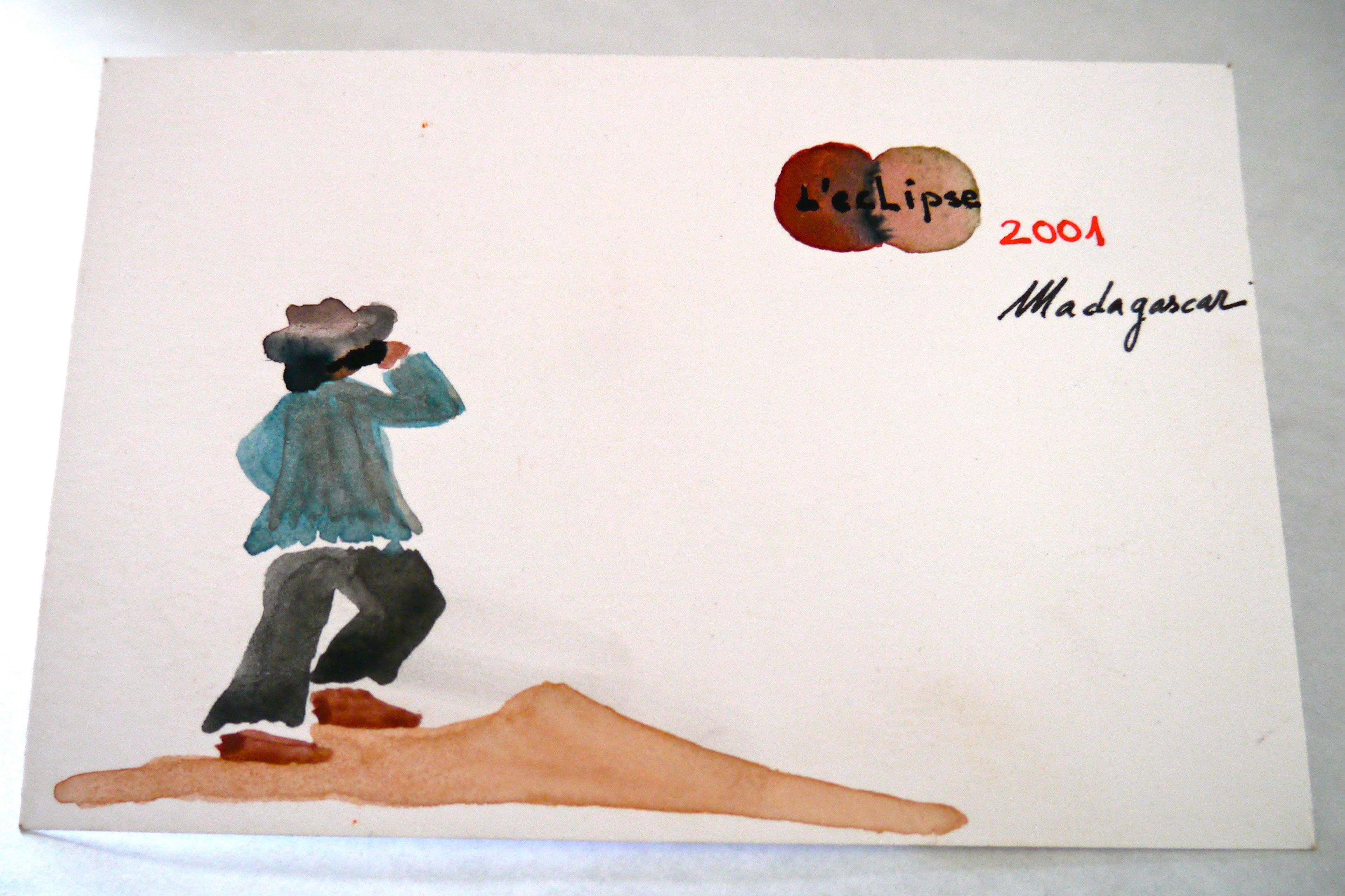
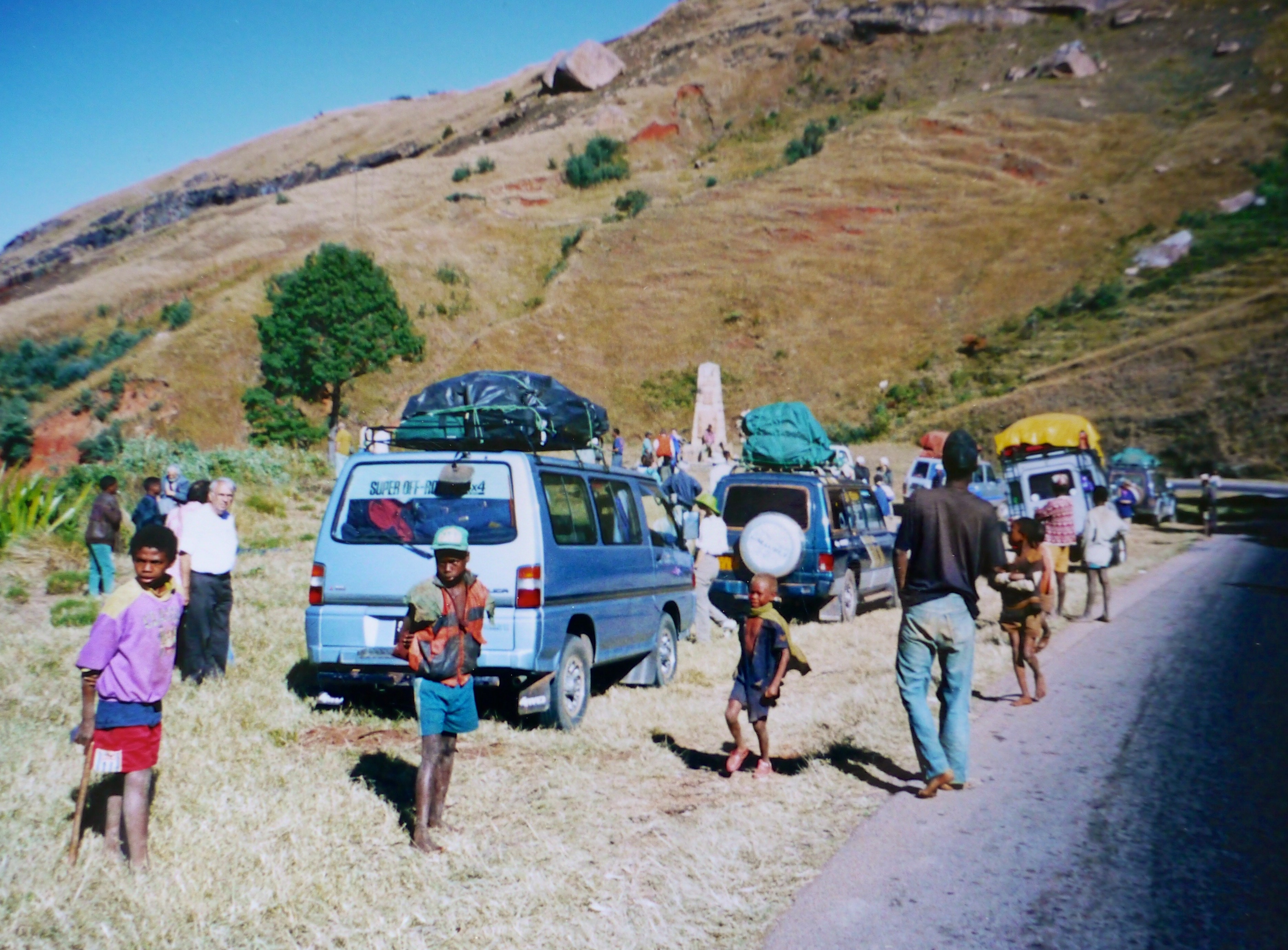
Children surrounded us at every stop asking for money for their coin collections. I know what you’re thinking, but it’s true. They showed us: a penny here, a five-centime there, small change received from the rare travelers to the villages, crudely taped to index cards. I watched as they traded each other for the US coins they didn’t have; a quarter swapped for a nickel. (The “coin collector” scammers typically target Euro or Japanese tourists whose coins hold a higher value, and bill collector scammers are even more prevalent. Just saying.) Older kids and adults sold their hand-painted or colored pencil souvenir drawings.

People lined the road to watch the parade of 4WD vehicles making their way to the coast. Schoolchildren held up their hands, making the sign of the sun (similar to the University of Oregon O-gesture) and shouted “faza!” as we passed. (“Faza!” we call in return, waving. Later we were informed that meant “white people.”)

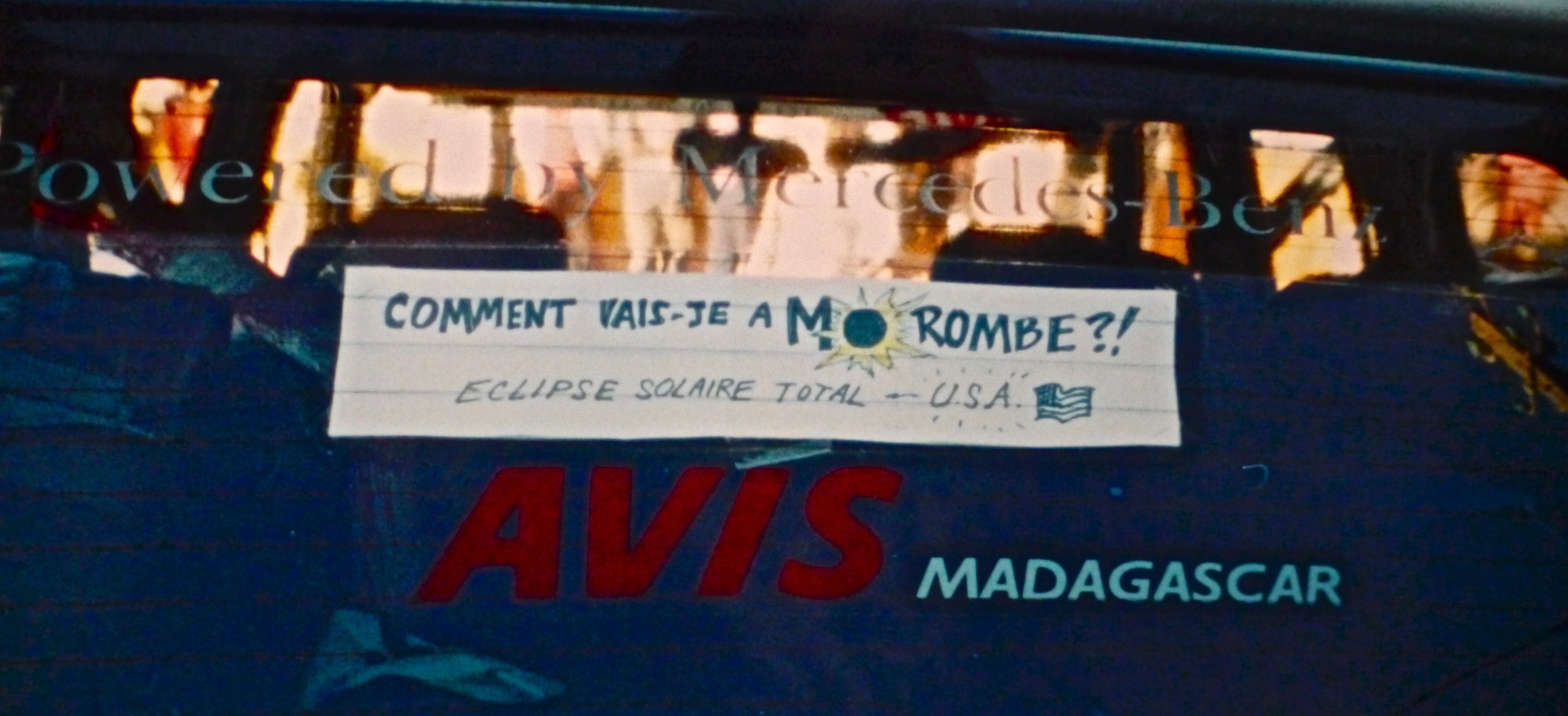
Hoping to offset the exorbitant daily cost of the vehicle we hatched a plan to rideshare the remaining miles to the coast, and taped a sign to the window reading “Comment vais-je a Morombe? Eclipse Solaire Total (USA)…do you need a ride?” (I didn’t know how to say that last part.) It worked; we hooked up with three young French students at Isalo National Park, all prepared, as we were, to camp on the beach. Their translation services were a welcome addition, and at rest stops they chatted happily in French with Samuel.

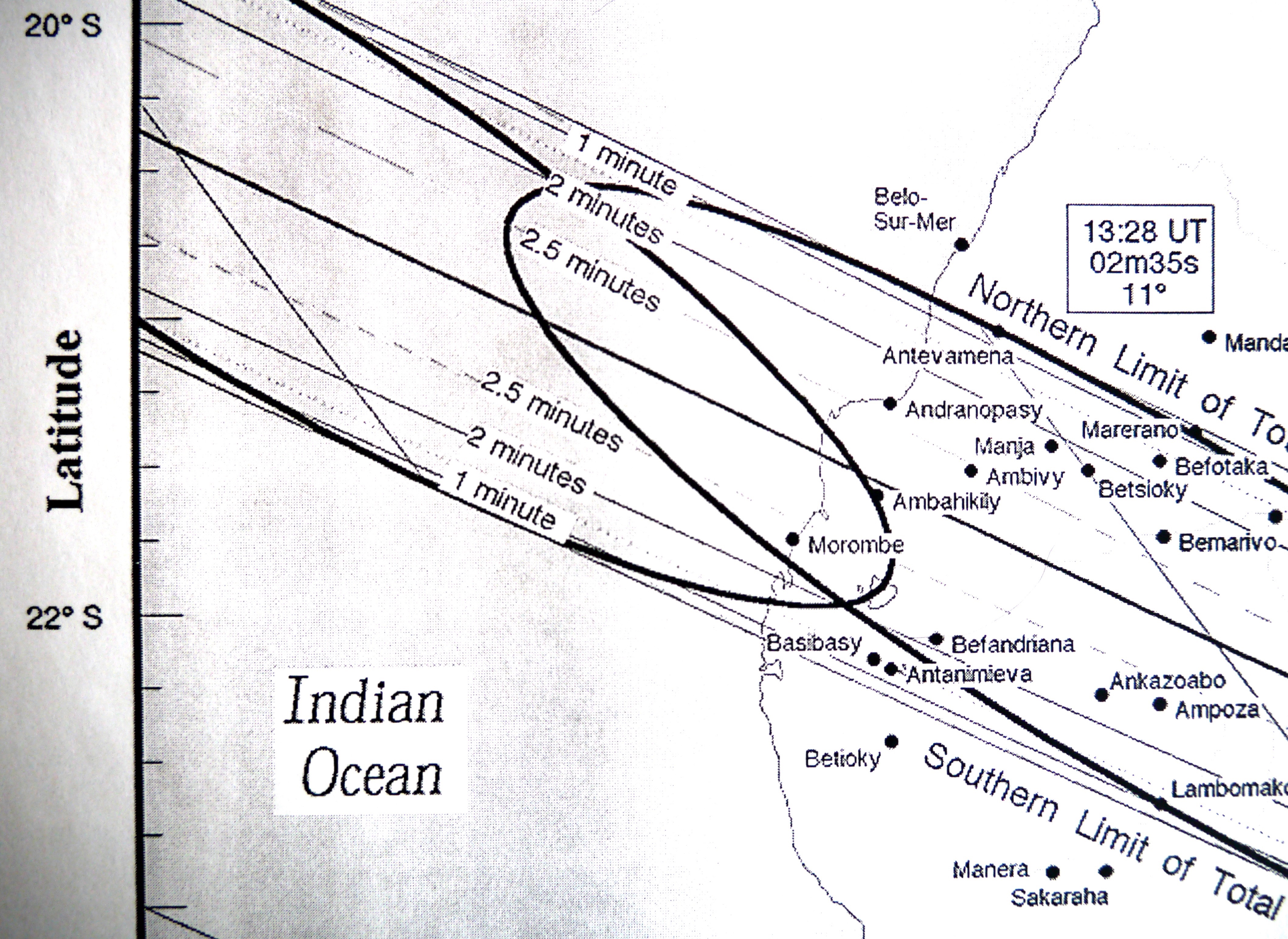
“The road from Toliara to Morombe is slow and grating being composed of the broken remains of a formerly paved highway that has aged into a mixture of sandy potholes and abrupt edges,” wrote Fred Espenak and Jay Anderson in their NASA prospect report on the Madagascar eclipse. Getting to Morombe on the final stretch of red “piste” (dirt road) was quite an ordeal.

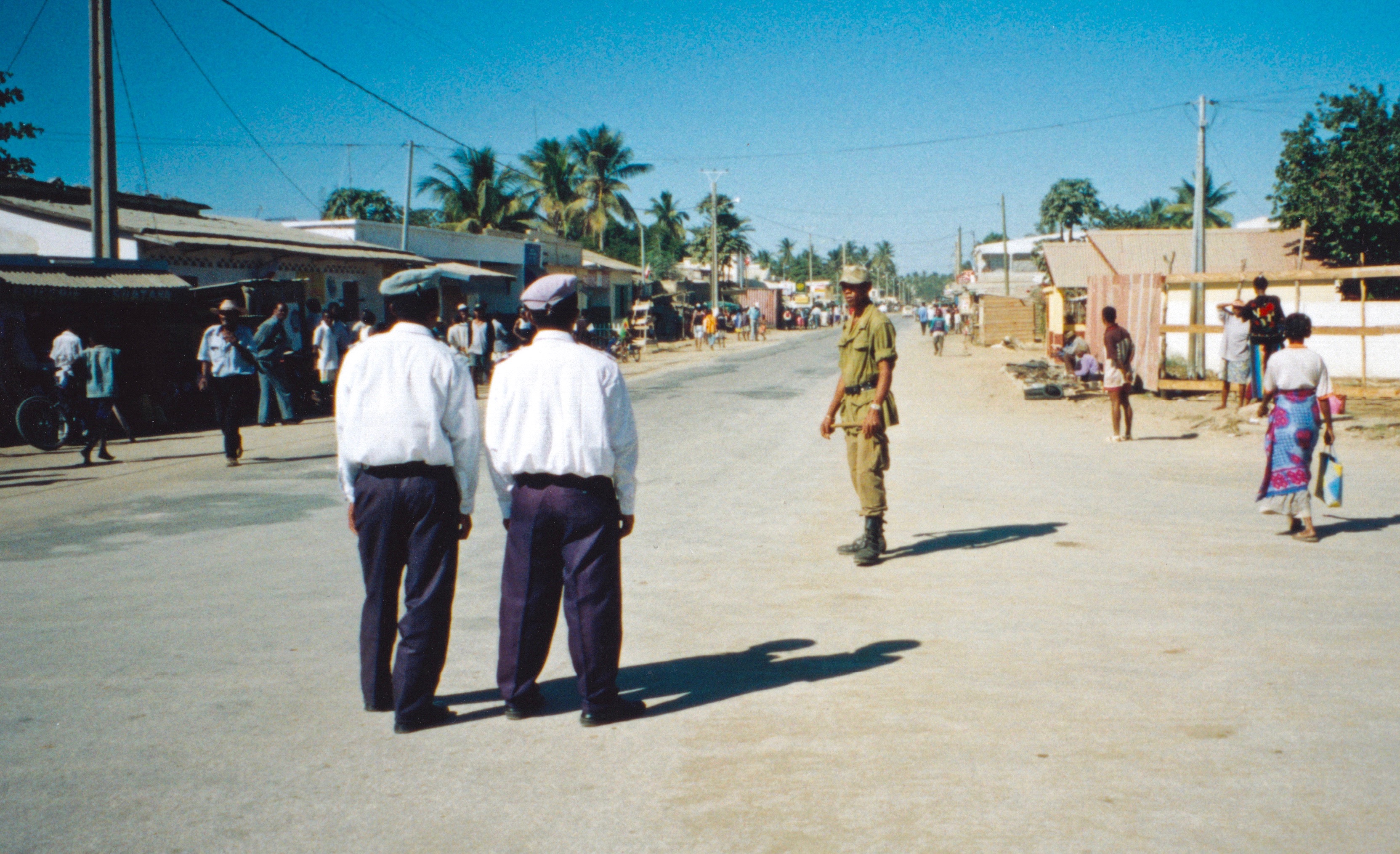
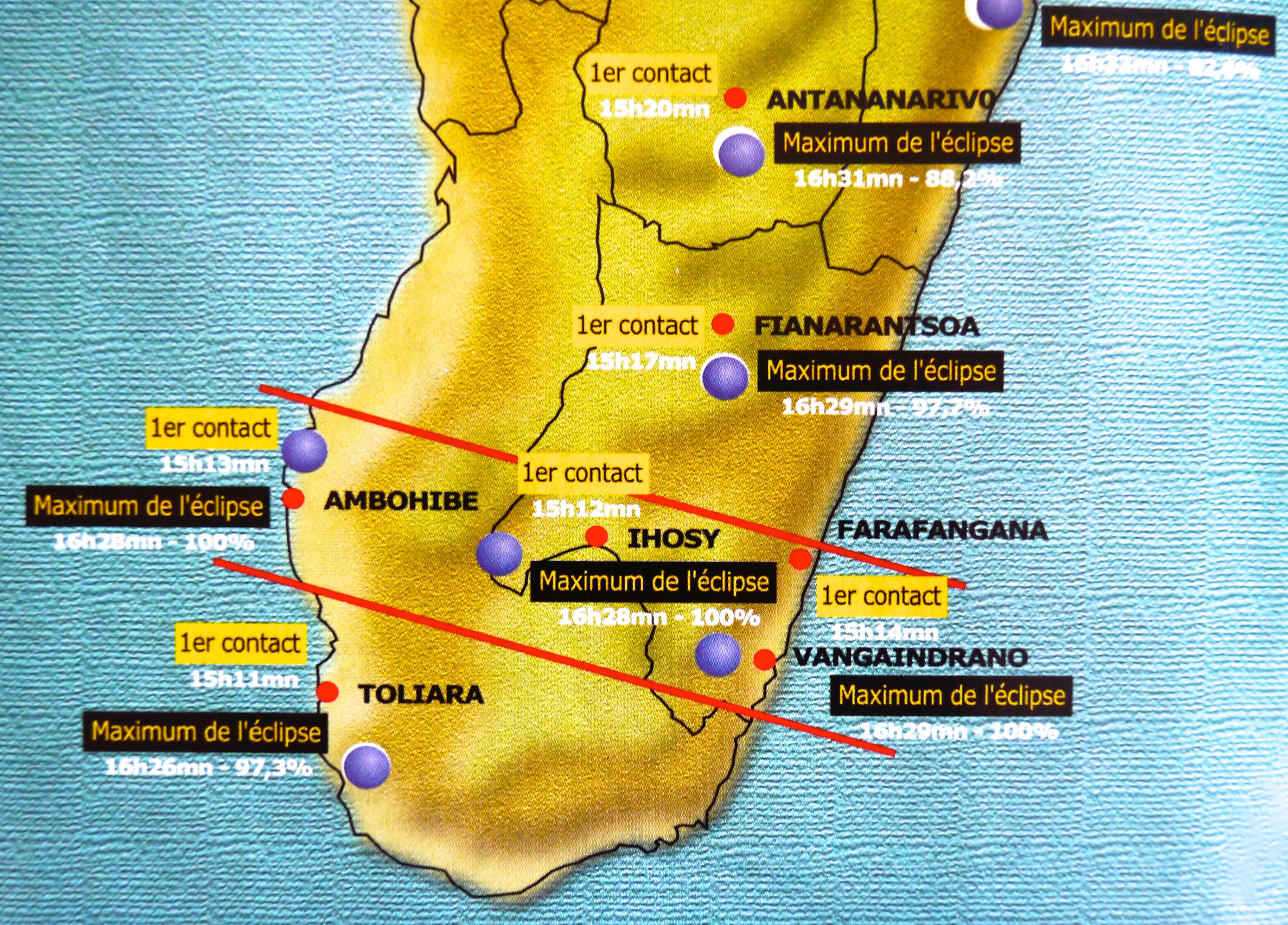
We weren’t sure if we would make it to the viewing site, right up until the last minute. From our final launch point before eclipse day we heard rumors it would take anywhere from eight hours to two days to reach Morombe. (We kept an eye on our map of totality, and cheered when we reached a town in the shadow—if we couldn’t get to the coast, we’d at least see totality from that point on.) An official motorcade conveying, I don’t know, Jacques Chirac or somebody, was ahead of us and made progress worse by blocking the streets in every town we came to.

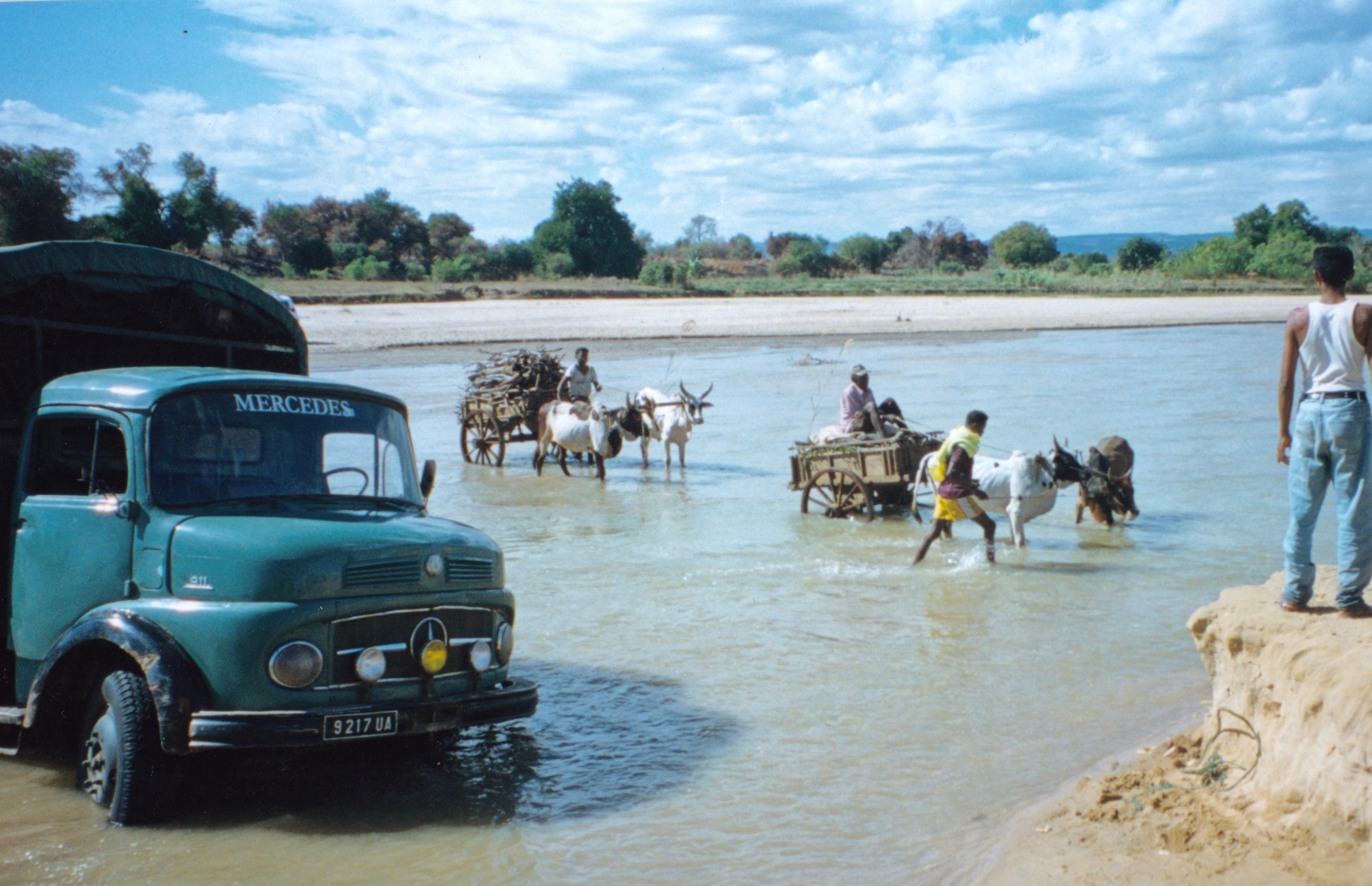
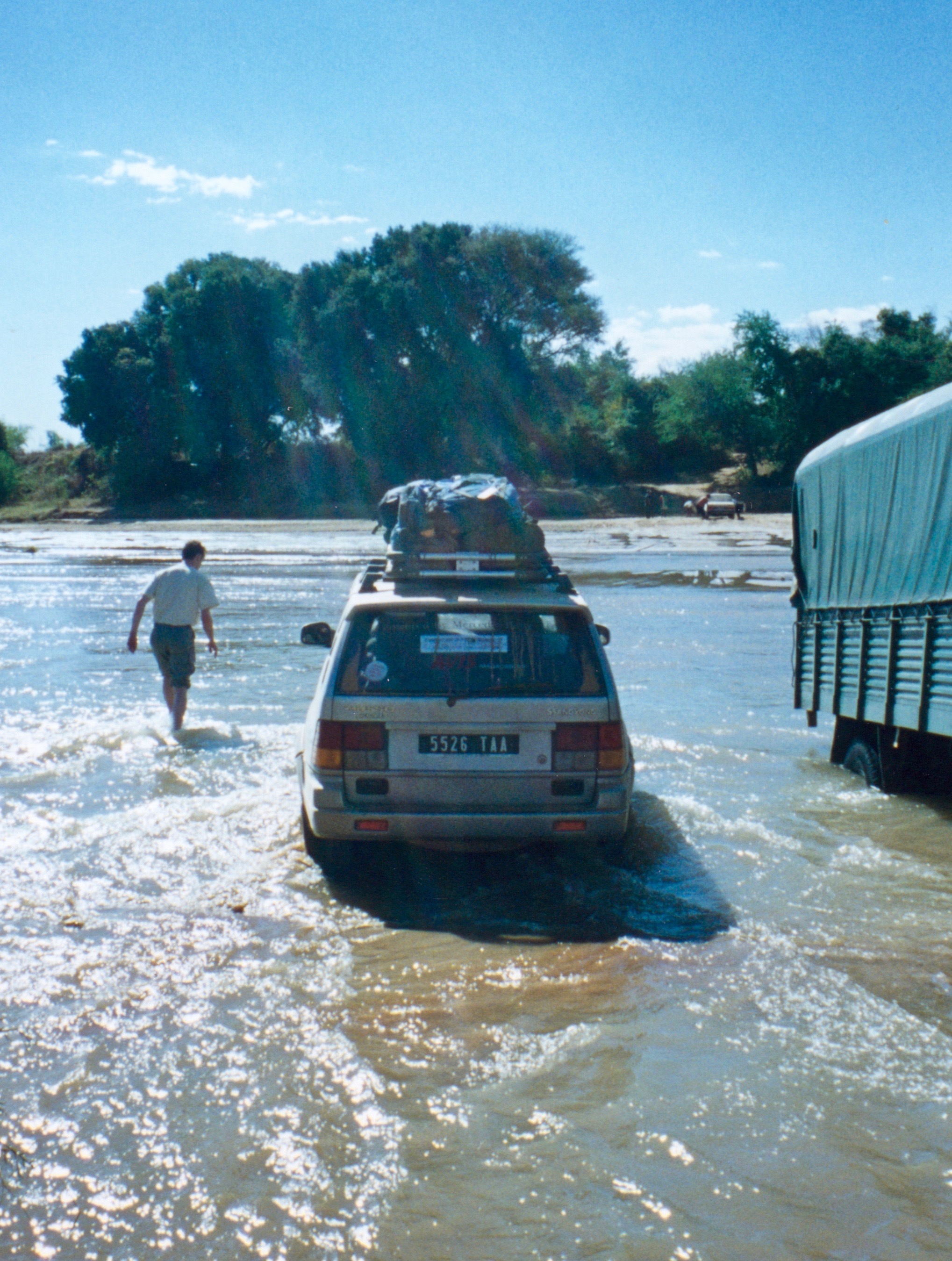
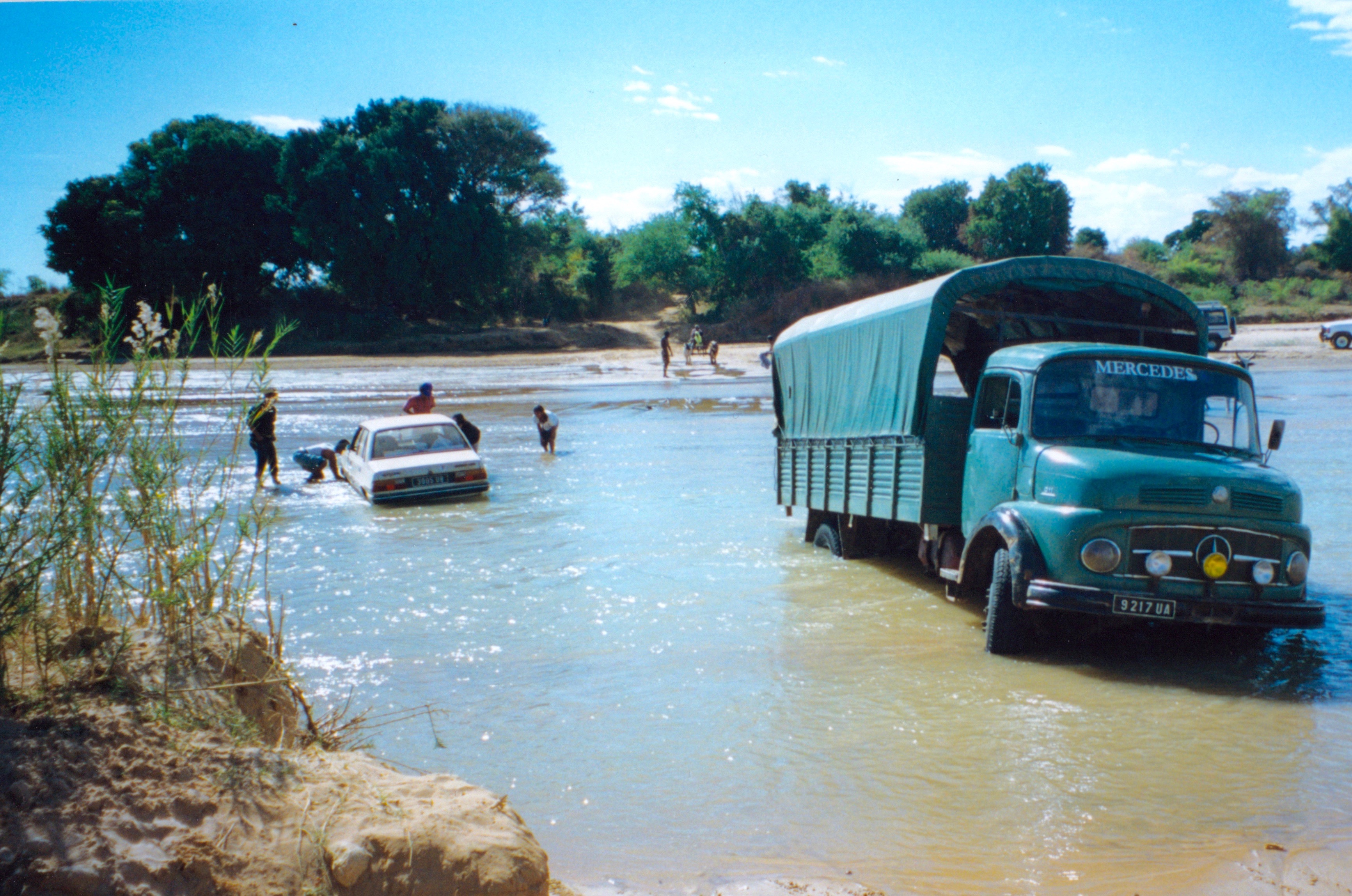
We reached Morombe after only twelve hours of lurching and bumping along a road so rough I couldn’t open my mouth to talk, afraid the jolting would cause me to chomp down on my tongue. Into huge ditches we dropped, up and over sand dunes, and through villages with chickens and pigs and children and zebu carts scattering as we blew through town in the Trooper. We even had to navigate a full-on river crossing, with water up to the doors, past a stranded old Citroen and taxi-brousses that were being winched out of the mud. I had the time of my life.

In Morombe Samuel dumped us on the beach and disappeared with the car. We made it.

Above: Stuck in the mud

Below:

Handmade souvenirs

Do you need a ride?

River crossing

Dignitary crossing

Road trip on Planet Mad

Each day in Madagascar was more freakish than the last.

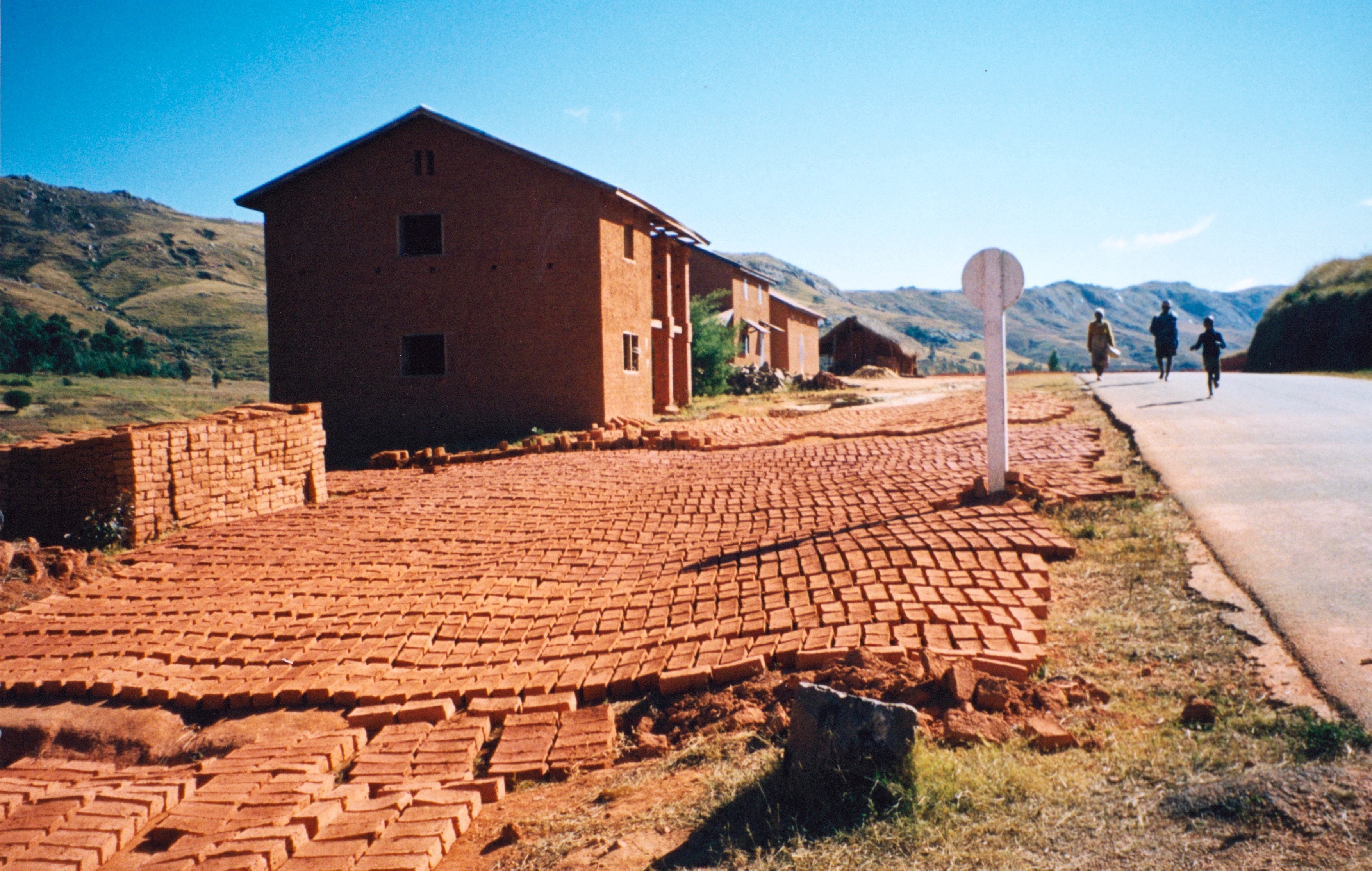
There are surrealist paintings in disturbing, peculiar hotels, and kooky murals on town walls. Houses are made of red mud—when they eventually melt from the weather, homeowners simply build a new one next door. We saw white wall-eyed chameleons and herds of zebu crossing the road, and otherworldly baobob trees in the spiny forest.

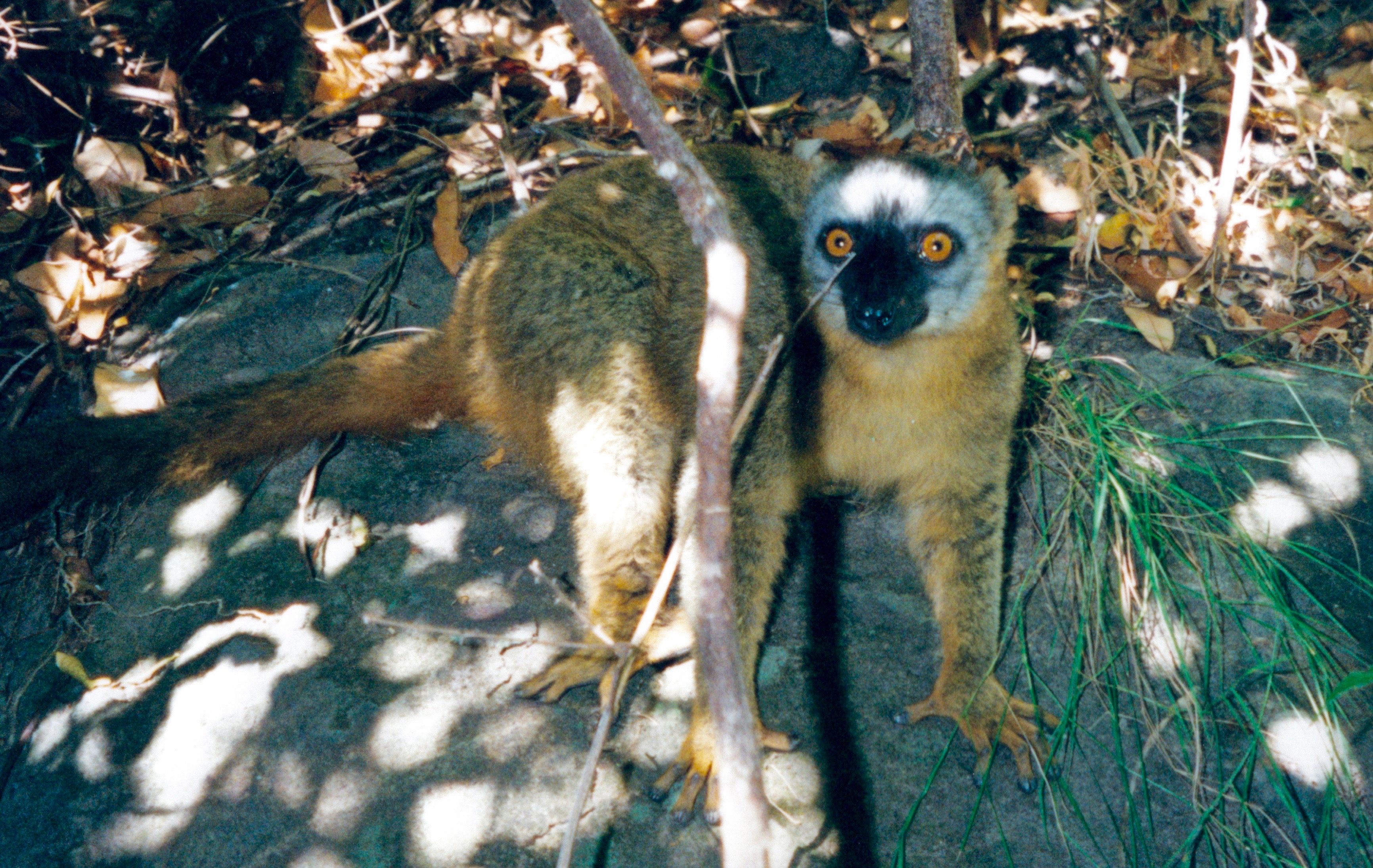
Along the way we left the main two-lane highway to buy gems at a mine, and pressed flower stationery at an artisan shop. We stood among lemurs as they drank from a pool and bounced above our heads through the trees in the Beza Reserve. I observed locals buying wine at the “liquor store”: a wood shack where some kind of red alcohol is fermented in a 55-gallon drum and mouth-siphoned into empty plastic containers held beneath the hose. Candles flickered inside paper lanterns as children carried them in a late night parade. Poor villagers sharpened knives by running with them blade-down in the middle of the asphalt highway. We witnessed a fatal car accident—pedestrians bumble around on the road (and children—children!—play there), though the Malagasy drive like bats out of hell.

It’s impossible to sound out the pronunciation of Malagasy words. Guess how to say the names of following towns: Ambositra? (No. “Am-boosht”.) Ihosy? (“Ee-yoosh.”) Fianarantsoa? (Psych! Just like it looks.) French was also spoken, and I remembered enough from high school to translate “l’eclipse solaire totale” and order in a restaurant. Spoken English was so rare we perked up at the sound of it and searched the surroundings for the source.

Our viewing destination, Morombe, was south of the centerline about 200 miles north of Toliara (“too-lee-ar”— again with the pronunciation) where my slapdick spouse had his wallet and passport stolen (his fault, long story). Have you ever been to an American embassy in the Indian Ocean? Travel Tip 2: Make every effort to avoid this. We wasted several days bouncing keystone cop-like between the embassy and various government agencies, who all extorted money—thirty or sixty cents at a time.

Above: Baobob trees

Below:

Zebu drivers laugh at our photo album

Leapin’ lemurs!

Mud bricks

Drying corn

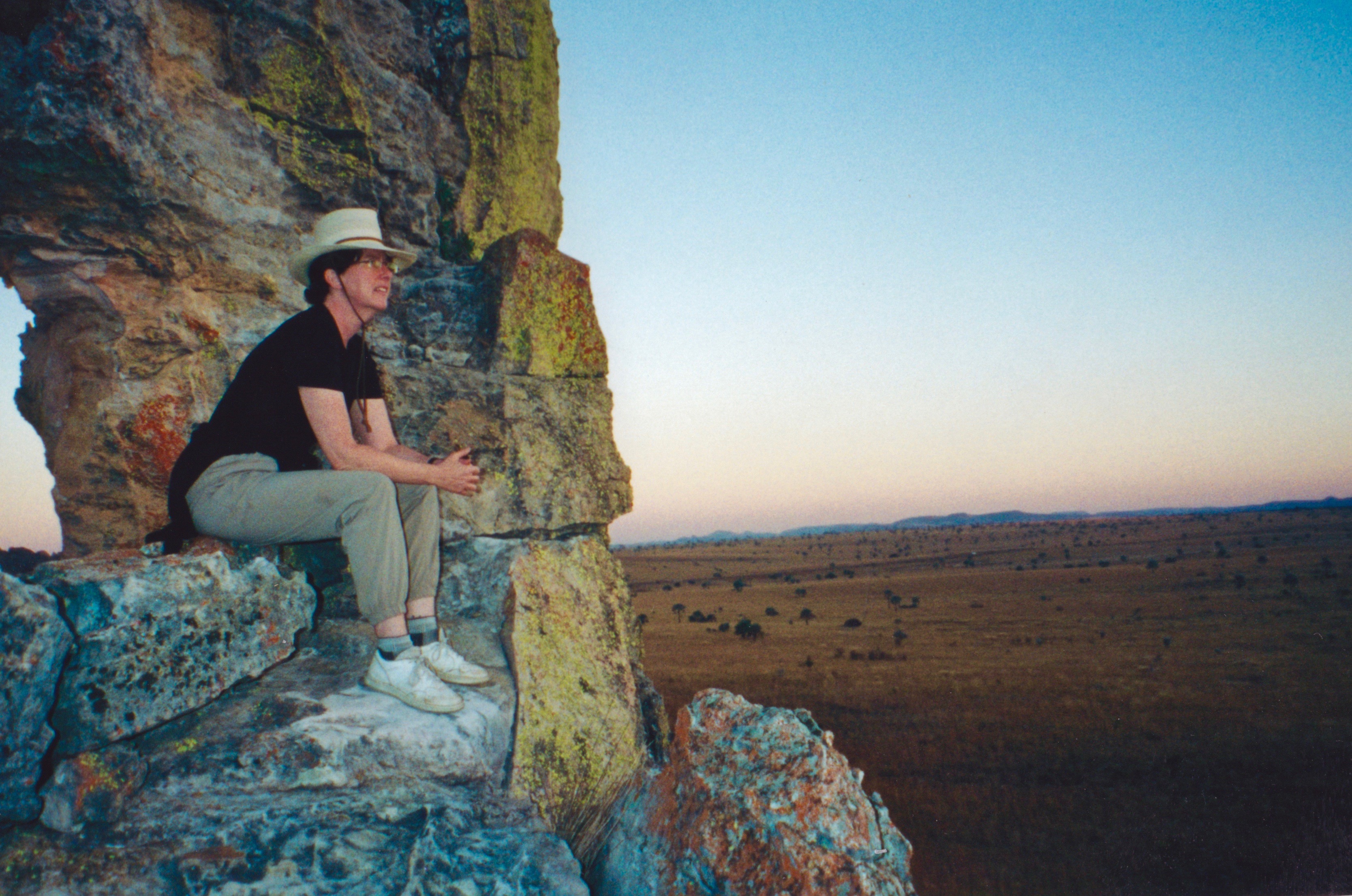
Quiet time in Isalo National Park

Meet Samuel

I made arrangements for a 7-passenger Isuzu Trooper from Avis at a staggering cost per day, but that included insurance, unlimited mileage, and Samuel, the mandatory Malagasy driver, who slept in the car while we overnighted in hotels along the way.

When asked if he spoke English (in addition to French and Malagasy, the two official languages of the country), he answered “yes”. Travel Tip 1: always ask a follow up question; “yes” was the only English word he knew. I made do from the backseat by reading out loud from a French phrasebook, but my pronunciation was so bad (or so different from Malagasy French) that I usually had to hand him the book and point.

Samuel The Driver became our tour guide, bodyguard, bellhop, and constant companion on the two-week expedition across the country and back. We found out later that he would be paid a tiny fraction of the cost per day of the vehicle. Don’t worry; he earned a big, big tip.

Above: Samuel

Below:

Madagascar journey

Loading (and unloading and loading and unloading) the Isuzu

Tourist vehicle = local attraction


The Mad plan

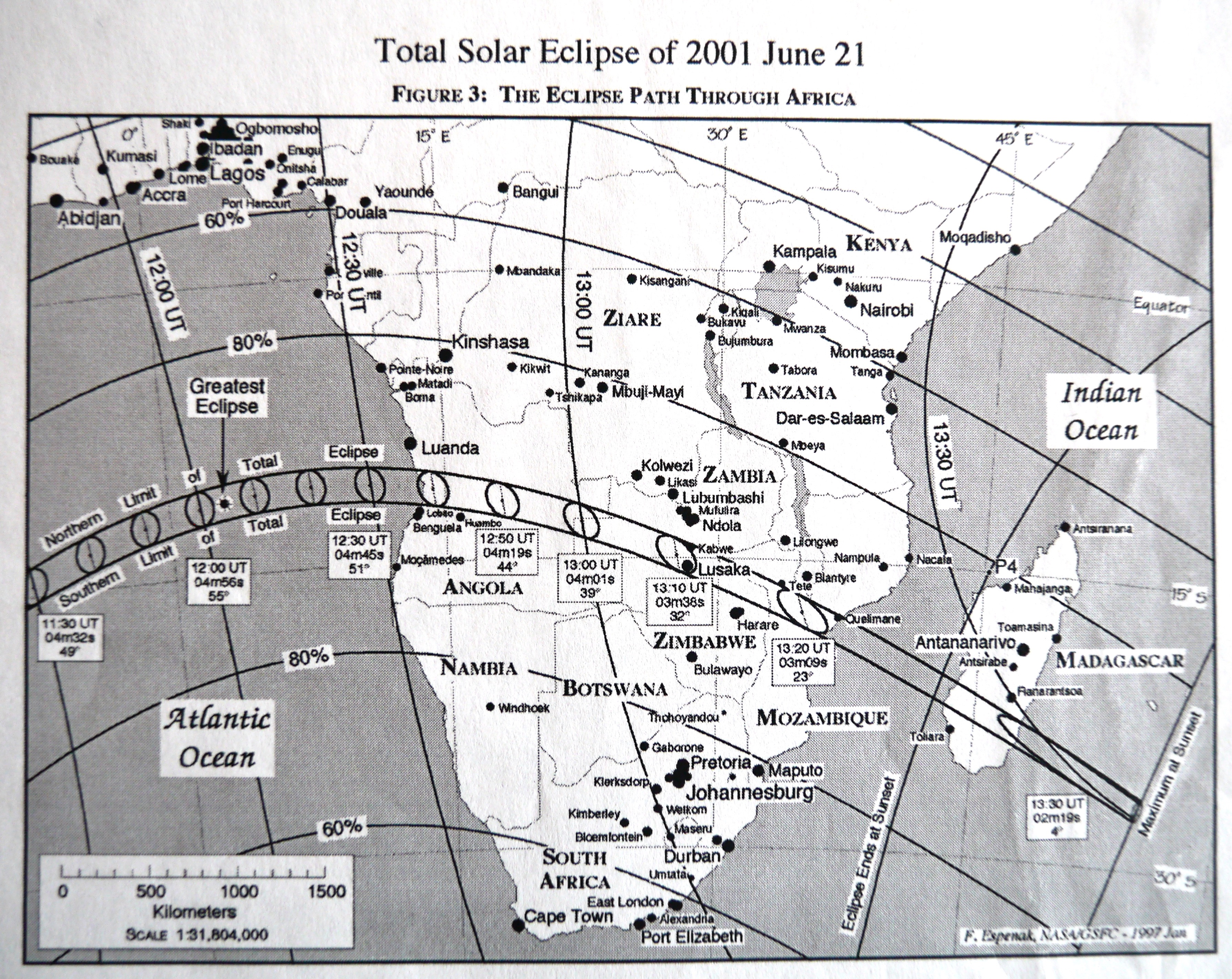
On June 21 the shadow of the “solstice eclipse” raced across southern Africa at 1000+mph, touching Angola, Zambia, Zimbabwe, Mozambique, and where I chose to view it, the island nation of Madagascar.

I made the trip independently with my second husband, a repulsive loser—ask anyone—and all-around impotent jackhole. (I had some self esteem issues back then.) But he did like to travel.

Most of the respected tour groups were full for this popular eclipse, the first TSE of the 21st century. I contacted several travel agents who regretted they were unfamiliar with Madagascar and couldn’t help. When I tried to find an internal flight to the dusty seaside town of Morombe (our viewing destination on the west coast of the country) I received this adorably formal email from Josiane Razafinavalona of the Madagascar tourism department:

“Further to your e-mail we are pleased to send you hereunder our proposal concerning the eclipse totale in Morombe. Due to the importance of queries recorded uptodate, planes are fully booked at this periode and only car is the mean of transportation left.”

So I forged ahead with my own half-cocked plan: fly to the main airport in the capital city of Antananarivo (“Tana”, for short), rent a car, and drive two weeks overland to the coast where weather prospects were brightest.

We flew into dangerous ‘Tana (we heard gunshots at night from our room at the Hilton) and rented a vehicle for the foray west through Antsirabe, Fianarantsoa, Ihosy, Isalo National Park, and Toliara.

I’ve never been anywhere as bizarre as Madagascar.

Above: Boarding Air Mad

Below:

Eclipse path through Africa

Duration, eclipse 2001

Souvenir cloth

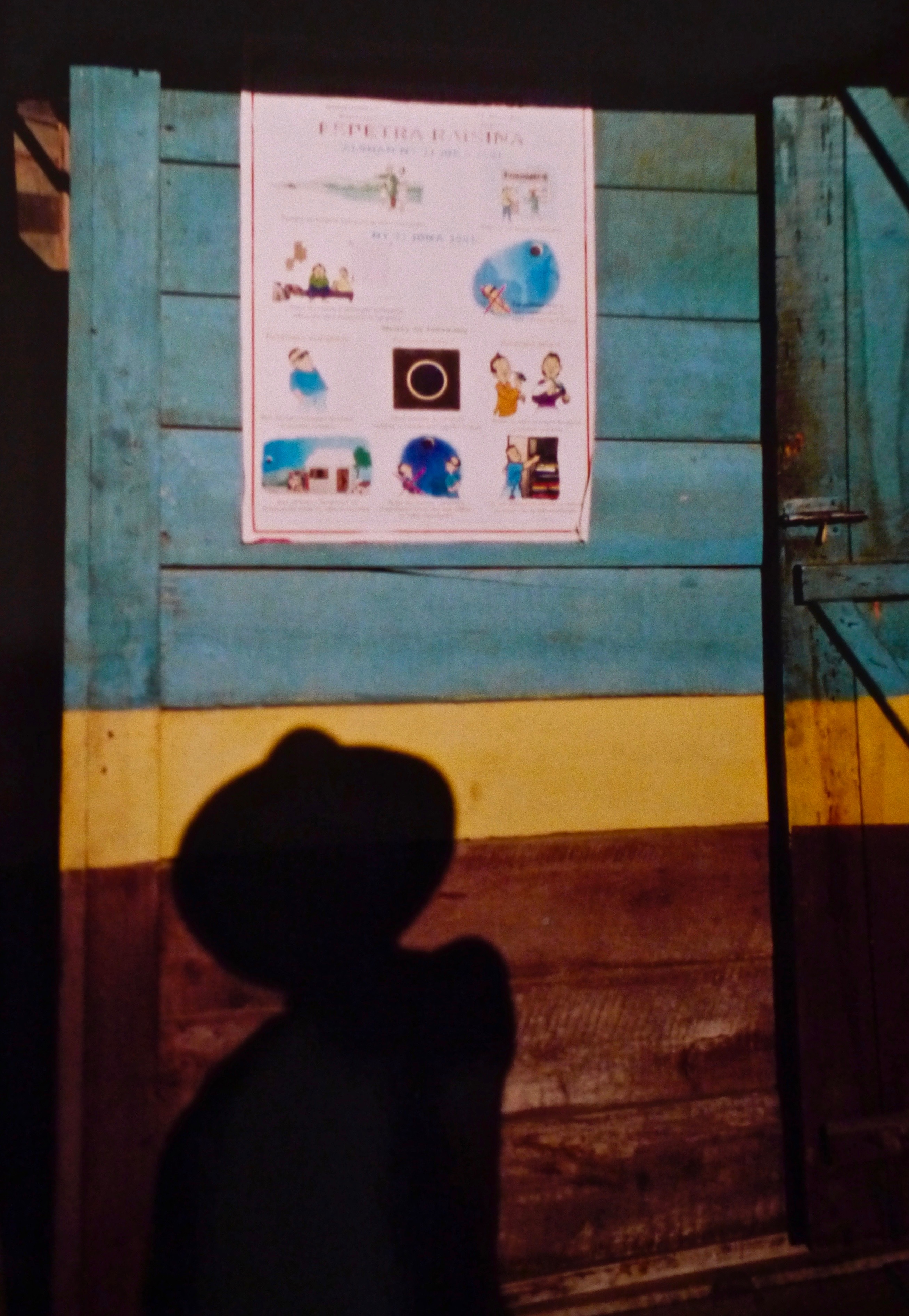
Safety signage

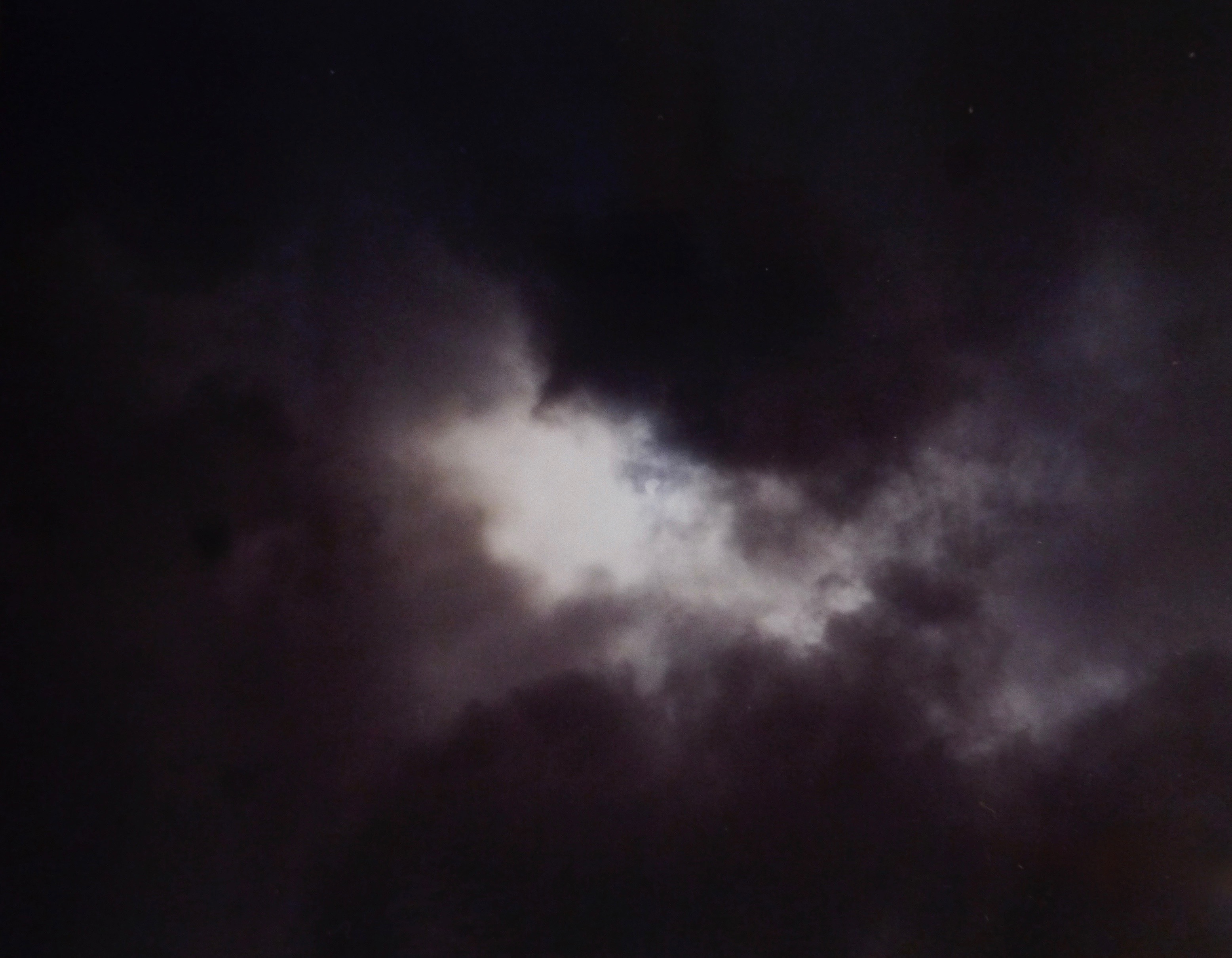
Close call

White puffy clouds filled the blue sky on eclipse day, and we eyed them nervously. The odds of the eclipse being obscured looked higher than 50-50, and prompted much discussion among the organizers.

Ashore, chances for good weather were fair—but if cumulus clouds formed, we were SOL unless it was sufficiently windy. Those on land would at least be ensured a fun day playing on the beach, or we could shop in the clean, touristy, Netherlandic town while we waited for totality.

Option 2: remain aboard the maneuverable ship that could be positioned under a cloudless patch in the sky at 2:09. The downside was a drag, though: no special area was reserved by the tour group—meaning jostling for position with the 2000 non-astronomers also on board—and there would be fewer diversions during the long hours of partiality.

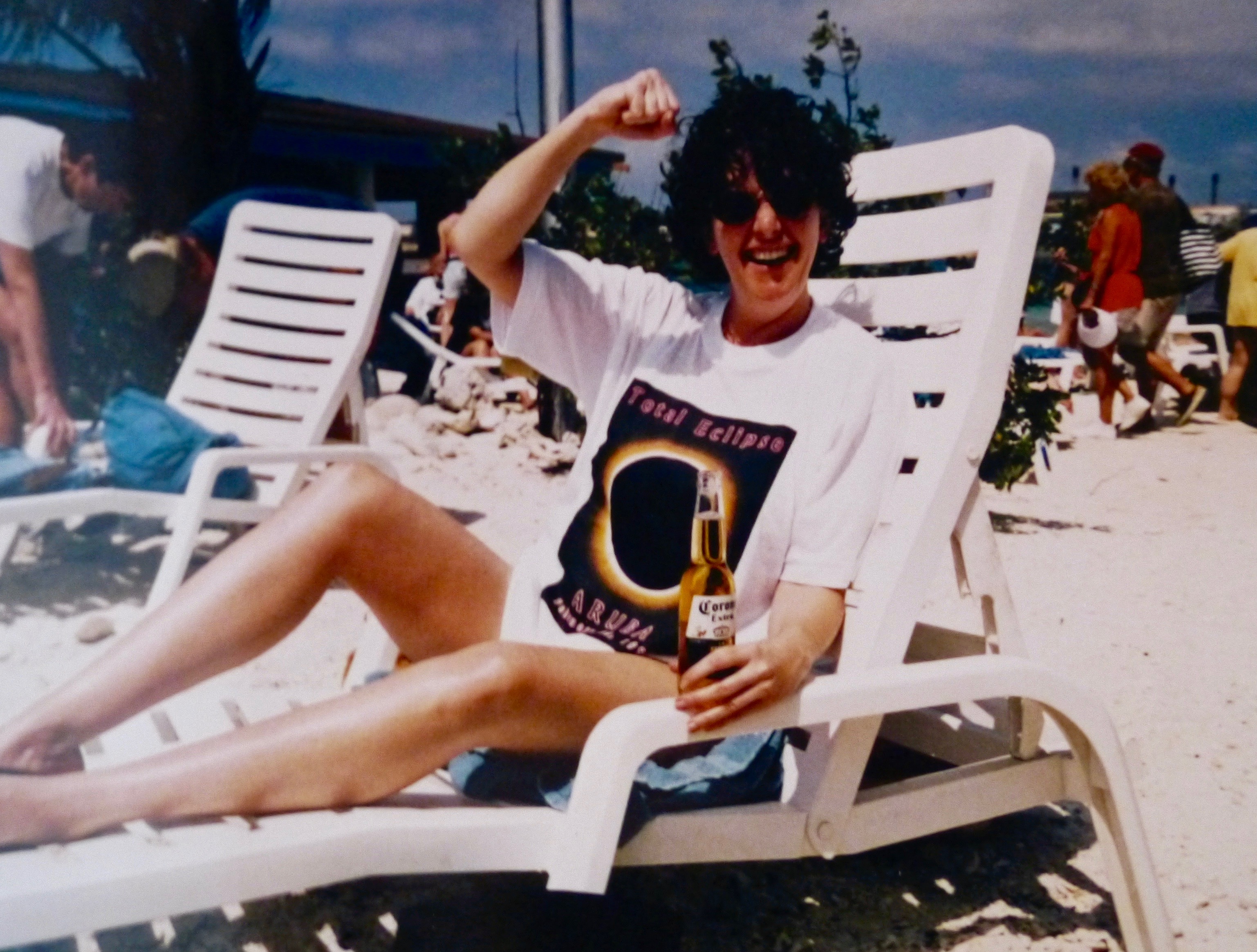
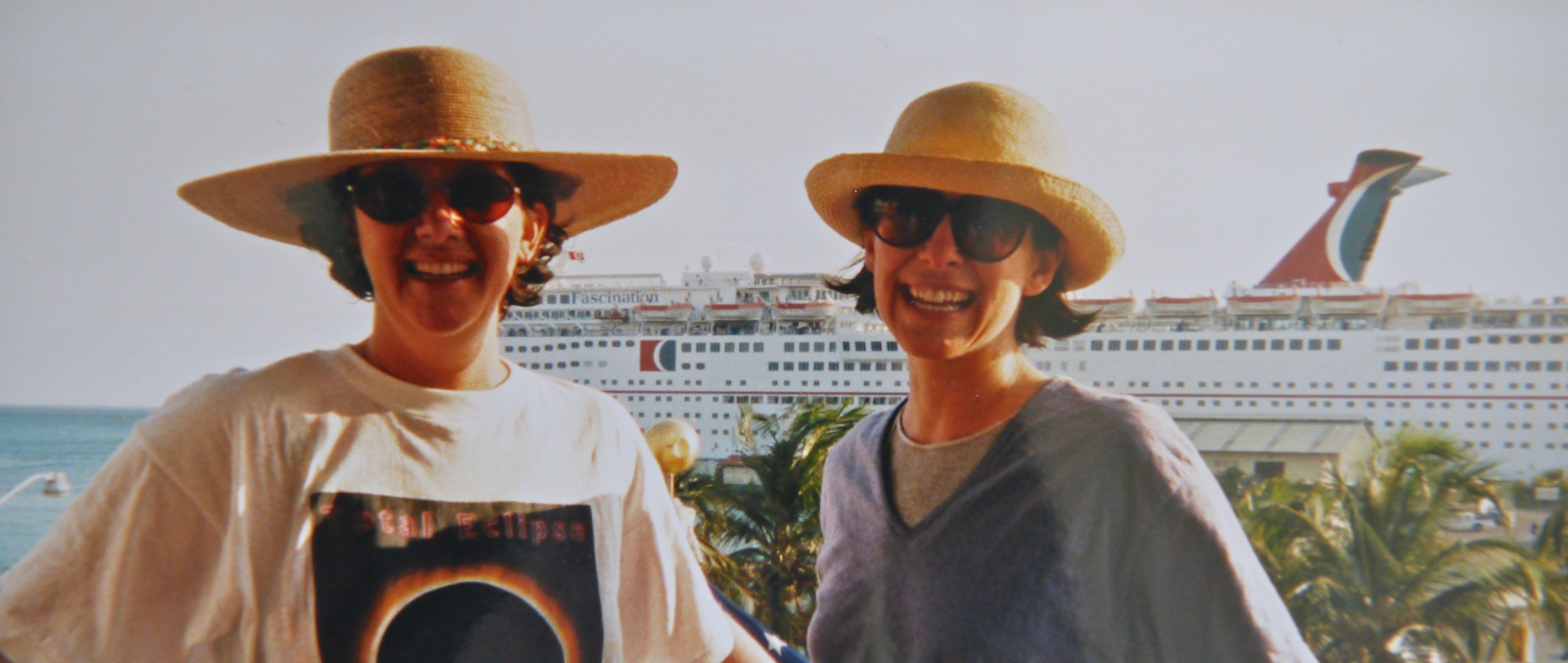
I pitted out over this decision, and in the end Susan and I decided to roll the dice and accept the offer to stake out a section of beach in Oranjestad, Aruba, where we could snorkel DePalm Island. At 7:30 a.m. we waved goodbye to the Fascination, sailing south toward improved chances (and a longer TSE near the centerline).

It was definitely a nail-biter with clouds overhead all day, but the sky cleared beautifully for totality. There were happy smiles all around when the ship docked to pick us up; skies were clear at sea as well.

Above: Ominous clouds (cue the theme from Jaws)

Below:

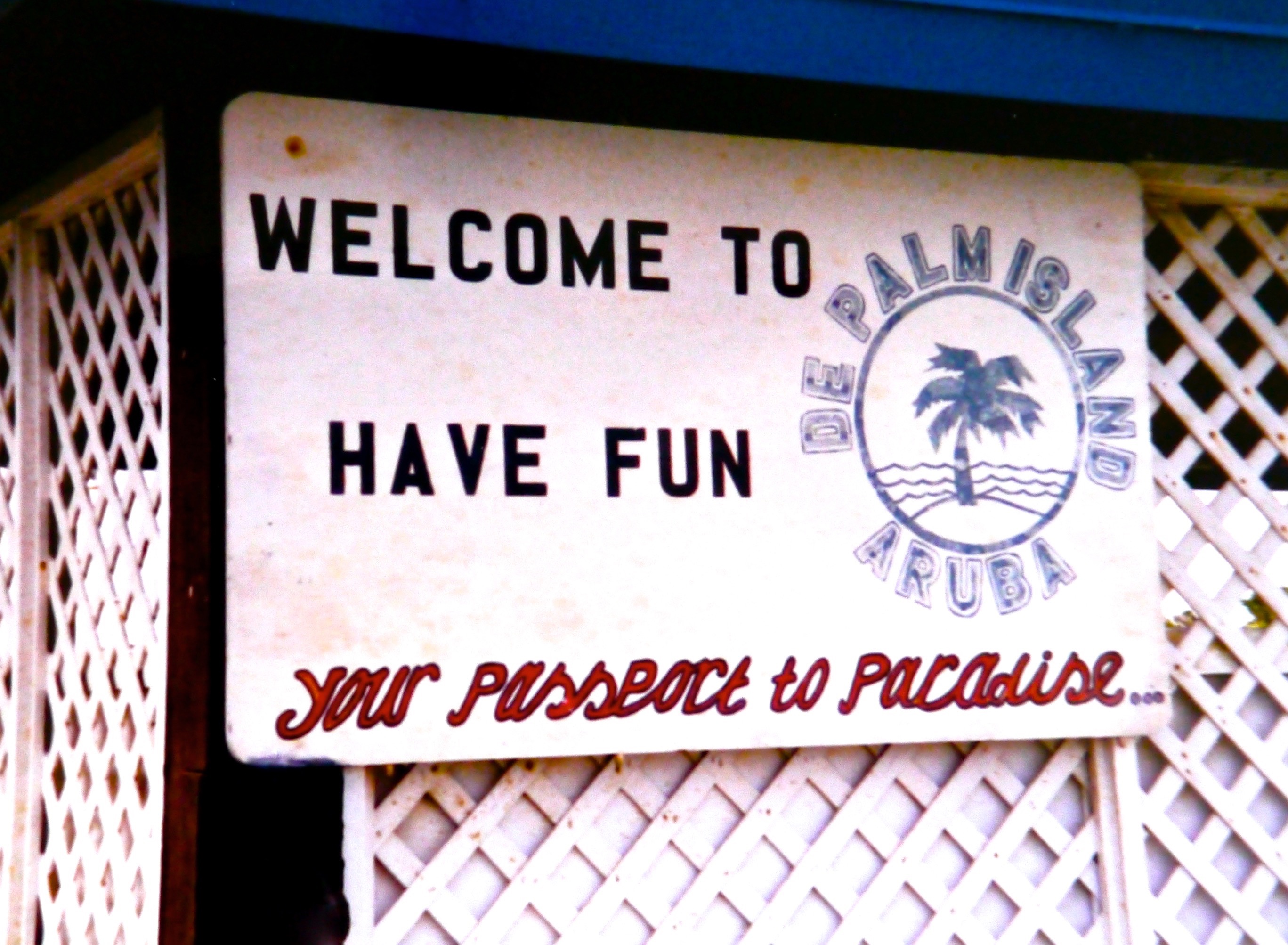
Welcome to have fun at DePalm Island

Partial viewing

Three for three!

The Carnival Cruise eclipse

The “Millennium Eclipse” over the central Pacific and Atlantic oceans on Feb 26, 1998 promised to be a “tropical festival of science” (reported the AP). After the hardships of Bolivia an easy cruise sounded nice—and the Caribbean, in February? Escape rainy Portland? Heck yeah.

The 93-mile wide umbra was to pass over a string of Caribbean islands, including Aruba, Curacao, Guadeloupe and Antigua. I chose travel coordinator Gary Spears’ Astronomical League Eclipse Cruise on the Carnival ship Fascination for my next TSE, and conned my poor friend Susan to come along.

Hey, Carnival haters! I know you’re there. KMA. If you can’t have fun on a cruise, no matter the accommodations, you simply don’t know how to have a good time.

My second Astronomical League tour was again organized by Ken Willcox (may he rest in peace; Ken passed from cancer exactly one year after the Caribbean eclipse). Also in attendance was Mr. Eclipse himself, Fred Espenak of the NASA/Goddard Space Flight Center, and Mark Littman, author of Totality, Eclipses of the Sun.

Susan, poised and pretty and definitely a non-nerd, was a good sport and a blast to travel with. She stuck out like a hothouse orchid during all the corny ship activities, though—and in the dining room, surrounded by astronomy geeks in polo shirts, patiently listening to their chatter about lens grinding.

The Fascination carried us from San Juan Puerto Rico to six ports of call. In St. Thomas we sunbathed on the beach with a three-foot iguana under our chairs. In Guadeloupe we tasted rum and bought spice necklaces; in Grenada we hiked in the rain forest. We were afraid to disembark in Caracas, Venezuela—and totality occurred over Aruba (where the group was scheduled to be deposited ashore for an eclipse viewing beach party).

You know the Caribbean drill: touring the rum factory, booze cruising, steel drum bands. Except for the eclipse, the most exhilarating event was renting a car on the island of Guadeloupe and driving it out to hike to a waterfall where Susan and I lost track of time and distance. Running critically late for re-embarkation with no time to return the car, we simply abandoned it at the dock, keys in the ignition, and ran laughing up the gangplank as the ship sounded its deafening horn. (Astonishingly, my credit card statement later showed a debit for the car rental, no extra charges, no penalty. Some benevolent Guadeloupian must have returned it.)

Above: Dames at Sea

Below:

Path of totality, 1998 (via NASA)

Billboards

Formal night. Are you in this photo? Drop me a line!


National Geographic

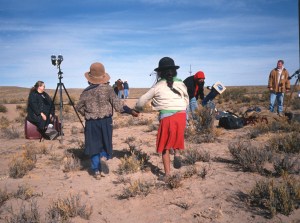
The afore-mentioned film crew—a team from PhotoSynthesis Productions—was there to capture the eclipse experience for the National Geographic educational documentary Sun, Earth, Moon.

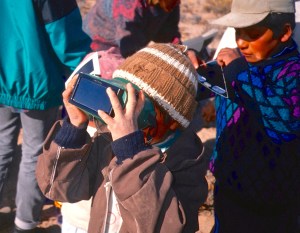
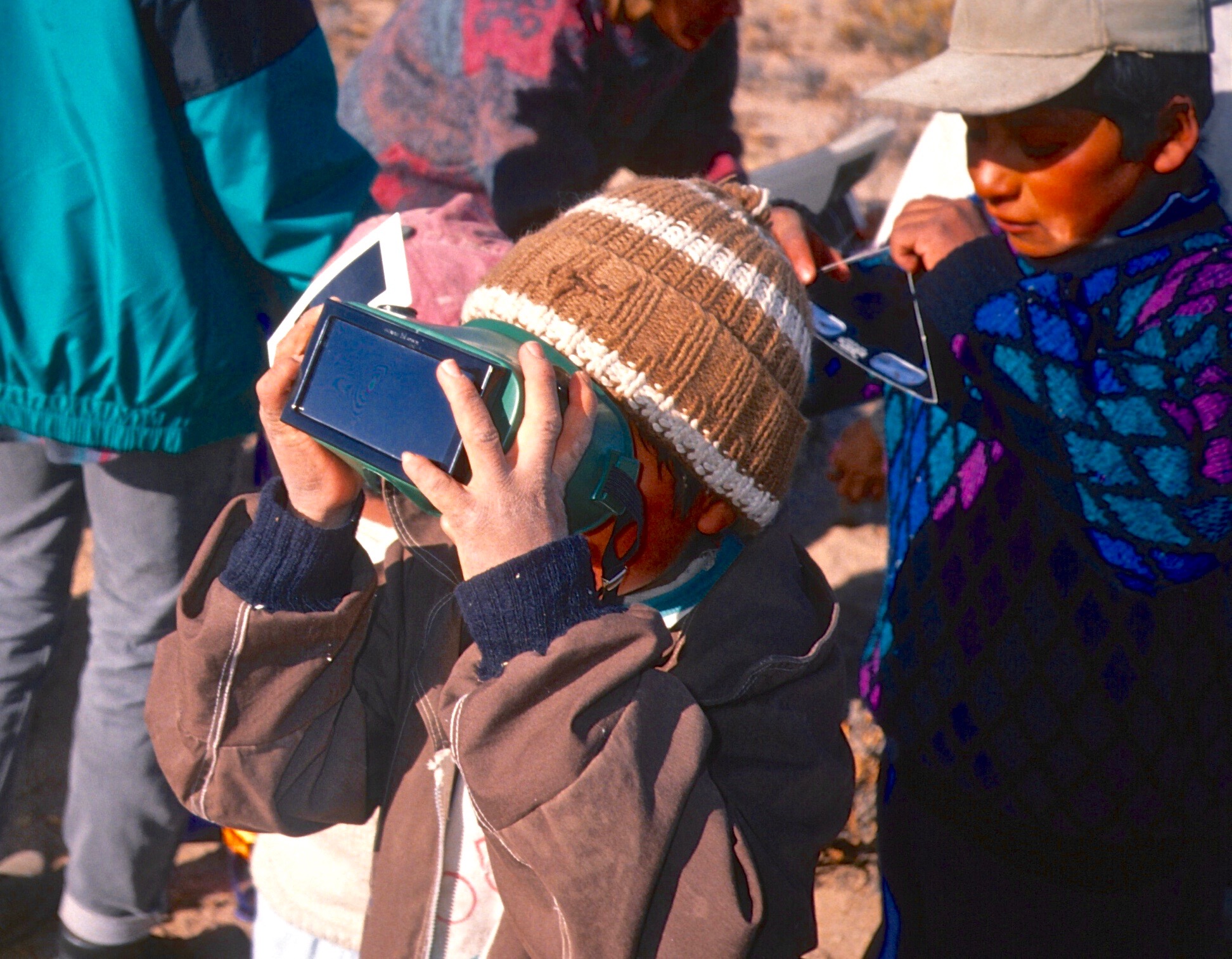
They documented our preparations, shot footage of Bolivian kids looking through solar filters, and collected statements before and after the eclipse.

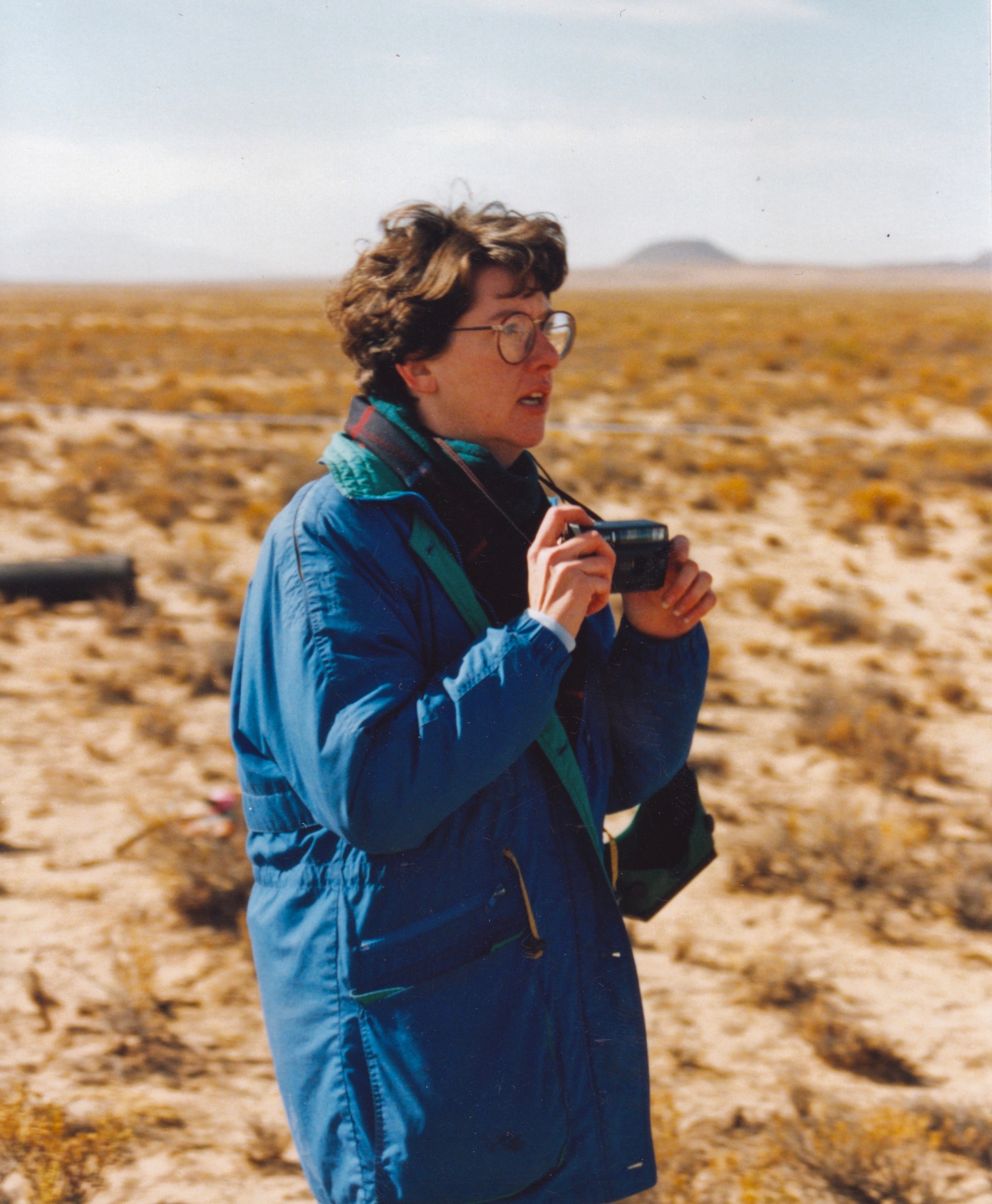
Post-totality is always an emotional moment, but put it in a blender with pre-dawn excitement after a punchy near-sleepless night on a freezing train with too many french fries and one’s response might be…overwrought. When the film crew came to me for an on-camera interview, I felt composed and ready to be articulate. With the camera rolling I began to share what I believe (and love most) about the eclipse phenomenon—totality allows us, for just a short time, to all be doing the same thing at once. Our planet, our one sun, our only moon, all move as one—while every villager, traveler and living creature beneath the shadow reacts. “Everyone is looking up together,” I said. “It’s a beautiful thing.” Then I started to cry. Dammit! Preserved for embarrassing posterity in their film. Then the filmmaker suddenly dropped his camera on the ground, moved forward to put his arms around me, and HE burst into tears. More crying ensued. The rest of the trip we awkwardly avoided each other.

Their twenty minute video actually captures it all—the eclipse play-by-play explained in terms intended for children to understand, the typical scene of locals and umbraphiles assembling, excitedly waiting for totality, and me, blubbering like a fool. The TSE on the Altiplano “crystallizes the film’s message about the interaction of celestial bodies,” states NationalGeographic.com.

Find “Sun, Earth, Moonhere (or possibly, still at nationalgeographic.com).


Eclipse at 16,000 feet

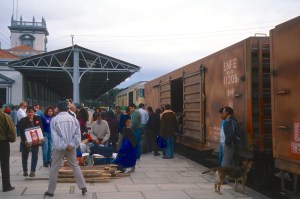
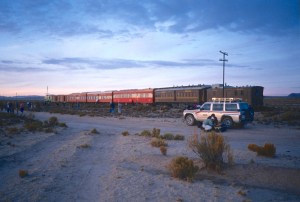
To be accurate, 15,702 feet; a private train took us to view totality on the Altiplano along the Rio Mulatos-Potosi railway line, the world’s ninth highest.

The train was beyond rustic. Eight hours of squeaking metal, with hard seats in cold and cramped compartments. To get to the dining car (for yet another meal of pollo and fries) we had to take a giant step between the cars, the rushing tracks visible in the yawning, swaying crack below.

We boarded the evening before the eclipse and the train clattered through towns and remote villages for hours, higher and higher into the night. We handed our freebie paper eclipse shades and filters out to villagers when the train stopped. We moved through a huge All Souls Day celebration with covered tents and couples dancing, bands playing caporal and cumbia music, people holding up their beers to toast us as we pass.

All the trains to the centerline were coordinated from below and embarked from the station two miles apart, and the nighttime passage and early arrival time ensured that no smoke, light or vibration would pollute the eclipse viewing areas.

The train screeched to a stop at 4 a.m. where the weather satellite said to, somewhere outside Sevaroyo. With the trains filled with groggy travelers suddenly silently in place, it was hushed and dark and cold before dawn on eclipse morning.

No flashlights or flash photography were allowed. We were advised to dress in warm layers—there would be no heat, no generator—and prepare to be on camera: an accompanying film crew hired by National Geographic was about to go to work.

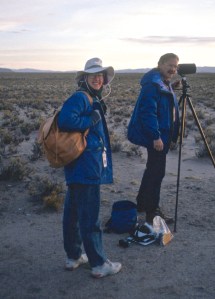
After a hurried breakfast we all piled out onto the dark desert with our scopes and cameras; we were late arriving, and there wasn’t much time for observing before sunrise at 6:30. I saw Crux, the Southern Cross for the first time—a stargazer’s milestone and proof that a North American traveler is very far from home.

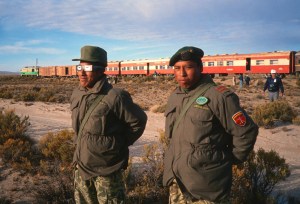
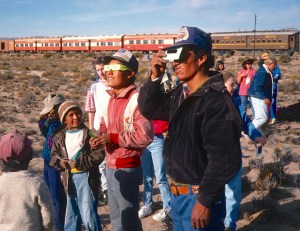
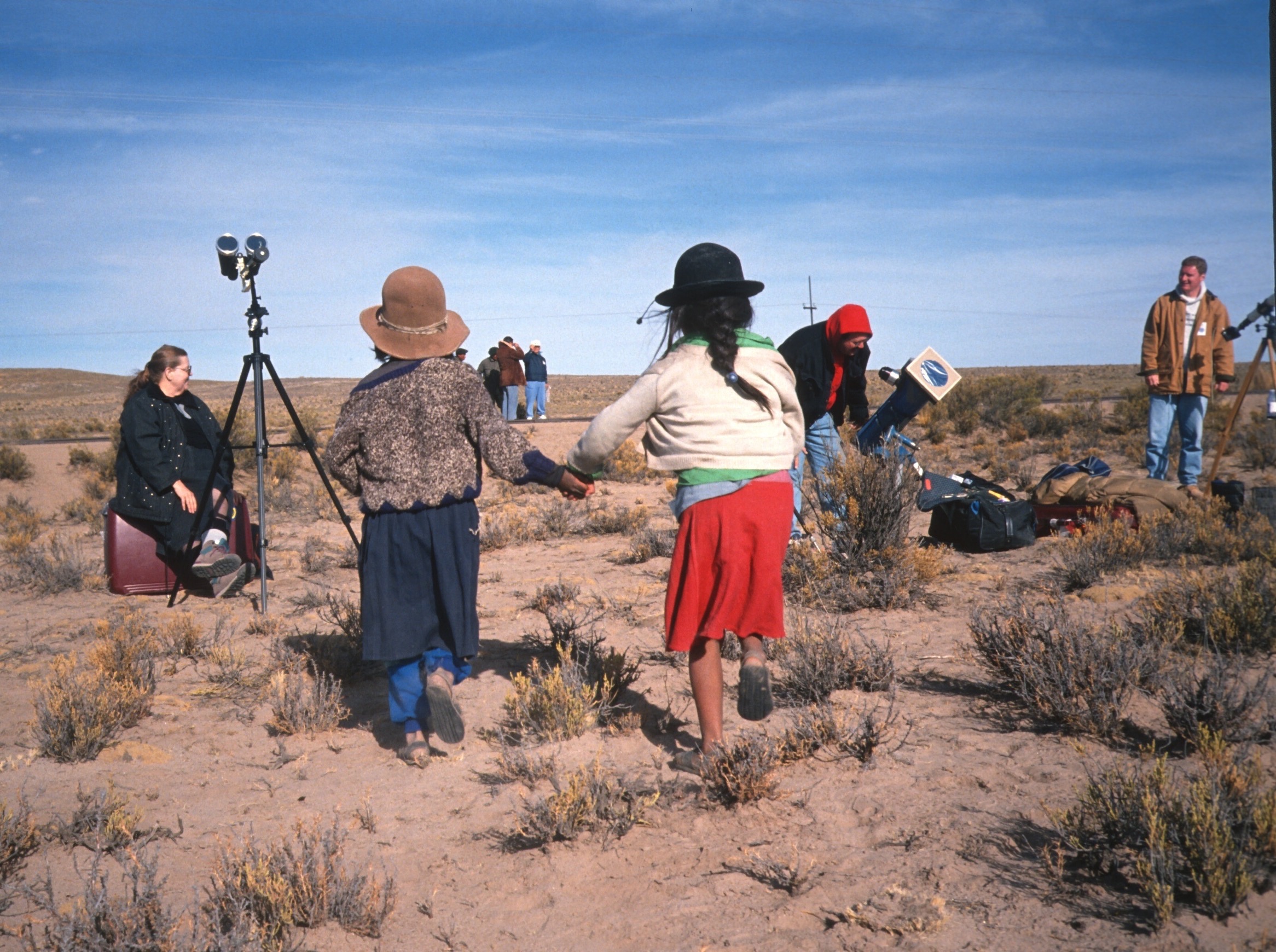
I was excited to be observing at a high-altitude site—about as far from my sea level first eclipse as possible—where the coronal streamers were expected to be long and bright (as light from the corona wouldn’t be dulled by Earth’s atmosphere). The air was thin and the wind was chilly. Local children, families, and military guards armed with machine guns materialized to view partiality through our solar scopes and eclipse glasses. I later learned that only 600 souls were present on the Altiplano.

The short three-minute totality began at 8:22 a.m. at 35.80 degrees above horizon. As predicted, the delicate corona was detailed and luminous. I got a good look at Baily’s Beads (for those who don’t know, these are the dots of light in a ring formed by SUNLIGHT SHINING THROUGH THE MOUNTAINS ON THE MOON, sorry, I can hardly fathom it), and this time, both diamond rings.

Above: Sunrise on the Altiplano

Below:

Boarding the ENFE train

Viewing site

Locals and travelers witness together

Group shot at the train