Betel nut

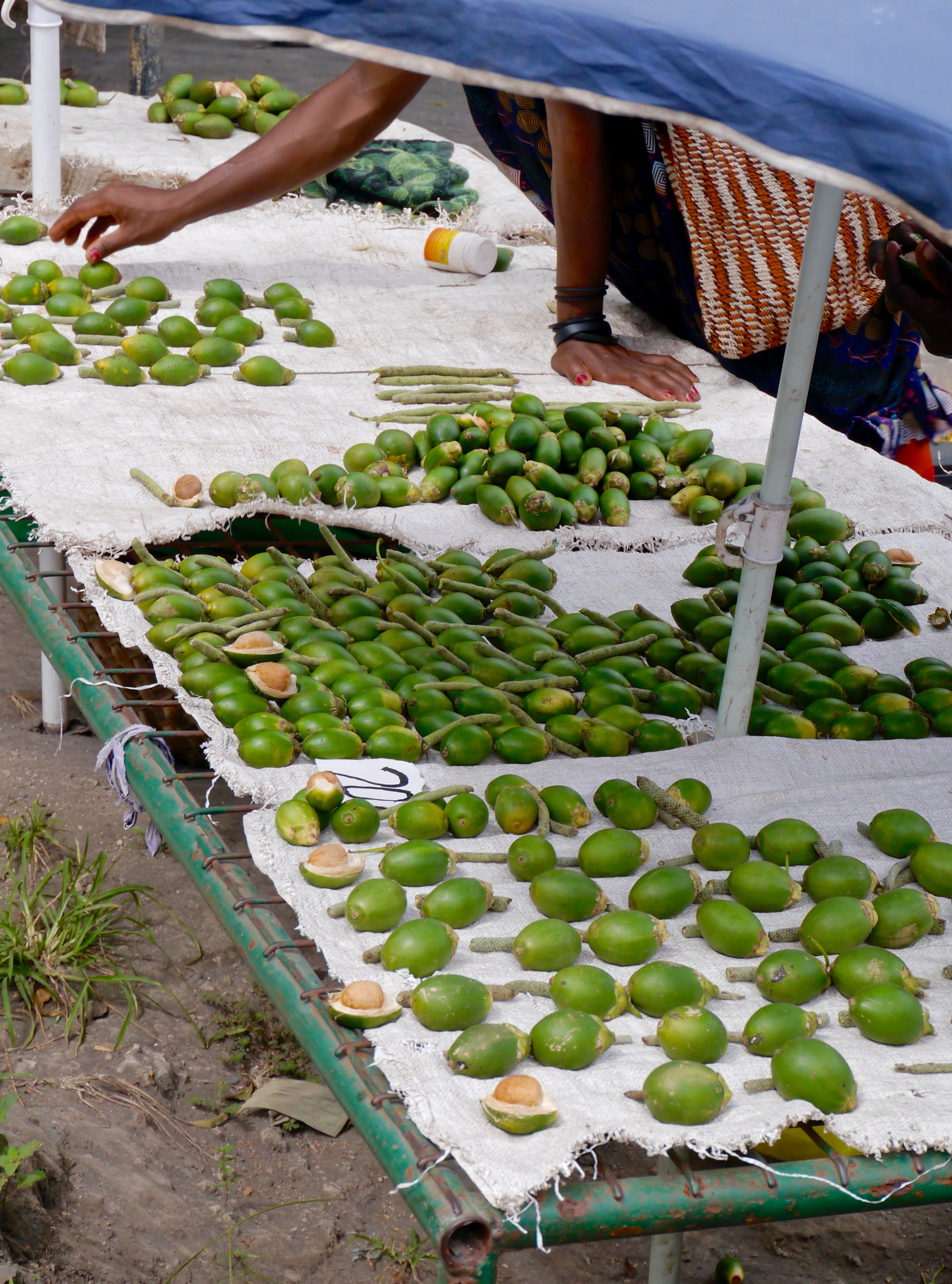
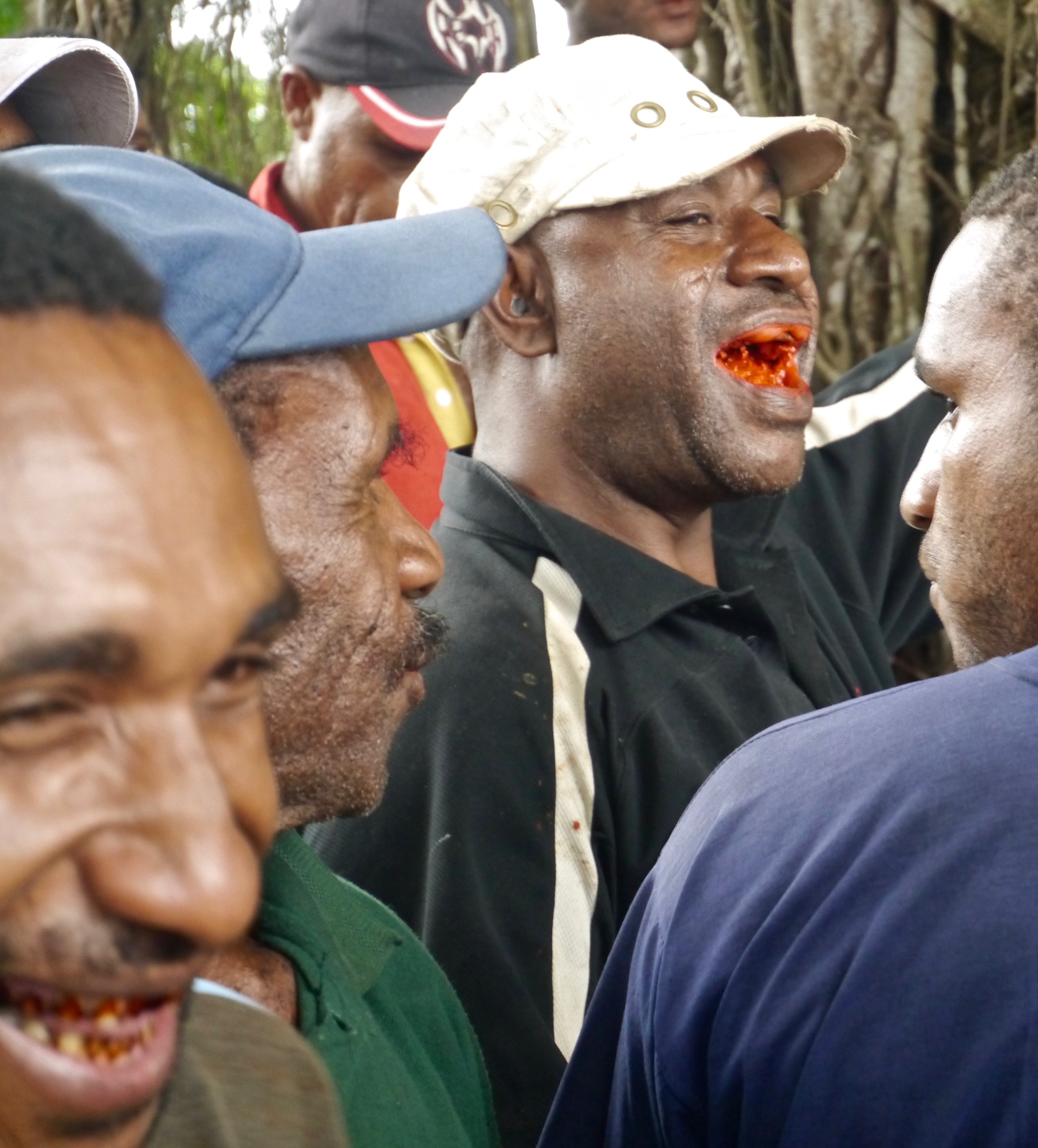
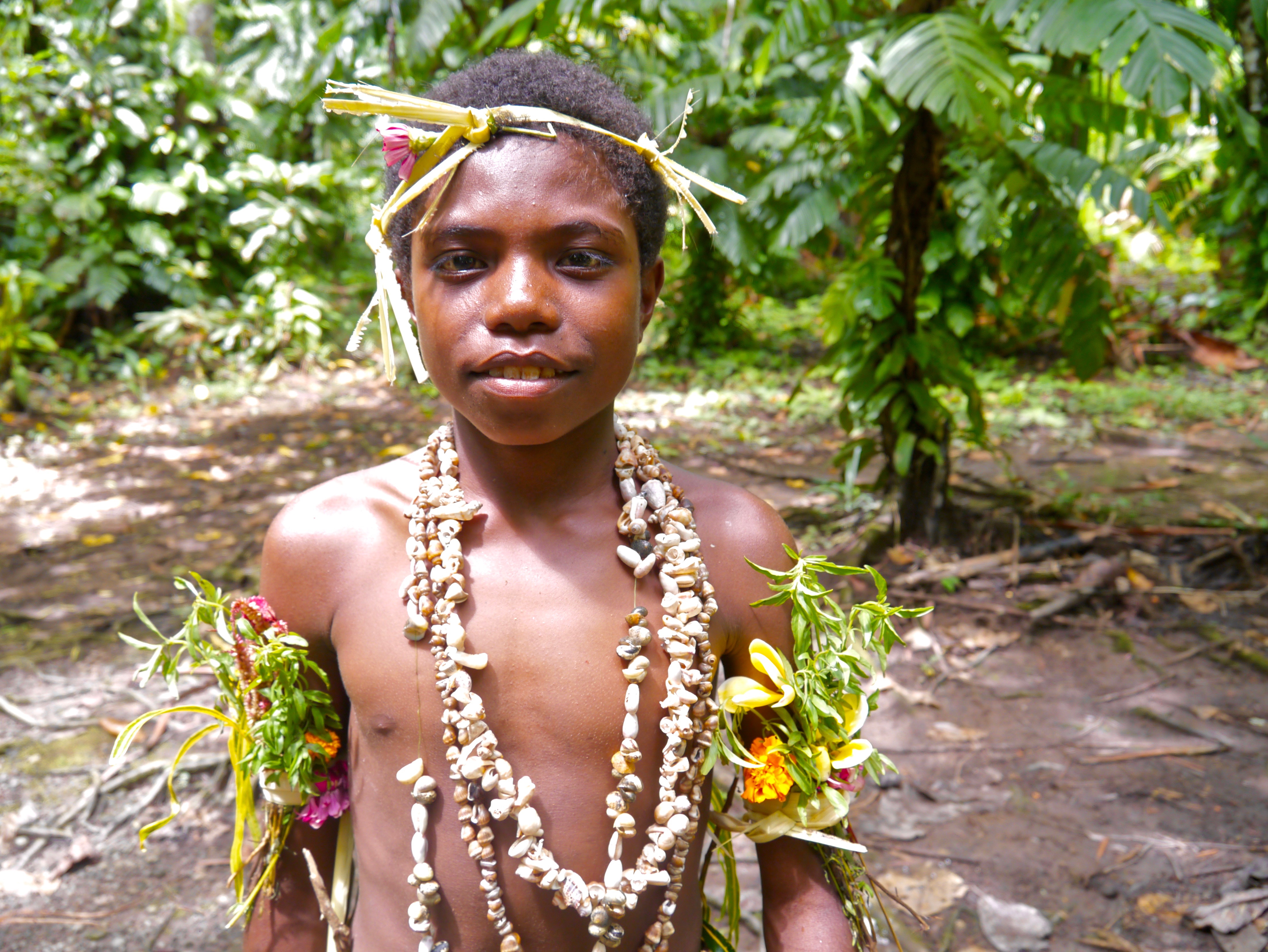
Like most island nations in the tropical Pacific, chewing betel nut is a popular pastime among the people of Papua New Guinea. The effect (I’m told) is a mild and calming buzz, akin to cigarette smoking. Like cigarettes, betel nut is addictive and not without side effects beyond the ghastly red smile: gum disease, tooth loss, and mouth cancer.

So what! Betel nut—actually, the areca seed and associated chewing paraphernalia—is widely sold on any market day in PNG. Some roughnecks on the street in Madang were happy to demonstrate the technique for enjoying “buai”: bite the nut meat a bit to, what, get it going I suppose, then spit the fibrous wad onto a betel leaf and add powdered lime (or, if you’re man enough, just pour the lime onto the inside of your lower lip). A type of mustard may be added to make it extra gross. Position the wad to the side of your mouth or under your lip; do not swallow. When spent, spit it on the ground, adding to the various clumps of ABC fibers in the gutter.

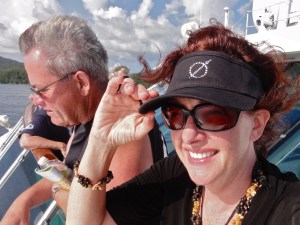
Justin, the Orion’s cultural liaison (and official tribesman by marriage) brought some on board for us to try during happy hour. After tasting it I can safely say I will remain betel-nut free. 

Above: Market selection

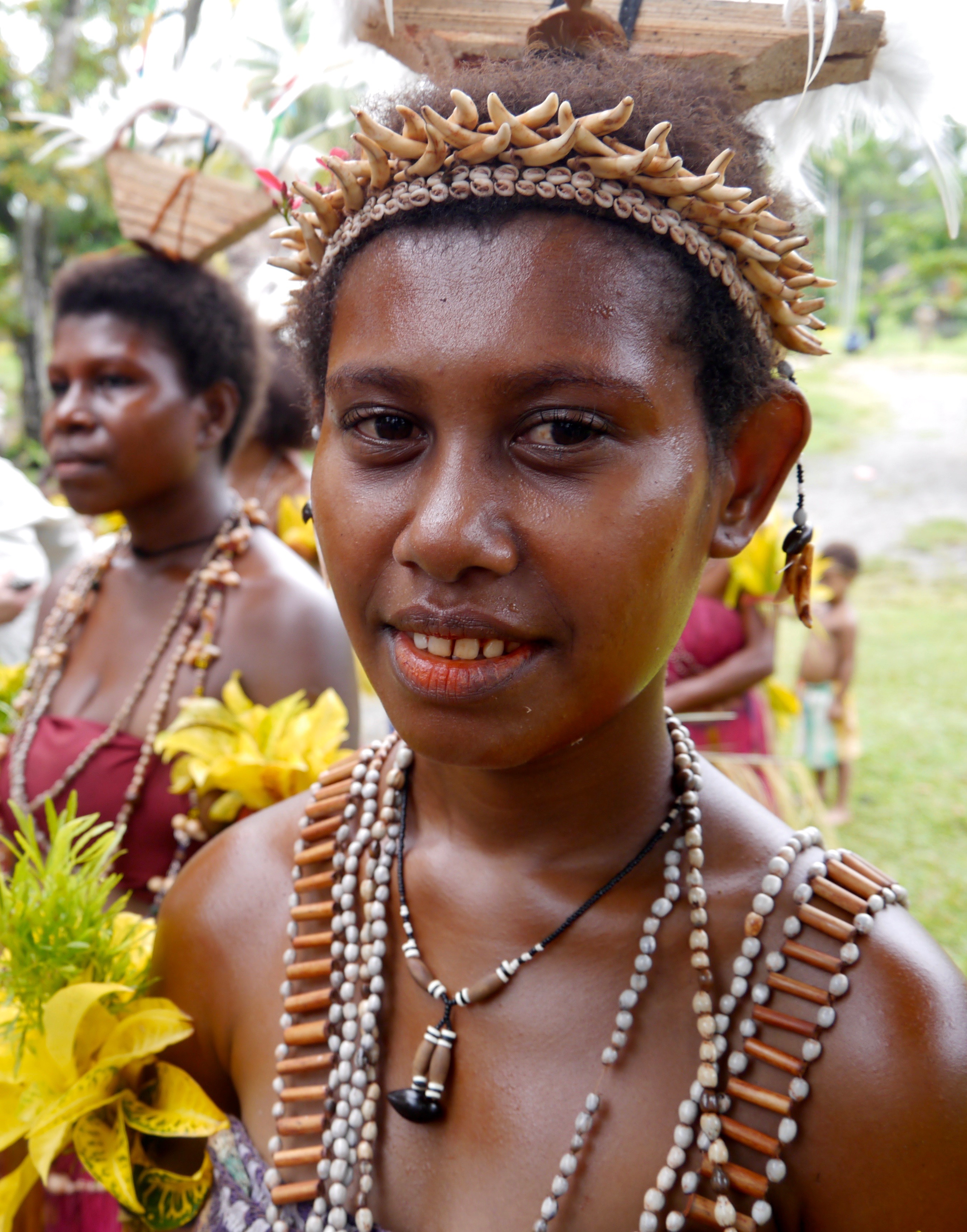
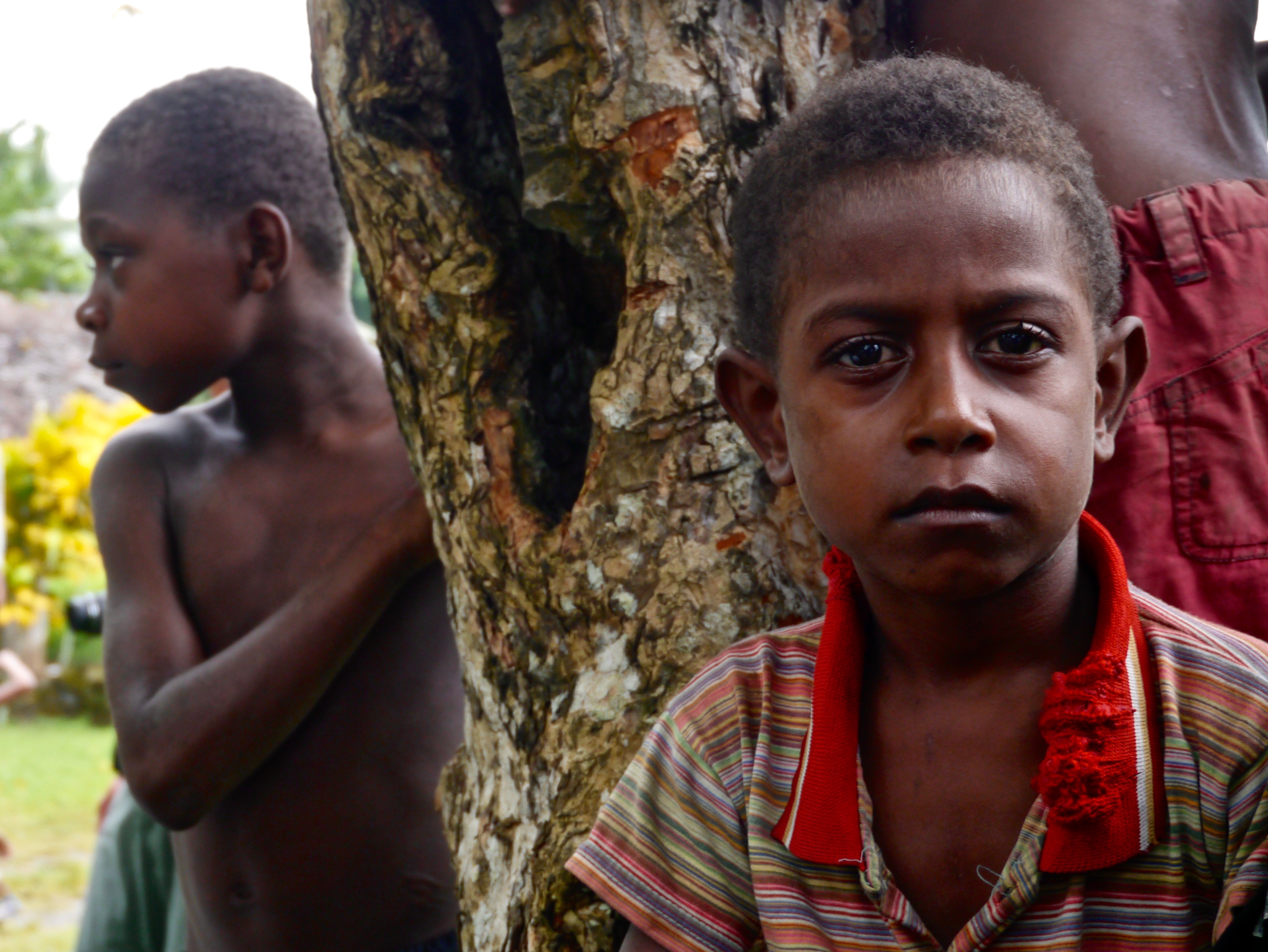
Below: The Faces of Betel Nut


WWII history

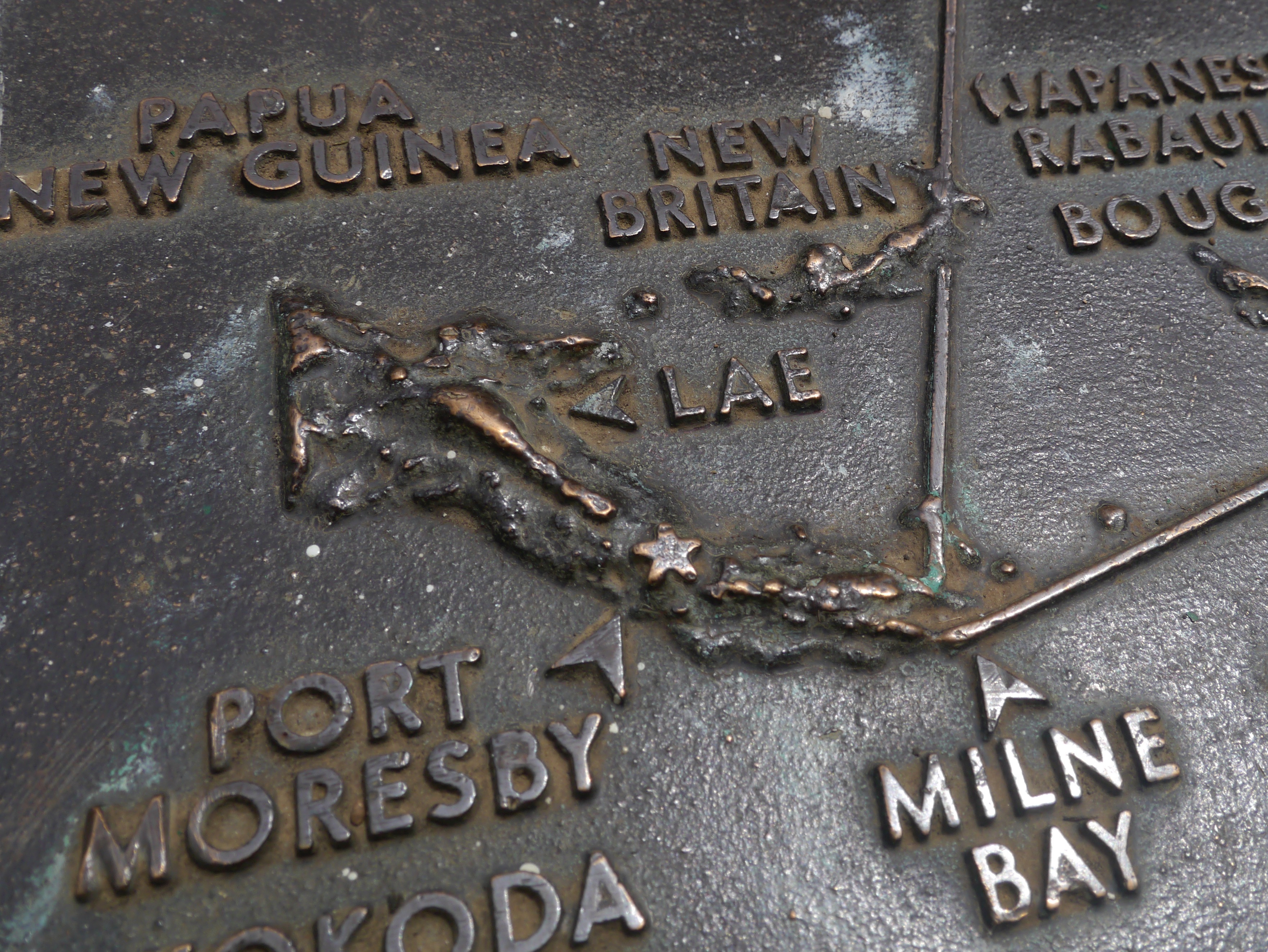
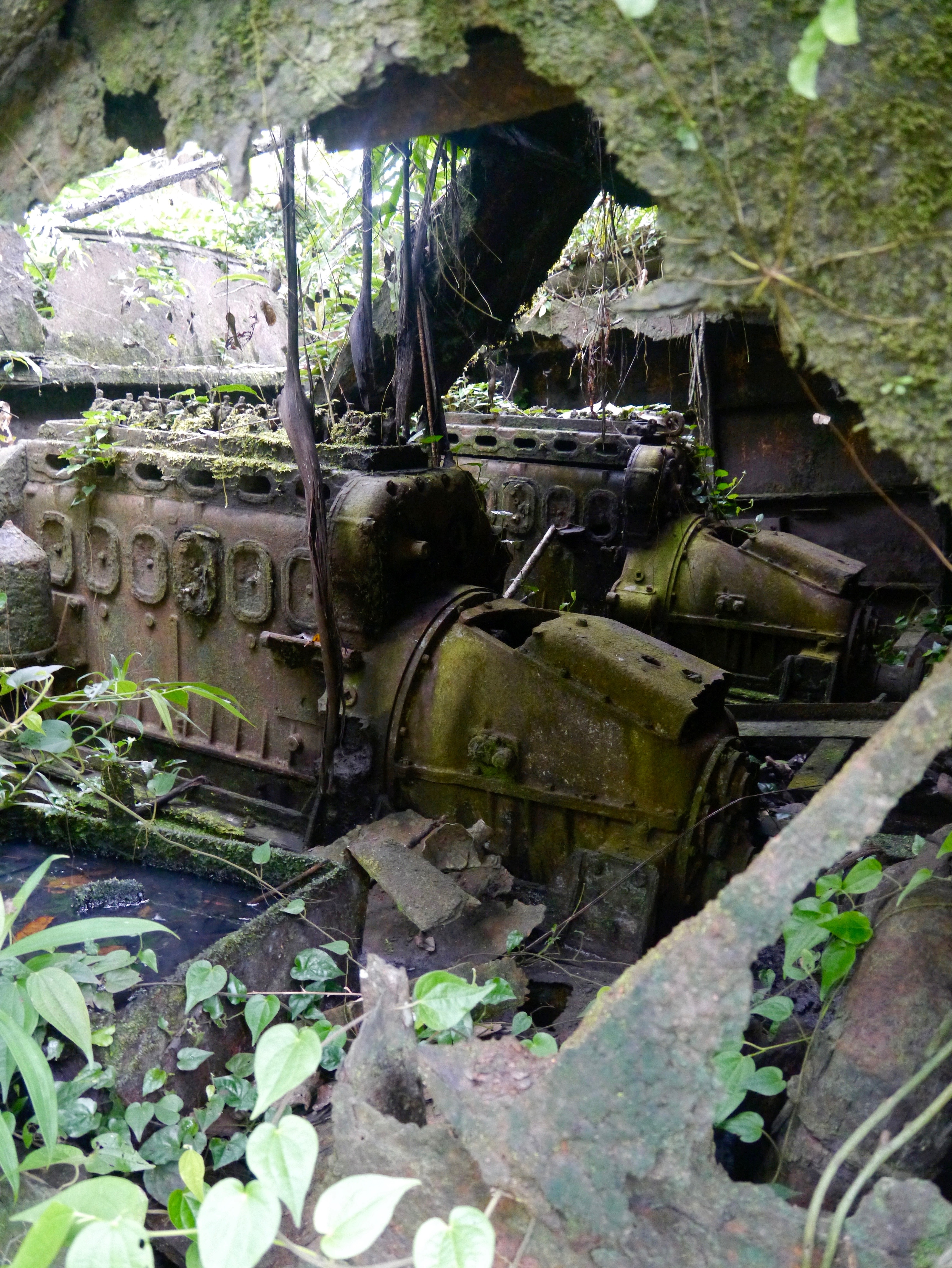
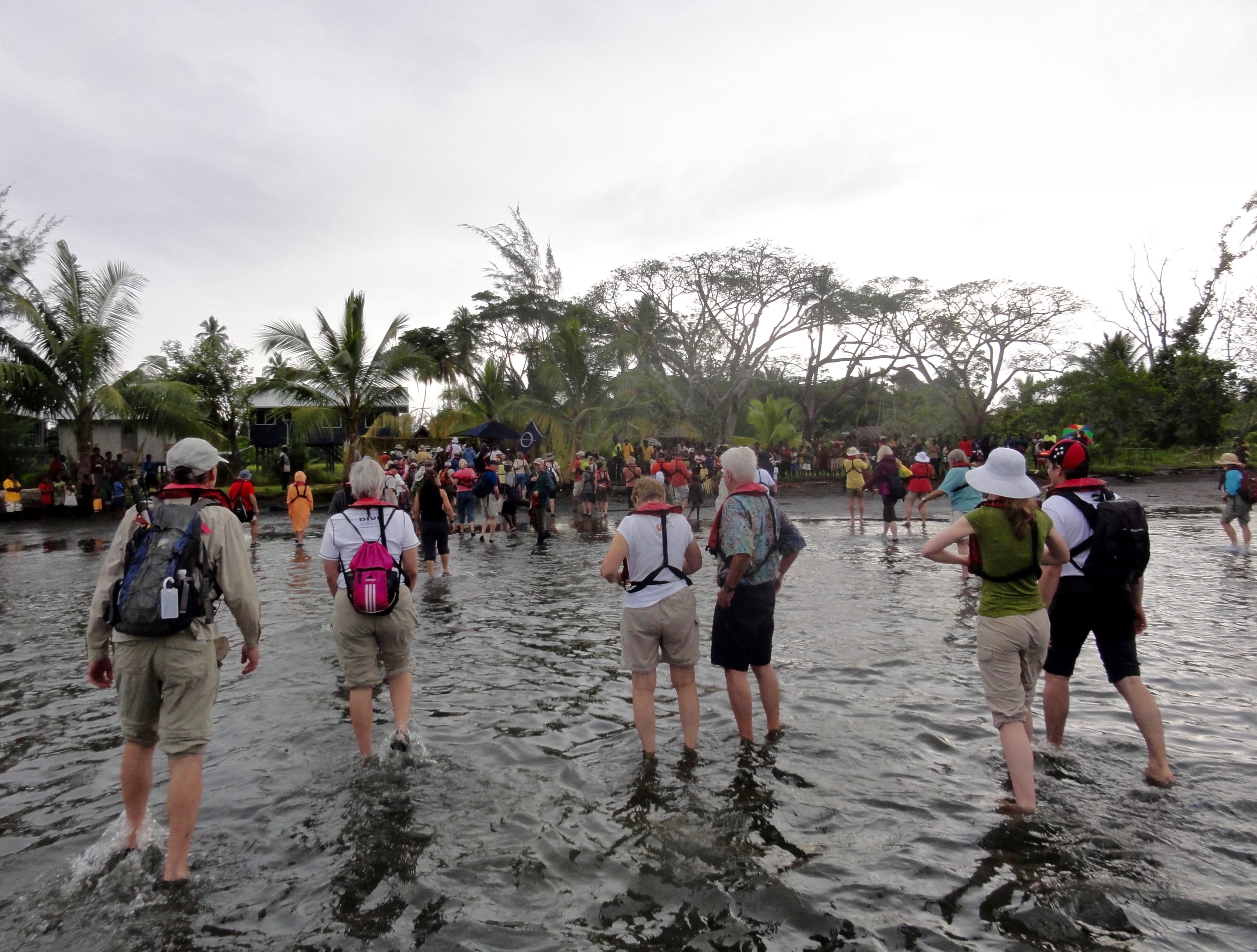
Aspects of the cruise would have been a challenge for Ralph: wading ashore after a cramped and bumpy Zodiac ride with twelve strangers; the terrifying blackfaced guy who jumped out of the jungle with a spear on Tufi; the crew talent show. But as a historian he would have loved the significant World War II sites and the buried and rusting remnants of tanks, aircraft and military vehicles in Rabaul, Alotau and Milne Bay.

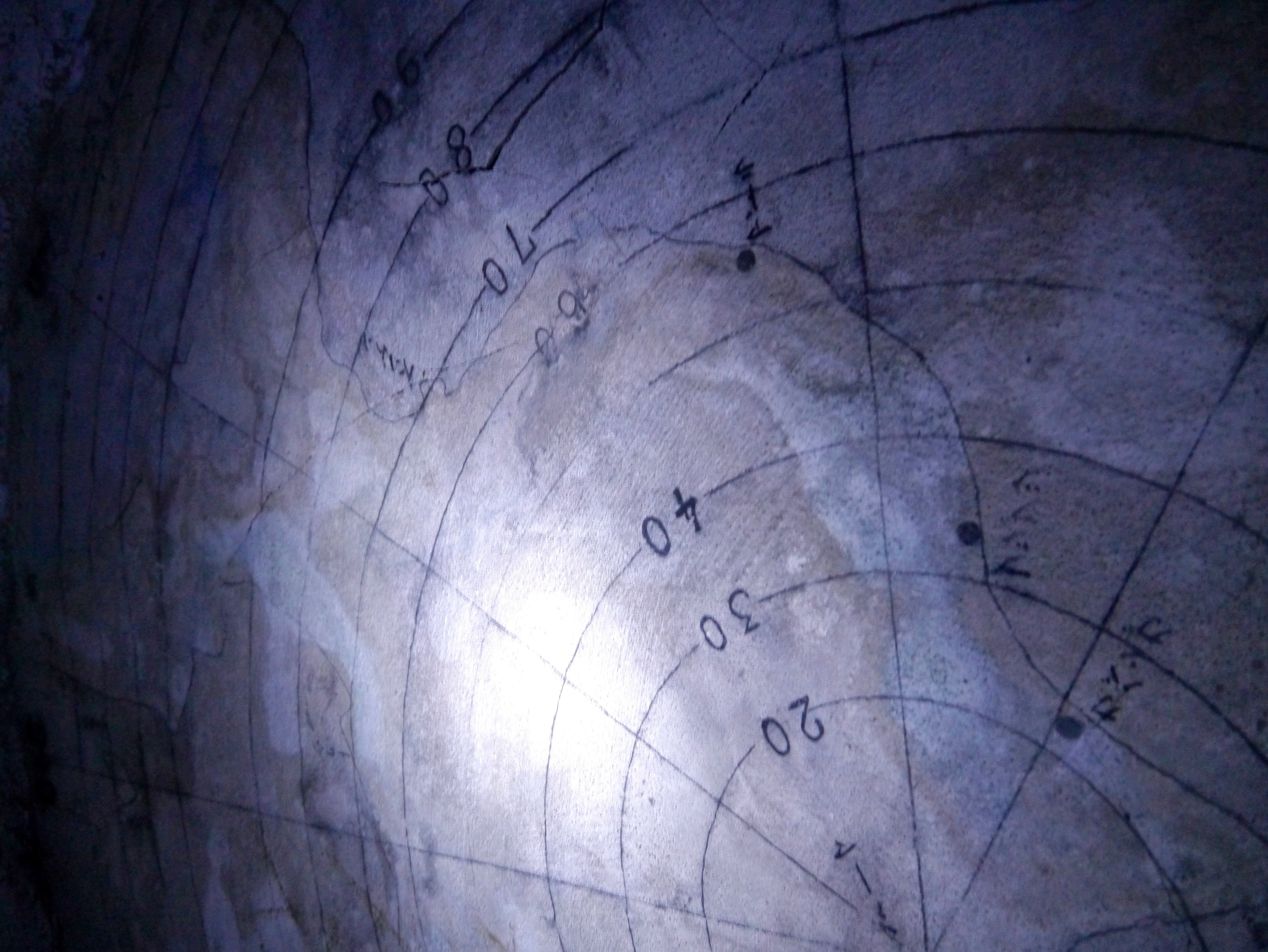
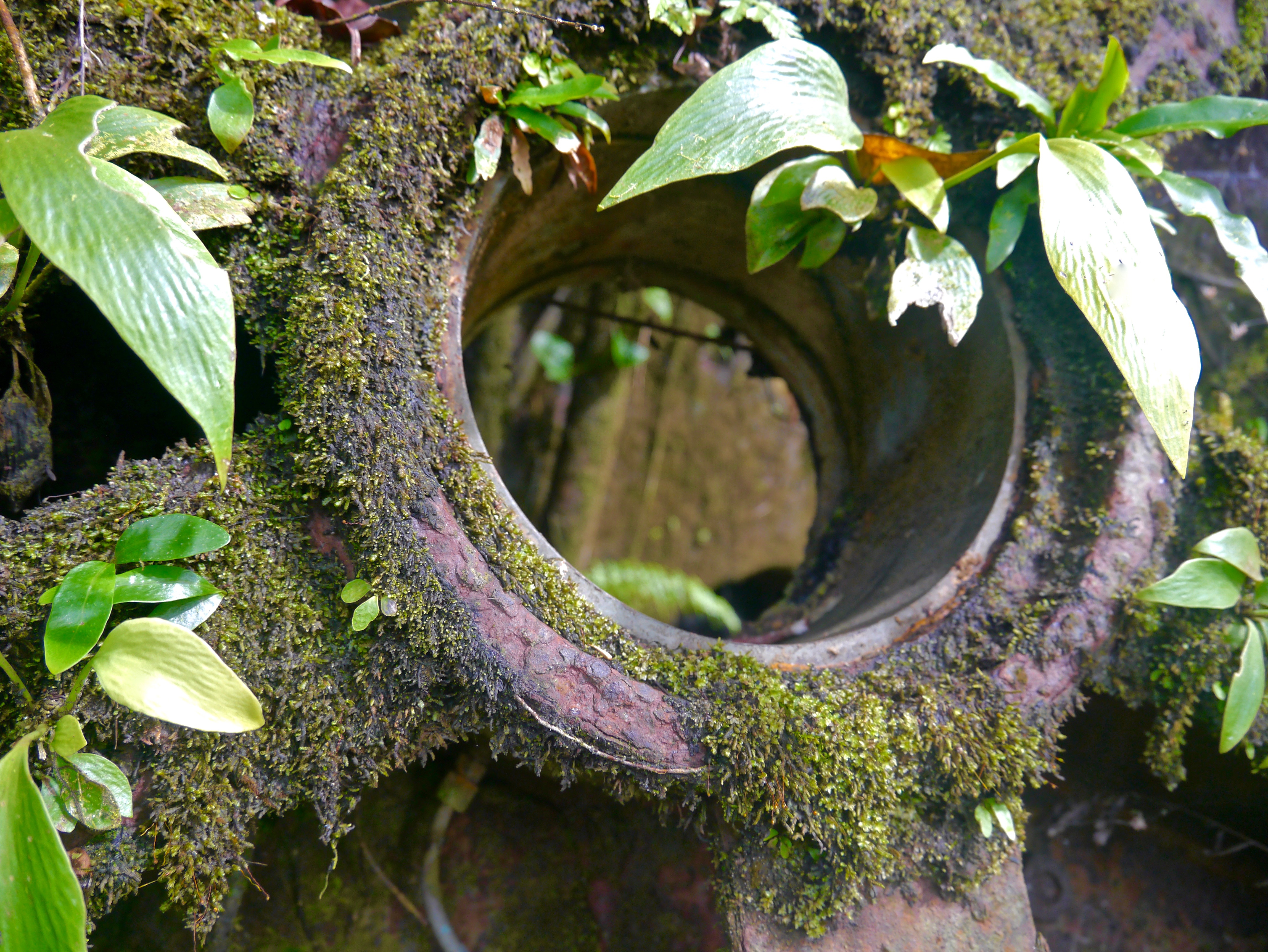
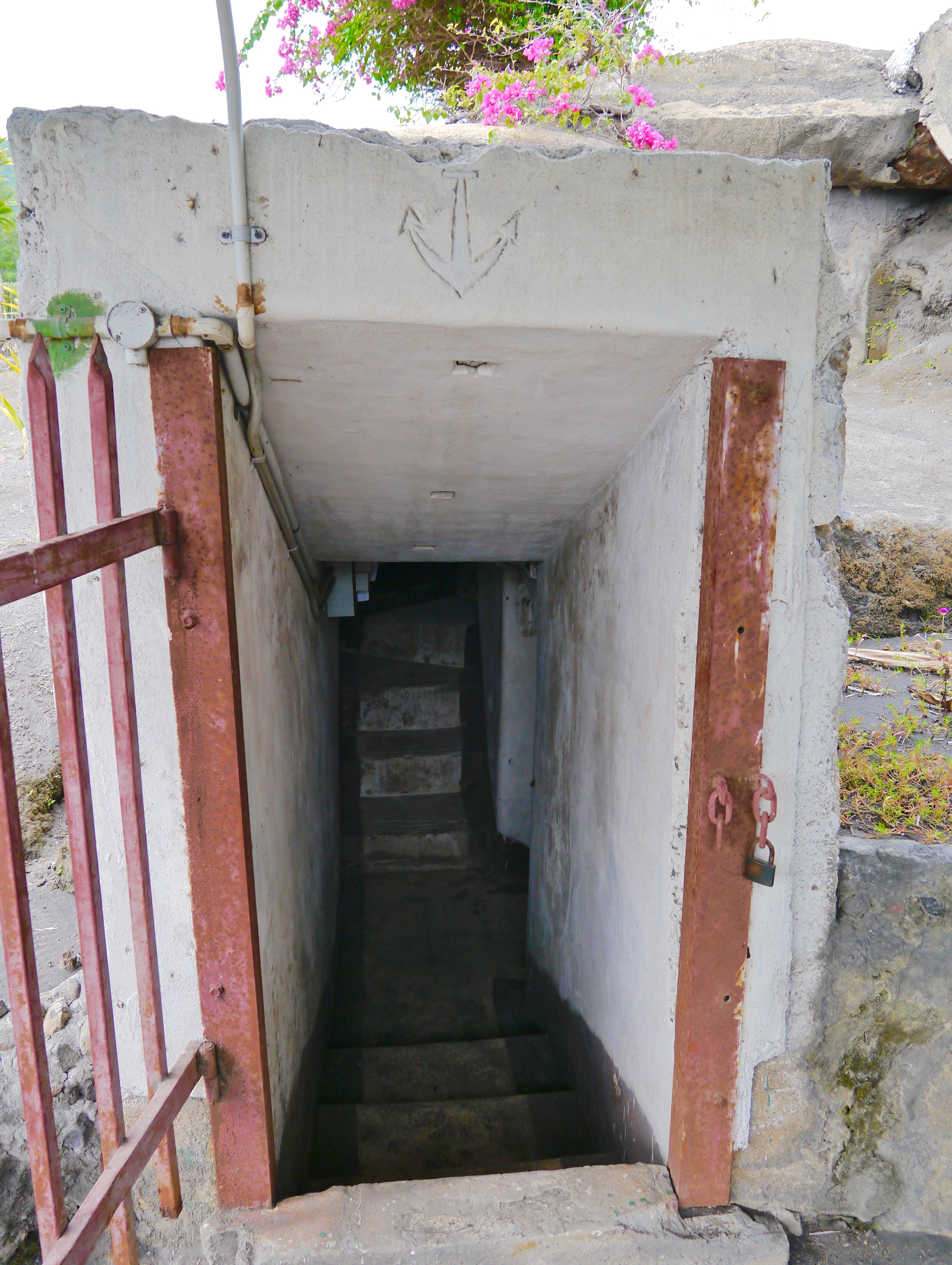
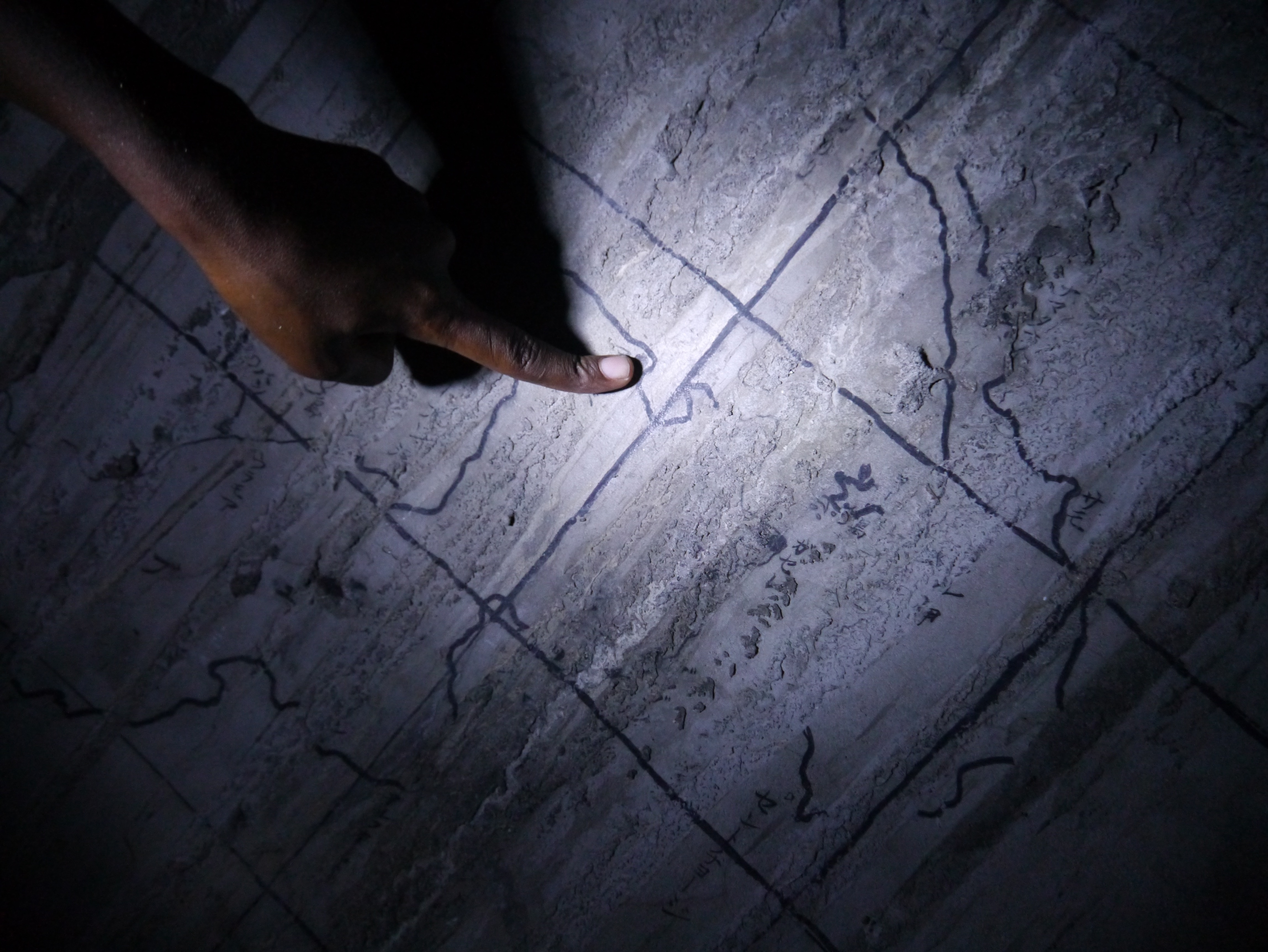
The military history in Milne Bay in Alotau is dear to Australians as the site of the Battle of Milne (or “Millin” as the locals say). Yamamoto—you’ve heard of him: Japanese Admiral? Battle of Midway? Bombed Pearl Harbor? that’s the one—spent his last night in a bunker in Rabaul where hand-scawled battle maps and notes remain on the walls down in the dark. Exposed caves and tunnels reveal Japanese cargo barges, and the steel bones of sunken ships and aircraft are still half buried in the sand.

For actual details, please read this moving article about PNG’s war history and relics.

Island artifacts

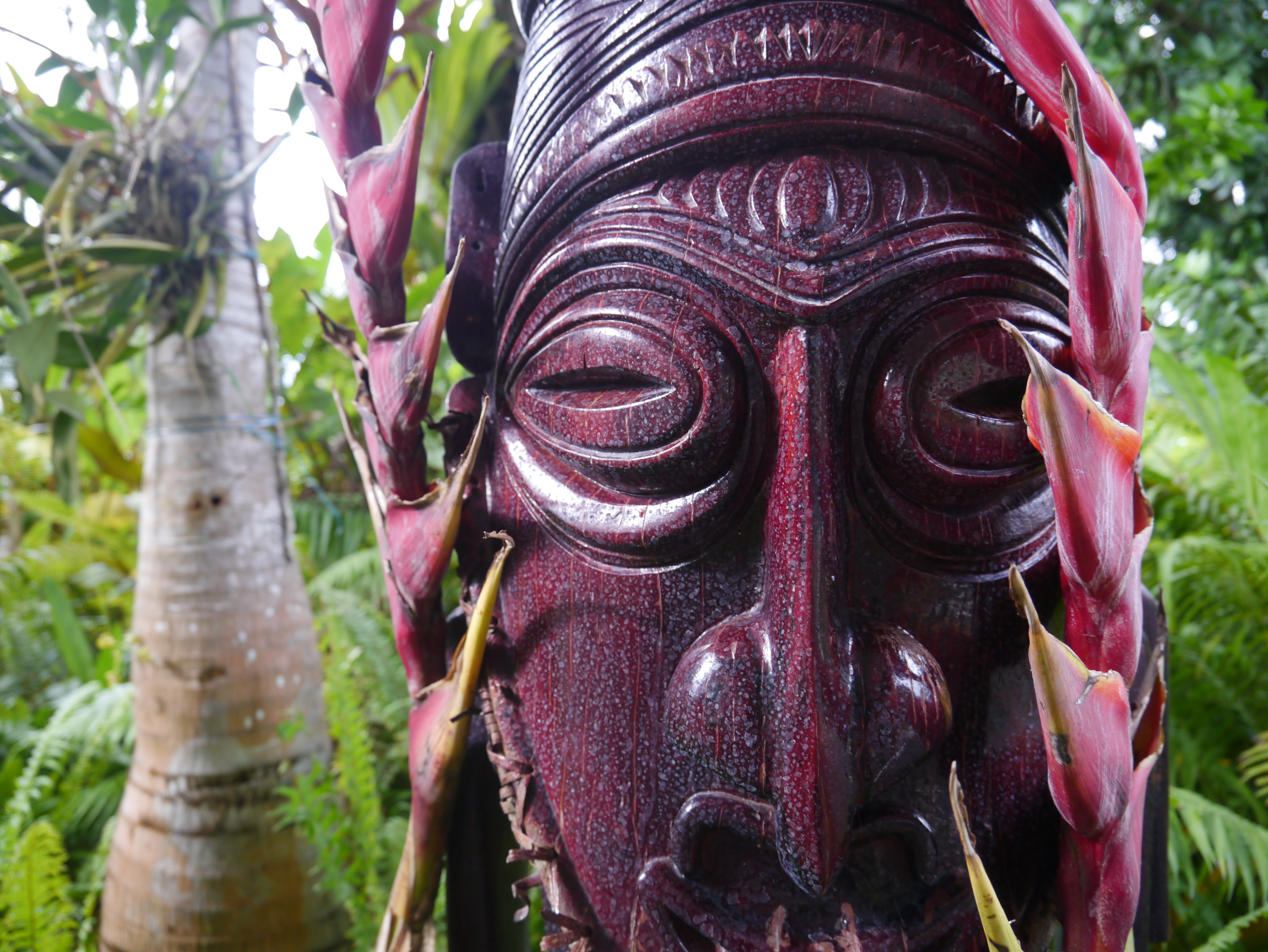
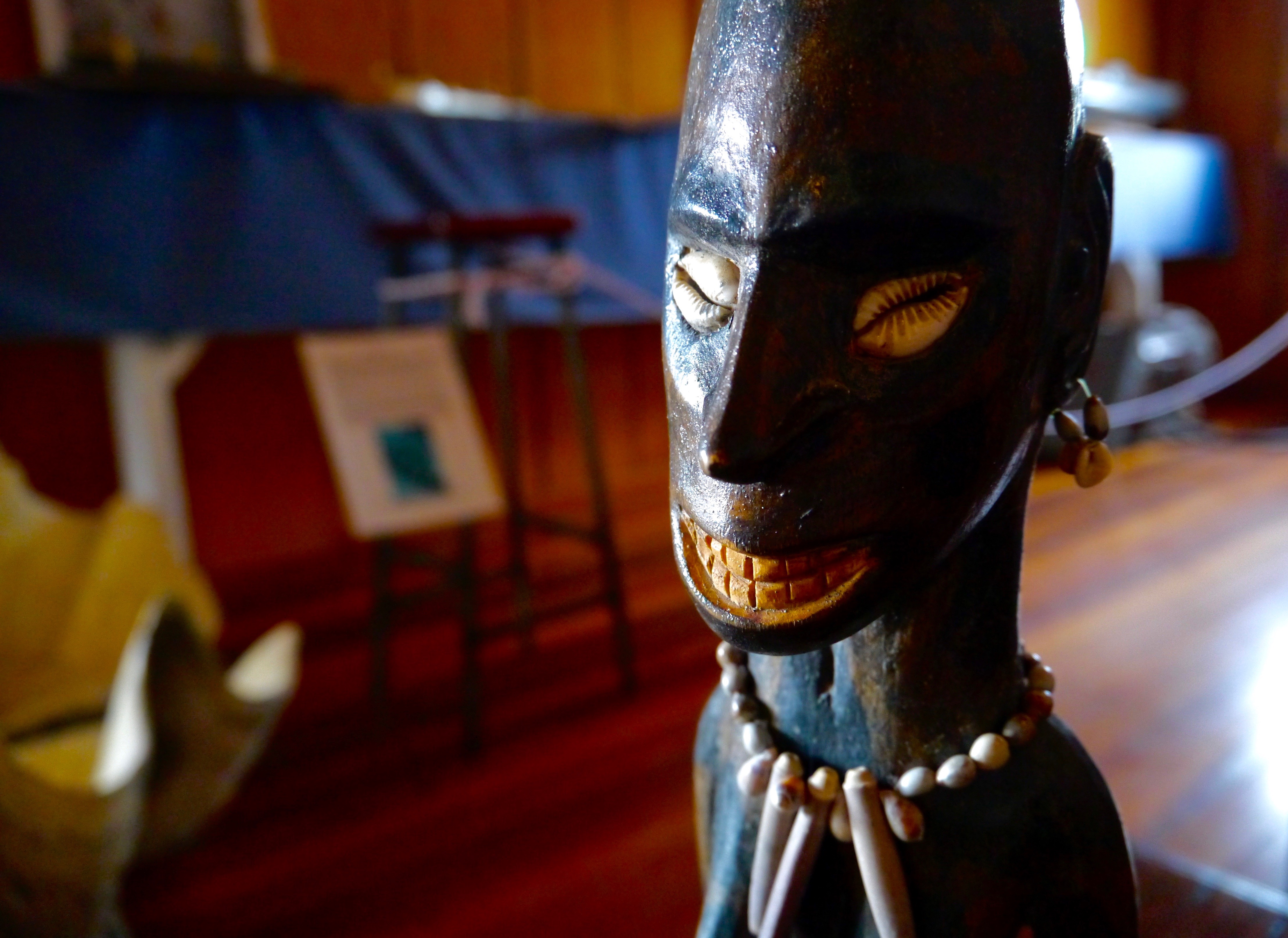
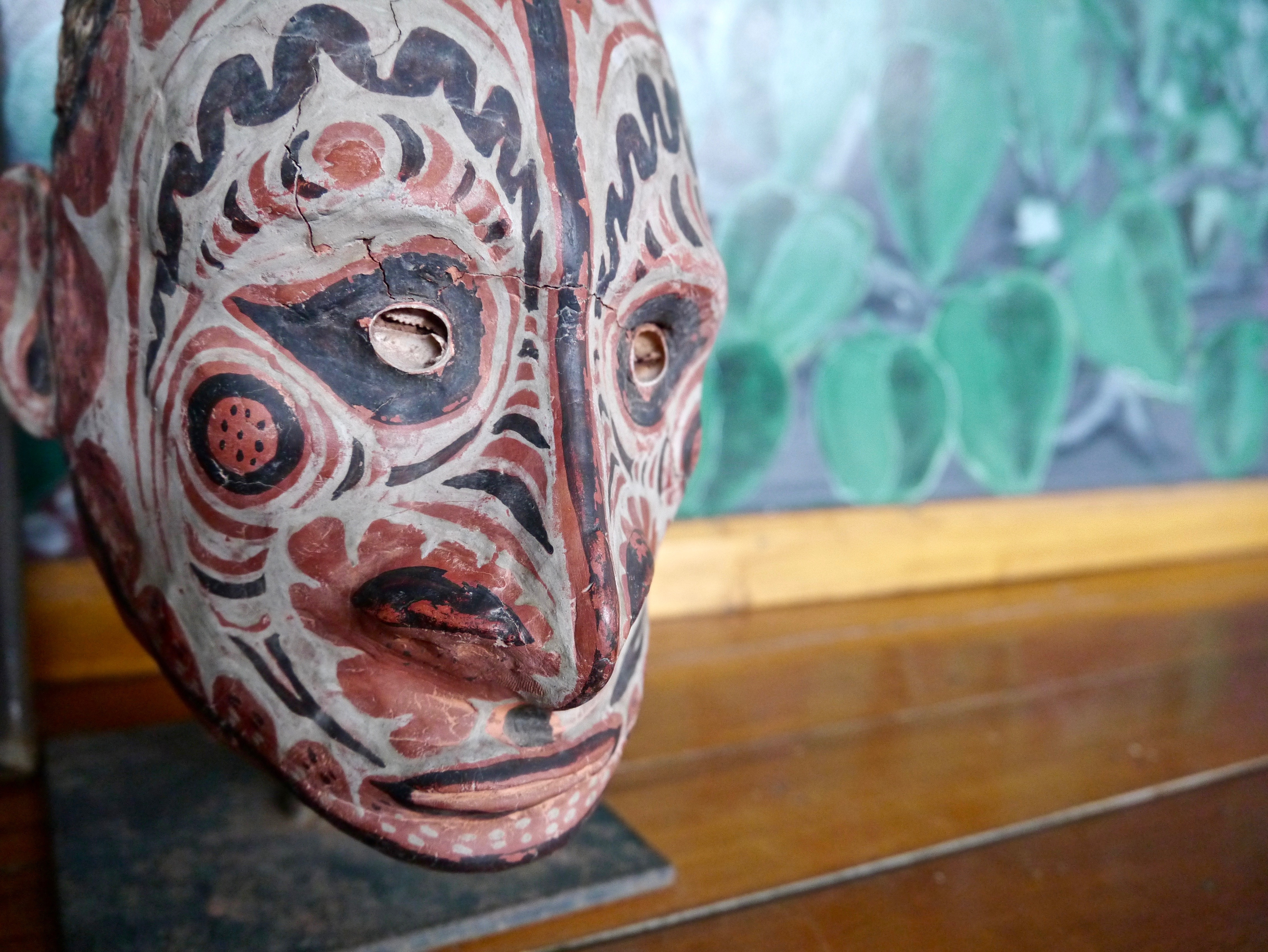
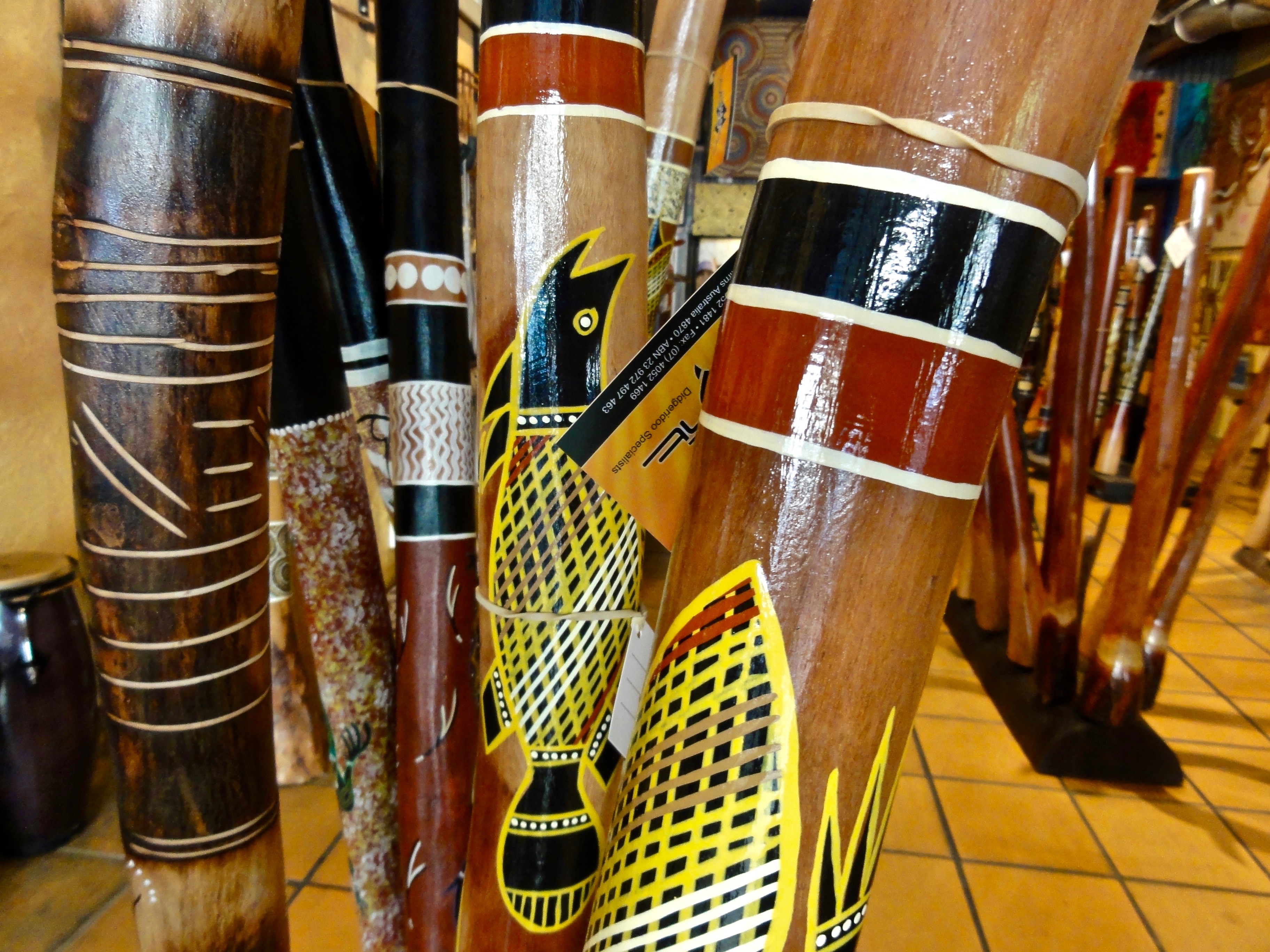
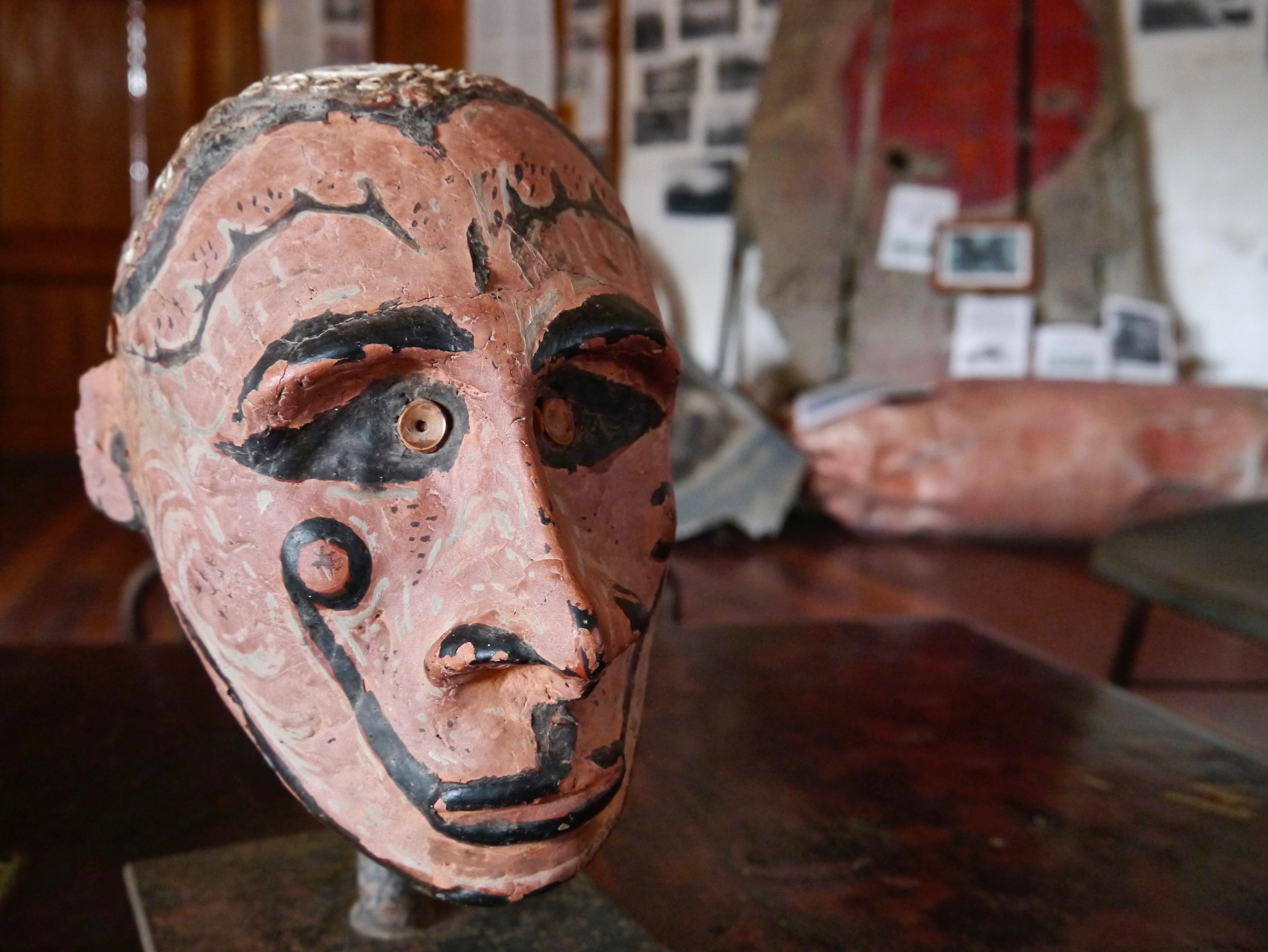
At every island there were ample opportunities to shop for handmade artifacts and home goods: carved bowls and raku-style Bilbil pots, shell jewelry, bilum string bags, woven penis sheaths (a lovely souvenir to bring back to the men at home), and eerie masks.

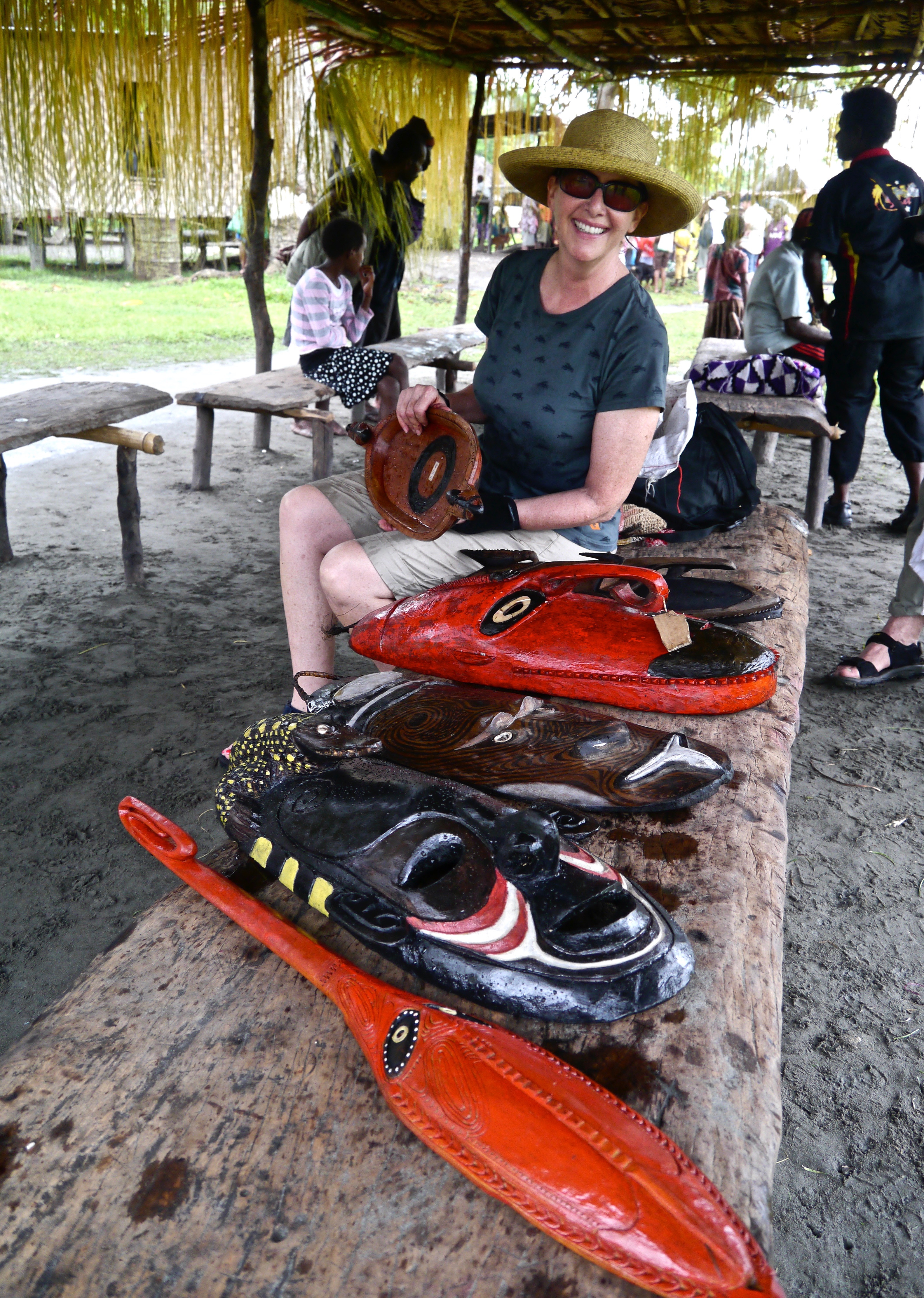
Those who had an eye for tribal art were salivating, and at one point on Tami Island it was like a sale at Filene’s Basement—the collectors were prepared to physically fight each other over who would take home the best spirit mask from the selection lined up on display along the muddy main street.

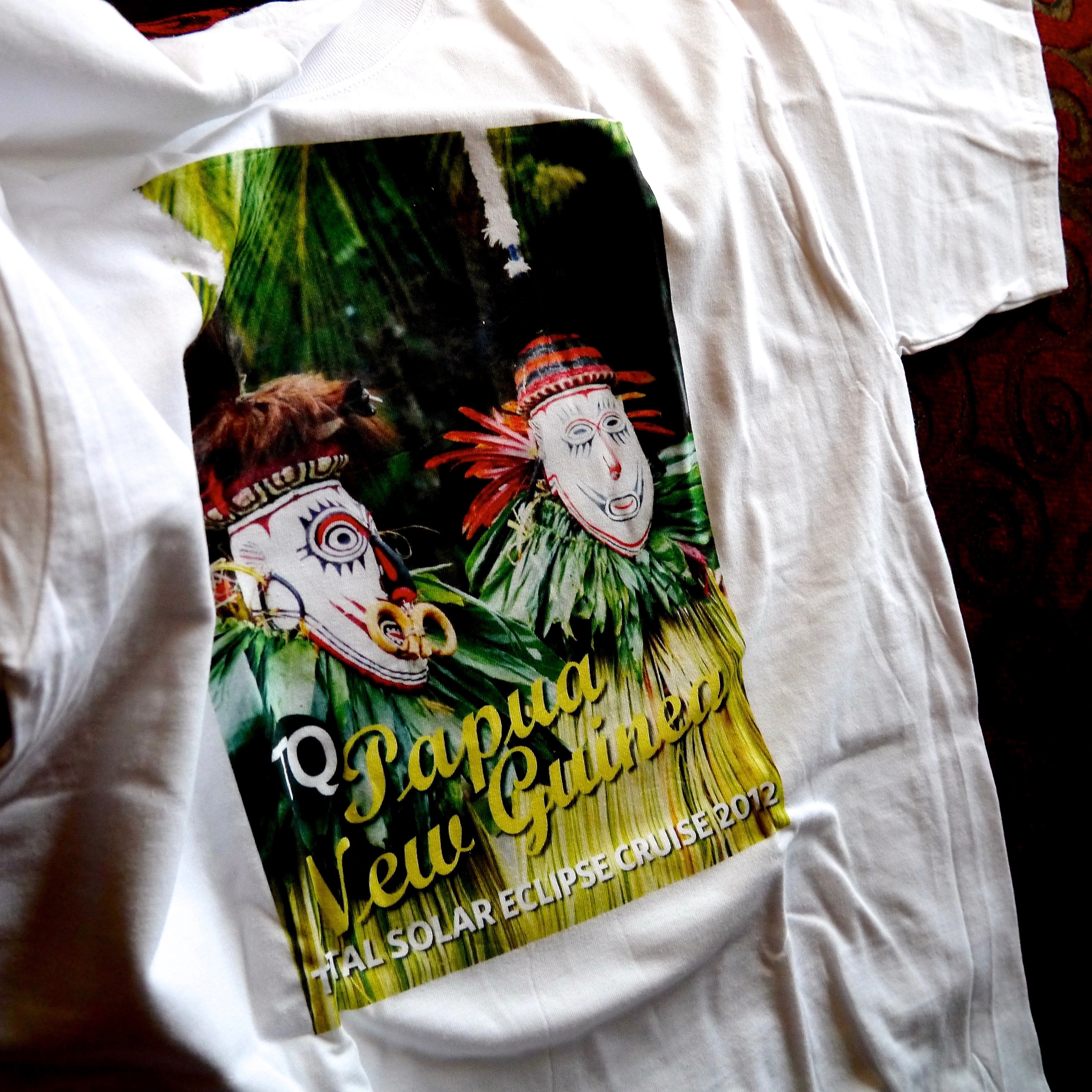
I had yet to purchase my showpiece collectible when the mask supply ran low (and a sneaky couple bought the one I had chosen when I turned away for a few minutes to pull more Kina bills from my backpack). One of the sing-sing dancers ran to their costume shop and brought me a three-foot tall white Tago “ghost” mask with a feather headdress that was used ceremonially, not just made for tourists to buy. Look—it’s the same type pictured on our tour t-shirt.

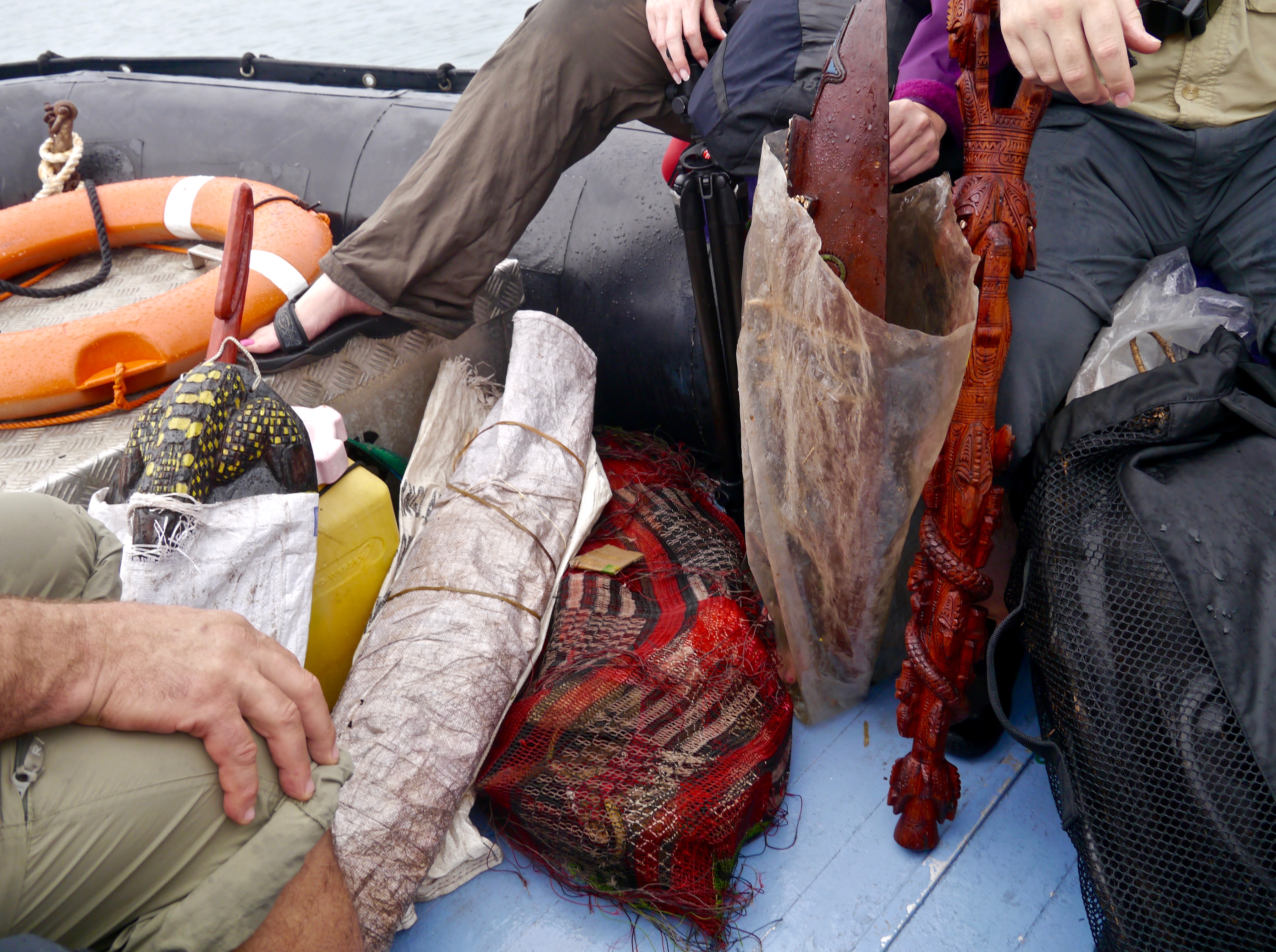
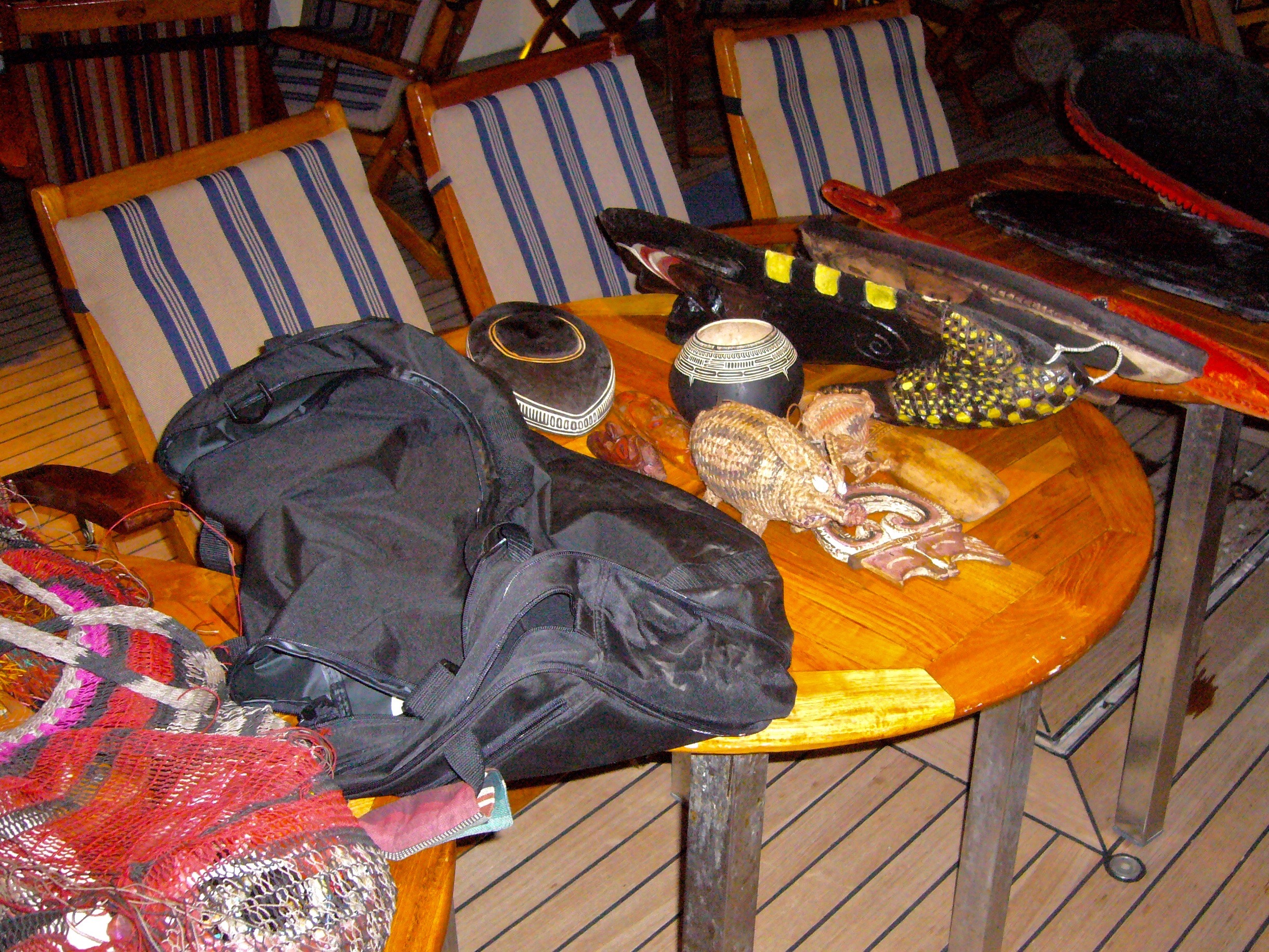
Many items—certain turtle shell and bean beads, Kundu drums with lizard skin heads—would be disallowed by customs officials when we returned to Trinity Wharf in Cairns. The ship’s purser helped sort out the mess of souvenirs on board, and ensured that all items were brought to the deck of the ship to be soaked liberally with an anti-infestation spray.

I spent the entire last day on board scrounging bubble wrap from the Orion gift shop and wrapping my treasures for shipment home.

Above: New mask collection

Below:

Tapa cloth 

Shlepping our souvenirs on the Zodiac

Shipboard treatment

The Tago mask—represents an ancestor ghost

Sing-sings

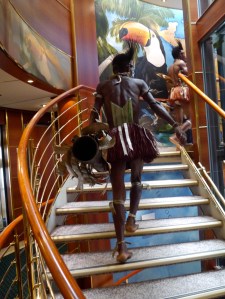
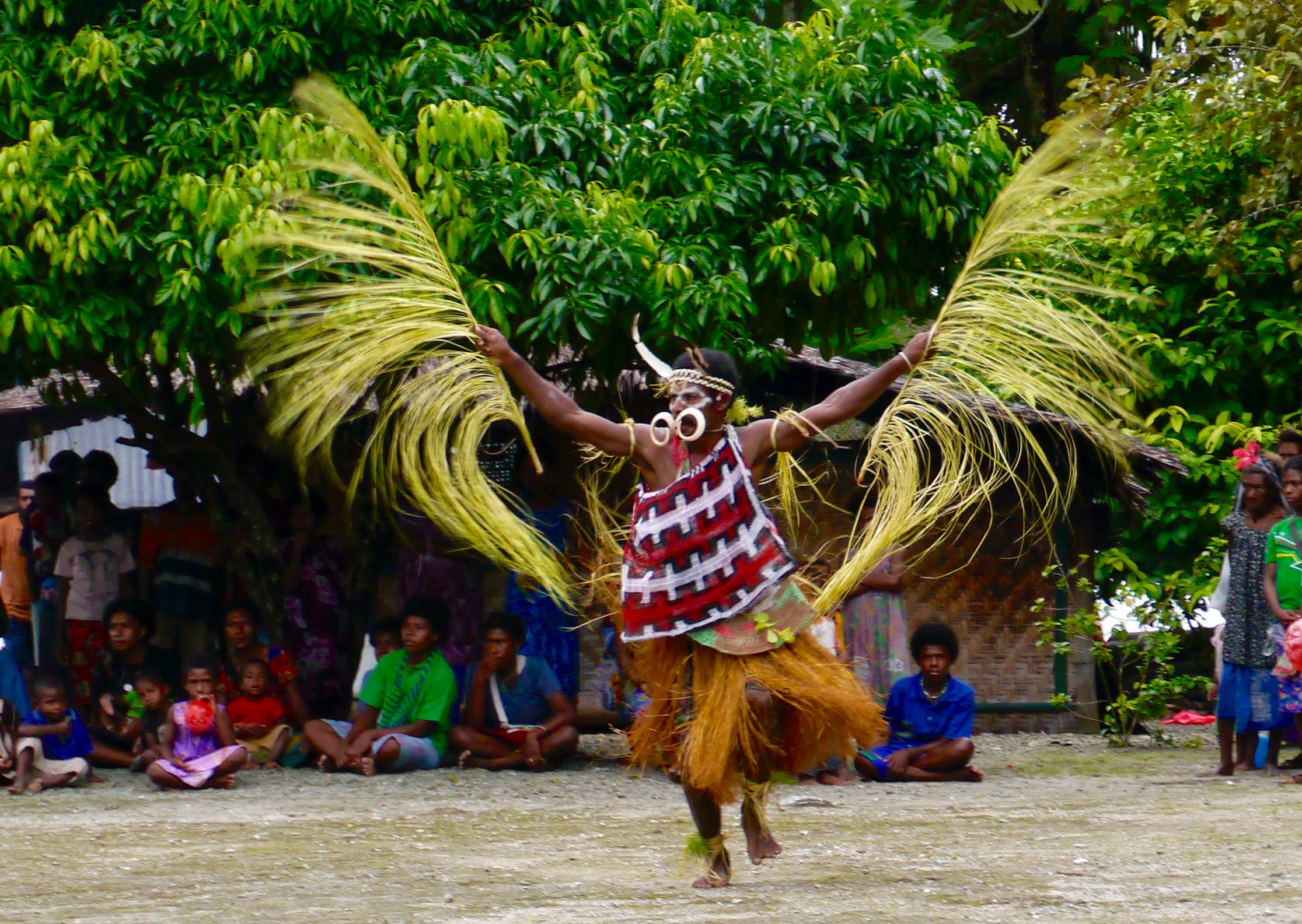
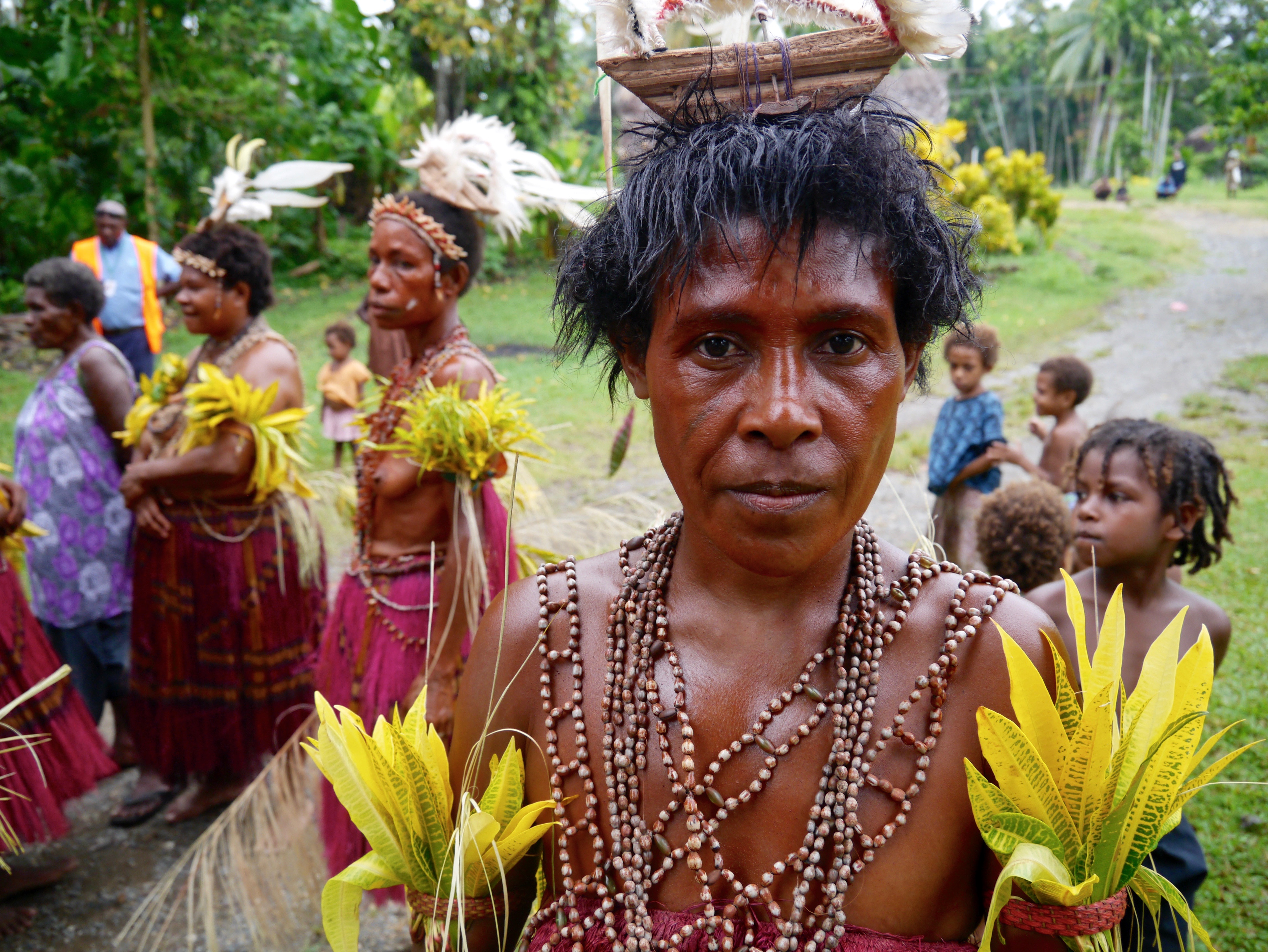
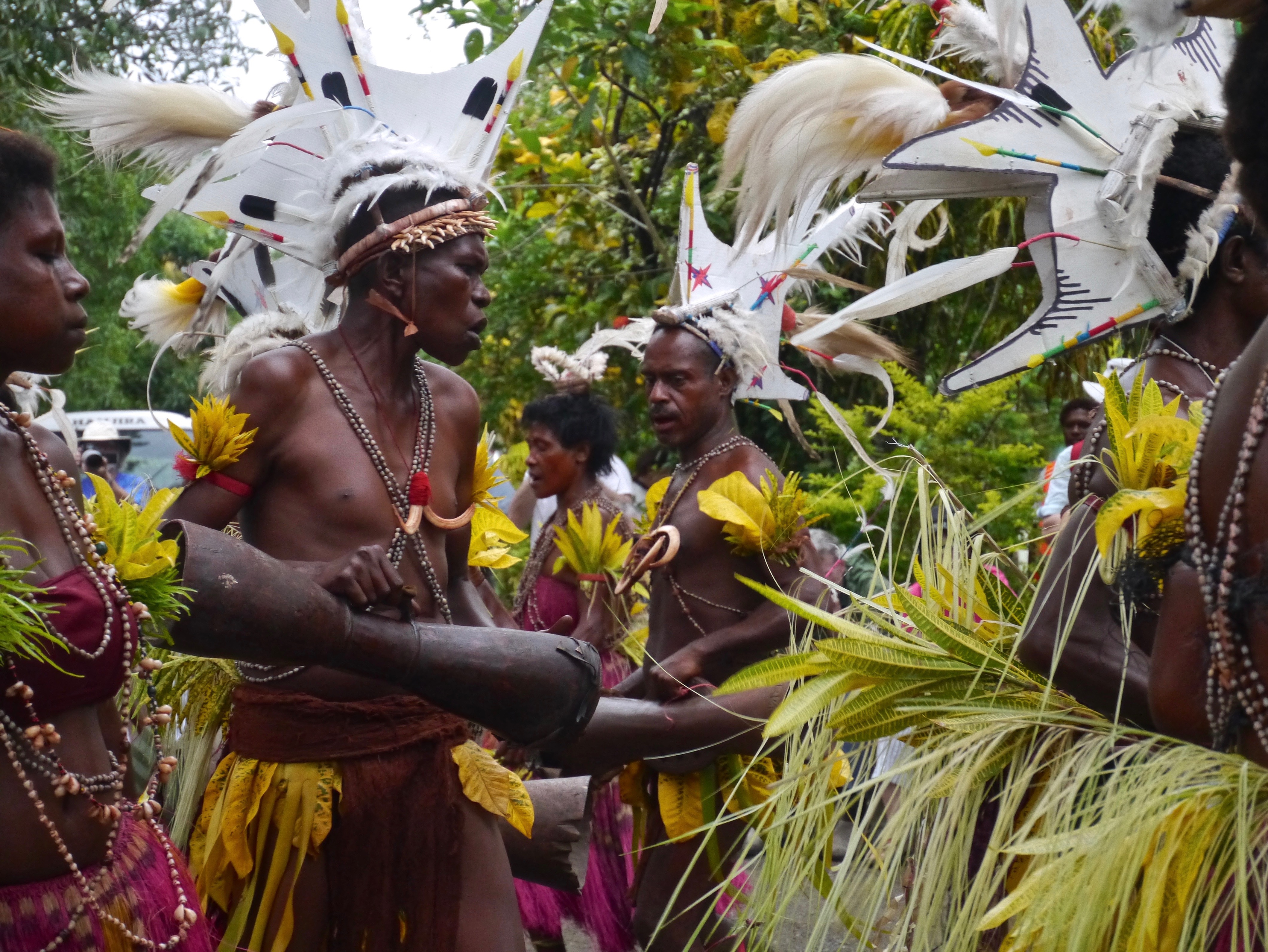
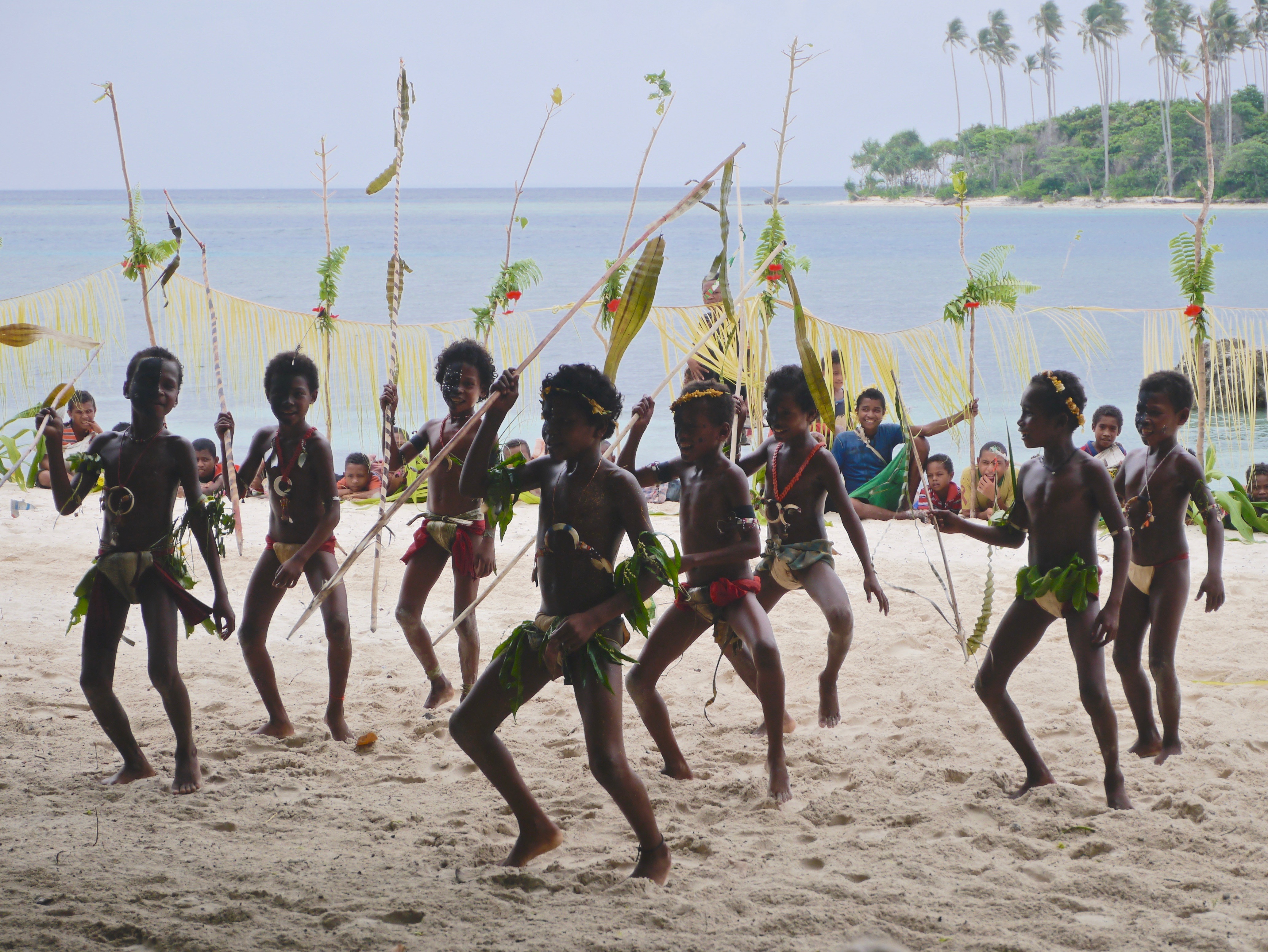
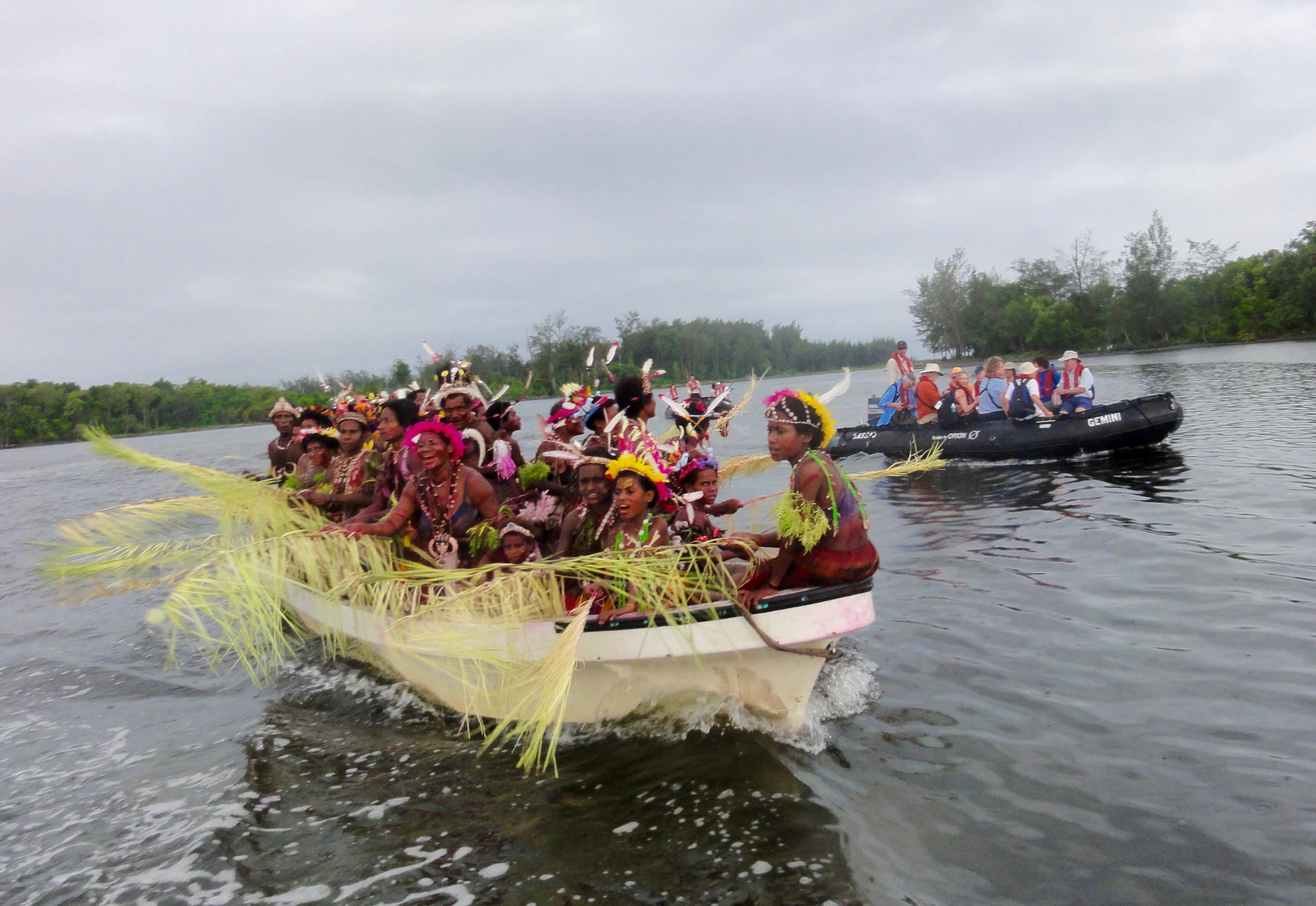
A sing-sing is a cultural demonstration of ritual dance and kundu drumming, that, in many cases, was necessary to perform before we were allowed to set foot on the islands to ward off the evil spirits we brought with us on the ship (they got that right).

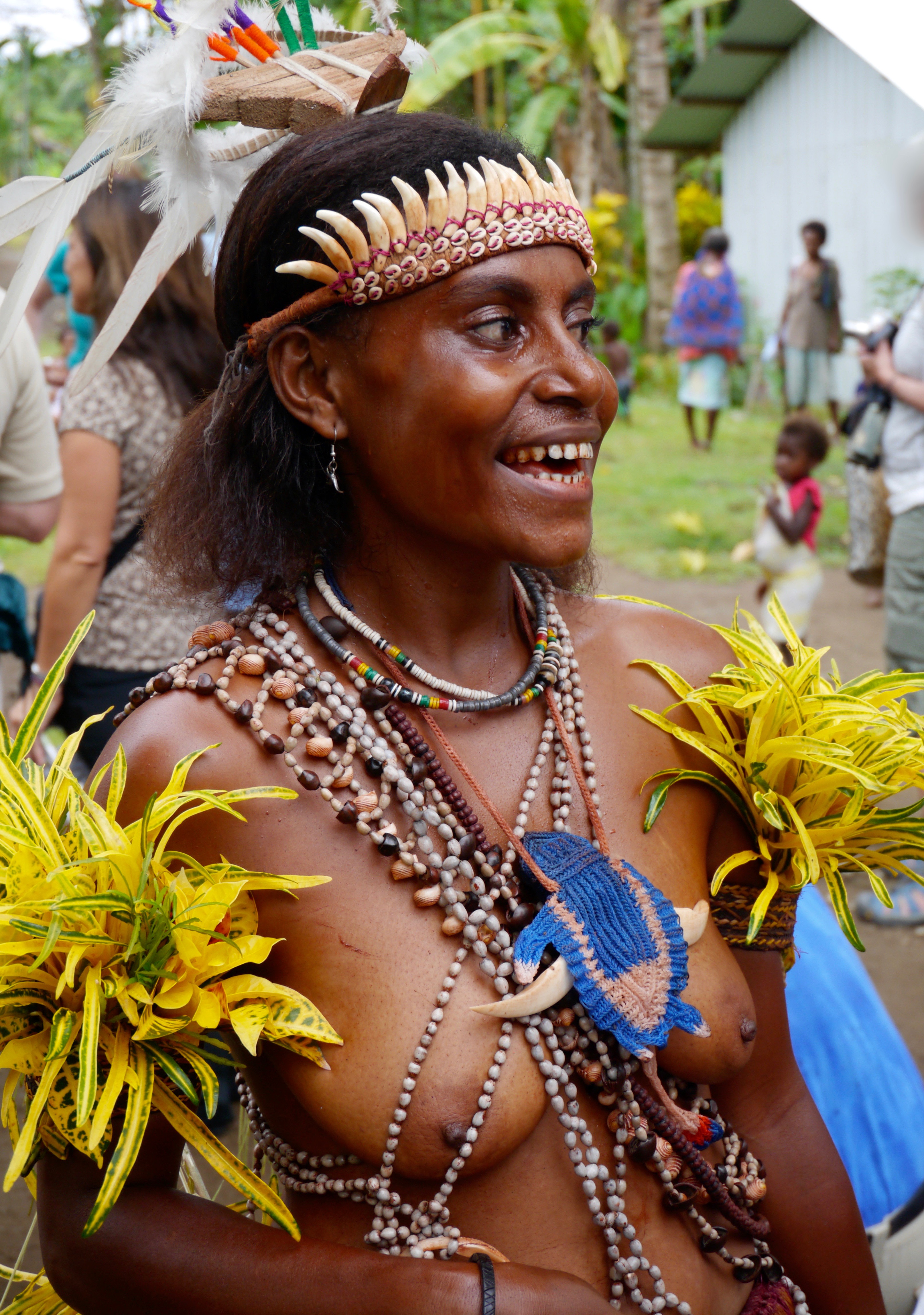
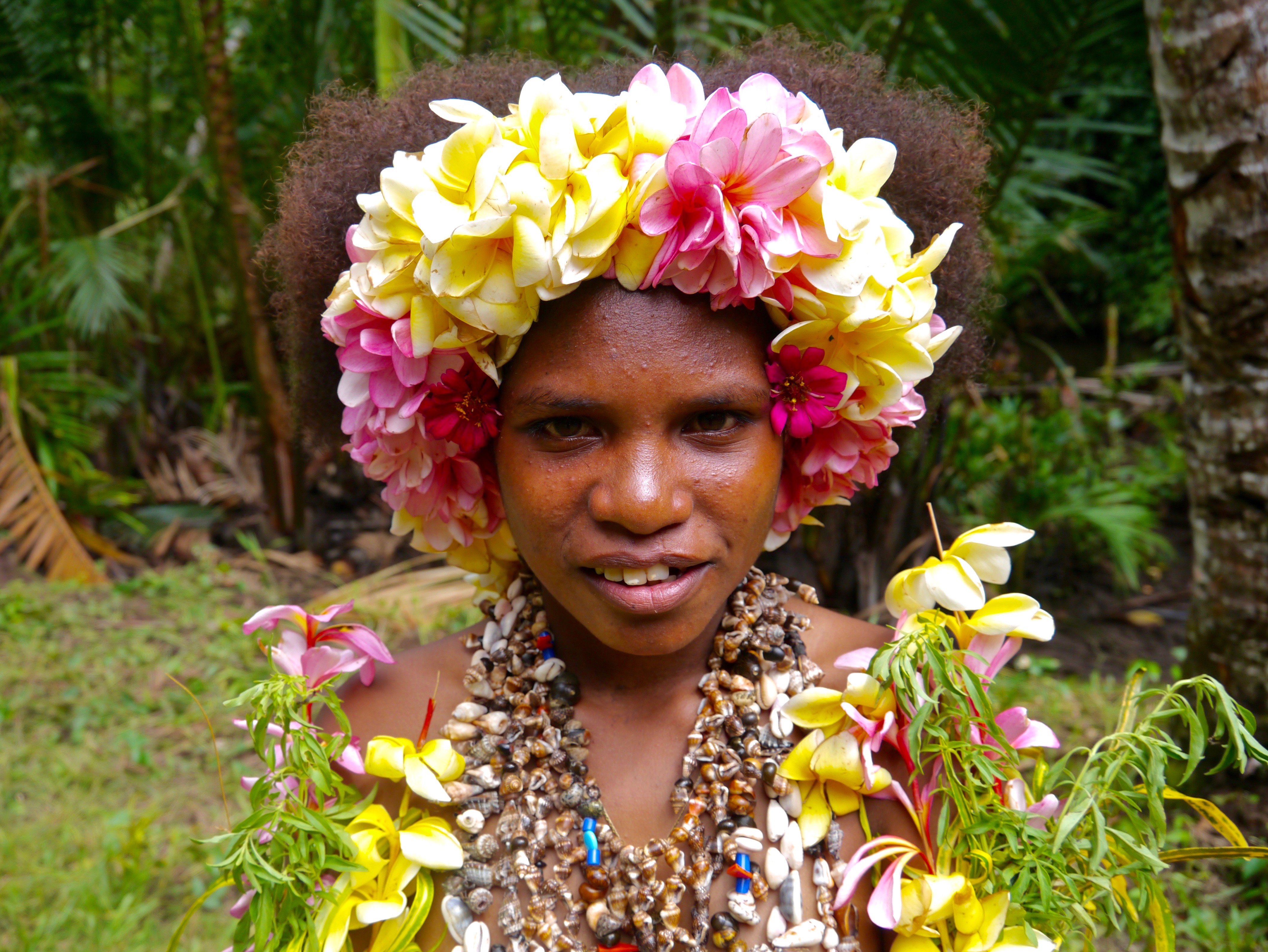
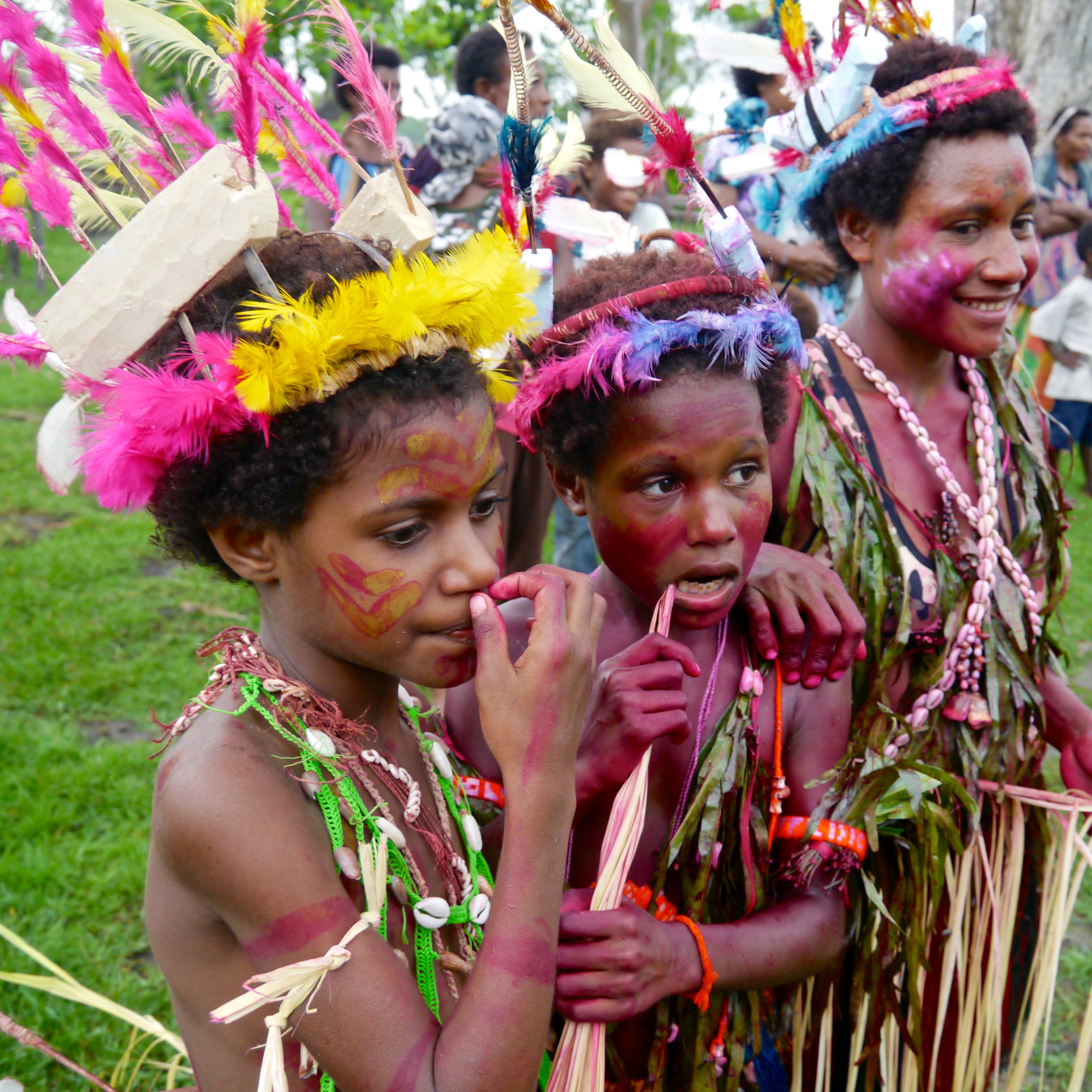
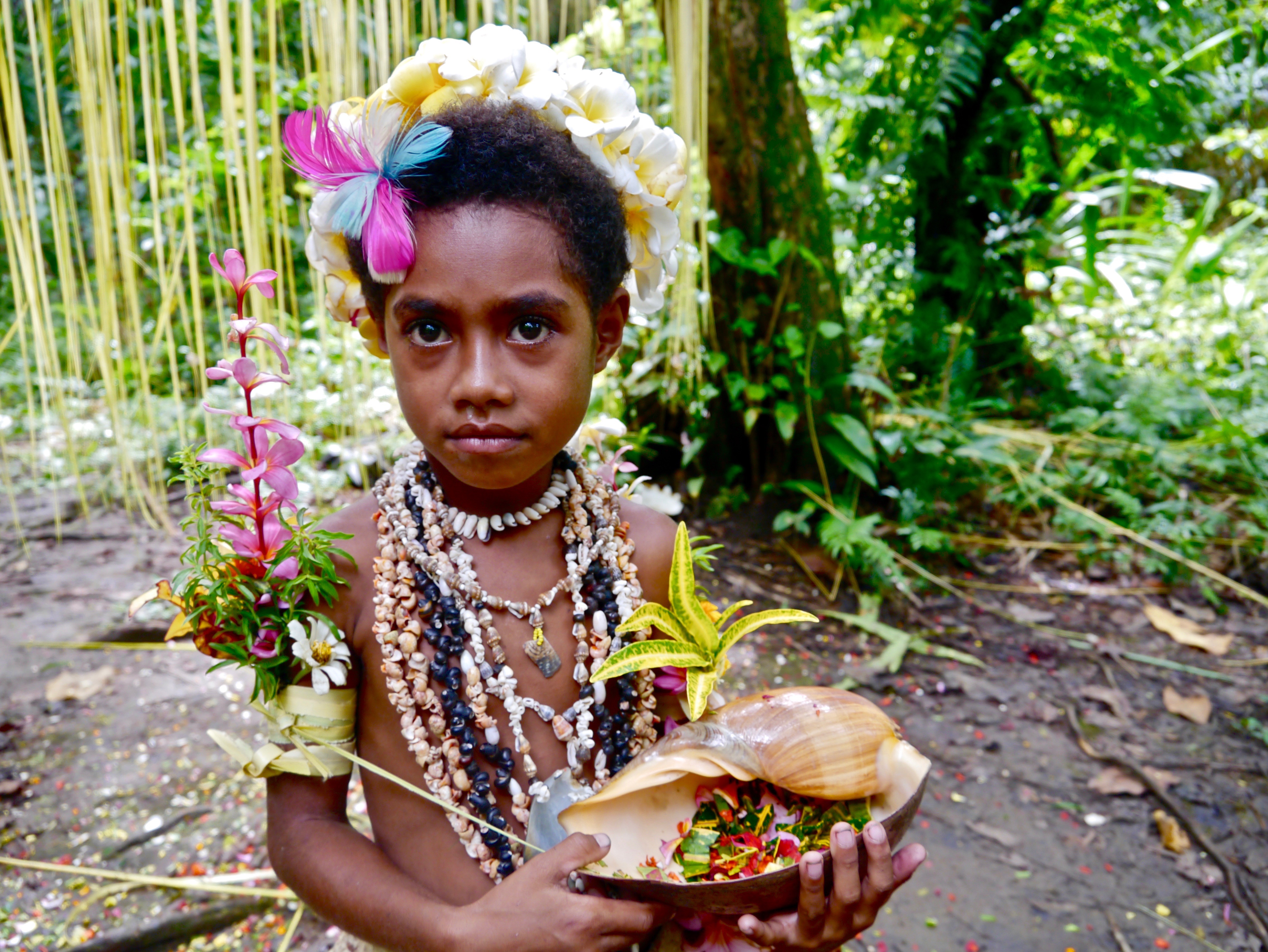
Extravagant ceremonial costumes and body paint are worn, incorporating reeds, leaves, flowers, feathers, skins, and shells. Each island cultivates their own unique style and local custom for welcoming guests. This video will give you a taste.


Island hopping

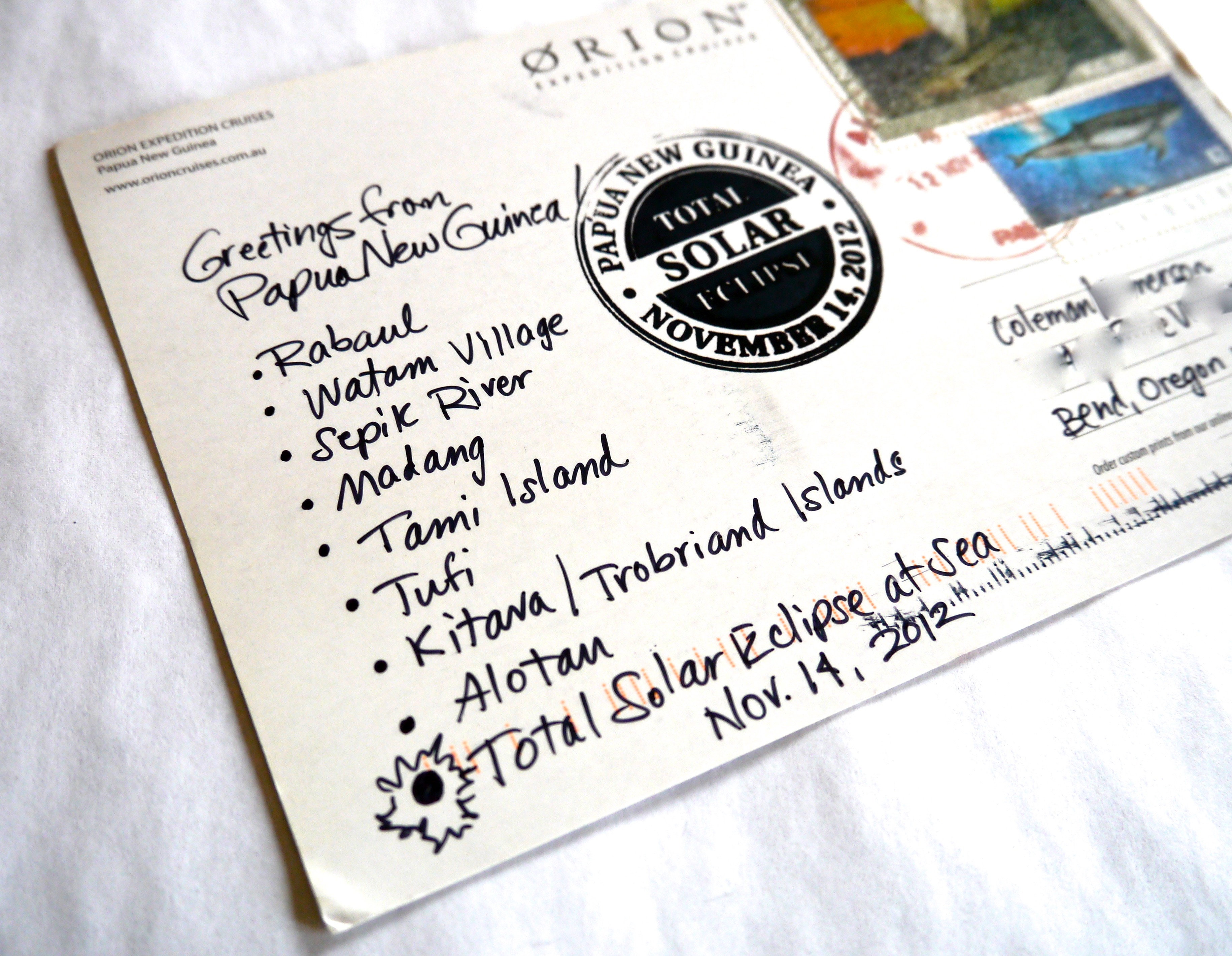
In 2012, 60,000 people descended on Cairns for the TSE. Ninety of us sailed away for awhile to visit the Papua New Guinea people in their secluded villages.

With expedition natural scientists as our guides we watched locals dig for Megapode eggs, laid in the ash leftover from the still-active Tavurvur volcano eruption.

We were led into remote Watam Village, where there’s no wifi—or roads, or phones, or electricity—by an ostentatious ceremonial dragon dance and witnessed “sing sing” cultural performances at every historic, scenic, mind-blowing location.

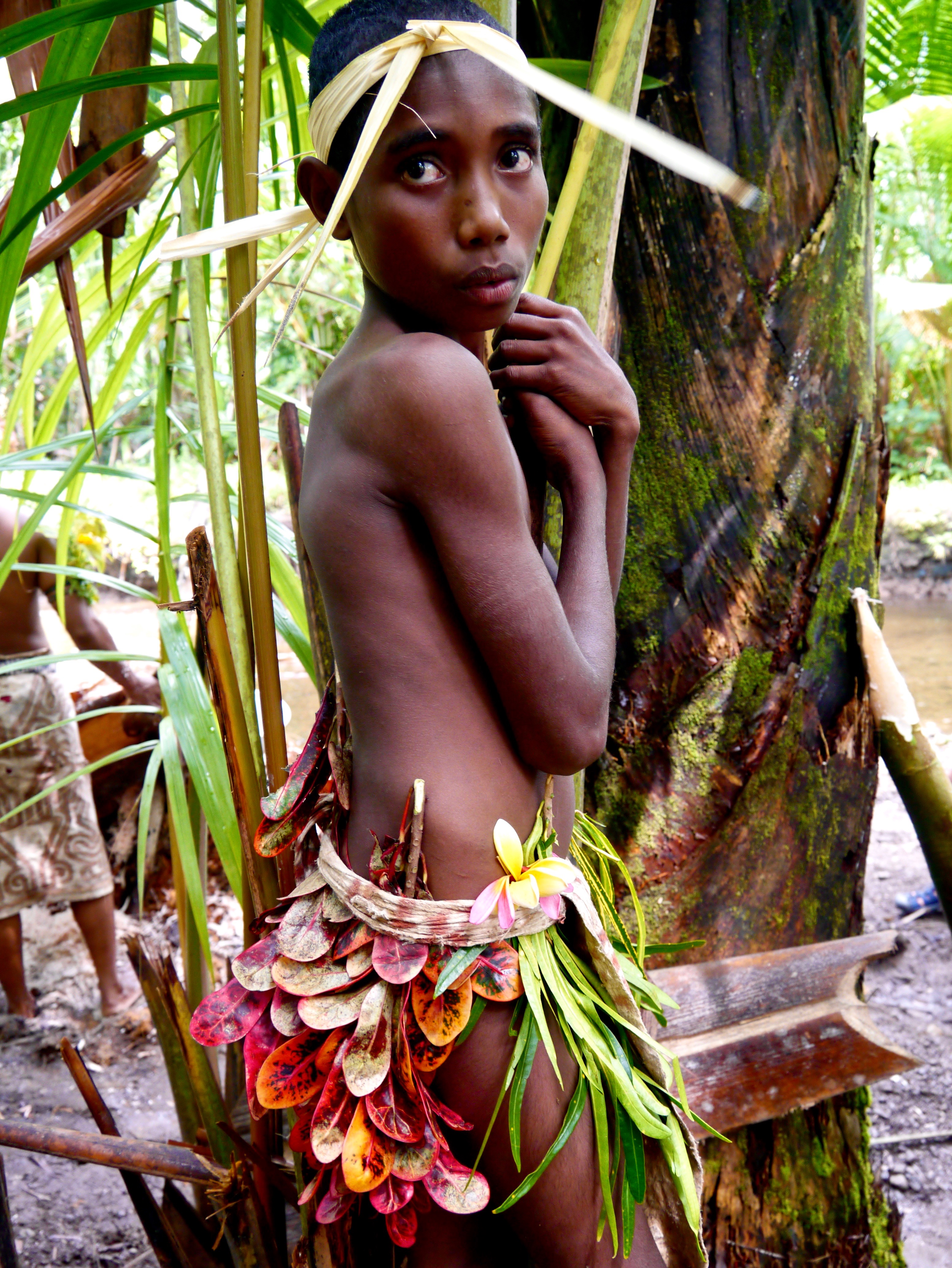
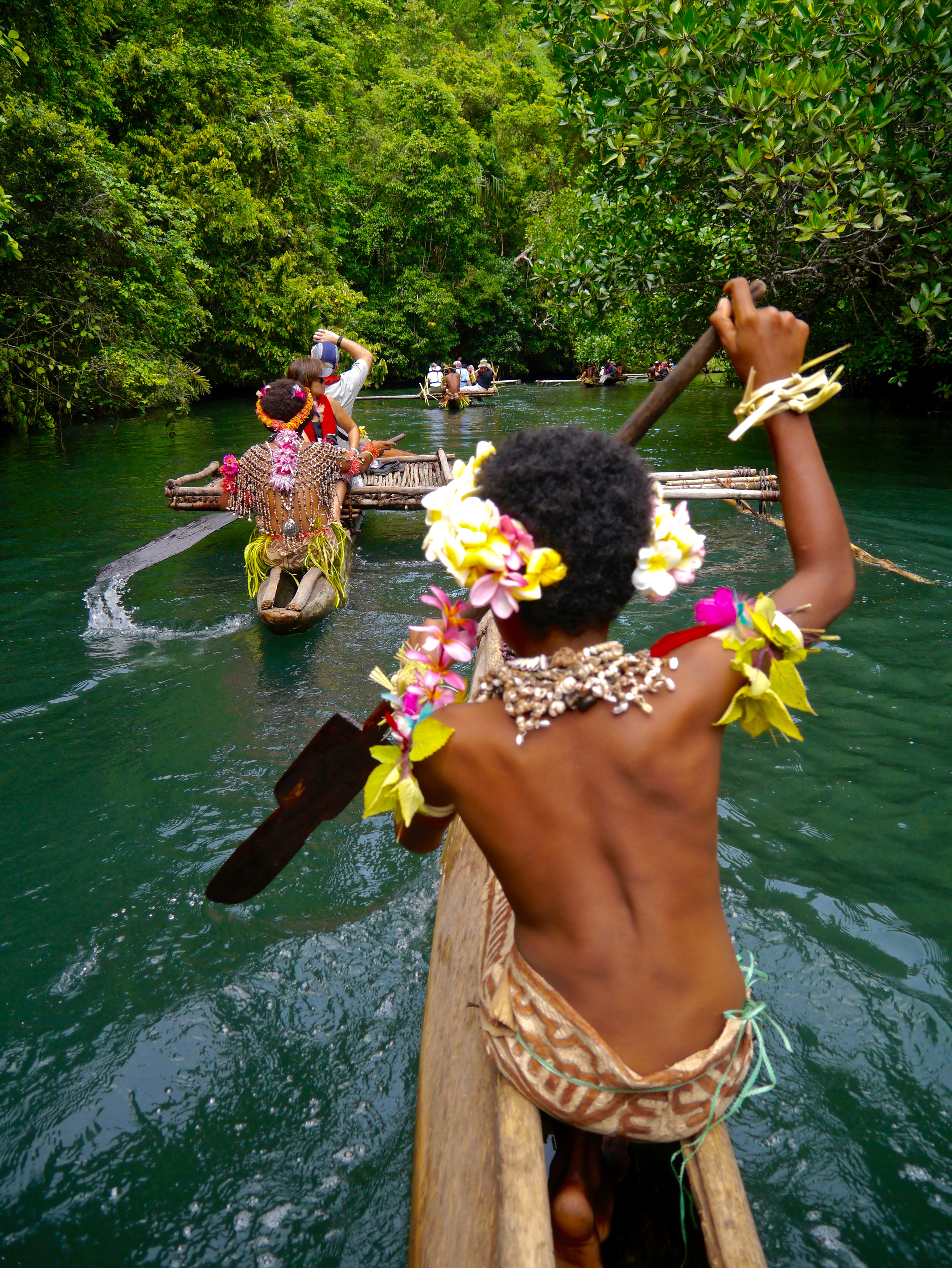
We were shown how to make pasty palm sago, the local staple that can baked into a pancake-like bread. We sailed through fjords (not just for Norway anymore) and boarded hand-carved outrigger canoes, paddled by willowy young girls, to get to villages deep in the jungle. We saw flying bat colonies and “yam houses” and masks of human bone. By the way, the people of Papua New Guinea stopped practicing headhunting and cannibalism, oh, gosh, months ago.

My favorite people were the lusty Kitava from the Trobriand Islands. When colonial rulers came to stop the inter-island warring in the 1800s they were aghast to see the suggestive thrusting and pointing during the ceremonial Kitavan dances. The Europeans introduced them to cricket as a means to channel their competitive fighting and ribald desires. Unfazed, the enthusiastic islanders just substituted a violent cricket rivalry—and used their vulgar dances anyway as a victory celebration to taunt the opposing teams.

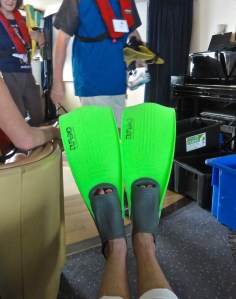
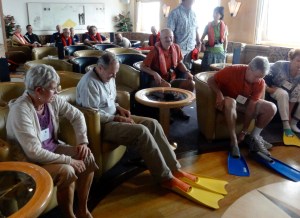
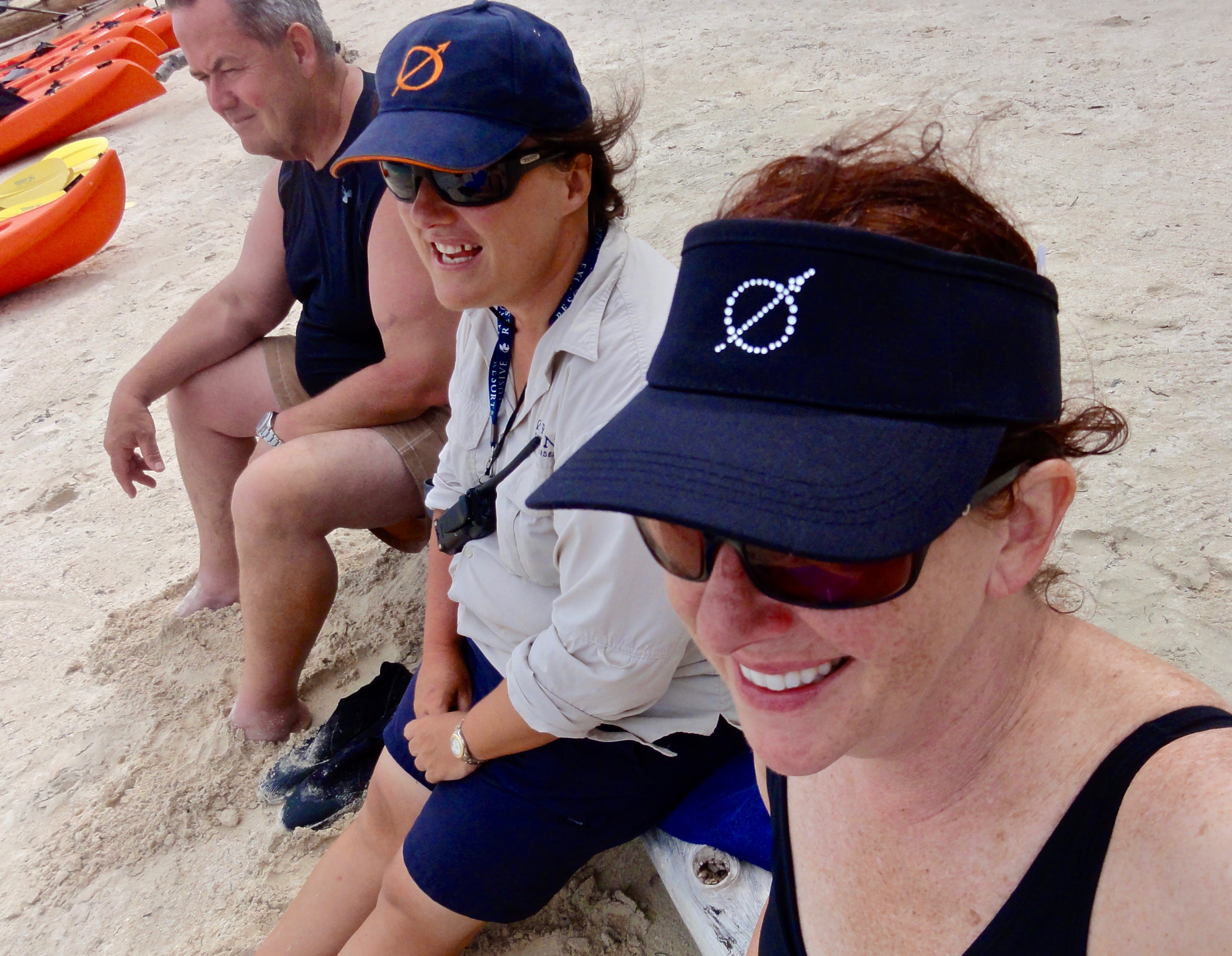
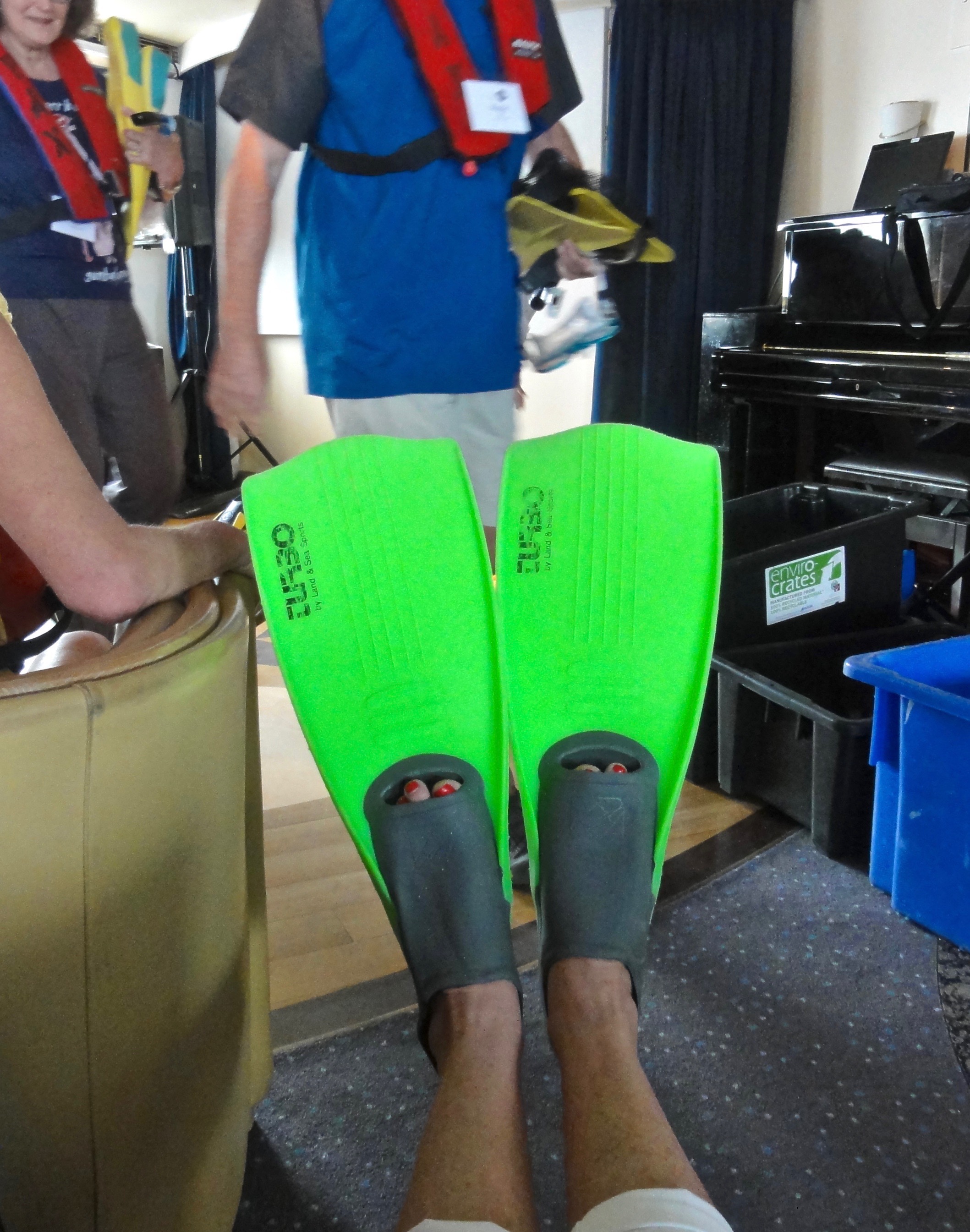
The Orion also supplied sea kayak and snorkel gear, taught passengers how to use it, and ferried everyone via Zodiac boat to private coves to swim in the reefs and enjoy barbecue lunches on white sandy beaches. “Big Dave”, my new friend on board (and expert diver) taught me to snorkel on Nuratu Island. Underwater it was like an aquarium in a tropical fish store. The hardcore divers on board said it was the best snorkeling they’d ever experienced.

Life on the Orion

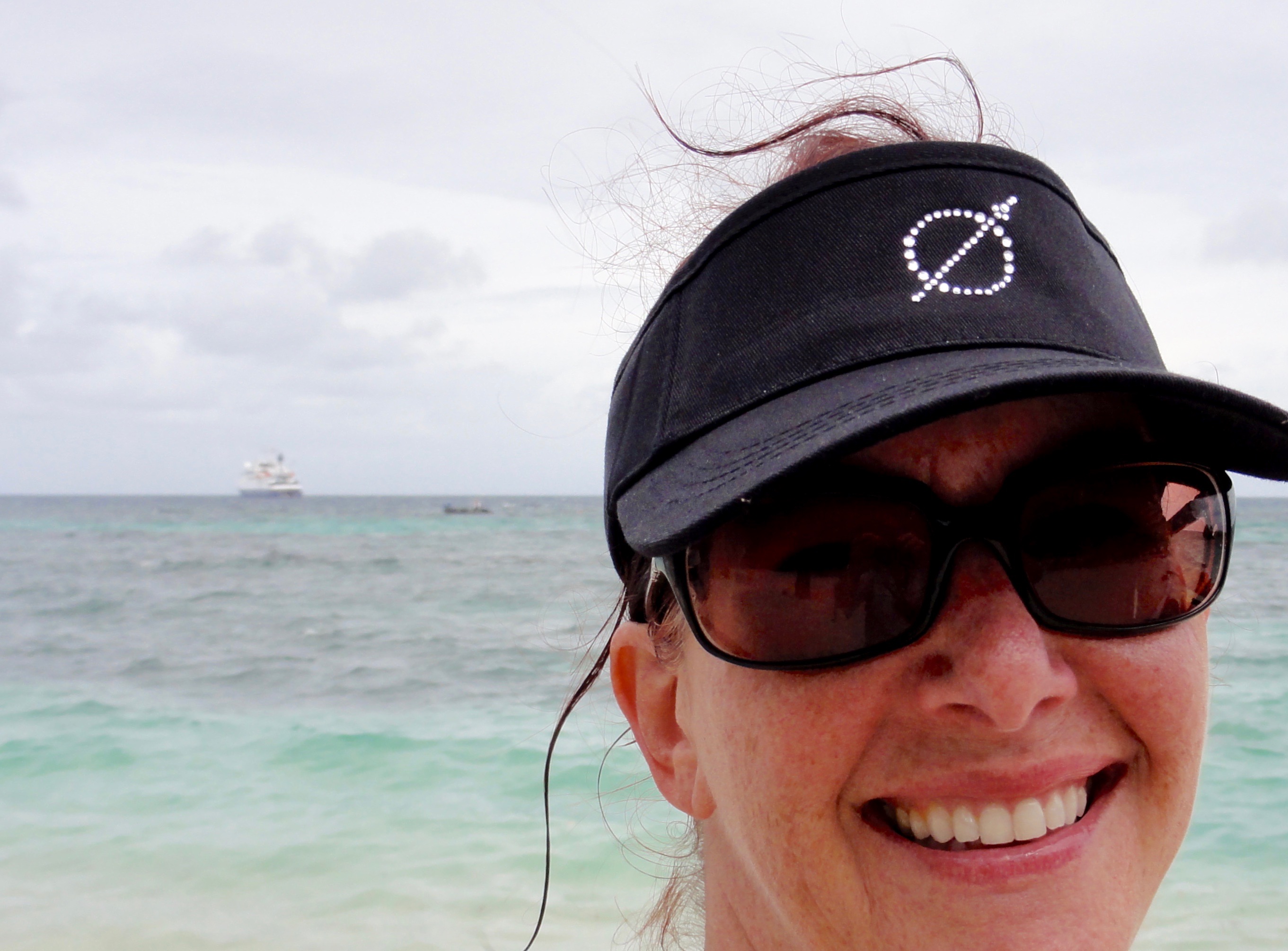
It was a wedding gift of sorts. Two months after we married, Ralph sent me on my own to join another TravelQuest eclipse tour, this time on the glamorous expedition ship Orion. The dream itinerary: a private charter flight from Cairns Australia to Papua New Guinea to join the Orion for nine days—a ship small enough to carry passengers to several remote villages—and a grand finale, totality at the Great Barrier Reef.

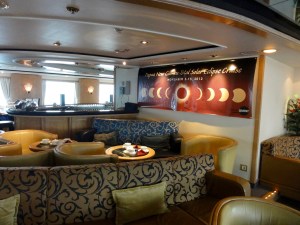
The intimate Orion (90 passengers, 75 crew) came equipped with kayaks, Zodiac landing craft (many of our ports were “wet landings”), and diving and snorkeling gear. The professional expedition staff included a marine biologist, acclaimed wildlife photographer Sue Flood, a field biologist, meteorologist Jay Anderson, planetary scientist and former NASA astronaut Thomas Jones, and a cultural anthropologist—an Aussie who married into a PNG village and actually became a chief, who knew everyone and all the local customs.

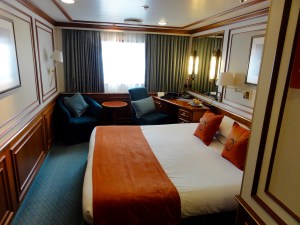
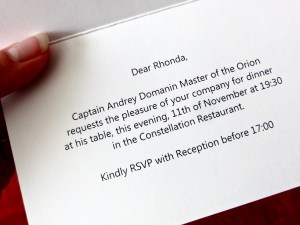
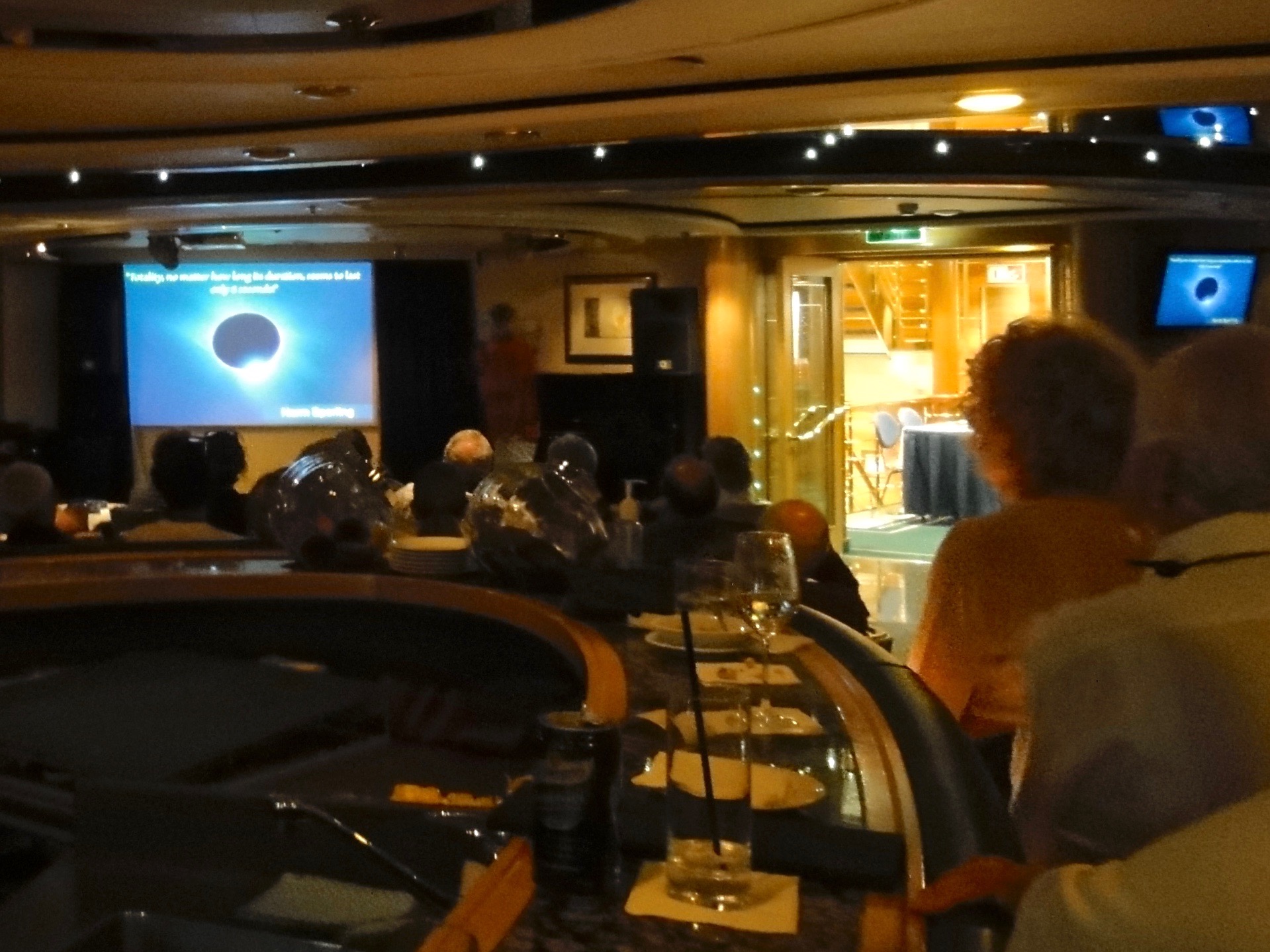
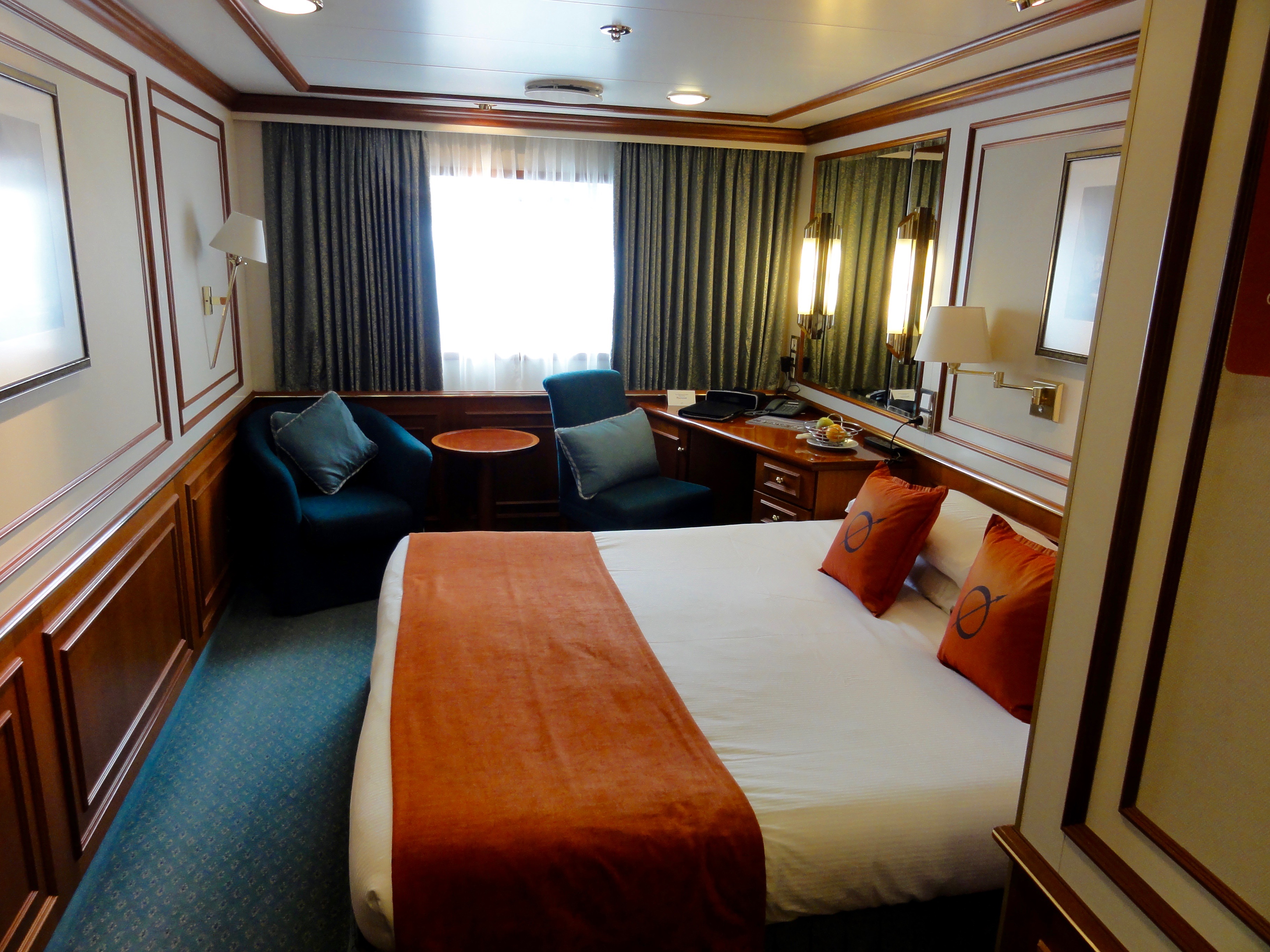
Each day at sea there were workshops and lectures on the flora and fauna of PNG, space travel, photography, and a cultural briefing on the islands we would visit—all accompanied with drinks and traypass hors d’oevres. The food—three squares a day plus high tea and assorted cocktail parties—was exquisitely prepared and, like most cruises, nonstop. I was giddy like a girl asked to the prom when a note addressed to Miss Coleman in Stateroom 310 included an invitation to dine that night at the table of Captain Andrey Domanin, “Master of the Orion”.

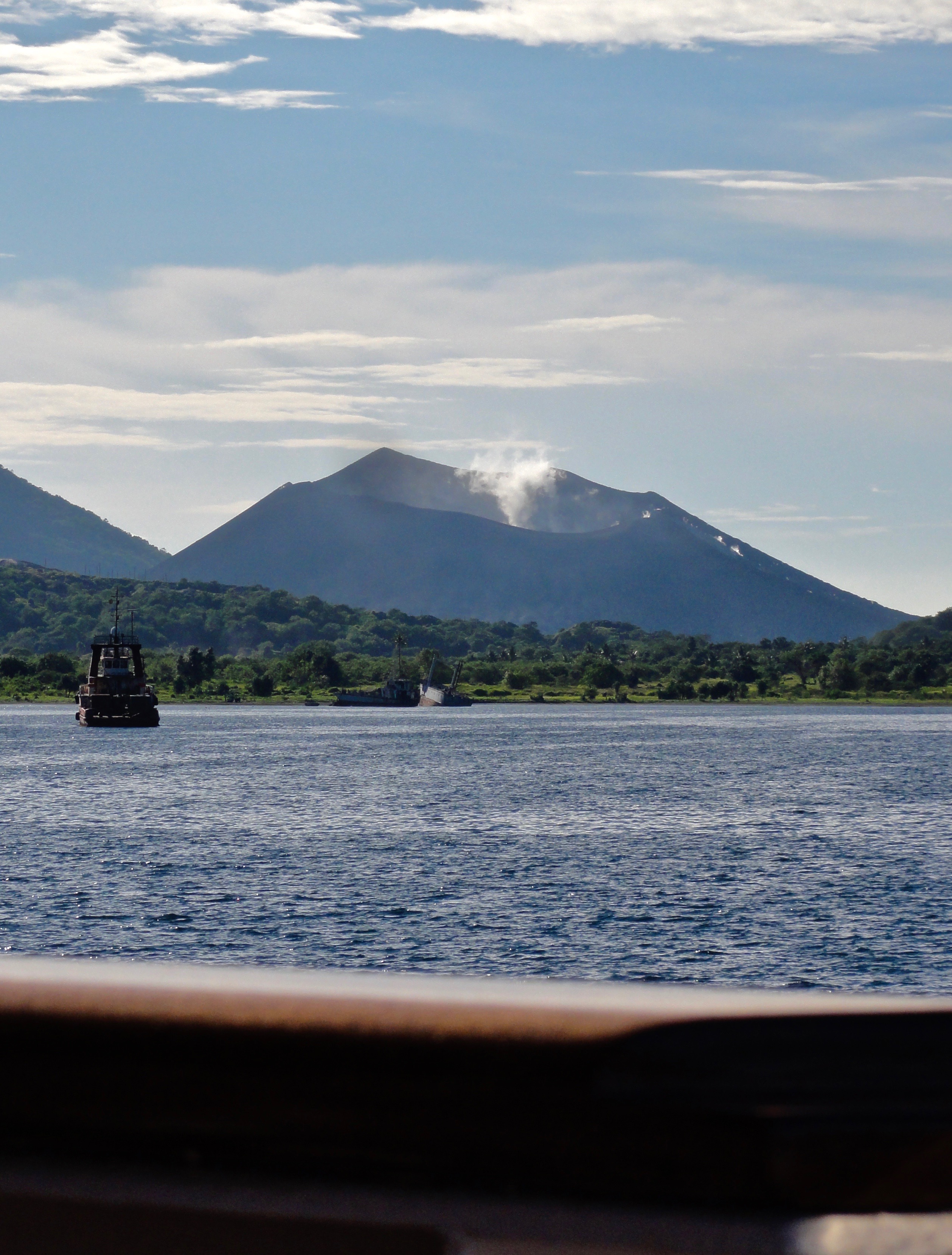
One night after dinner the captain took a joy ride past the actively-erupting Manam volcano; red lava flowed down the side and rocks and flames shot out of the top. (As I watched from the deck, a glass of champagne in my hand, I wondered: am I asleep?)

Performers boarded the Orion in our last island port and drummed a farewell before we sailed to the Great Barrier Reef. The last days at sea were rough, literally and figuratively. Barf bags were tucked behind the rail on every deck. The ship’s doctor Doctor Chris administered shots and big blue nausea pills; Dramamine was heaped in a tasteful bowl on the reception counter.

I was one of the few unaffected and had work to do—an article on Burning Man due for Trailer Life magazine. I found an empty bar on the top floor of the ship but my laptop kept sliding off the table what with all the pitching and yawing. (Cruise ship tip: when seas are high, climb down to the level nearest the hull, where it’s calmer.) The dining room was sparsely populated with wan-looking, uncommunicative passengers. The ill-conceived cocktail of the day was banana liqueur and coconut rum—a little warm ginger ale might have been a bigger seller.

(Sound like fun anyway? Get on board for this one: the TravelQuest South Pacific Cruise to totality on the Paul Gauguin with a pre-vacay on Easter Island.)

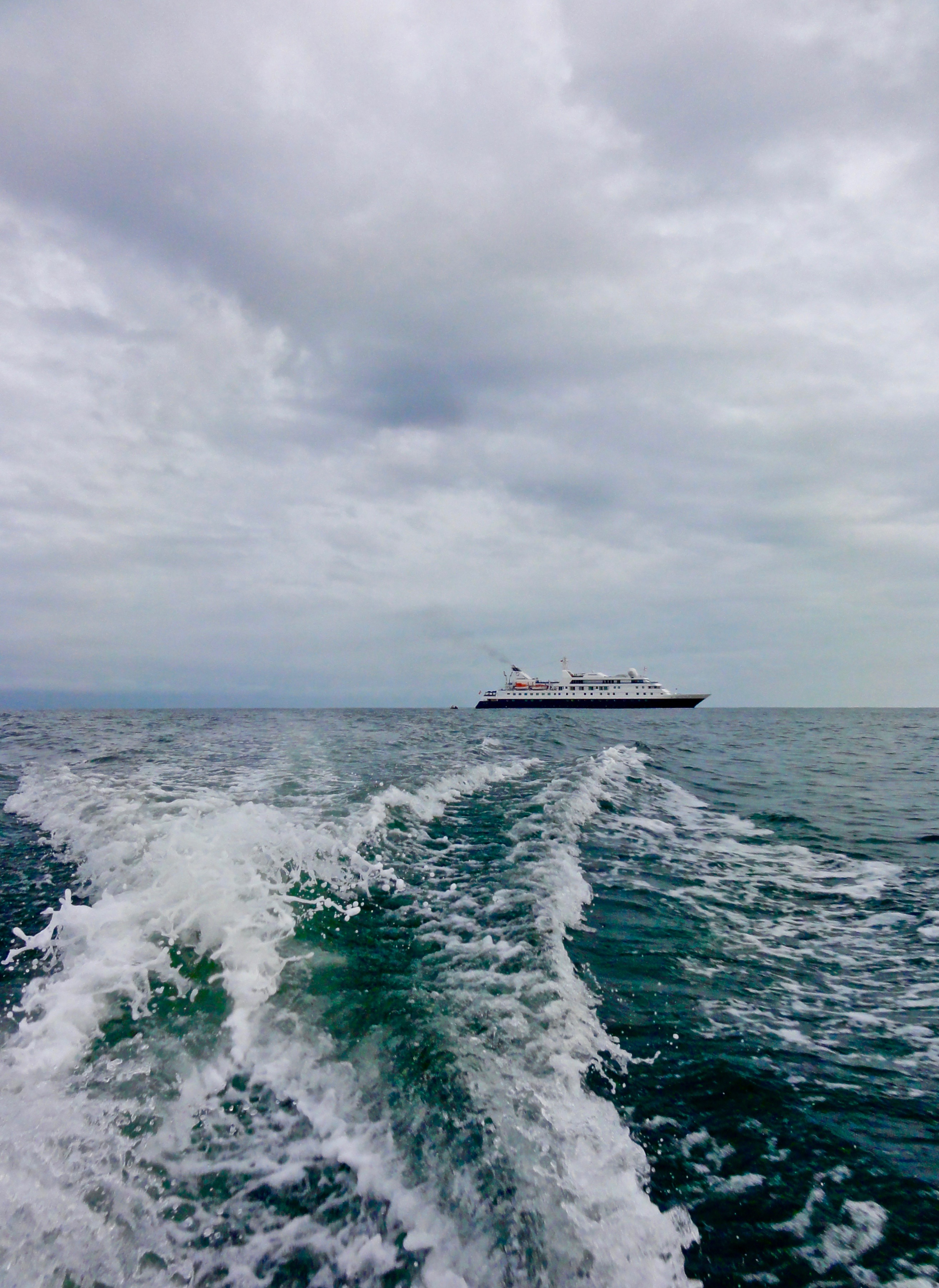
Above: The Orion

Below:

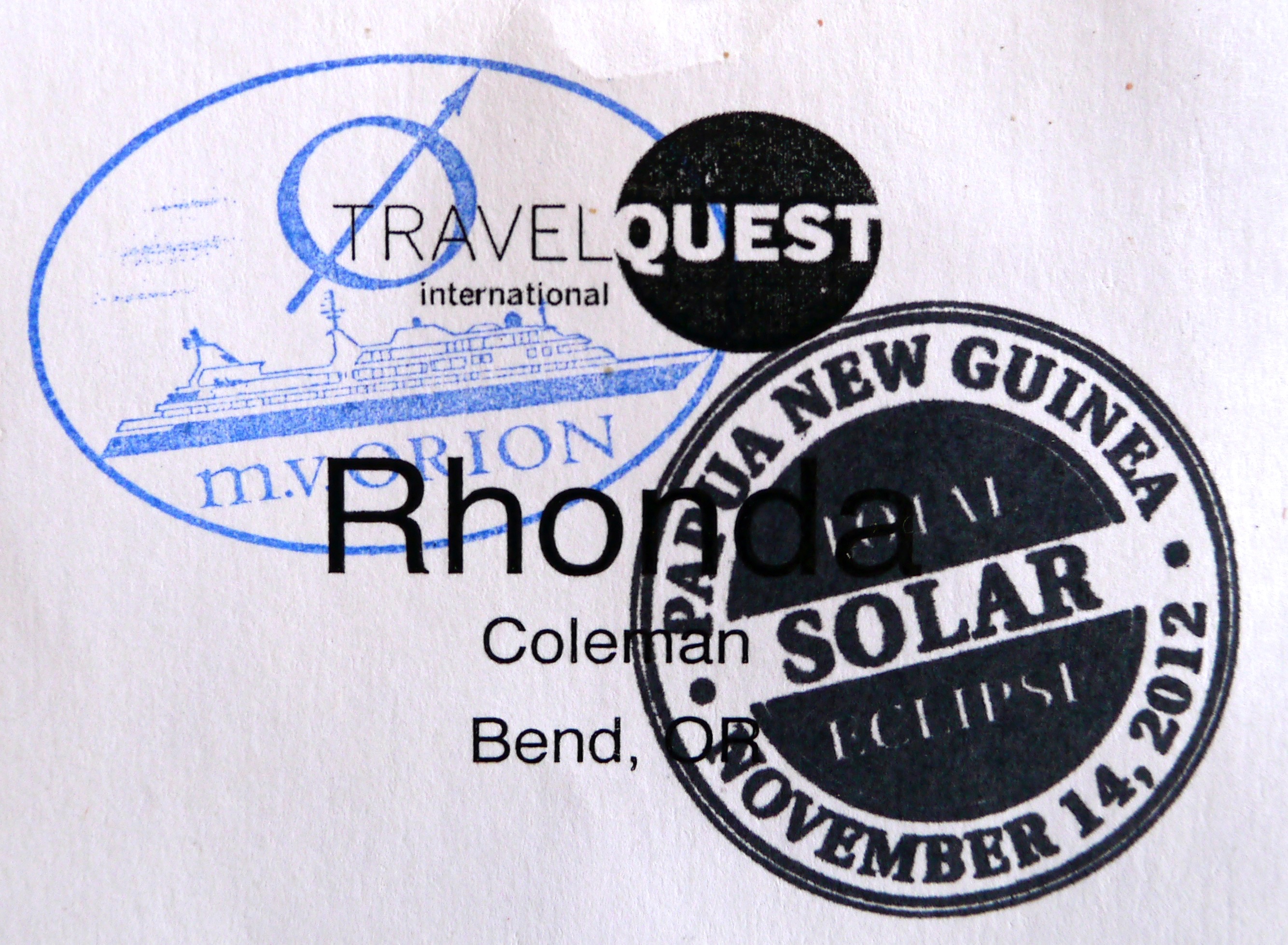
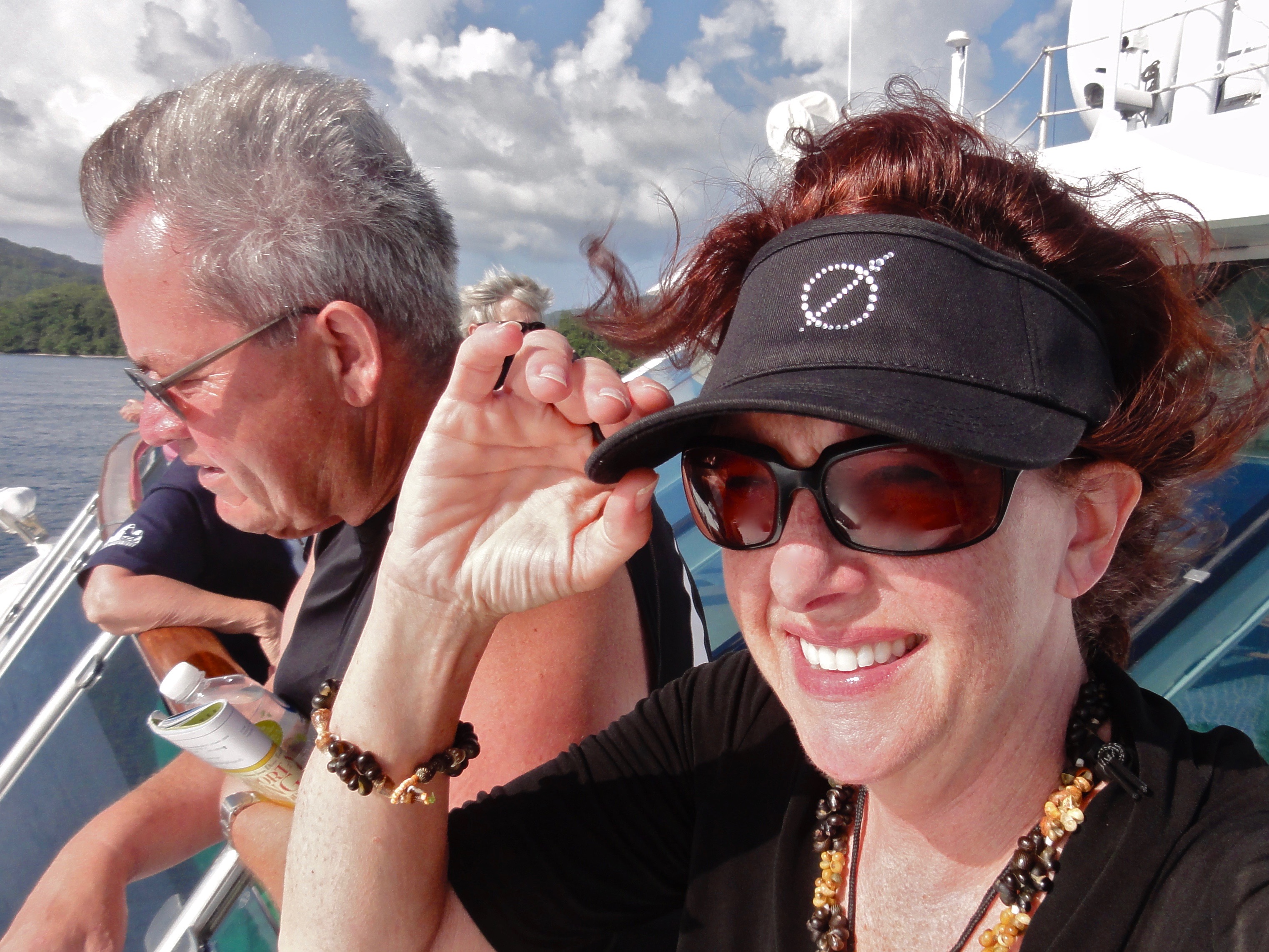
Commemorative rubber stamps; All aboard; Lounge and meeting room; Stateroom 310; Cairns; Snorkel gear; On deck; From the Zodiak; Manam volcano; What to wear?; Dancers on board; Still waiting for the Green Flash.

Find more photos here

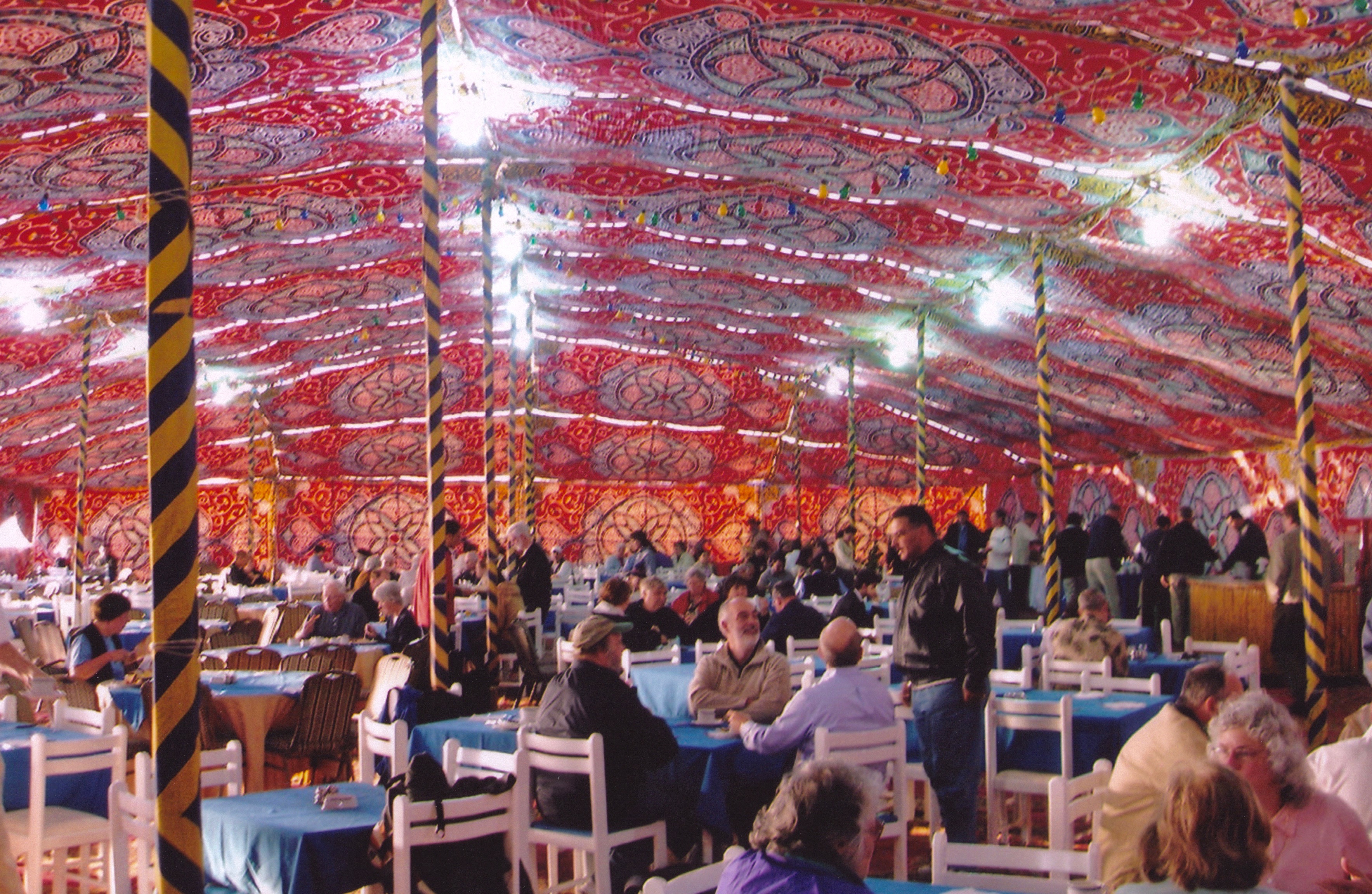
The celebration tent

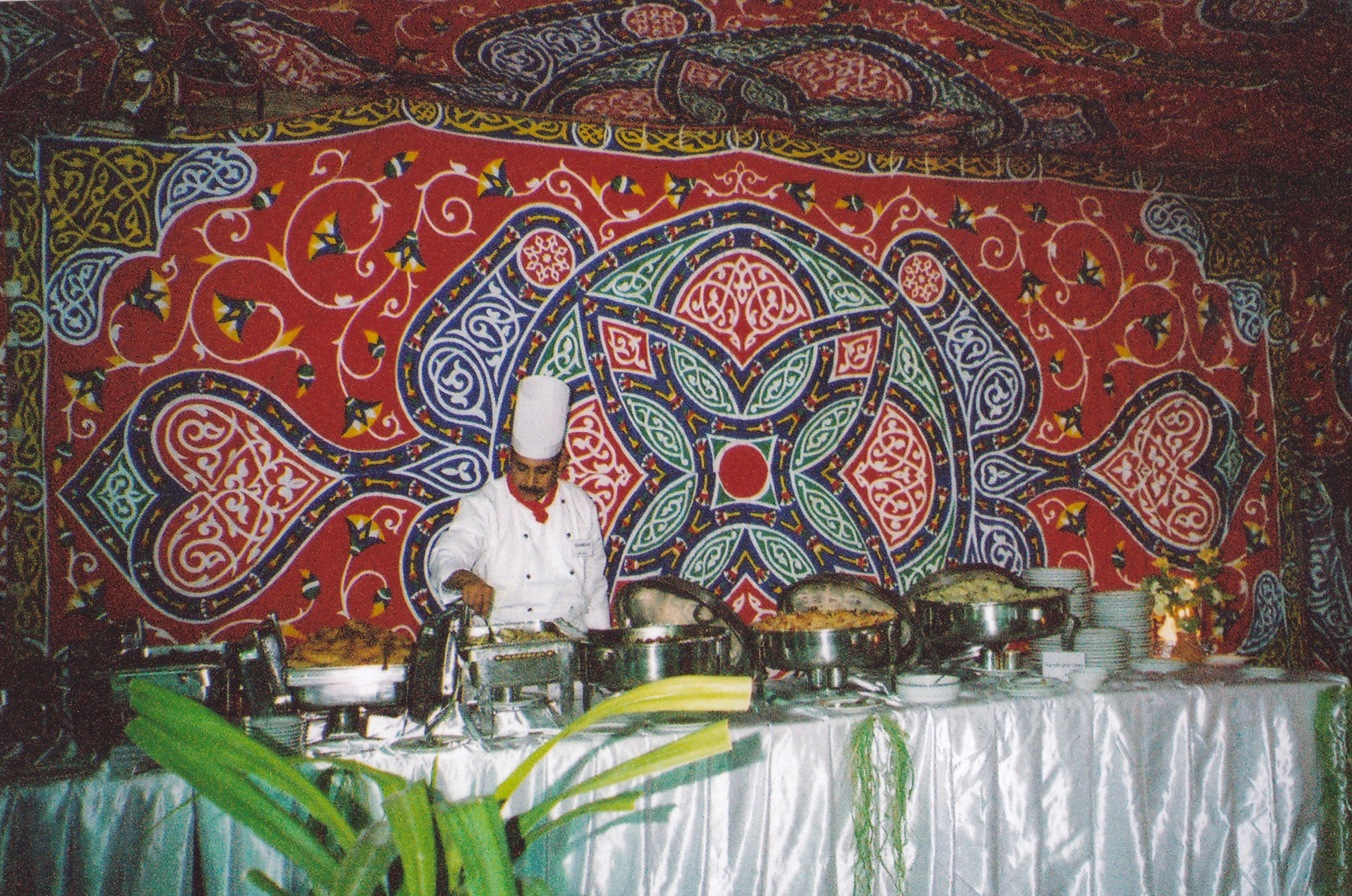
A giant tapestry-type tent was erected on the beach outside the hotel in Mersa Matruh, and the post-eclipse celebration inside was memorable—woven carpets covered the sand, and table after table was heaped with catered Mediterranean food.

Funny WTF moment: at the cheese and hummus table I pointed to a bowl of chalky grey squares and inquired with a lift of my eyebrows to a man behind the table wearing a chef’s uniform and tall white toque. He just shrugged, so I reached for one and started to put it in my mouth. “No eat!! No eat!!” he screamed, waving me off. I dropped it and ran. I still don’t know what it was.

A dorky DJ spun outdated American records and the frenzied eclipse nerds danced to “YMCA”.

The entire glorious day was a travel memory I wish I could relive, with my Ralph, exactly as it was—except I’d take more photos.

Above: Celebration tent in Mersa Matruh

Below:

Fabulous food

Chasers get down

Eclipse 2006

On March 29 an estimated 8,000 tourists, astronomers, NASA scientists and Egyptian officials gathered in Sallum, a town on the Libyan border usually visited only by workers and truckers entering and exiting Egypt.

The hotel in Mersa Matruh was 2 1/2 hours from the eclipse site and we rose unspeakably early to the pre-dawn rumble of motorcoaches and diesel fumes outside the hotel. “This reminds me of the Marine Corps,” groaned Ralph as we staggered from bed to bus seats in the dark.

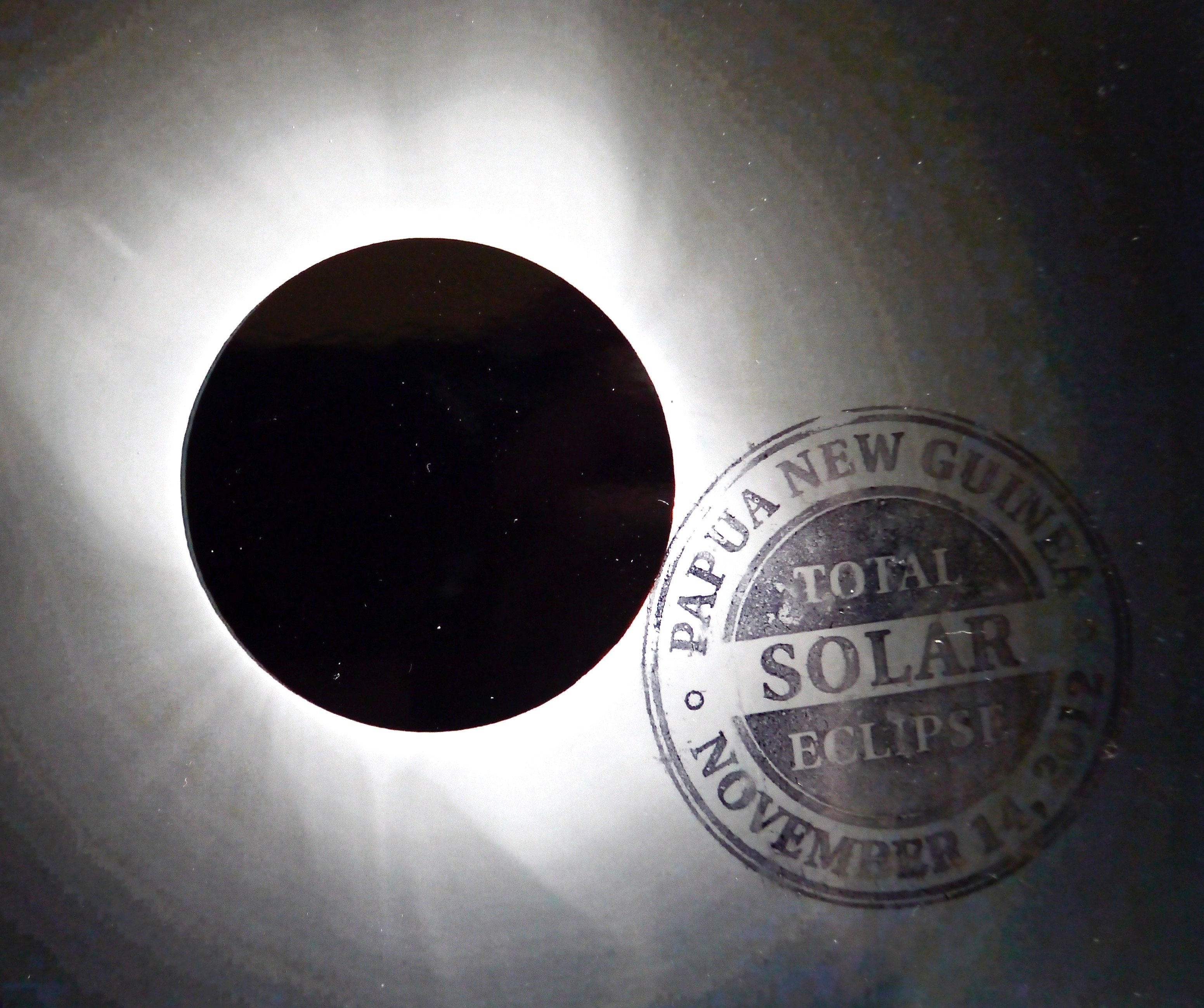
At half past noon the moon passed before the sun in a perfect and cloudless sky. I’m now five for five.

I noticed that the shape of the corona—which is different every TSE and has something to do with sunspots and the solar magnetic field—exactly and mysteriously mirrored the design of the winged sun carvings on the back of my chair in the Nile Hilton dining room. I kept this observation to myself.

Above: Shades

Below:

Path of totality, 2006

Back on the bus

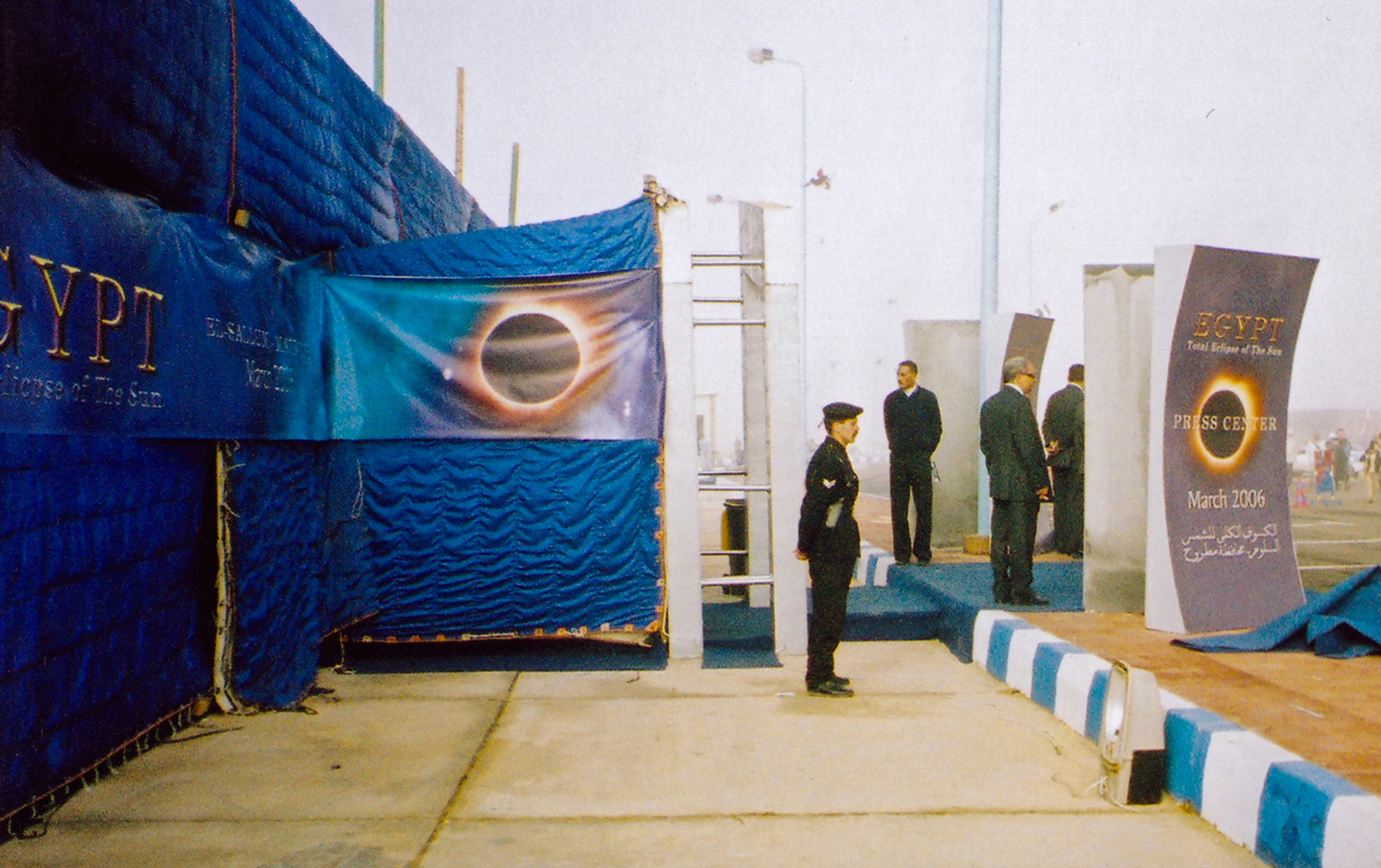
Press tent

Observing at Sallum. (Ralph. Get UP.)

Mubarak

The official viewing site for the eclipse was in Sallum at what appeared to be an abandoned air force base under heavy checkpoint surveillance near the Libyan border.
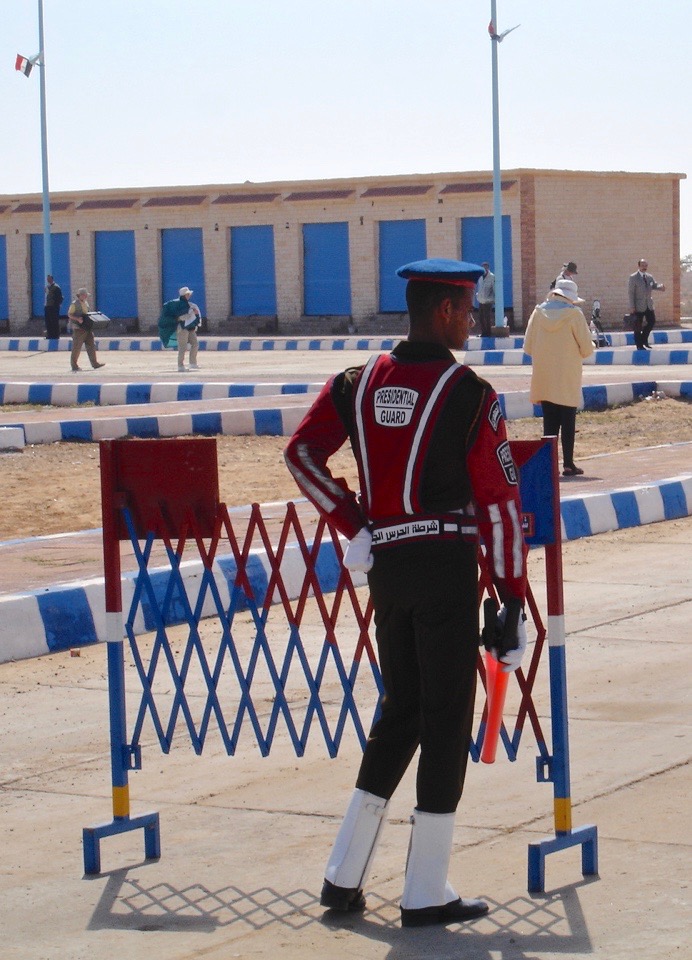
The early waiting and partial phase hours in Egypt were more entertaining than at any other eclipse: an elaborate preparation was underway for the arrival of then-president Hosni Mubarak. Young soldiers in smart parade uniforms were arranged in rank, then in file, then re-aligned. Superior officers inspected and fussed and dusted: tunics were jerked, collars straightened, caps adjusted to the perfect angle. The soldiers finally stood in solemn formation in anticipation of their leader.
A large, multicolored seating area was assembled with gilt furniture, gold-potted plants, and a red carpet stairway leading to a massive portrait of the president’s big ol’ face.
Events took a turn in the minutes before his motorcade pulled up: a team of men in jumpsuits scrambled to dismantle the stage and hustle the red carpet and other decor to a low and modest tent adjacent to the showy grandstand—which I’m assuming was a decoy all along, presumably to deter an assassination attempt (!) Travelers to the site that day, was that your impression?

Mubarak, his wife, and several Ministers, Egyptian officials and various governmental hangers-on soon pulled up in their sleek motorcade and observed the eclipse from the lesser enclosure. Mubarek boarded a black sedan shortly after third contact and waved “wadaeaan” from the window.

Above: That’s him

Below:

Welcome to Salloum—however you spell it

Egyptian military at the ready

Mubarak’s viewing area—not Mubarak’s viewing area—Mubarak’s new viewing area

Bye now, gotta go stand trial