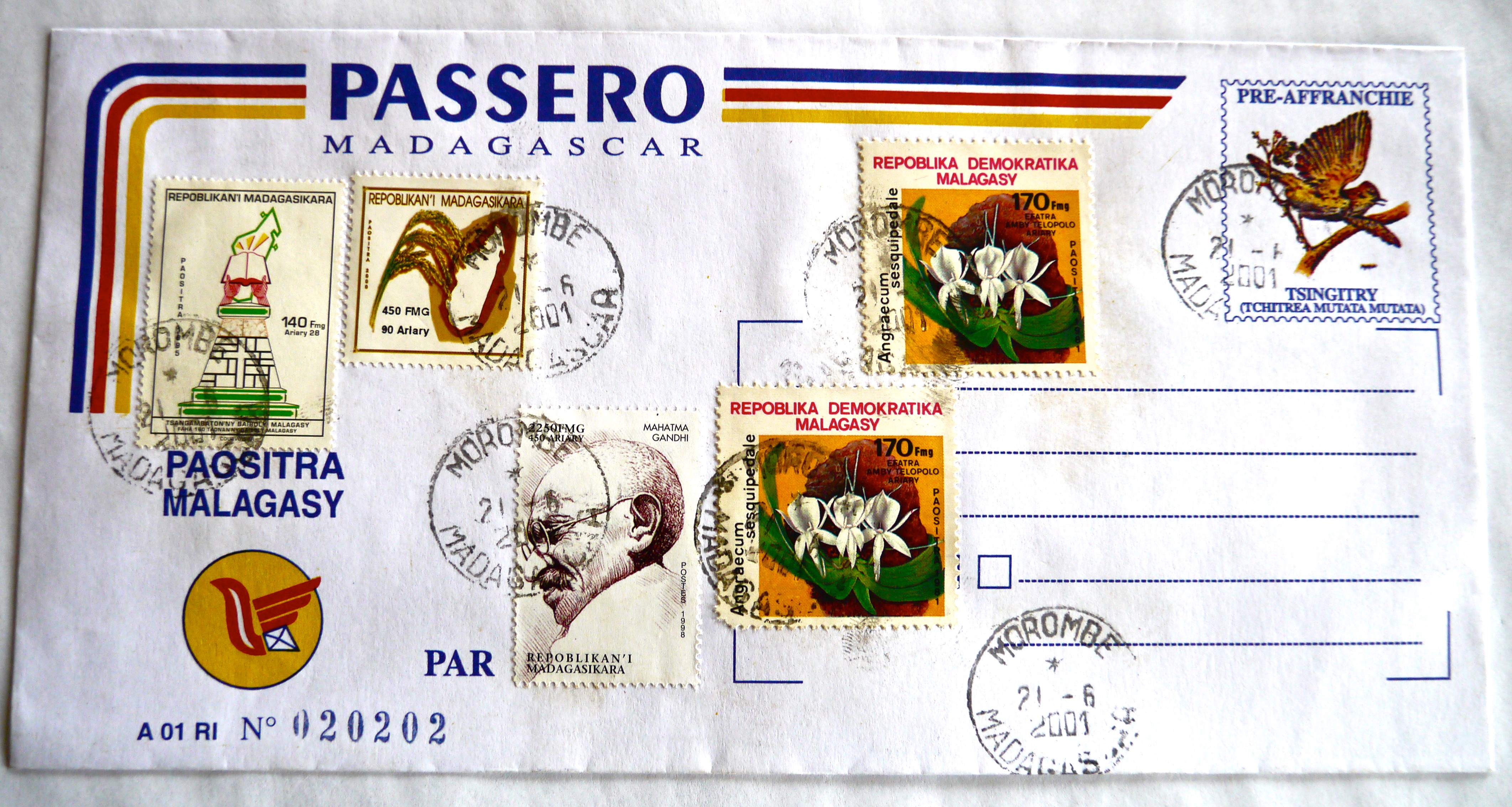
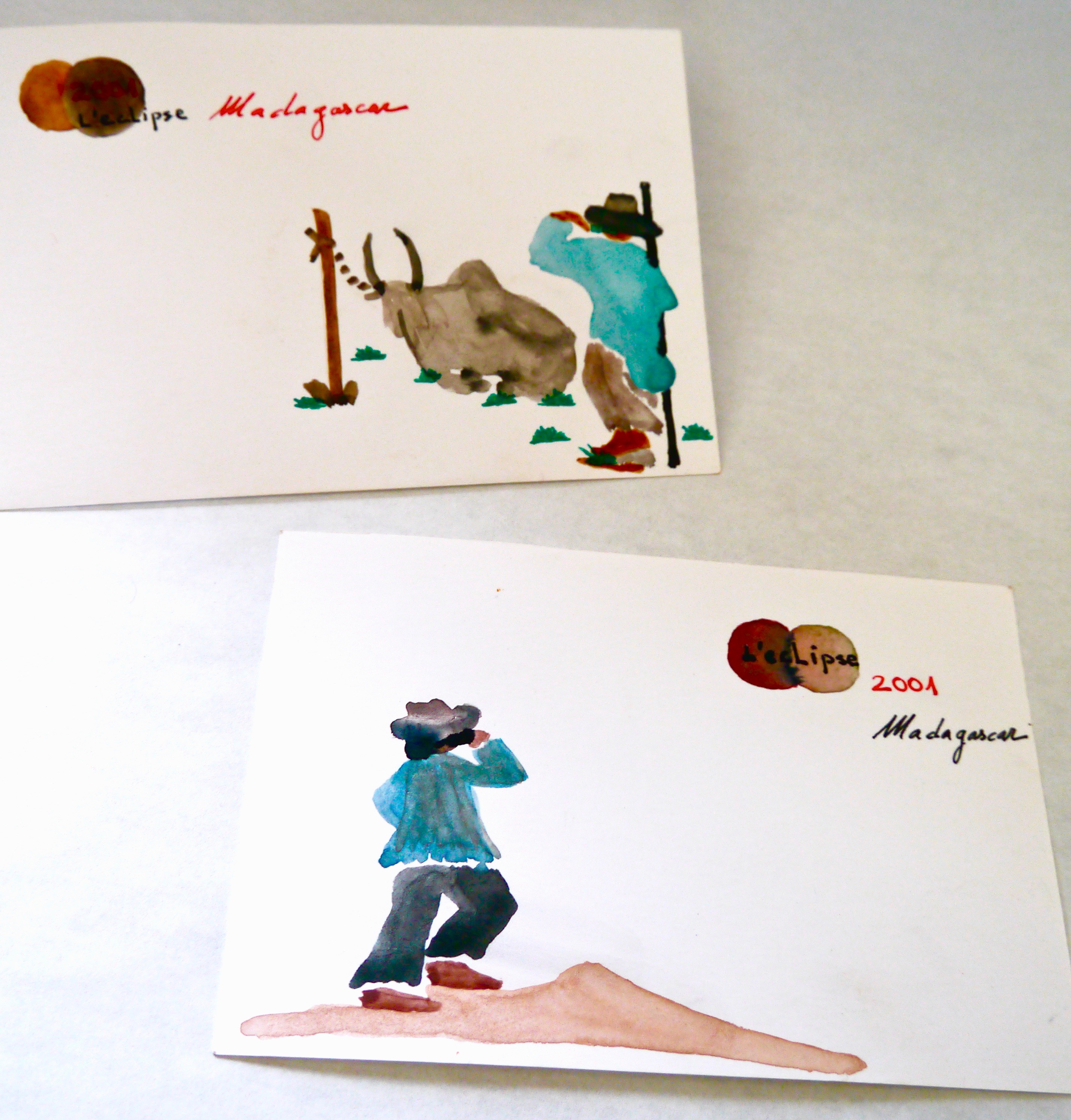
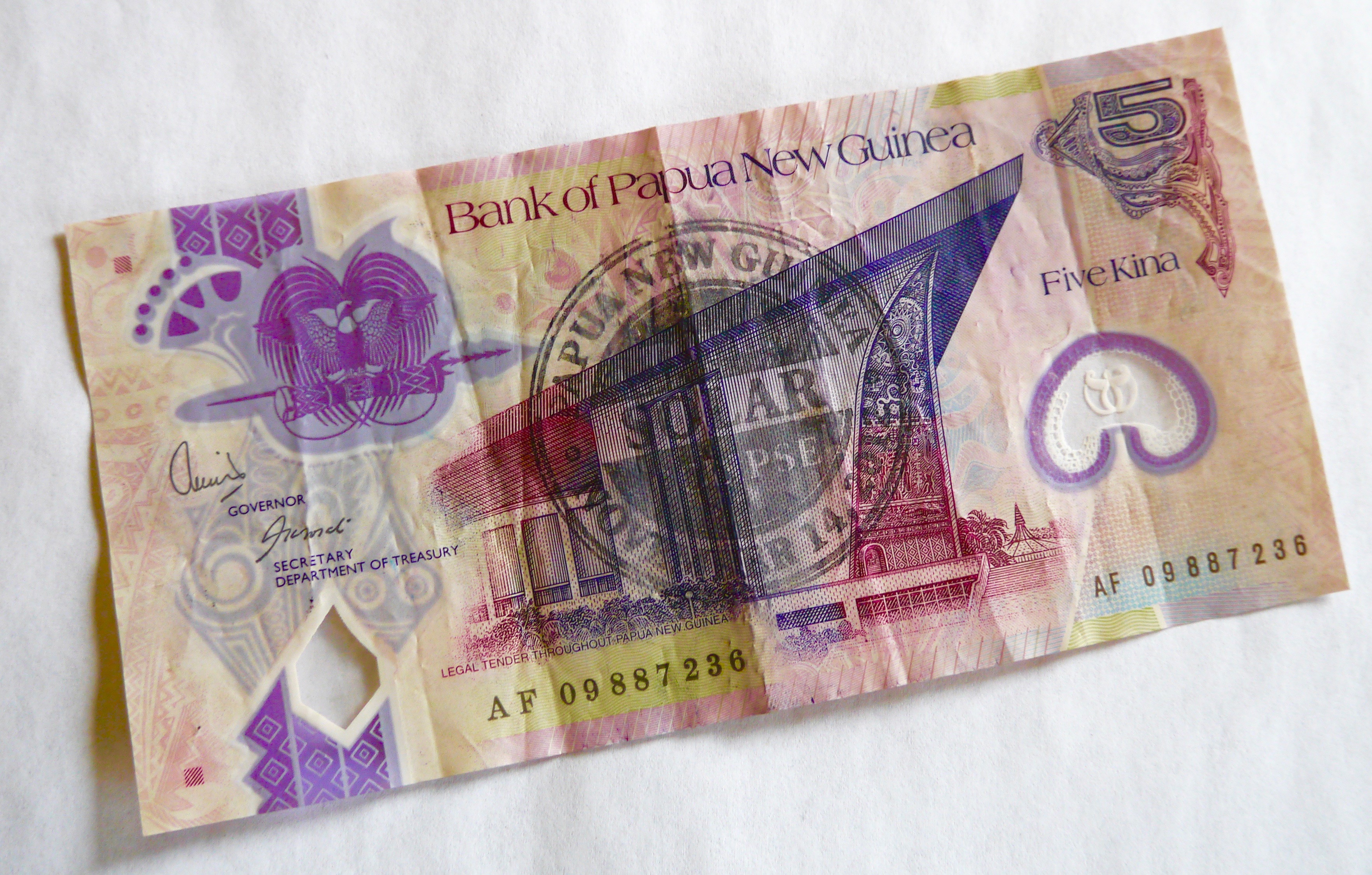
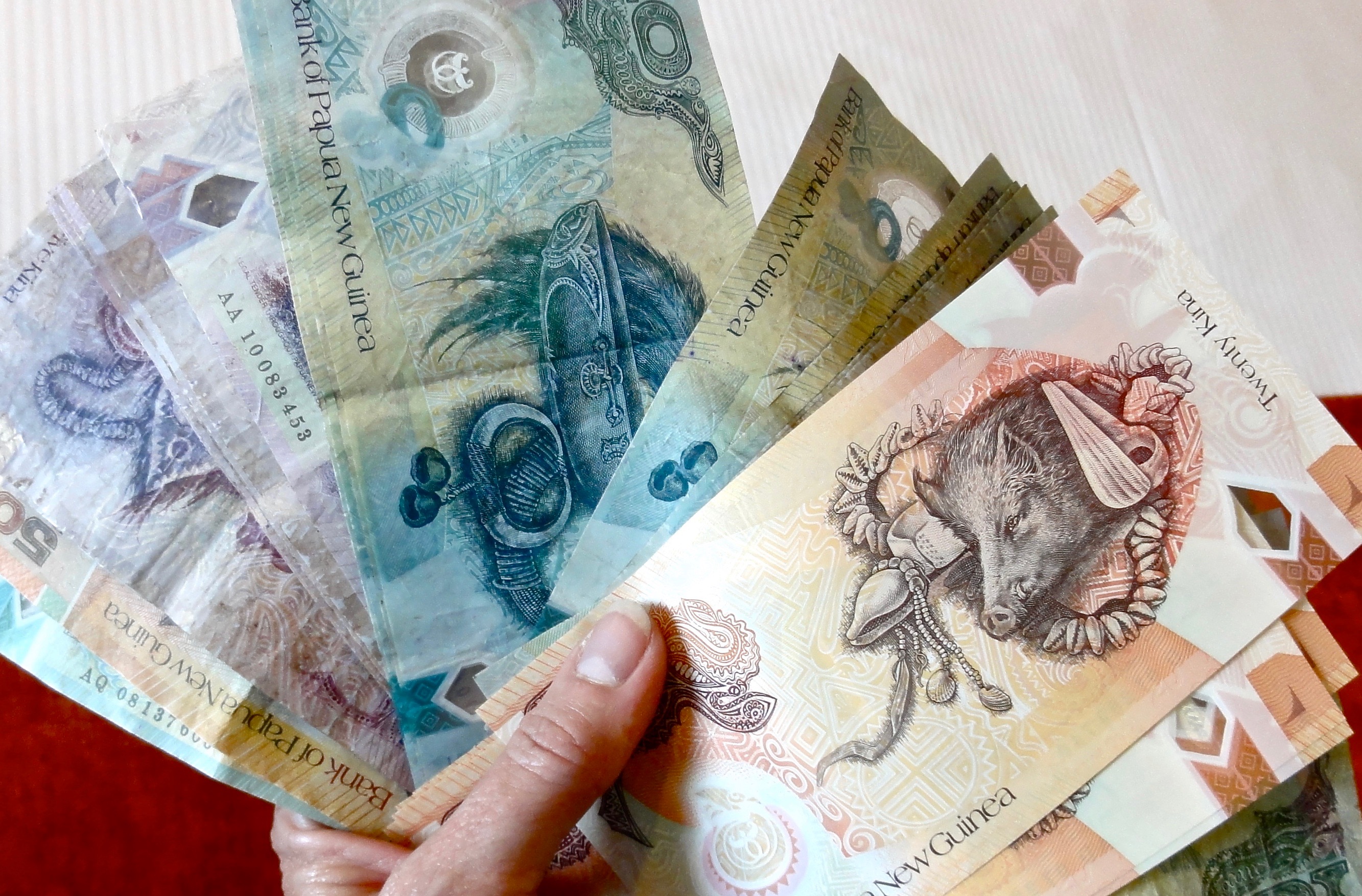
Souvenir stamps

Eclipse chasers who also collect stamps. If that isn’t a double nerd alert, what is?
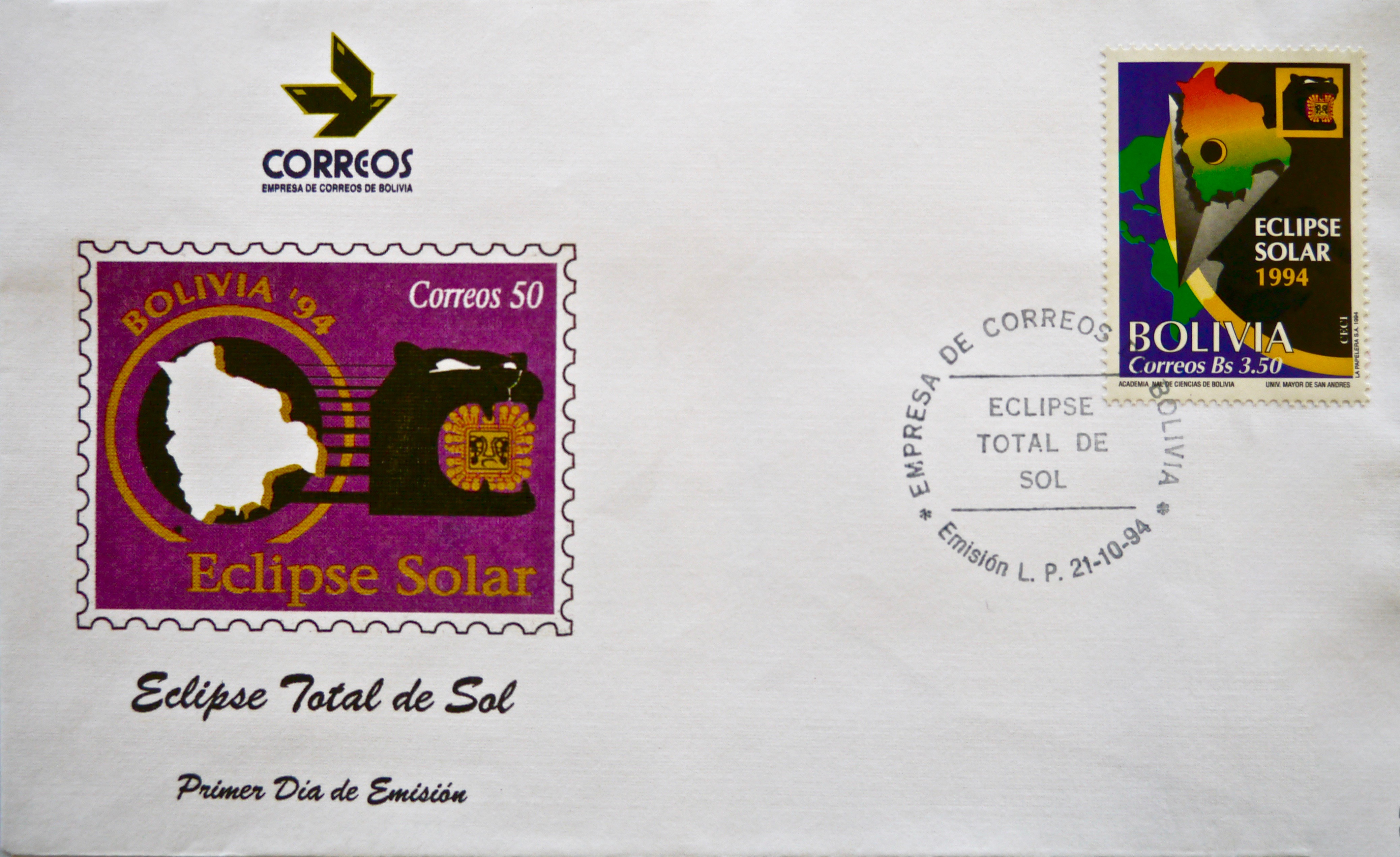
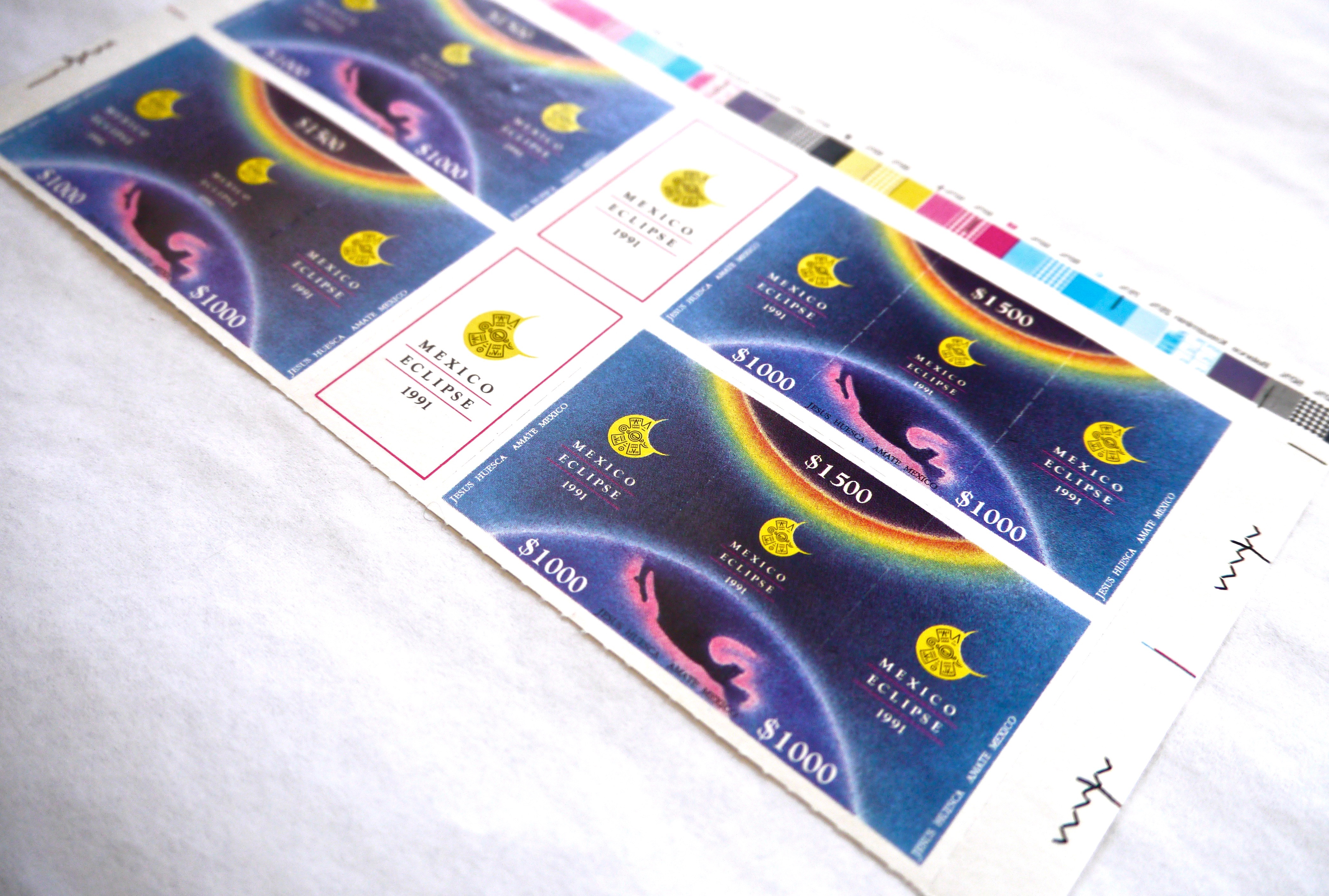
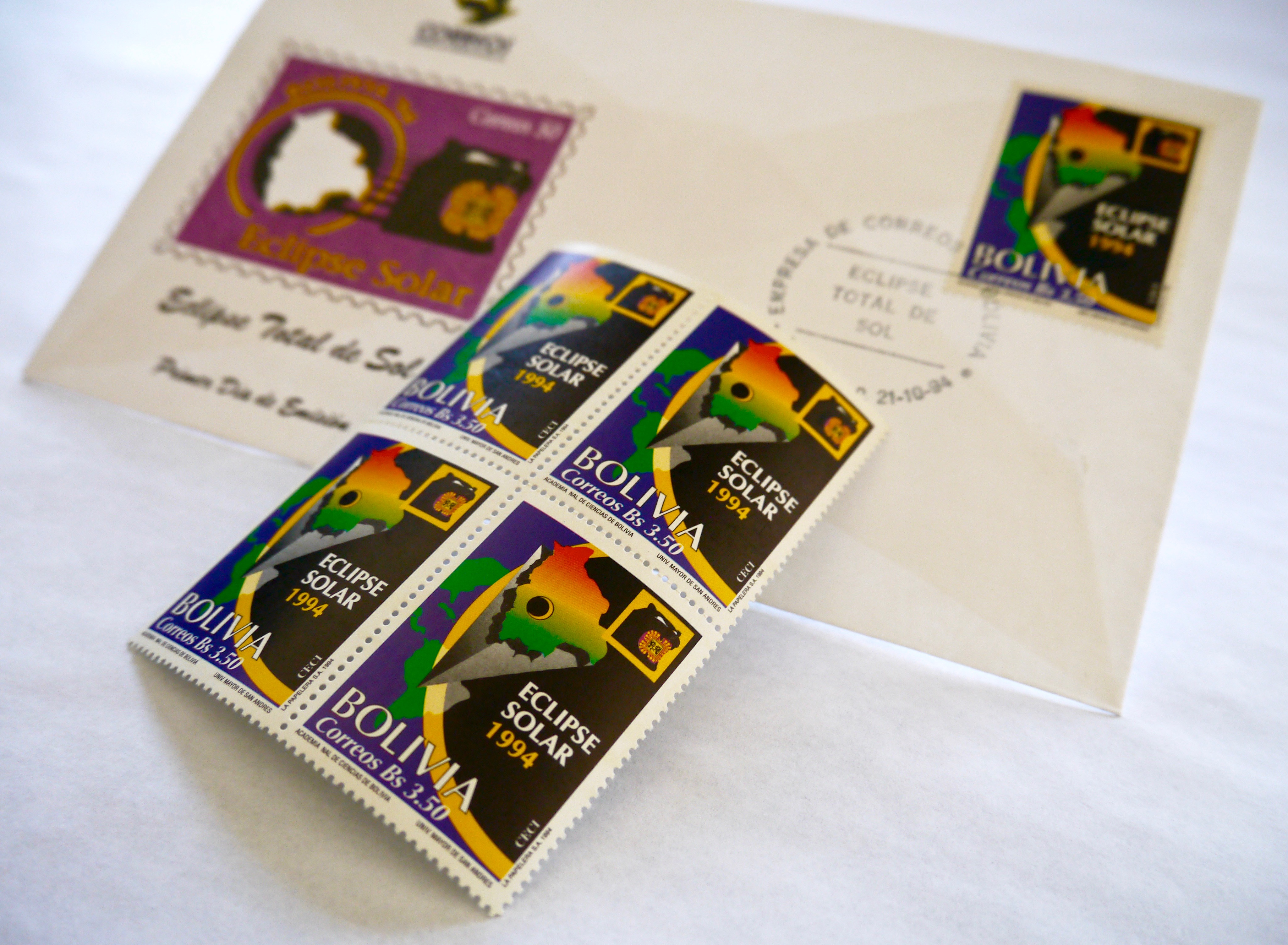
Where my philatellas at, yo? Stamps and first day covers from each eclipse make a fabulous (and flat, lightweight) souvenir. To celebrate a special TSE, local governments often issue a commemorative stamp and/or a first day cover—an envelope affixed with said stamp, postmarked on the first day of its issue, usually imprinted with some kind of illustration.

Today the USPS released their Total Eclipse of the Sun Forever stamp, a first-of-its-kind stamp that transforms the eclipsed sun into an image of the Moon using thermochromic ink.

Make your own philatelic souvenir for the Great American Eclipse: address an envelope to yourself, place a Total Eclipse of the Sun Forever stamp in the usual corner, take it to the post office on the morning of August 21, 2017, and ask a clerk to date stamp the envelope and drop it in their outgoing mail. (Add artwork on the lefthand side for a personal touch; kid’s drawings of their interpretation of the eclipse would be adorable.) Be sure to physically perform this transaction with a postal clerk; you might miss the postmark by a day if you drop it in a mailbox.

Above: Stamps and cover from Bolivia, 1994. Below: Another from Bolivia; Mexico 1991; Aruba 1998; Madagascar stamps and handmade card 2001; souvenirs from Papua New Guinea 2012 (Orion ship stationery and kina bills—folding money is fun to collect, too).


Eclipse chaser log

Umbraphiles, have you logged your eclipses at the Eclipse Chasers website? All the cool kids are doing it.

Eclipse chaser “sounds better than eclipse stalker, paparazzi, or voyeur which are more accurate terms,” states site author Bill Kramer, a veteran of ten TSEs. “If you stay in one place all your life, the chances of seeing a total solar eclipse are quite slim. As a consequence, in order to see one or more total eclipses of the sun one must travel to see them. And that is how you become an Eclipse Chaser.”

Kramer has painstakingly assembled a nice little hub for chasers to keep track of their travels, surveil each other, and find out who else was there on the day of totality.

The Eclipse Chaser site allows you to find and claim any total, annular and/or partial eclipse, dating from 1806. (So, if you’re 211 years old, you might need to get a teenager to help you with the log in.) Add everything you can remember about your eclipse experiences, hit “save”, and your name, shadow time, chase success and other details will be posted automatically to the user summary—314 names, and counting!

Your log will include a delicious quantity of too much information you never knew you wanted to know.

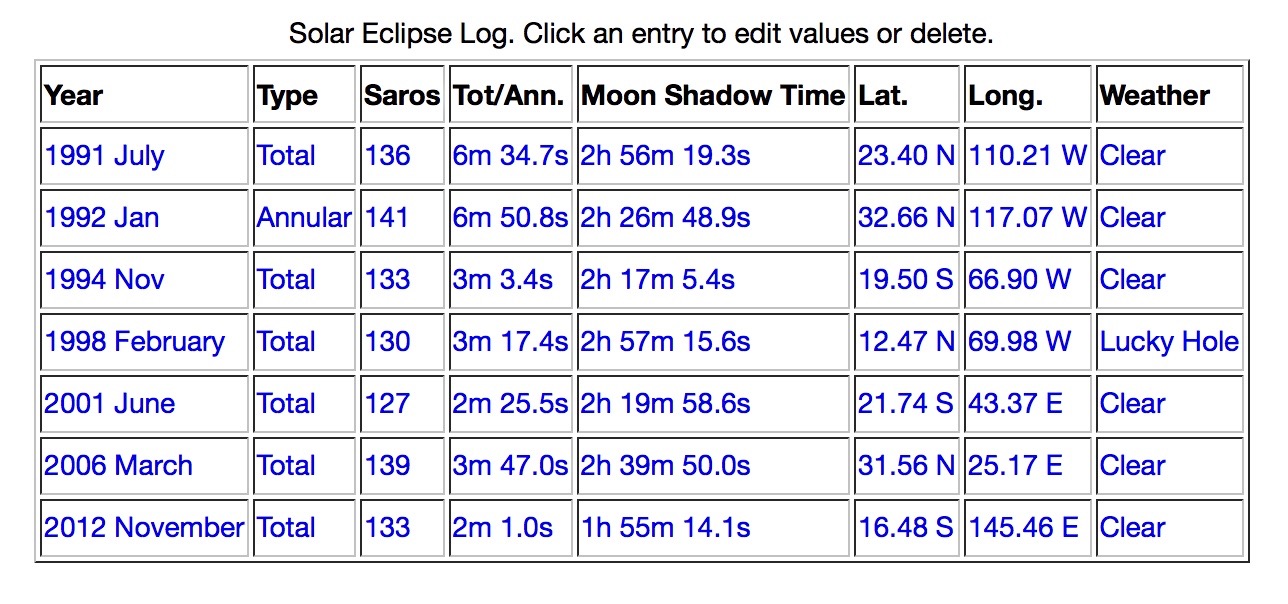
Mine looks like this:

Eclipse count: 7, of which 6 were total and 1 were annular types. The remaining were partials.

Number of Saros Series seen is 6

Time in shadow of the moon: 17h 32m 31.9s. (all partial plus total plus annular)

Total Eclipse time: 21m 9.0s (1,269.0 seconds)

Annular Eclipse time: 6m 50.8s (410.8 seconds)

Central shadow time (A+T): 27m 59.8s

The site is fantastic resource for past eclipse data and includes fun auxiliary information about safety and equipment, collectibles, a gallery of images, how to chase an eclipse (there are five steps! who knew), and even boring transits.

Just select “join log” and you’re on your way. Don’t rush your entries—it make take a few tries to drop a pin on exactly where you were standing in the shadow—and don’t forget, like I did until later, to use the drop down menu to select the exact weather conditions (fun detail, Bill!). No worries, though—you can go back and edit your entry at any time.

The Great American Eclipse, August 2017

If you’re a North American who isn’t living under a rock you know about #TSE2017—and I could ride my bike there.

Ha ha! JK. I’m not riding my bike 21 miles. But the edge of totality falls across Redmond, Oregon on August 21, 2017 at the northernmost edge of Roberts Field airport, just up the highway from my home in Bend.

Coincidence? I think not. Even the weak Kallawalla mystic would say it’s predictable that I live in the path of totality, a quarter of a century from experiencing my first total solar eclipse.

People ‘round these parts say they remember the Northwest eclipse of 1979—no they don’t. It was clouded out. (Disagree? Let’s see your corona shot. Yeah, I thought so.)

On eclipse day I will not be driving from my house—gridlock will grip highways 97 and 26 on the weekend before August 21st and traffic to the path from all directions will be slower than the Bend Broadband wireless network.

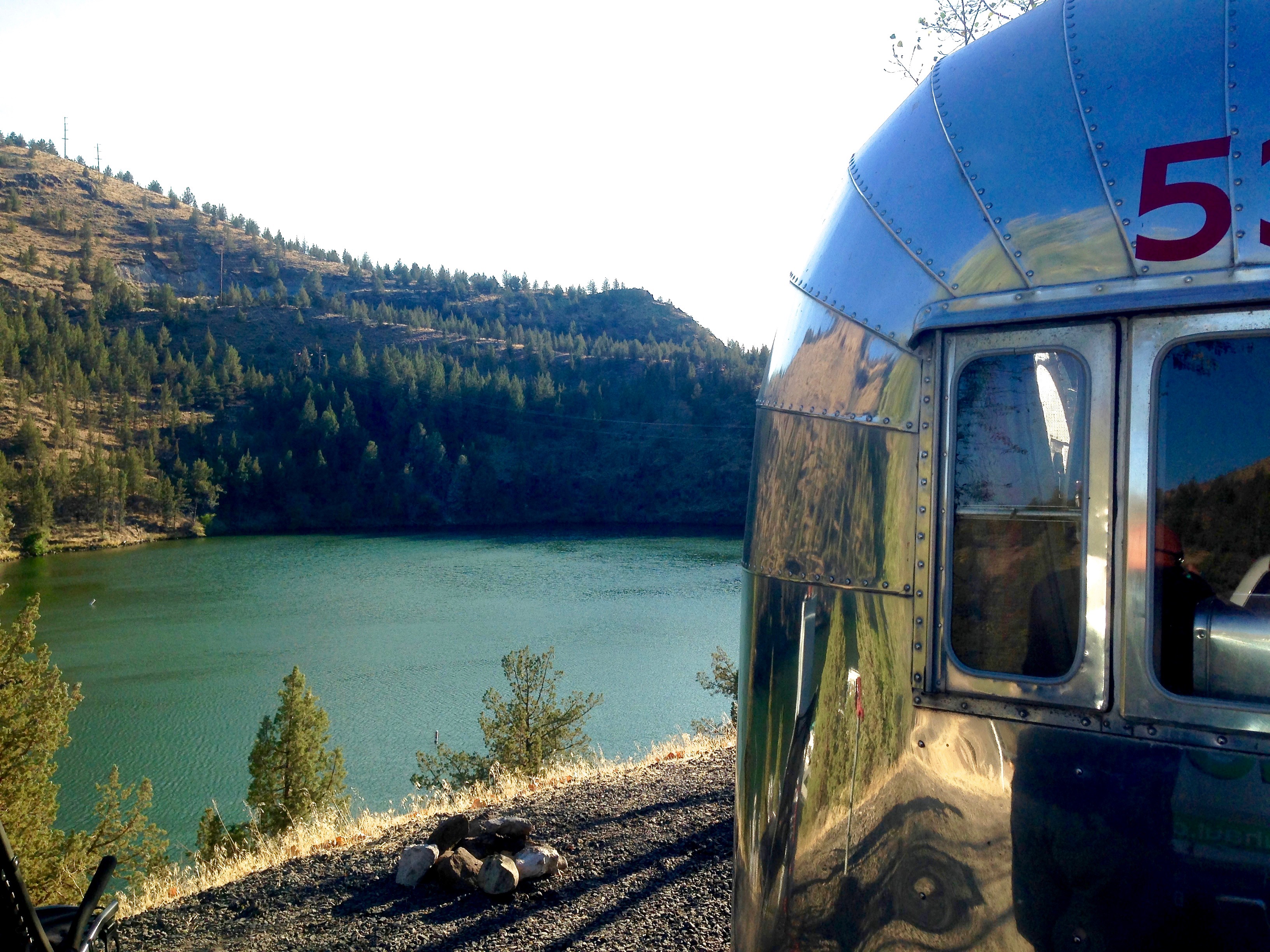
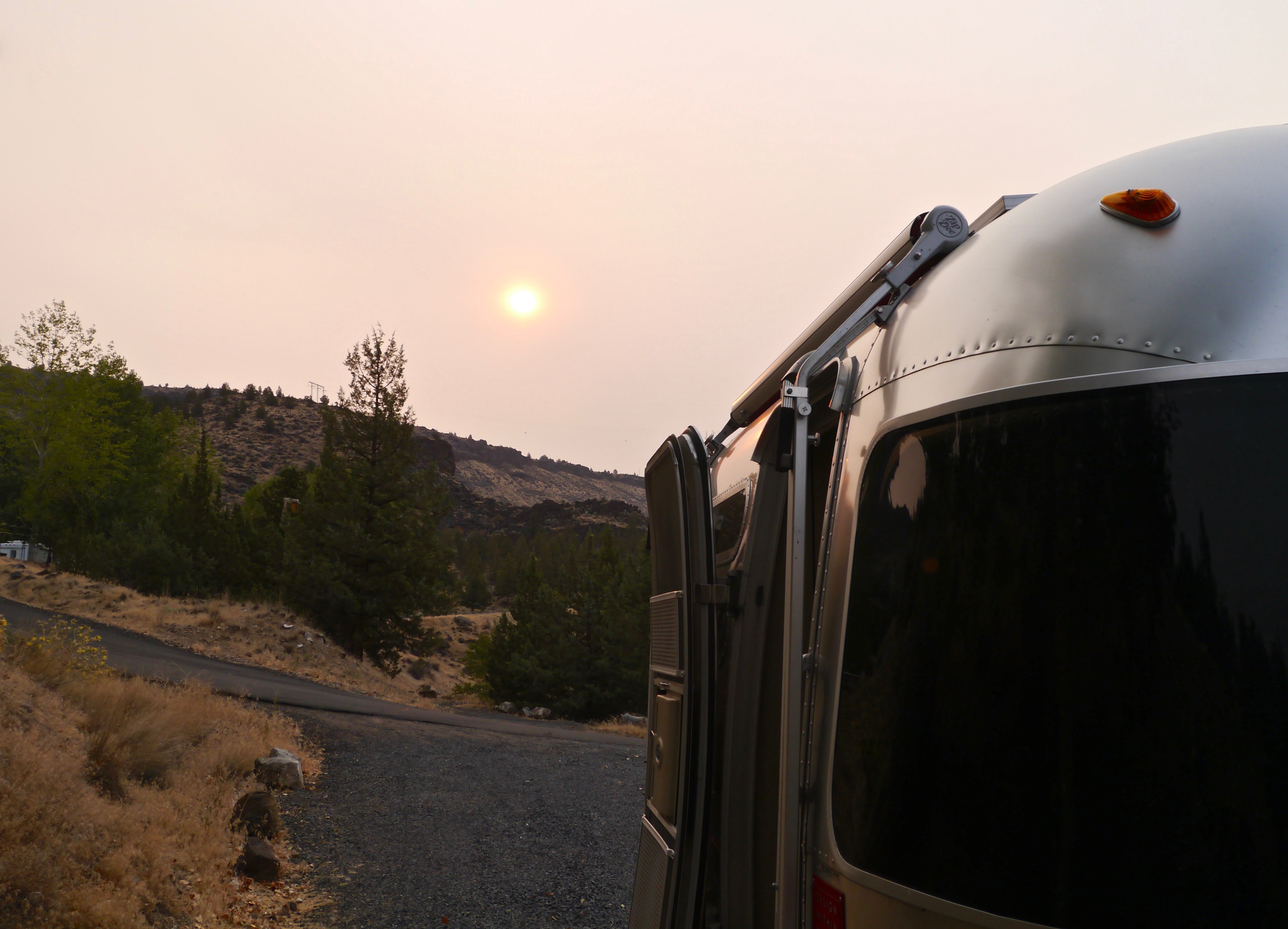
I’ll be at the Oregon Airstream Club Blackout Rally on the shore of Lake Simtustus, the reservoir behind Pelton Dam, in a sea of silver among my fellow Airstreamers.

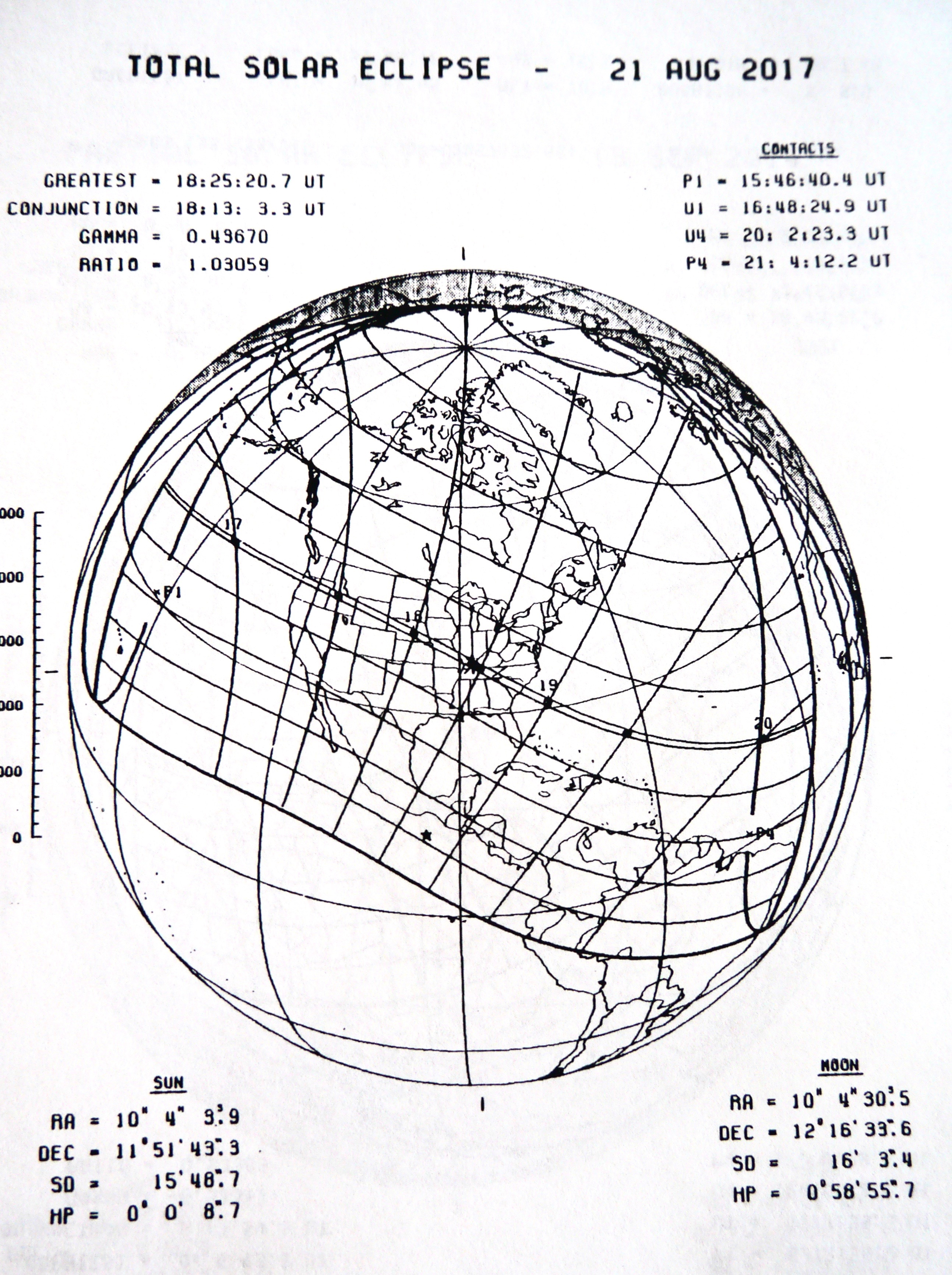
Below: Lake Simtustus site; position of the sun at first contact on August 21; Great American path


Eclipse 2006

On March 29 an estimated 8,000 tourists, astronomers, NASA scientists and Egyptian officials gathered in Sallum, a town on the Libyan border usually visited only by workers and truckers entering and exiting Egypt.

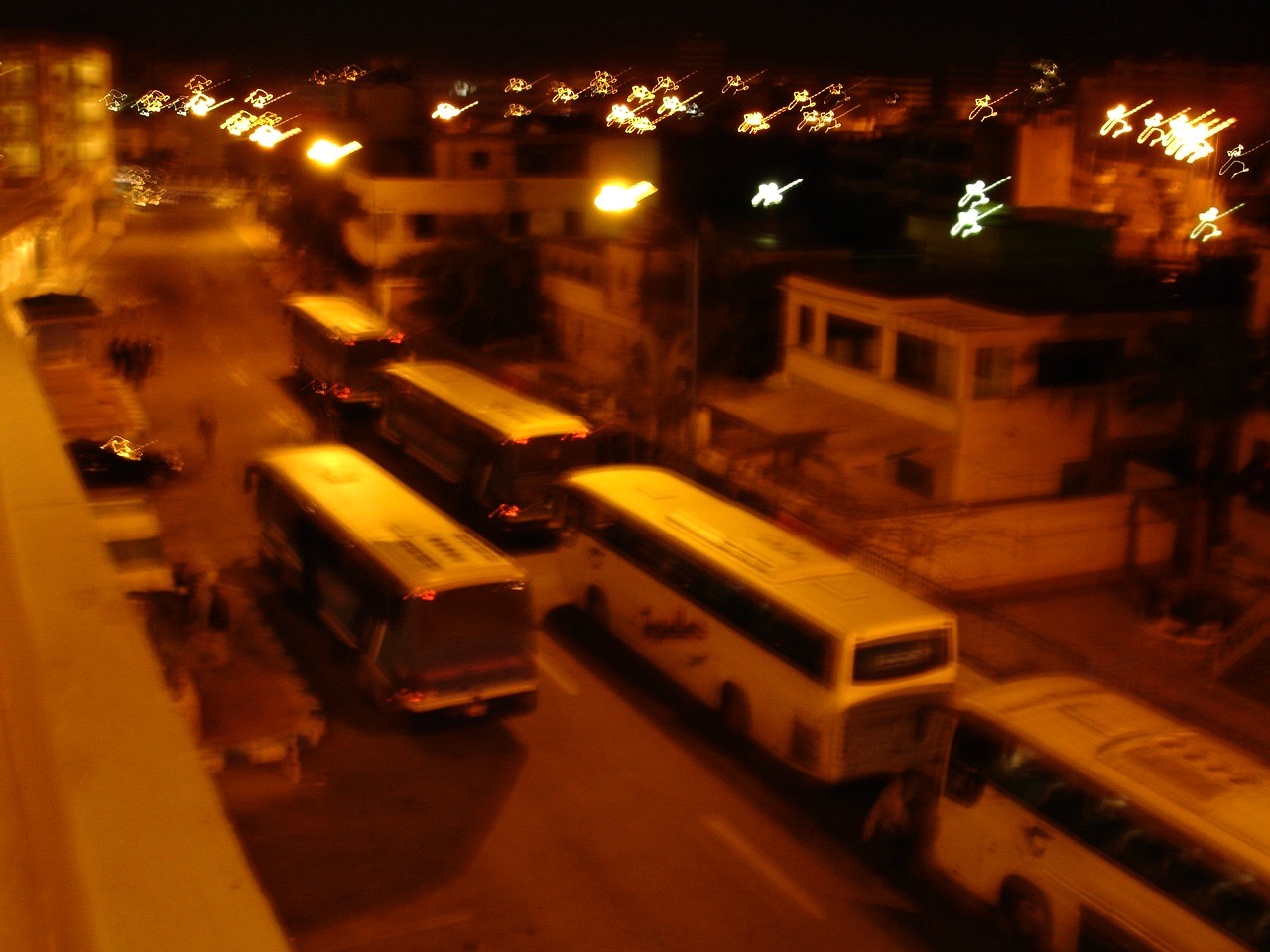
The hotel in Mersa Matruh was 2 1/2 hours from the eclipse site and we rose unspeakably early to the pre-dawn rumble of motorcoaches and diesel fumes outside the hotel. “This reminds me of the Marine Corps,” groaned Ralph as we staggered from bed to bus seats in the dark.

At half past noon the moon passed before the sun in a perfect and cloudless sky. I’m now five for five.

I noticed that the shape of the corona—which is different every TSE and has something to do with sunspots and the solar magnetic field—exactly and mysteriously mirrored the design of the winged sun carvings on the back of my chair in the Nile Hilton dining room. I kept this observation to myself.

Above: Shades

Below:

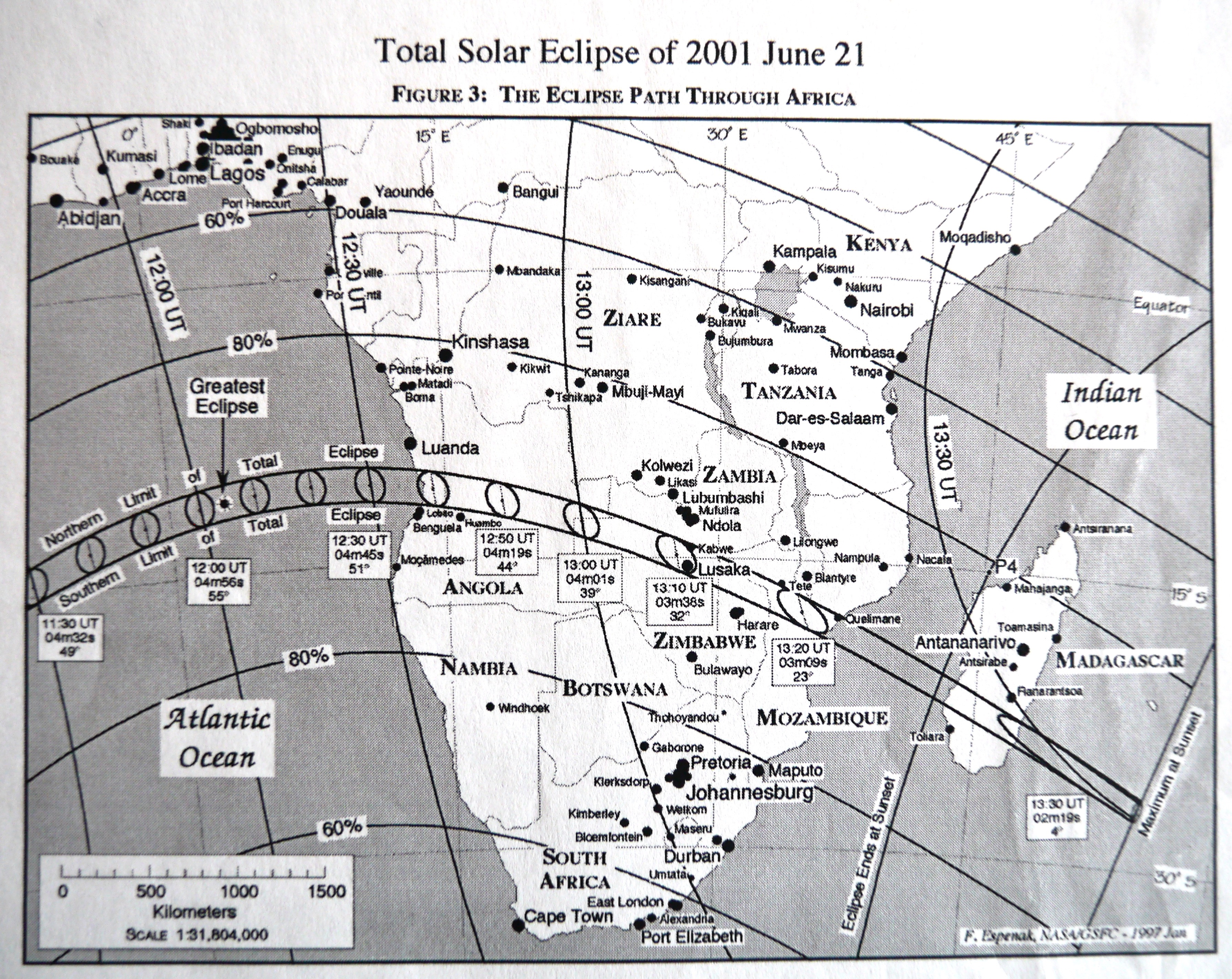
Path of totality, 2006

Back on the bus

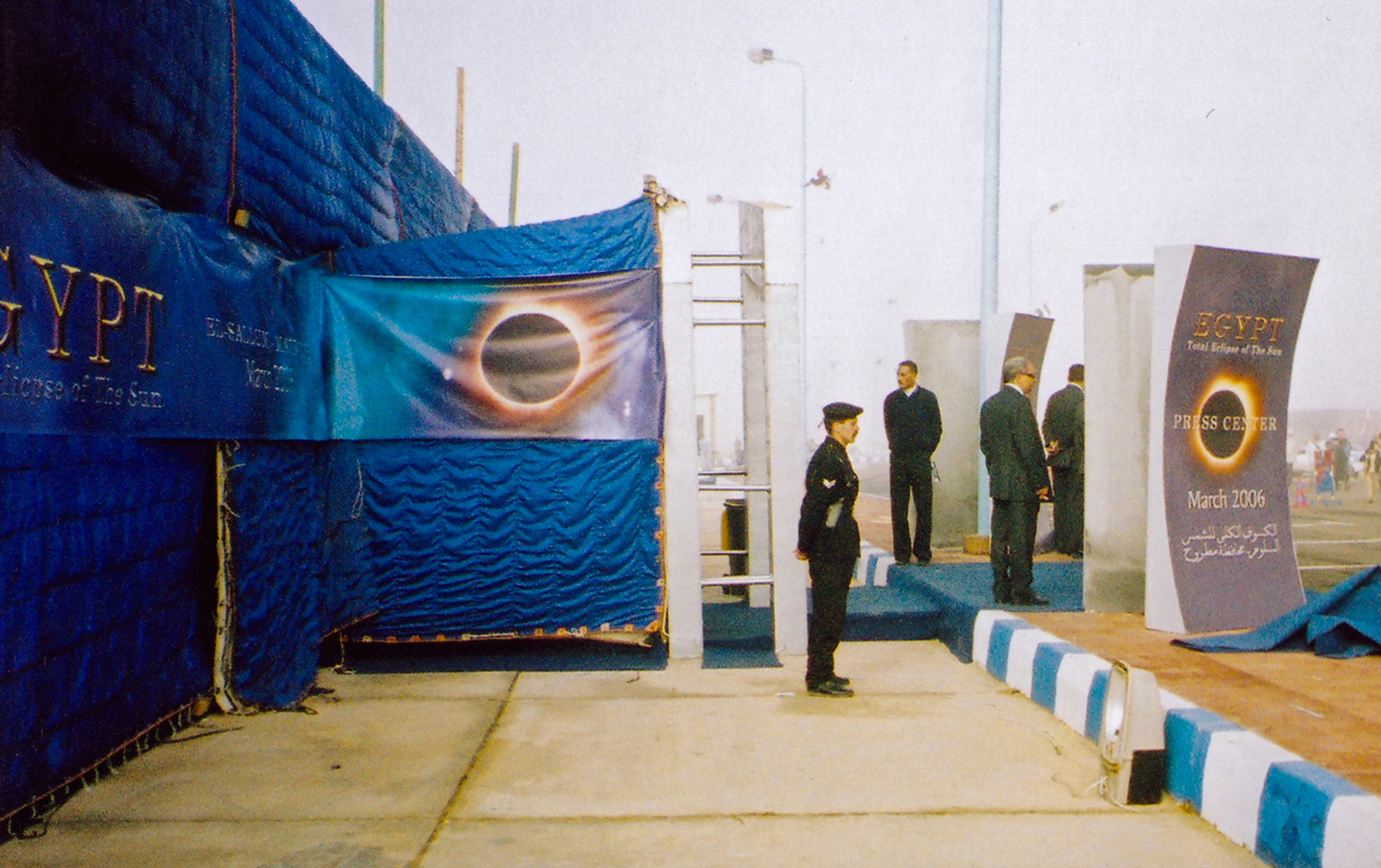
Press tent

Observing at Sallum. (Ralph. Get UP.)

Eclipse Solaire Totale

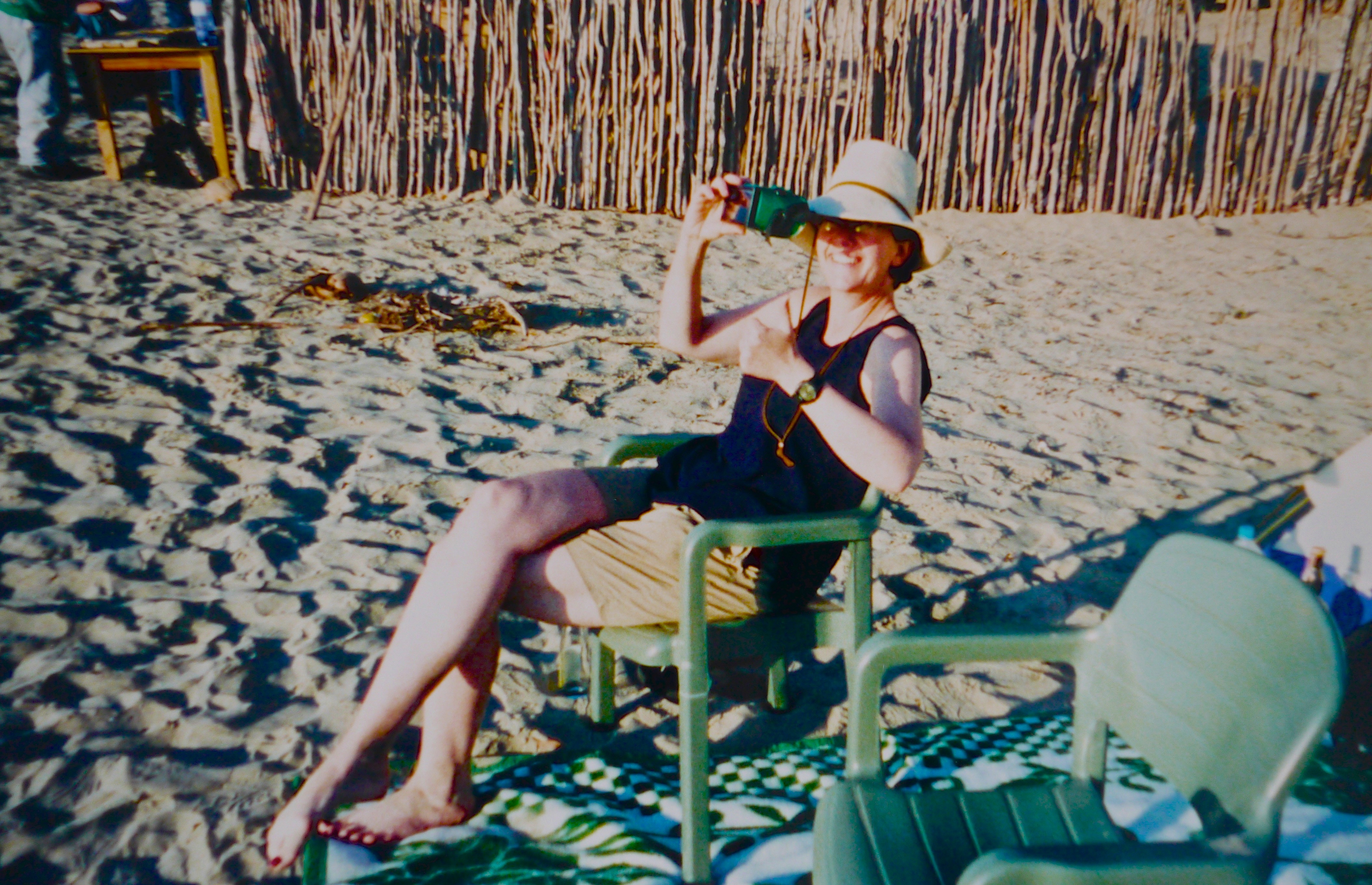
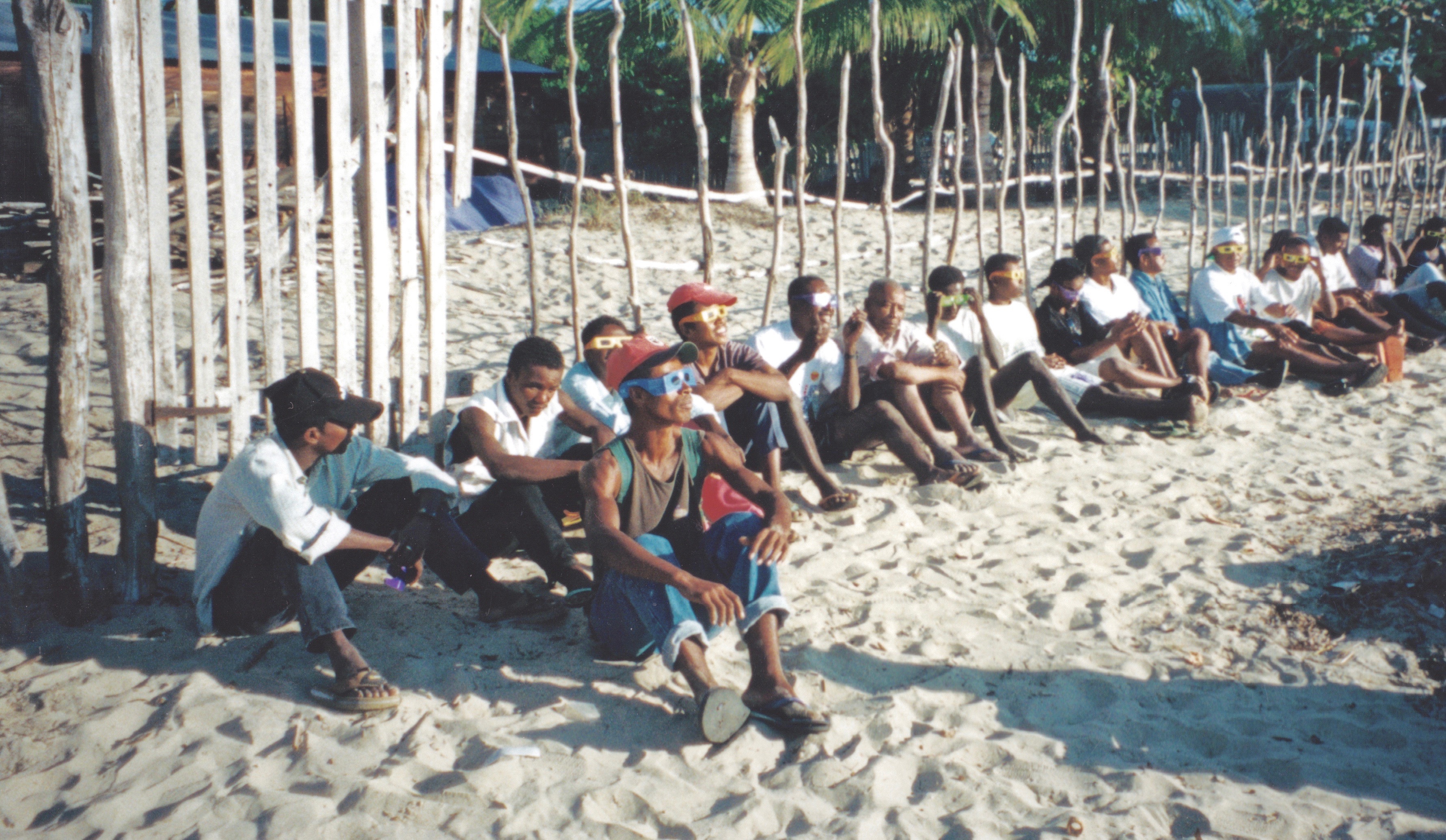
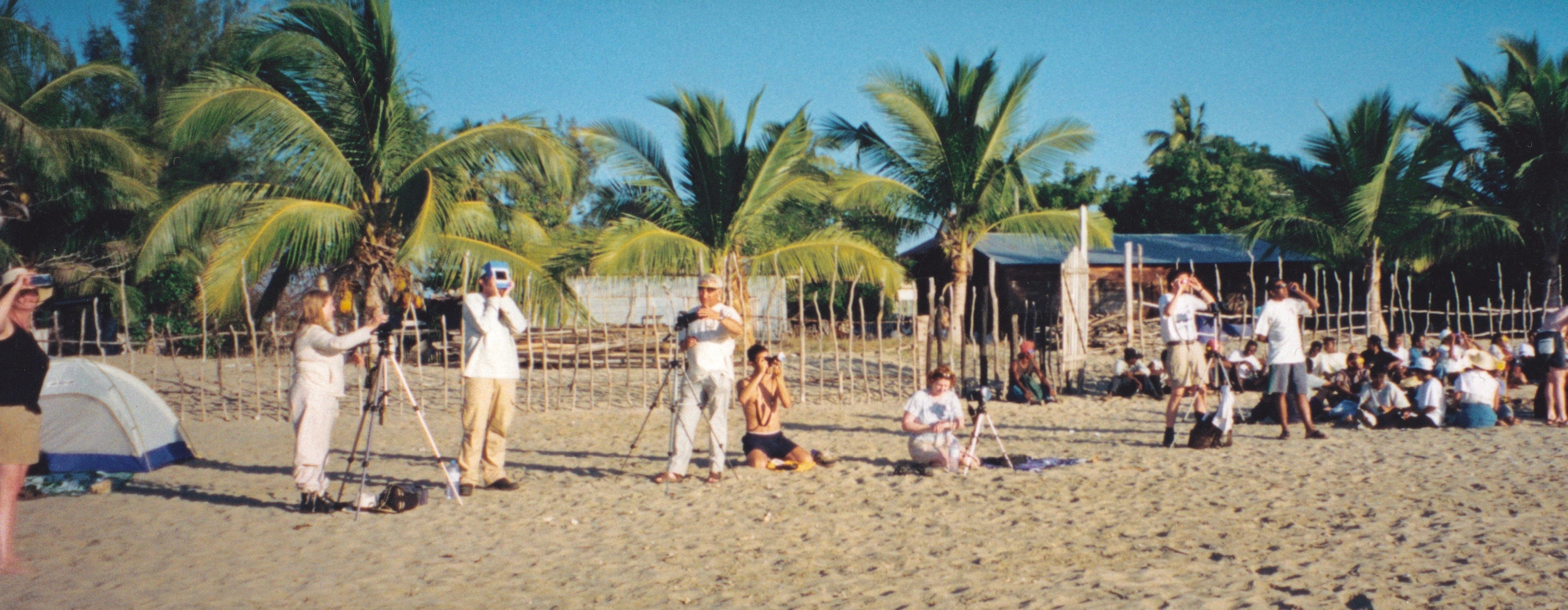
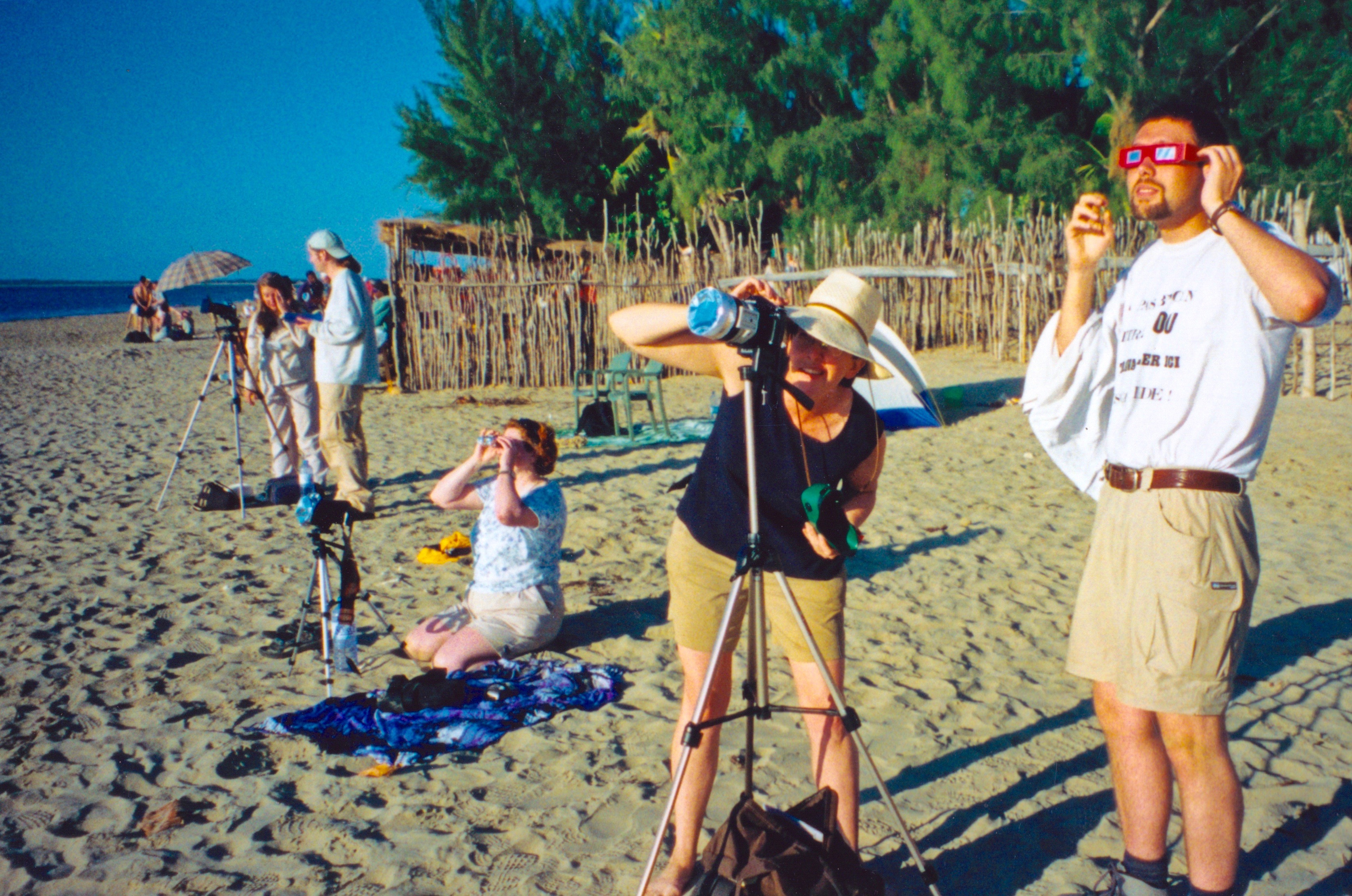
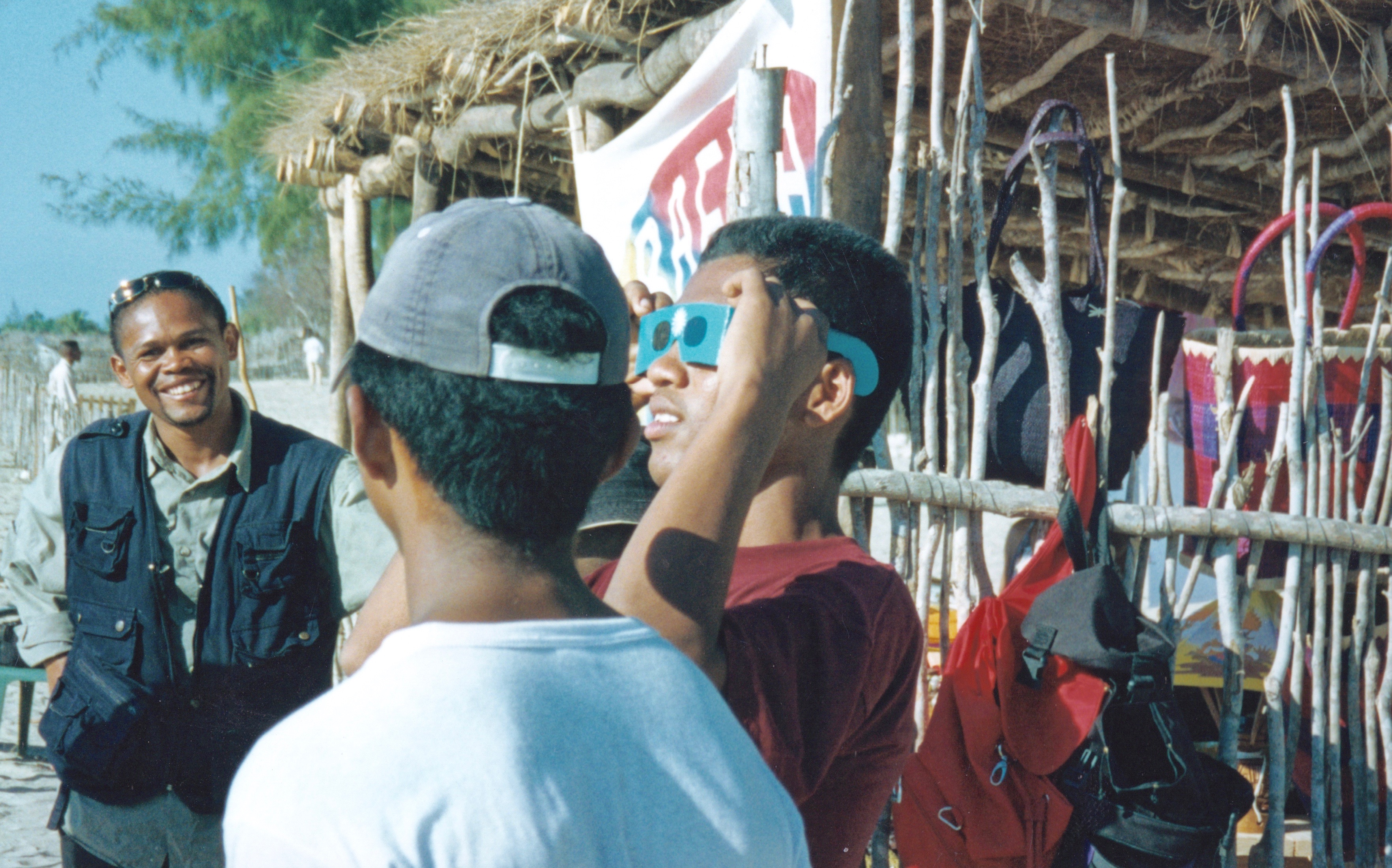
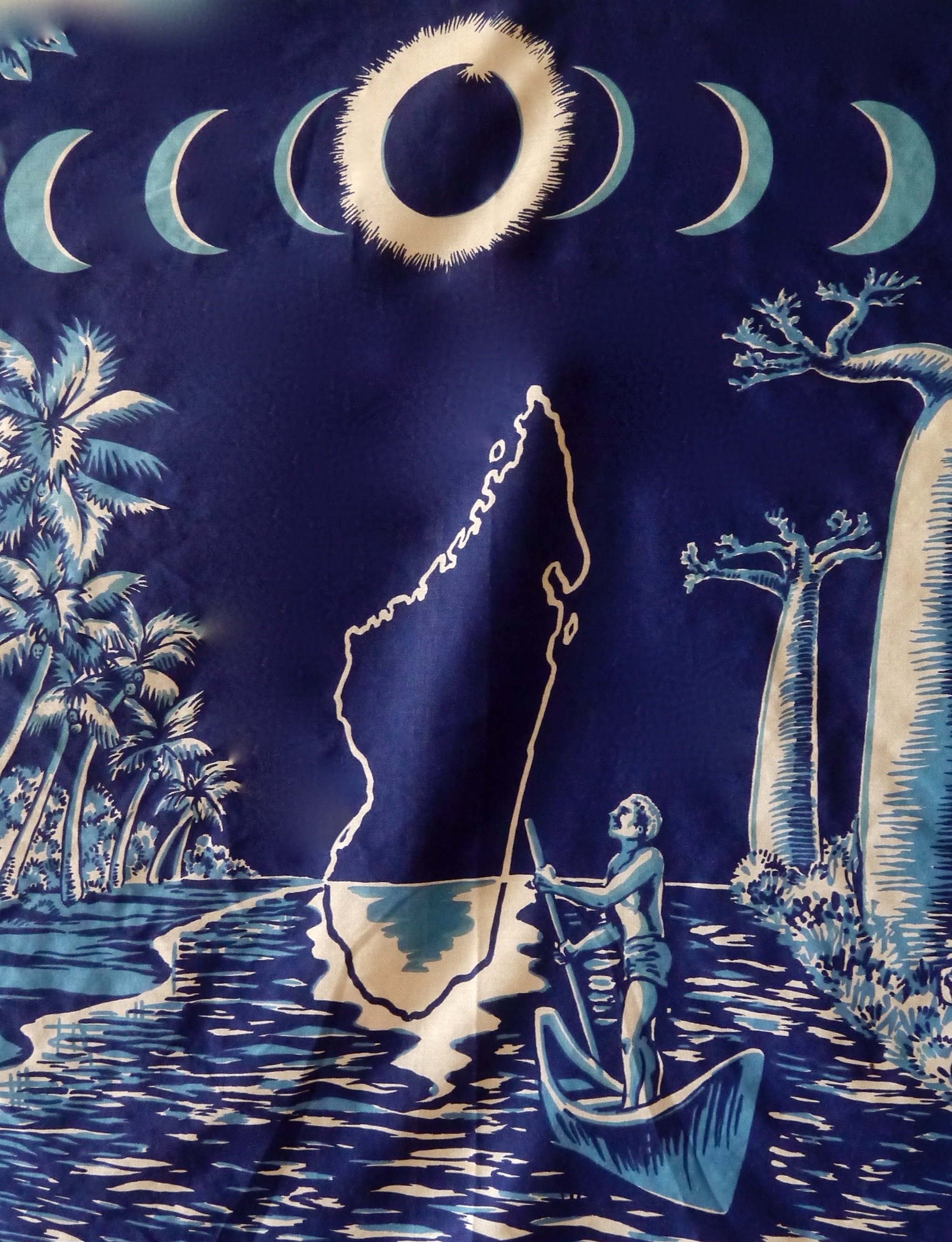
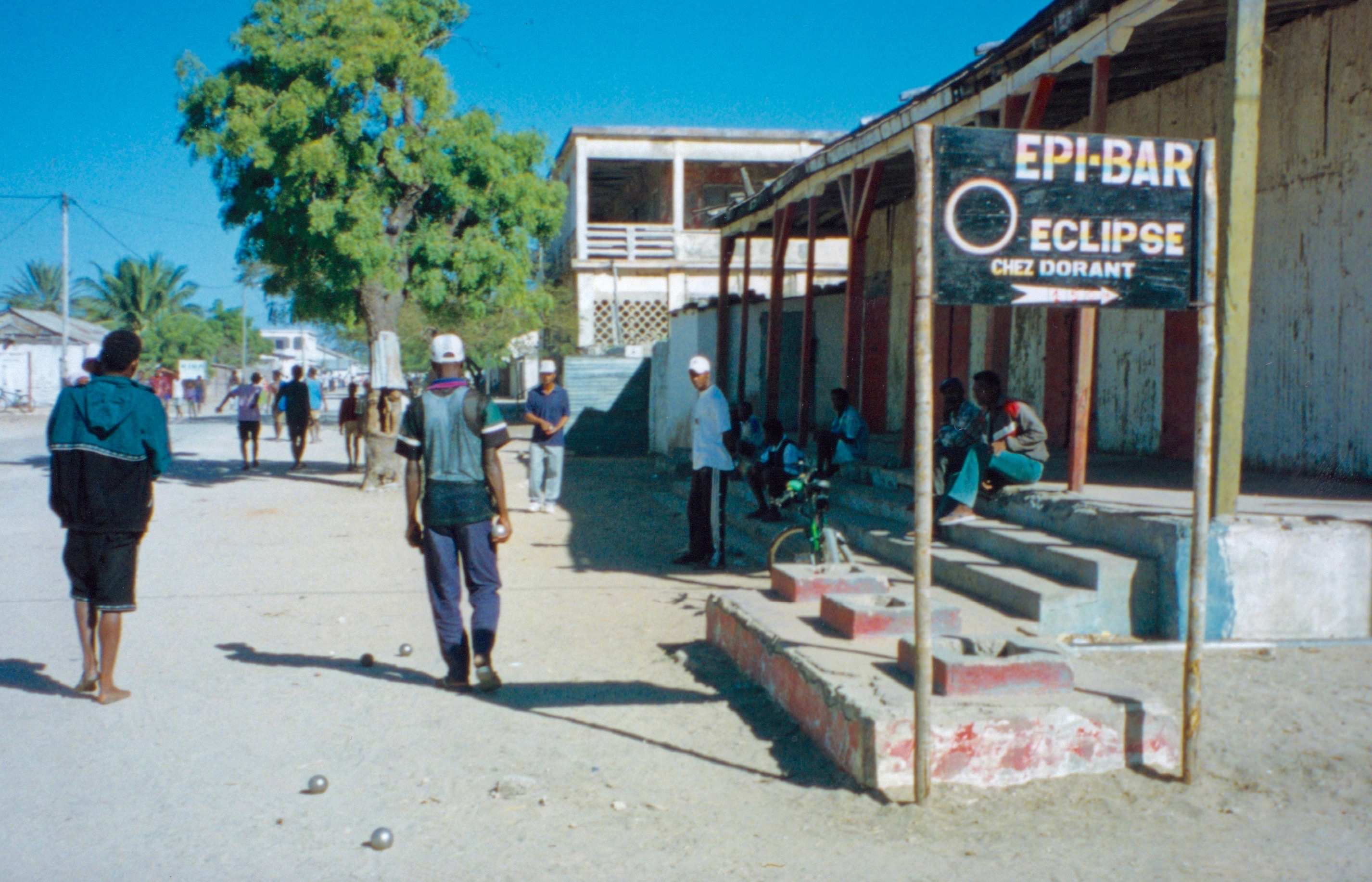
The morning of totality was clear and cool, and sunny beach weather prevailed all day. Locals arrived and chilled, propped against a stick fence on the sand. In broken French, using my souvenir cloth that showed the partial phases, I tried to explain the use and timing of the eclipse shades to some curious Malagasy guys.

Totality, as always, was sublime.

Sadly, a prime viewing site that attracted 15,000 people—the village near Isalo National Park—was clouded out on June 21. Bam! I’m four for four. (And, I don’t know how I missed it, but the Green Flash was observed as the sun set just minutes from fourth contact. I’ve been watching for the elusive Flash since I lived in San Diego in the 70s, and I’m still zero for zero.)

Above: Late afternoon partial phase

Below:

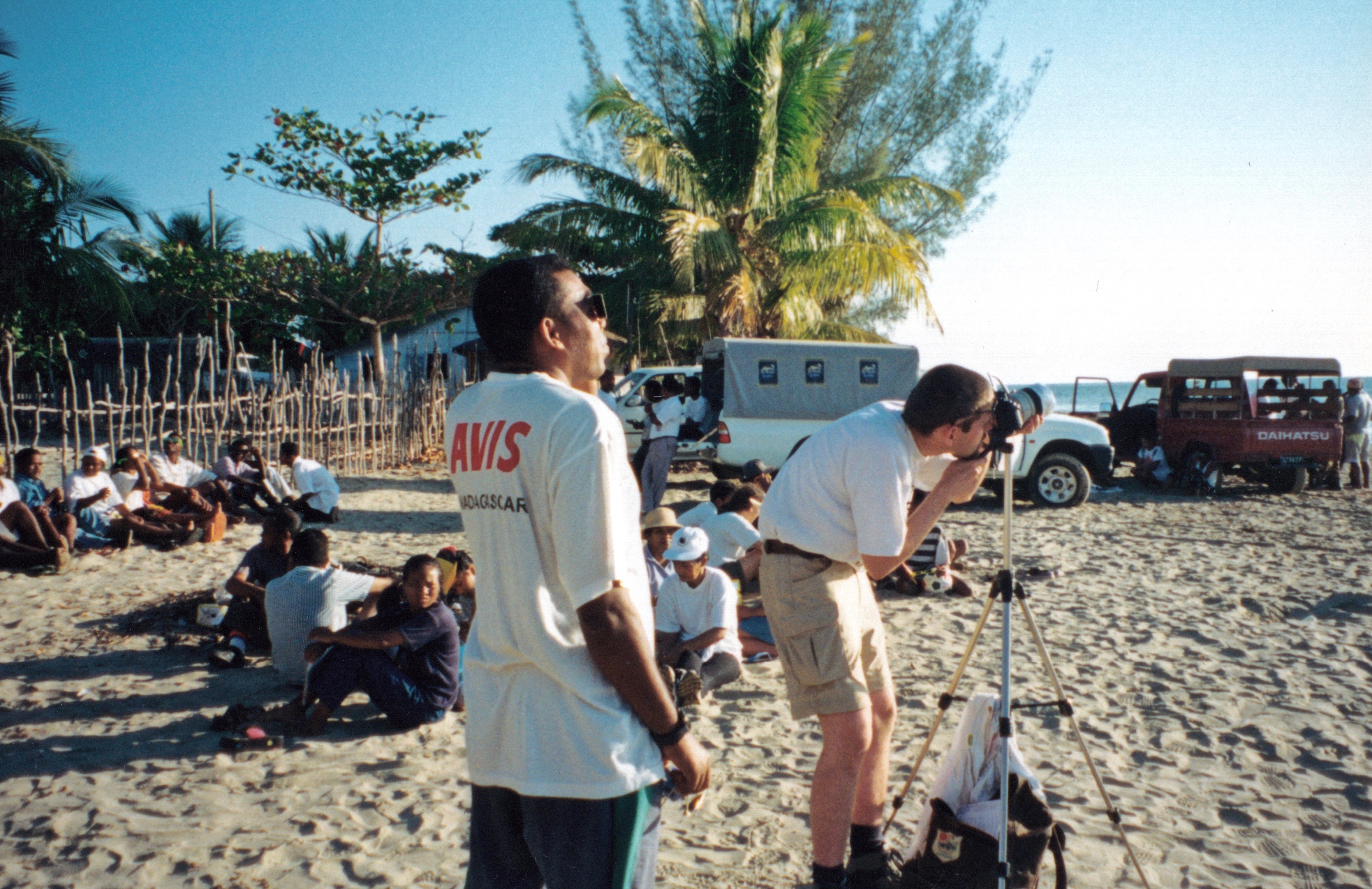
Locals and travelers wait for totality

Samuel makes an appearance

Eclipse tutorial

C’mon Green Flash

Morombe arrival

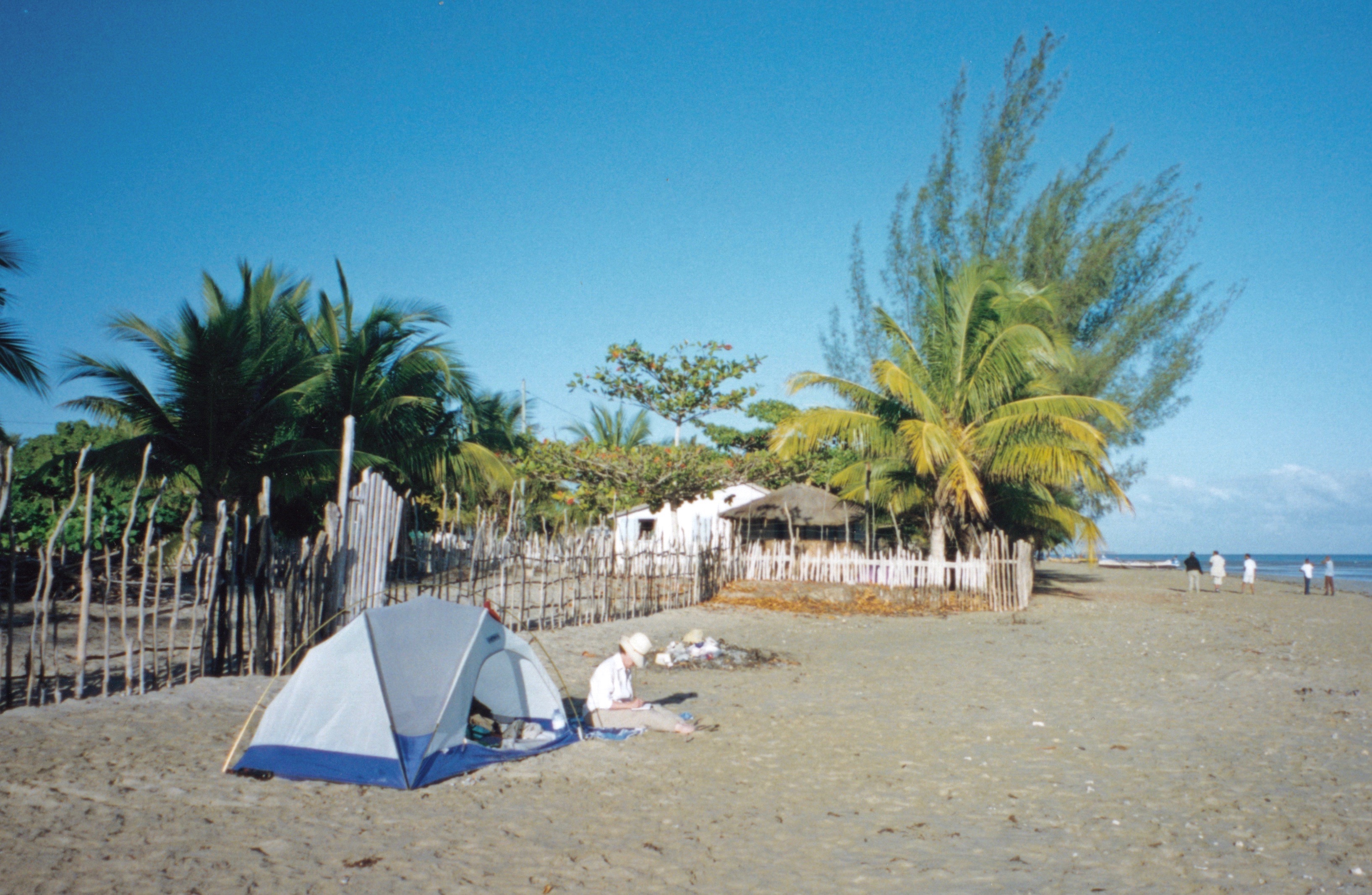
The evening before the eclipse we pitched our little tent on the beach in the village of Morombe.

The French kids— Arianne and the two Xaviers (sounds like a band)—set up camp beside us. A kindly couple appeared, spoke animatedly, and insistently gestured to all of us to follow. “We’re going to their house,” said Arianne.

As far as we could tell we received the invitation by default. The mother must have been watching our evening preparations from the window, Gladys Kravitz-style, and was appalled that a young woman was preparing to sleep in a tent with two young men. We were all compelled indoors for dinner, and Arianne was made to stay overnight in their home.

Their modest wooden house had a thatched roof, soccer posters on the wall, and a statue of the Virgin by the fridge. Dinner was Rice-A-Roni, bread and butter, soft cheese and Ritz crackers; we contributed a bottle of Bailey’s we’d been hoarding since the duty free shop in the airport.

In silence after dinner we all watched a VERY weird TV show in Malagasay on their black and white set. When we left, the mom gifted us with handmade place mats, and a kiss on each cheek.

Above: Beach camp, Morombe

Below: 

Main street

A toast: ciel clair!

The Carnival Cruise eclipse

The “Millennium Eclipse” over the central Pacific and Atlantic oceans on Feb 26, 1998 promised to be a “tropical festival of science” (reported the AP). After the hardships of Bolivia an easy cruise sounded nice—and the Caribbean, in February? Escape rainy Portland? Heck yeah.

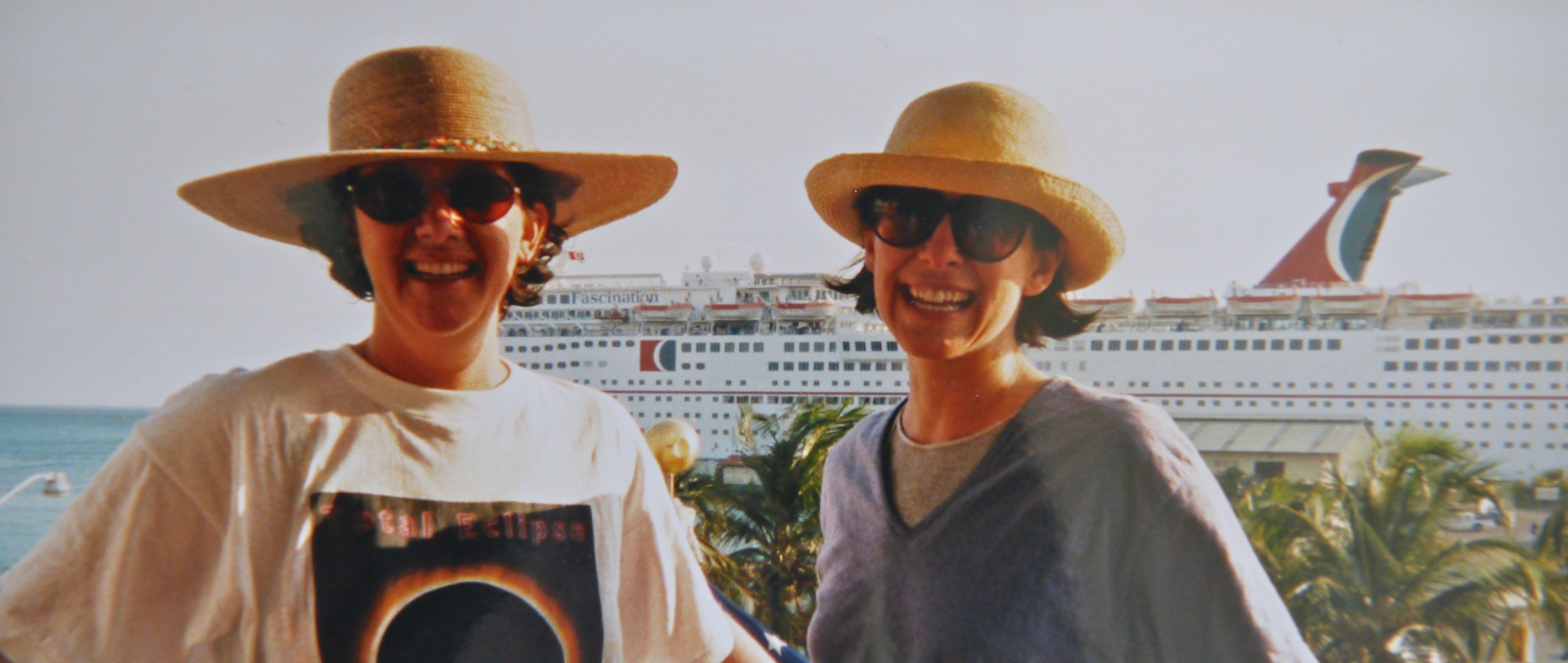
The 93-mile wide umbra was to pass over a string of Caribbean islands, including Aruba, Curacao, Guadeloupe and Antigua. I chose travel coordinator Gary Spears’ Astronomical League Eclipse Cruise on the Carnival ship Fascination for my next TSE, and conned my poor friend Susan to come along.

Hey, Carnival haters! I know you’re there. KMA. If you can’t have fun on a cruise, no matter the accommodations, you simply don’t know how to have a good time.

My second Astronomical League tour was again organized by Ken Willcox (may he rest in peace; Ken passed from cancer exactly one year after the Caribbean eclipse). Also in attendance was Mr. Eclipse himself, Fred Espenak of the NASA/Goddard Space Flight Center, and Mark Littman, author of Totality, Eclipses of the Sun.

Susan, poised and pretty and definitely a non-nerd, was a good sport and a blast to travel with. She stuck out like a hothouse orchid during all the corny ship activities, though—and in the dining room, surrounded by astronomy geeks in polo shirts, patiently listening to their chatter about lens grinding.

The Fascination carried us from San Juan Puerto Rico to six ports of call. In St. Thomas we sunbathed on the beach with a three-foot iguana under our chairs. In Guadeloupe we tasted rum and bought spice necklaces; in Grenada we hiked in the rain forest. We were afraid to disembark in Caracas, Venezuela—and totality occurred over Aruba (where the group was scheduled to be deposited ashore for an eclipse viewing beach party).

You know the Caribbean drill: touring the rum factory, booze cruising, steel drum bands. Except for the eclipse, the most exhilarating event was renting a car on the island of Guadeloupe and driving it out to hike to a waterfall where Susan and I lost track of time and distance. Running critically late for re-embarkation with no time to return the car, we simply abandoned it at the dock, keys in the ignition, and ran laughing up the gangplank as the ship sounded its deafening horn. (Astonishingly, my credit card statement later showed a debit for the car rental, no extra charges, no penalty. Some benevolent Guadeloupian must have returned it.)

Above: Dames at Sea

Below:

Path of totality, 1998 (via NASA)

Billboards

Formal night. Are you in this photo? Drop me a line!


Turistas

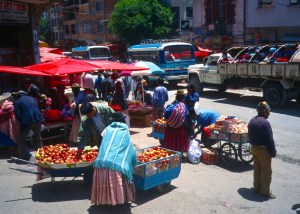
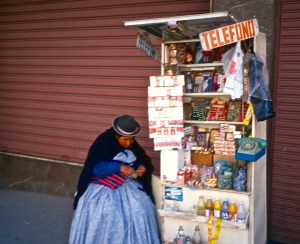
Before totality (viewed from the Bolivian Altiplano, the sunniest location on the eclipse track in 1994) we were taken on a whirlwind tour of, like, the whole country—a basic, barren nation with pockets of jaw dropping scenic and cultural beauty and colorful people. The women dress in native fashions: full pleated skirts and thick shawls with a cholita bowler hat worn rakishly on the head. Luis, one of the guides, explained that Bolivia is “simple and poor”, and because of the climate the residents “crave sugar and pork lard, so all the women are huge,” (his word). To their men, that’s a sign of strength and beauty.

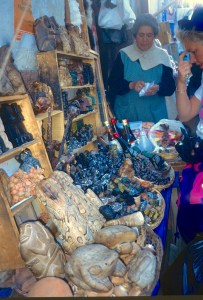
The tour group was put up in a familiar, ultranice Radisson in the big-city capital of La Paz. Throughout the trip Spears Travel made sure we were treated to the very best accommodations Bolivia had to offer. (Read between the lines.) I poked around town, bargaining for alpaca textiles and visiting the spooky witches market to buy lucky totem figures blessed by the brujas with yarn.

I climbed off a bus (after a ride so bumpy that water splashed out of a half-full Nalgene bottle) to explore the ruins at Tiwanaku and stand before the stone Gate of the Sun, believed to be an ancient observatory.

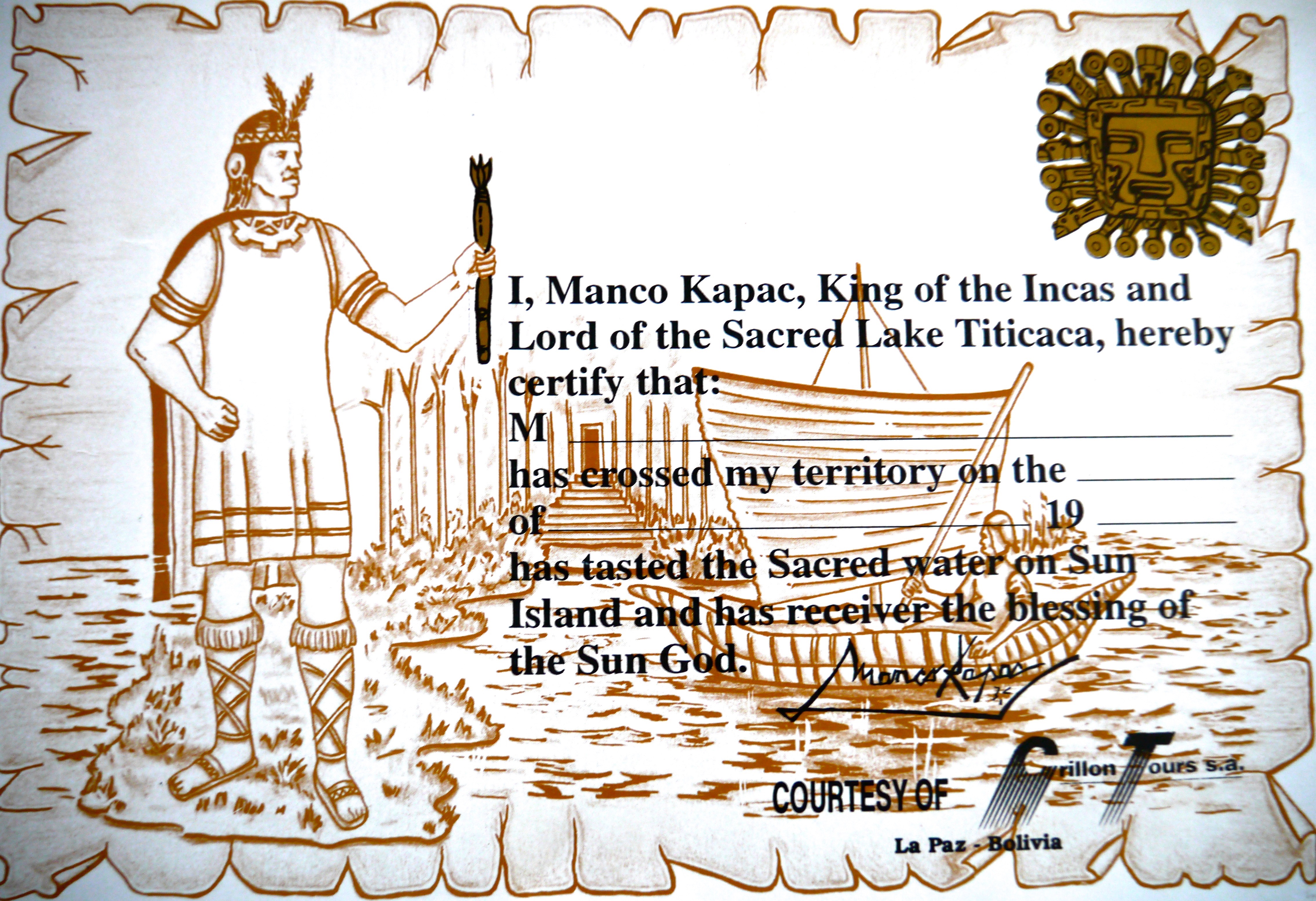
I watched my tour mates heaving over the rail of the hydrofoil jet boat that flew across Lake Titicaca on the way to the fountain of youth on the sacred Isla del Sol. At the car cha’lla blessing at Dark Virgin of Copacabana shrine, vehicles decorated with red, yellow and green flowers—the colors of the Bolivian flag—waited in rows for the priest to sprinkle them with holy water. Beer, champagne and colas were also on hand to acknowledge the earth goddess, Pachamama. (Bolivians believe that our planet is a being to share with and thank—and when you have a drink, you pour a splash on the ground for Mother Earth.) Afterwards, I took part in a little sacred ceremony—a sort of baptism by flowers dipped in the water of Lake Titicaca—and was ordered to repeat, “I will not lie, I will not steal, I will not be lazy,” (the three worst Incan sins). A pisca and gingerale toast sealed the oath.

I had my fortune told by a Kallawalla mystic using “guinea pig x-ray” magic, with dubious results. We gathered in a dark tent late at night; a wizened nut-brown gentleman in robes sat cross-legged in the center. “Who has a question or concern for the mystic?” announced the guide. Of course no one stepped up, so I took one for the team and raised my hand. I was escorted to a place on the ground before the seer and quietly posed a question about my work (how 90s was that). The mystic ruminated and finally said through an interpreter, “you are very worried, but everything will be okay.” The next person stepped up and asked their question. The answer? “You are very worried, but everything will be okay.” Ha! And so on, to everyone.

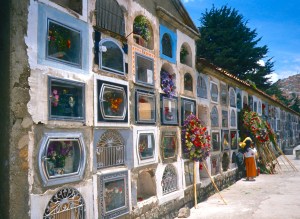
In Potosi, the worlds highest city, I went into a catacomb piled high with the skulls and bones of the faithful. I saw wild vicuña and flamingoes on the plains. I visited a cemetery by myself on All Souls Day and walked among families restoring the above-ground grave dioramas, strumming guitars and placing flowers for the spirits to enjoy. (“Were the dead grateful?” asked David, the videographer in our group. “I’m sure they were,” I stupidly answered. I got the joke about five minutes later.)

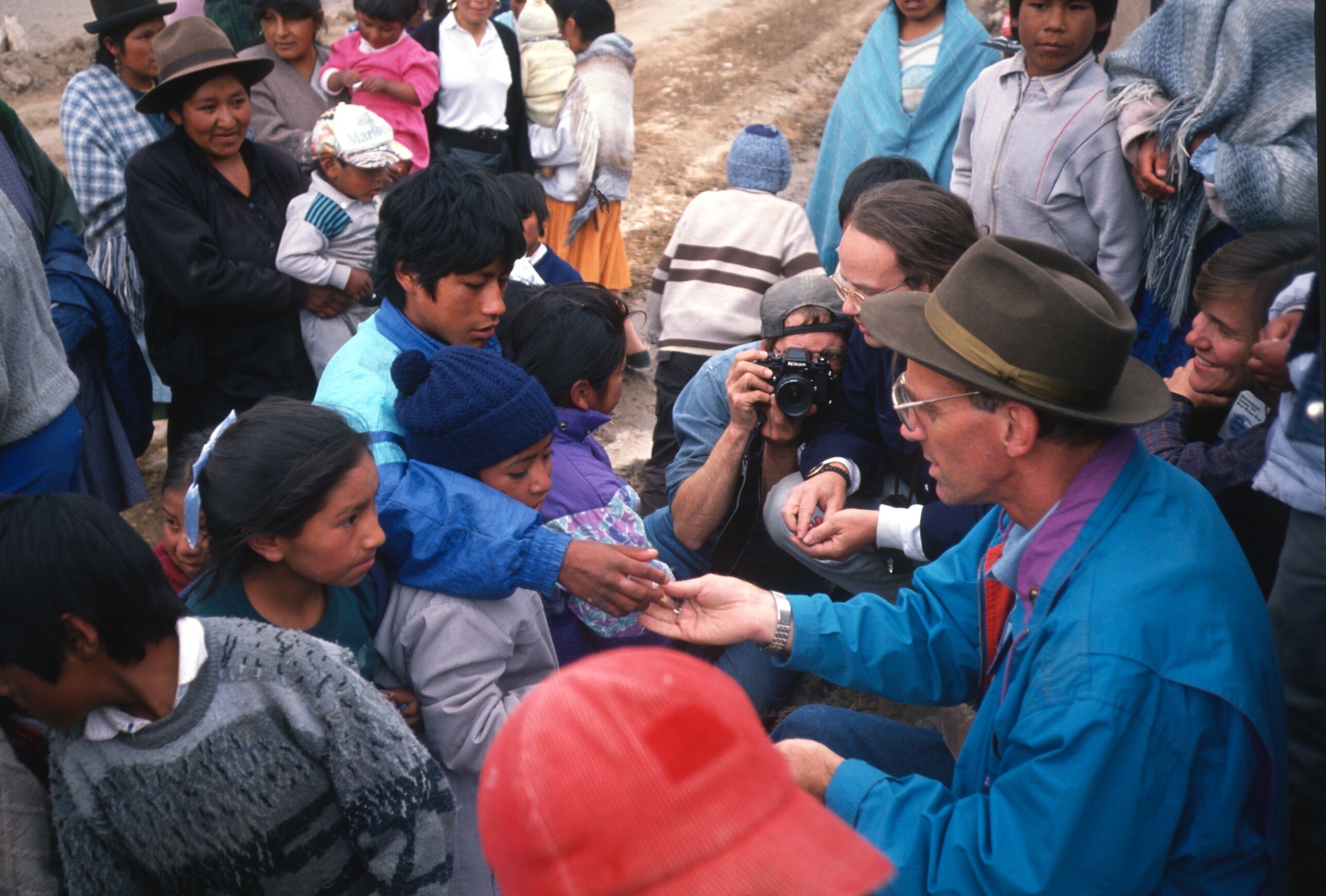
It was an honor to be in the presence of the late Ken Willcox, eclipse coordinator on the tour. Ken made it his business to circulate through our train to the eclipse viewing area and collect small items and anything that we could offer as a school supply—paper, pens, pencils, decks of cards—and distribute them to the children who came running when we stopped on the tracks in the poor villages.

By our final destination in the town of Sucre, the nerds looked less nerdy. Those once pasty and dandruffy and afflicted with altitude sickness at the beginning of the tour were now stronger, buoyant. The men became vital and scruffy, wearing Indiana Jones-style fedoras they found in a market somewhere. Faces were tanned and spirits were high as the travelers joyfully licked ice cream cones while sauntering around Plaza 25 de Mayo square. That night, all enjoyed a fancy farewell dinner, served in a Euro-style restaurant with white linen tablecloths.

Was it the asparagus with cream sauce served at dinner? The ice cream in the square? (Probably not the ubiquitous pollo and jojos, served piping hot from street vendors.) Whatever it was, I would learn that anyone who wasn’t flattened by altitude sickness at the beginning of the journey later contracted a frightening intestinal illness. One unfortunate dude hosted an amoeba so debilitating that he had to be a Boy in a Bubble and underwent a complete immune replacement—a process that took a year from his life.

I fell viciously and unexpectedly ill with dysentery on the flight home. The airline crew allowed me to lay on the floor of the bathroom during the last hour of the flight including WHILE THE PLANE LANDED. I was removed from the airport in a wheelchair, and was bedridden and delirious for two solid weeks.

It was worth it.

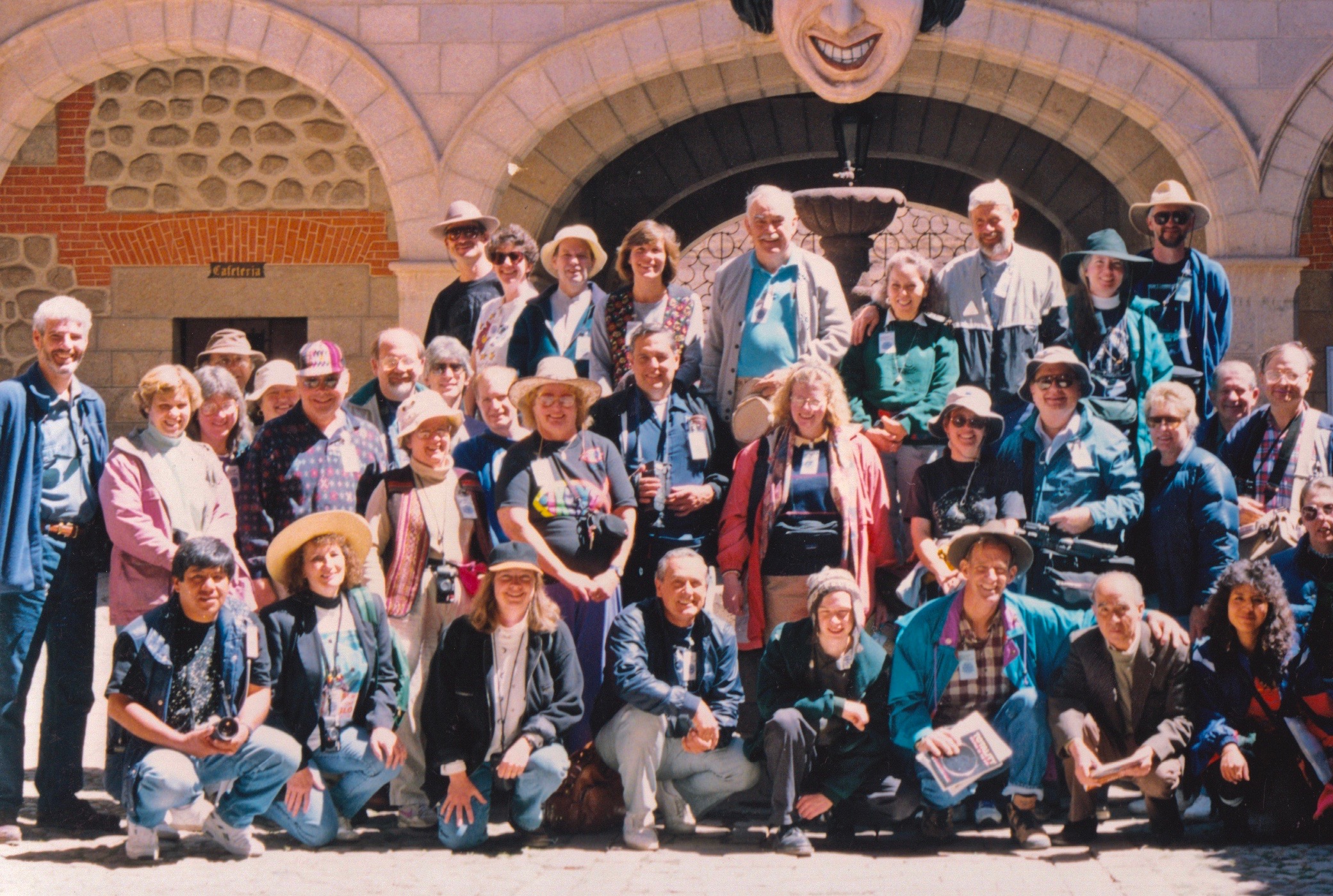
Above: Chasers at the mint 

Below: 

(Photography in Bolivia was difficult in 1994; it was generally verboten to take a picture of anything living, not just people and animals. A photo of a potato would take its soul, too—the next day it would surely be rotten inside. I couldn’t resist selfishly capturing certain memories for myself while trying to keep a respectful distance, and I still got in trouble. Once, three teenage girls in yellow and white school uniforms were sitting beneath a statue at the end of a town square; a breathtaking photo opp. They saw me trying to sneak a long shot from the other end of the square—from all that distance away!—and ran. When I put my camera away, they returned. Lesson learned.)

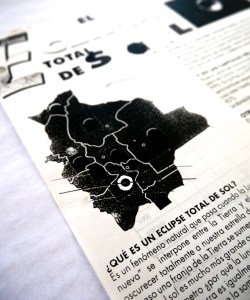
Path of totality 1994

Lake Titicaca 

Bonafied by King Manco Kapac

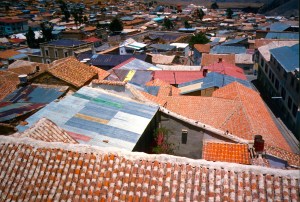
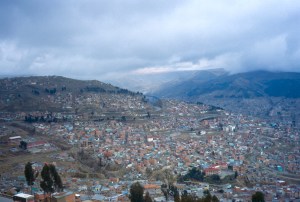
City scenes

Above-ground cemetery tombs

Remote village

Ken and the kids

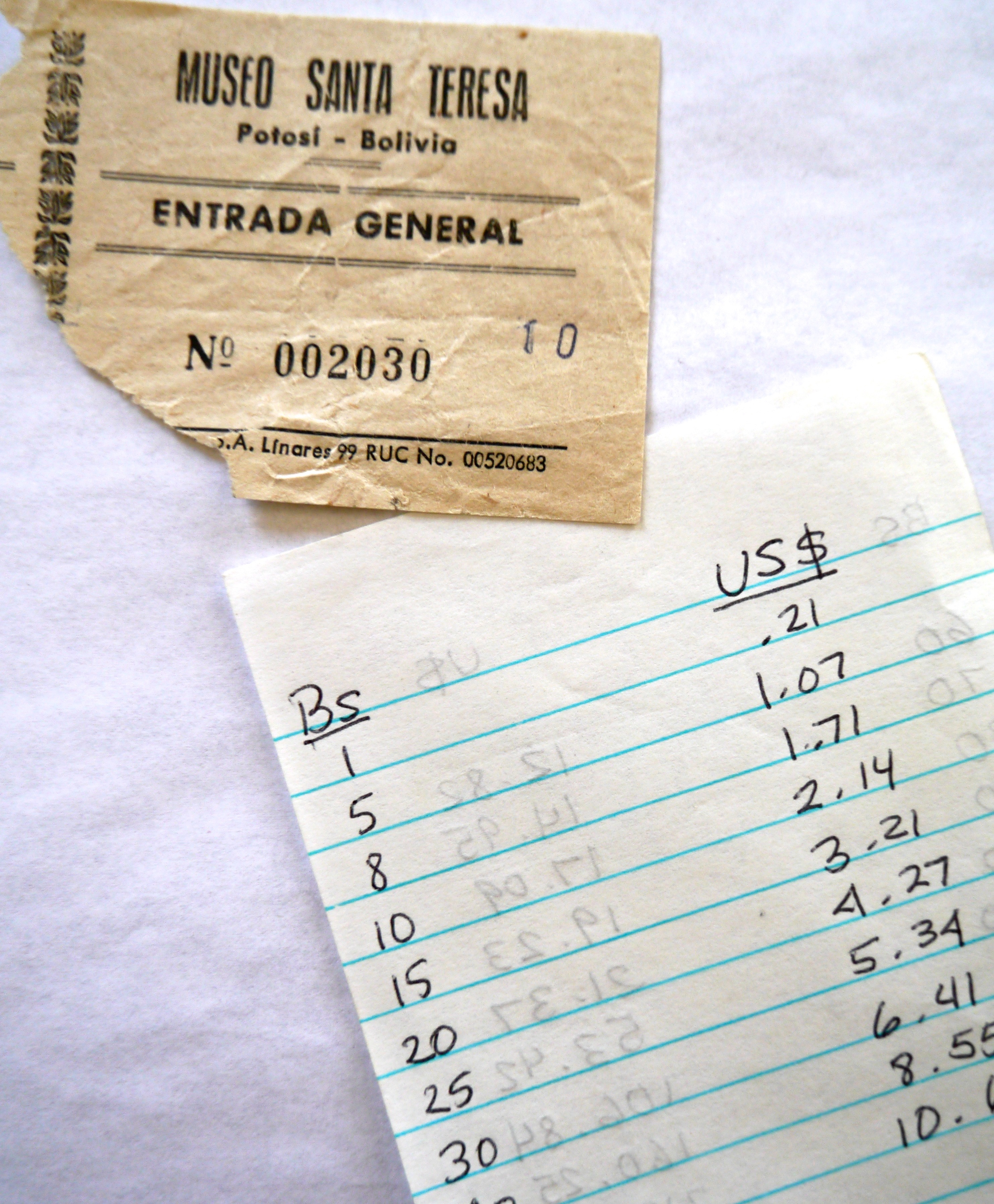
Boliviano converter

Shop lady

Witches market

Cerveza nacional

Climbing toward the Altiplano

(Do you see yourself in these or any photos on this website? I’d love to hear from you.)