Eclipse at 16,000 feet

To be accurate, 15,702 feet; a private train took us to view totality on the Altiplano along the Rio Mulatos-Potosi railway line, the world’s ninth highest.

The train was beyond rustic. Eight hours of squeaking metal, with hard seats in cold and cramped compartments. To get to the dining car (for yet another meal of pollo and fries) we had to take a giant step between the cars, the rushing tracks visible in the yawning, swaying crack below.

We boarded the evening before the eclipse and the train clattered through towns and remote villages for hours, higher and higher into the night. We handed our freebie paper eclipse shades and filters out to villagers when the train stopped. We moved through a huge All Souls Day celebration with covered tents and couples dancing, bands playing caporal and cumbia music, people holding up their beers to toast us as we pass.

All the trains to the centerline were coordinated from below and embarked from the station two miles apart, and the nighttime passage and early arrival time ensured that no smoke, light or vibration would pollute the eclipse viewing areas.

The train screeched to a stop at 4 a.m. where the weather satellite said to, somewhere outside Sevaroyo. With the trains filled with groggy travelers suddenly silently in place, it was hushed and dark and cold before dawn on eclipse morning.

No flashlights or flash photography were allowed. We were advised to dress in warm layers—there would be no heat, no generator—and prepare to be on camera: an accompanying film crew hired by National Geographic was about to go to work.

After a hurried breakfast we all piled out onto the dark desert with our scopes and cameras; we were late arriving, and there wasn’t much time for observing before sunrise at 6:30. I saw Crux, the Southern Cross for the first time—a stargazer’s milestone and proof that a North American traveler is very far from home.

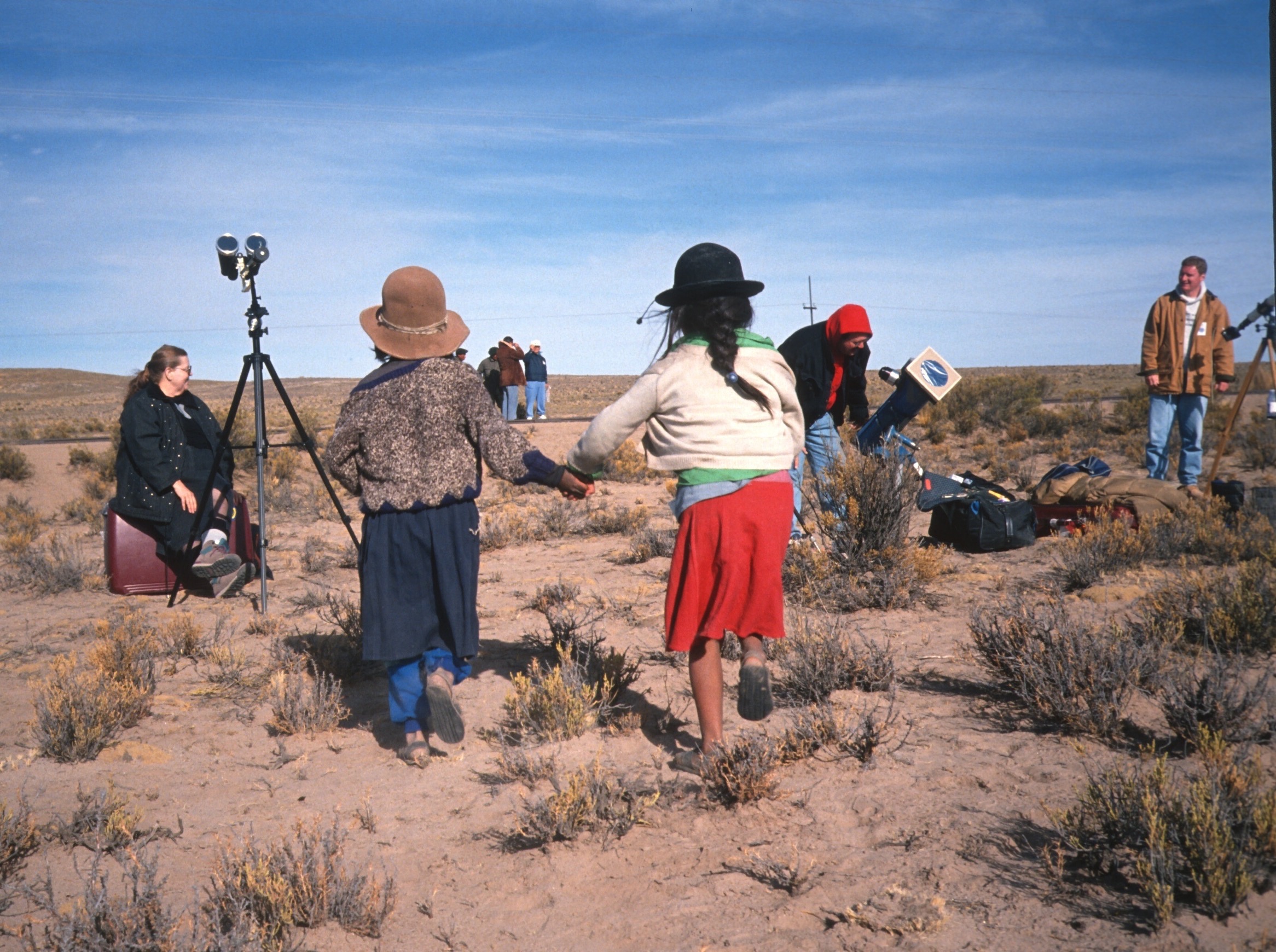
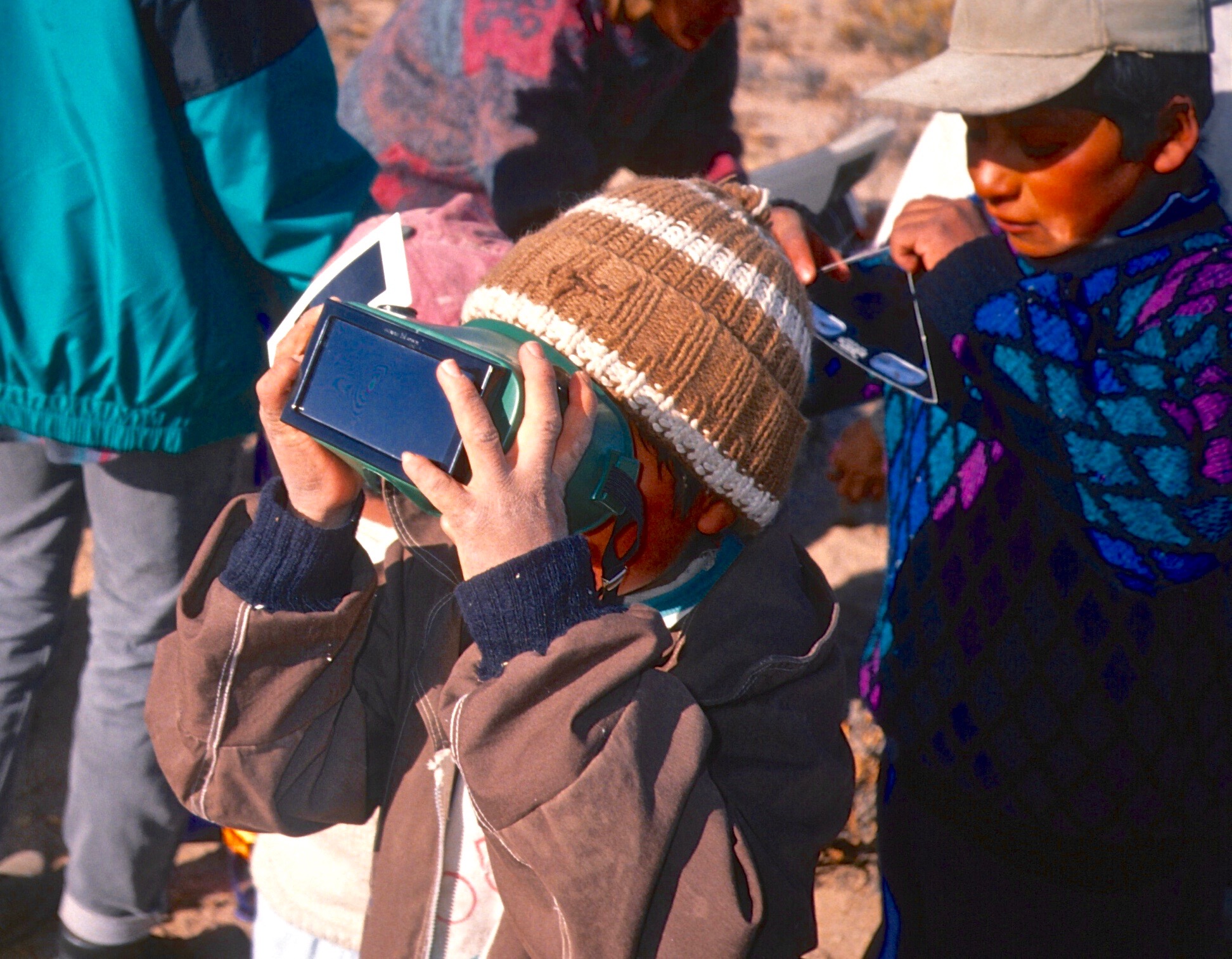
I was excited to be observing at a high-altitude site—about as far from my sea level first eclipse as possible—where the coronal streamers were expected to be long and bright (as light from the corona wouldn’t be dulled by Earth’s atmosphere). The air was thin and the wind was chilly. Local children, families, and military guards armed with machine guns materialized to view partiality through our solar scopes and eclipse glasses. I later learned that only 600 souls were present on the Altiplano.

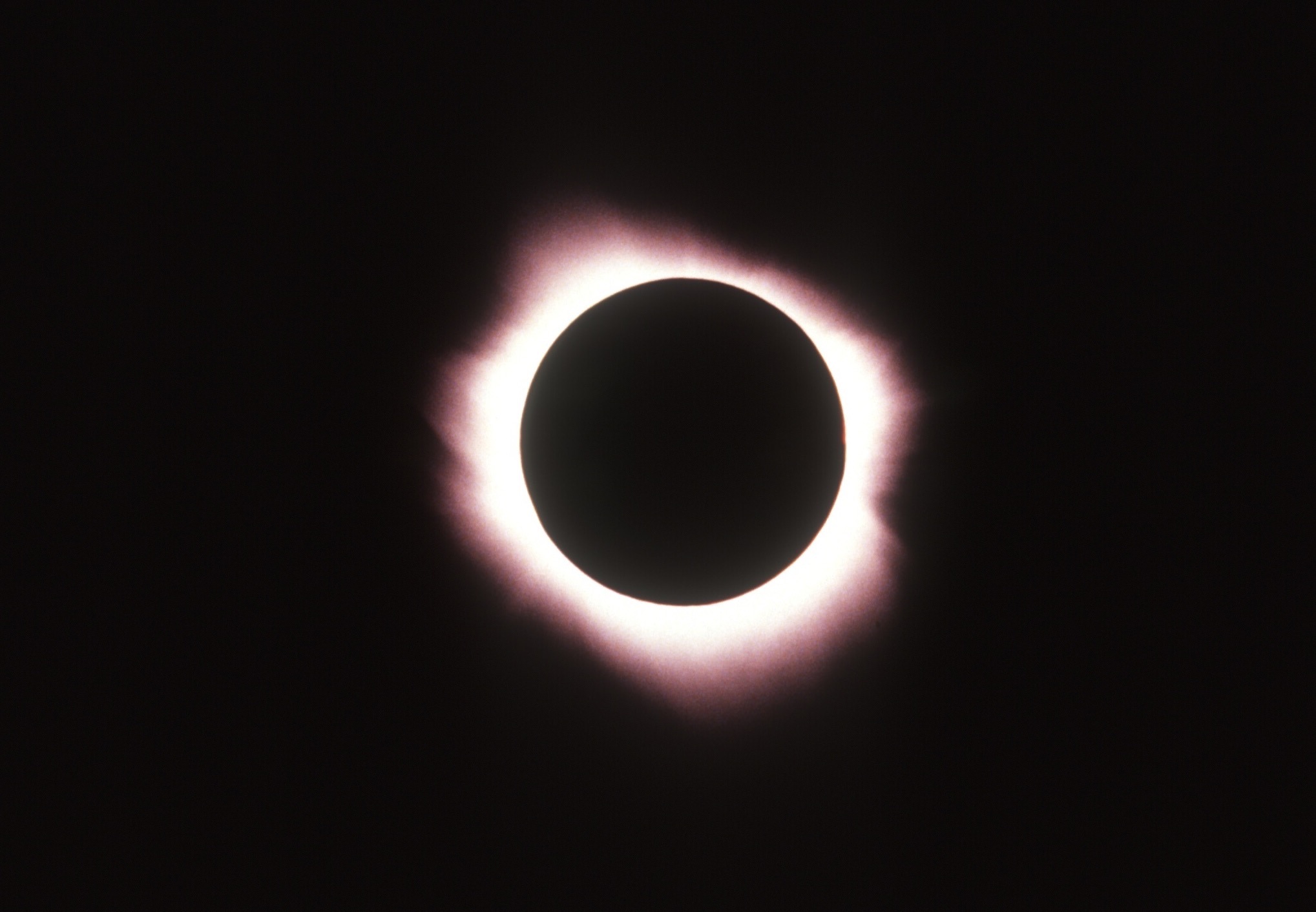
The short three-minute totality began at 8:22 a.m. at 35.80 degrees above horizon. As predicted, the delicate corona was detailed and luminous. I got a good look at Baily’s Beads (for those who don’t know, these are the dots of light in a ring formed by SUNLIGHT SHINING THROUGH THE MOUNTAINS ON THE MOON, sorry, I can hardly fathom it), and this time, both diamond rings.

Above: Sunrise on the Altiplano

Below:

Boarding the ENFE train

Viewing site

Locals and travelers witness together

Group shot at the train


A word about photography.

My photographer boyfriend, like all amateurs, tried and failed to capture the image and feeling of totality, though he got some good cookie bites (cast orange by the solar filter). The eclipse is just too far away, too contrasty, and too complex. Unless you’re a pro, it will never fill your camera the way it fills your eyes, heart, and memory.

Some advice for others who will try nonetheless: the only effective way (I’m told) is to expose for the corona, overlay a shot of the black disc of the moon, and create a final image of the two. Right, astrophotographers? Please comment and tell me how you do it, if you care to share.

Fred Espenak, aka “Mr. Eclipse”, offered his photo tips through a recent webinar; a recording may still be available online.

You do have access to “the finest collection of images of a total solar eclipse ever assembled”: order a backcopy of the November 1991 issue of Astronomy’s Great Eclipse Photo Contest.

Mexico epilogue: The boyfriend? He was a character but is now a thing of the past. I moved on to experience five more eclipses with a short parade of subsequent husbands, and ventured out on my own as well. It took three years to save for the next adventure: an unforgettable odyssey in Bolivia.

Above: Non-pro photo of the diamond ring

Below:

Cookie bites (with visible sunspots)

Pro shots: Local photographer Carrizosa (check it out, he got Buzz Aldrin’s autograph); Totality via Fred Espenak; Diamond ring via Snapfish.

Totality and beyond

Afraid to damage my eyes, I wore my welder’s glasses too long and missed the beginning of the diamond ring, but whipped them off in time to see totality pop into place. The solar corona quickly brightened to reveal a shocking black hole, delicate white streamers, and red flames of the sun. A splendor, a marvel, a miracle. It seemed to make a sound in my head, and fill the sky. Tears stung my eyes.

My guy and I grabbed a quick smooch for luck (like you do), and he shot a few frenzied photos, but mostly we gawped, wordless. A few people near us whooped and cheered; others stood in stunned silence, grinning. Six minutes and 53 seconds passed in an instant, and at third contact we lunged for the calendar of upcoming eclipses to start planning the next one.

As with all drugs, the first time is the best time and leaves you craving more.

Afterwards we joined a street party where I drank something dark yellow—probably mescal—from a plastic jug being passed among the crowd. Did not die.

My first eclipse experience—from the time we landed in Cabo to the end of fourth contact —was nothing short of magical. Reports of totality included phrases like “for sheer beauty, it ranks among the best”; the large, detailed corona “had a three-dimensional appearance”; a “pink chromosphere wrapped all around the south”; a naked-eye “crimson pair of huge, glowing prominences” extended to the east and west; and “it seemed like someone tied a ghostly bow around the sun.”

A writer in Sky said, after third contact, “The light returned. The wind off the sea returned…everything was as it was before, only everything had changed. Maybe I had changed.”

The Great One as seen from Baja did not disappoint—and it launched a very expensive hobby.

Above: Totality (not my photo)

Below:

Celestial bodies visible during totality on July 11, 1991

Trying to photograph the eclipse. (Tip: don’t bother.)

Thumb’s up at third contact

A toast

Plotting number two