
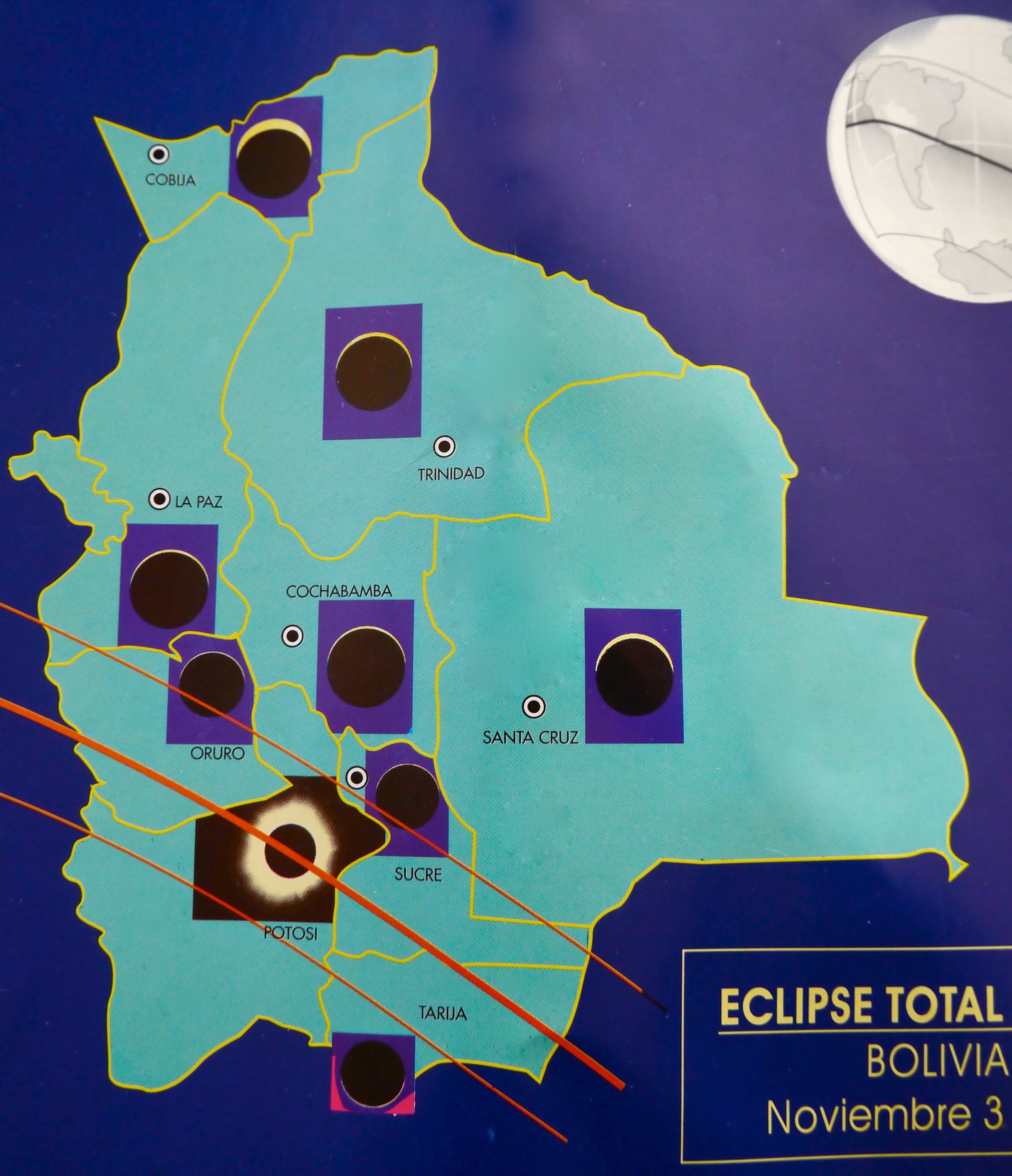
 November 3,1994
8:26 a.m.
3 minutes 6 seconds


November 3,1994
8:26 a.m.
3 minutes 6 seconds
 My photographer boyfriend, like all amateurs, tried and failed to capture the image and feeling of totality, though he got some good cookie bites (cast orange by the solar filter). The eclipse is just too far away, too contrasty, and too complex. Unless you’re a pro, it will never fill your camera the way it fills your eyes, heart, and memory.
Some advice for others who will try nonetheless: the only effective way (I’m told) is to expose for the corona, overlay a shot of the black disc of the moon, and create a final image of the two. Right, astrophotographers? Please comment and tell me how you do it, if you care to share.
Fred Espenak, aka “Mr. Eclipse”, offered his photo tips through a recent webinar; a recording may still be available online.
You do have access to “the finest collection of images of a total solar eclipse ever assembled”: order a backcopy of the November 1991 issue of Astronomy’s Great Eclipse Photo Contest.
Mexico epilogue: The boyfriend? He was a character but is now a thing of the past. I moved on to experience five more eclipses with a short parade of subsequent husbands, and ventured out on my own as well. It took three years to save for the next adventure: an unforgettable odyssey in Bolivia.
Above: Non-pro photo of the diamond ring
Below:
Cookie bites (with visible sunspots)
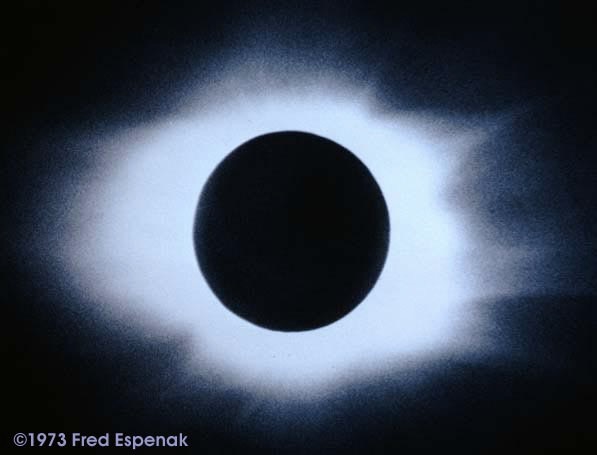
Pro shots: Local photographer Carrizosa (check it out, he got Buzz Aldrin’s autograph); Totality via Fred Espenak; Diamond ring via Snapfish.


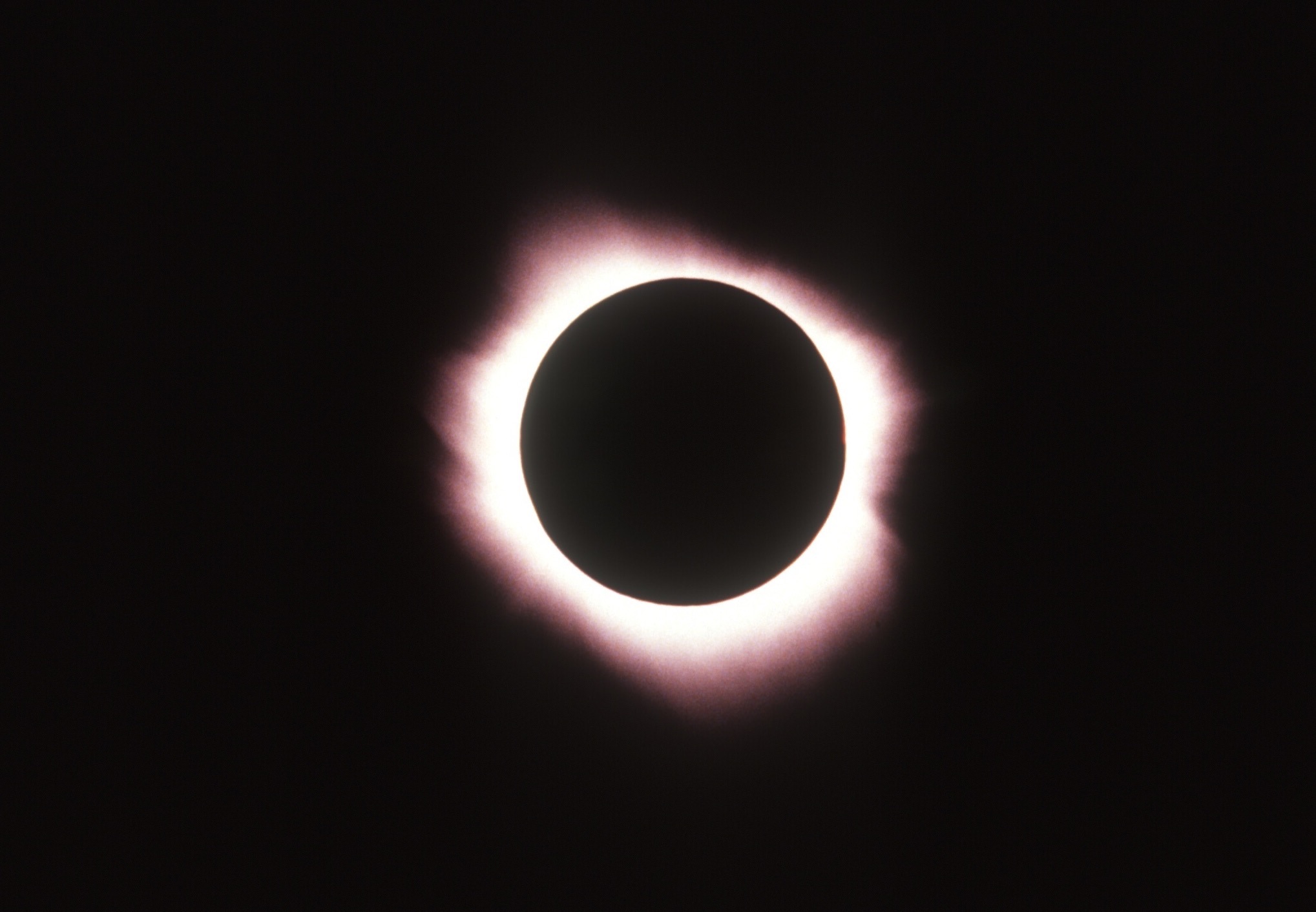 Afraid to damage my eyes, I wore my welder’s glasses too long and missed the beginning of the diamond ring, but whipped them off in time to see totality pop into place. The solar corona quickly brightened to reveal a shocking black hole, delicate white streamers, and red flames of the sun. A splendor, a marvel, a miracle. It seemed to make a sound in my head, and fill the sky. Tears stung my eyes.
My guy and I grabbed a quick smooch for luck (like you do), and he shot a few frenzied photos, but mostly we gawped, wordless. A few people near us whooped and cheered; others stood in stunned silence, grinning. Six minutes and 53 seconds passed in an instant, and at third contact we lunged for the calendar of upcoming eclipses to start planning the next one.
As with all drugs, the first time is the best time and leaves you craving more.
Afterwards we joined a street party where I drank something dark yellow—probably mescal—from a plastic jug being passed among the crowd. Did not die.
My first eclipse experience—from the time we landed in Cabo to the end of fourth contact —was nothing short of magical. Reports of totality included phrases like “for sheer beauty, it ranks among the best”; the large, detailed corona “had a three-dimensional appearance”; a “pink chromosphere wrapped all around the south”; a naked-eye “crimson pair of huge, glowing prominences” extended to the east and west; and “it seemed like someone tied a ghostly bow around the sun.”
A writer in Sky said, after third contact, “The light returned. The wind off the sea returned…everything was as it was before, only everything had changed. Maybe I had changed.”
The Great One as seen from Baja did not disappoint—and it launched a very expensive hobby.
Above: Totality (not my photo)
Below:
Celestial bodies visible during totality on July 11, 1991
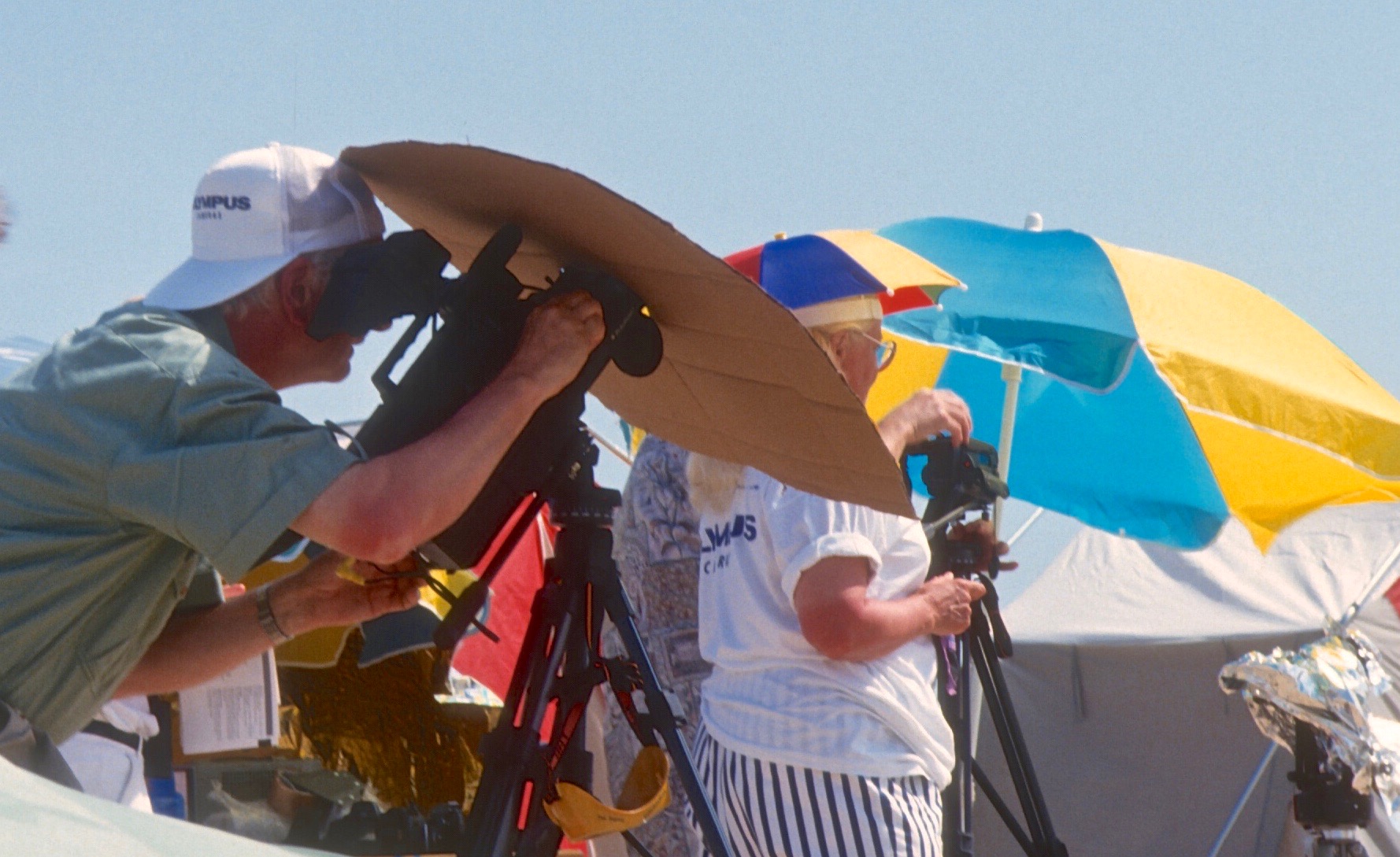
Trying to photograph the eclipse. (Tip: don’t bother.)
Thumb’s up at third contact
A toast
Plotting number two


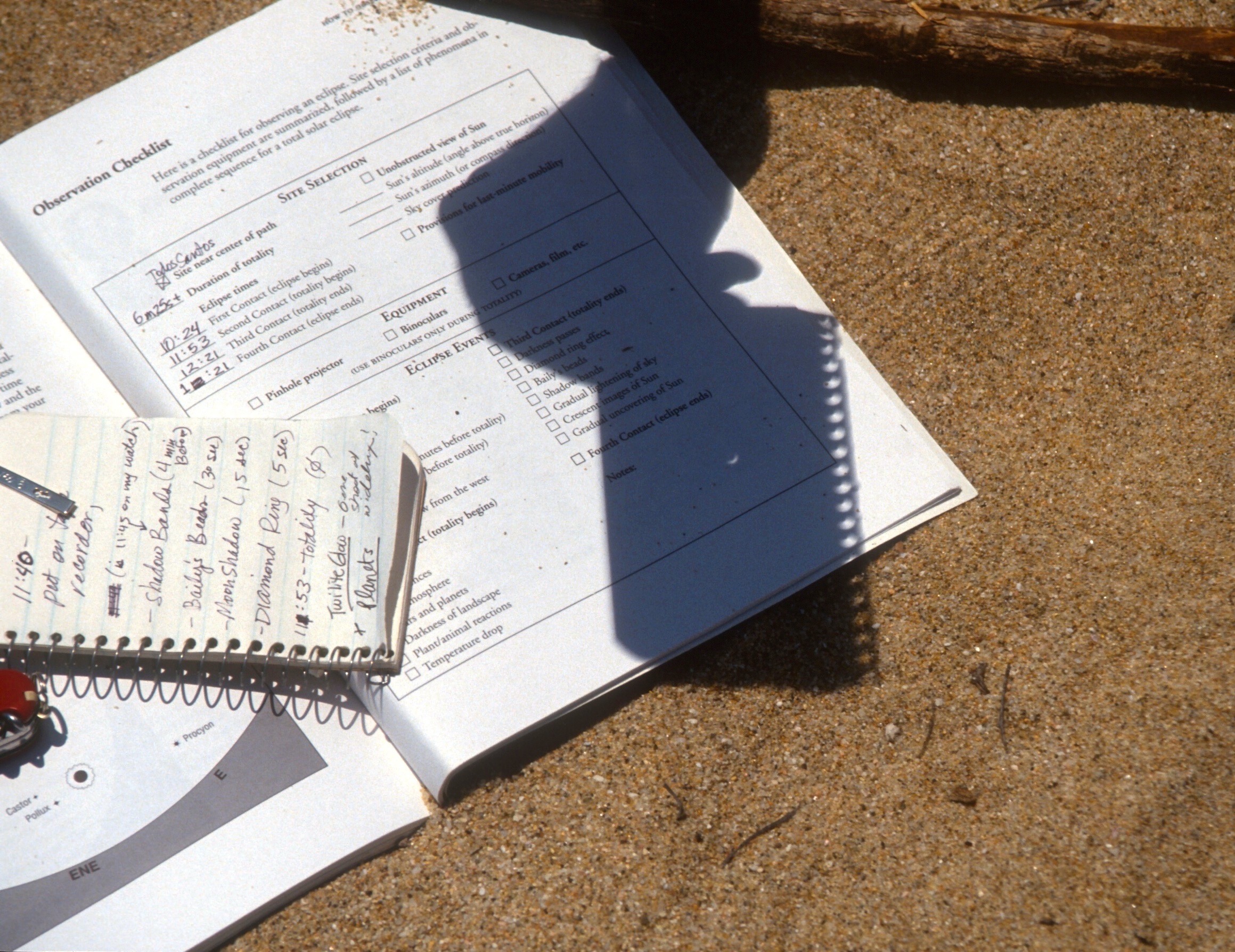
 Though it was my first eclipse I was well-prepared with a “shot list” I compiled by studying a copy of that year’s go-to book, Eclipse by Bryan Brewer, purchased from the museum store at the Fleet Science Center in Balboa Park in San Diego.
Pro tip: a TSE can get exciting and disorienting, especially in the final seconds before totality. Always make a list of phenomena to watch for, with the time and duration of each. This page will help you plan.
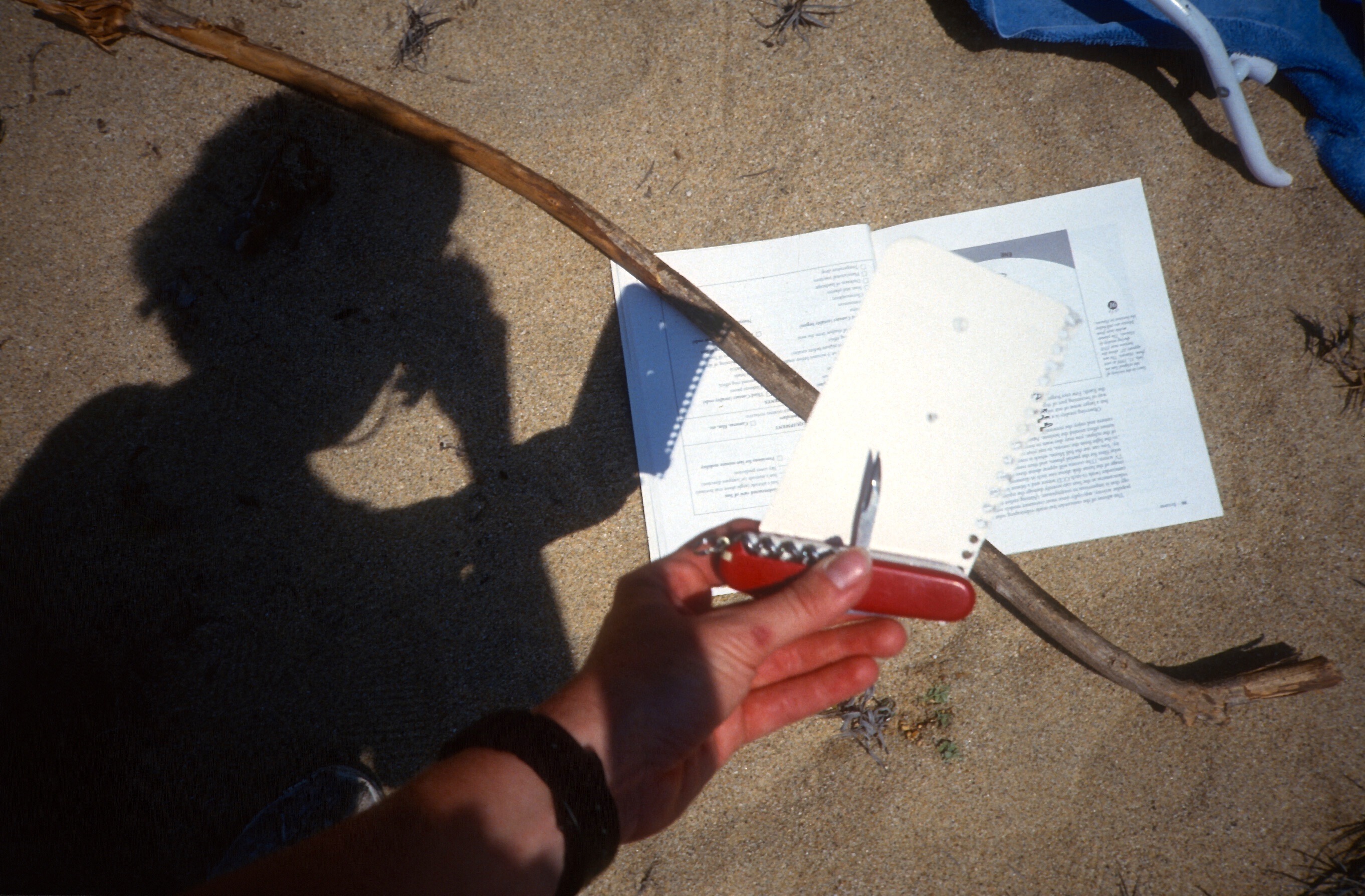
We made pinhole projections, watched in vain for shadow bands on the beach, and felt the gut-deep delicious foreboding as changes in the light and the land grew more pronounced. In the final few minutes before second contact the atmosphere shifted, shimmered, dimmed. It’s an odd quality; not like night, not like day, not like twilight or dawn. To feel our planet and our beloved celestial bodies morph for the first time elicits an instinctive, vague, involuntary dread.
Through my protective glasses I watched the sliver of the sun as it slowly narrowed, and narrowed, and narrowed. Totality was approaching in seconds. We could hear people screaming on the hill as the moon’s shadow sped toward us on the beach.
Above and below: After first contact
Below:
Partial phase waiting
Pinhole projection with observation list
The light (and the locals) getting weird


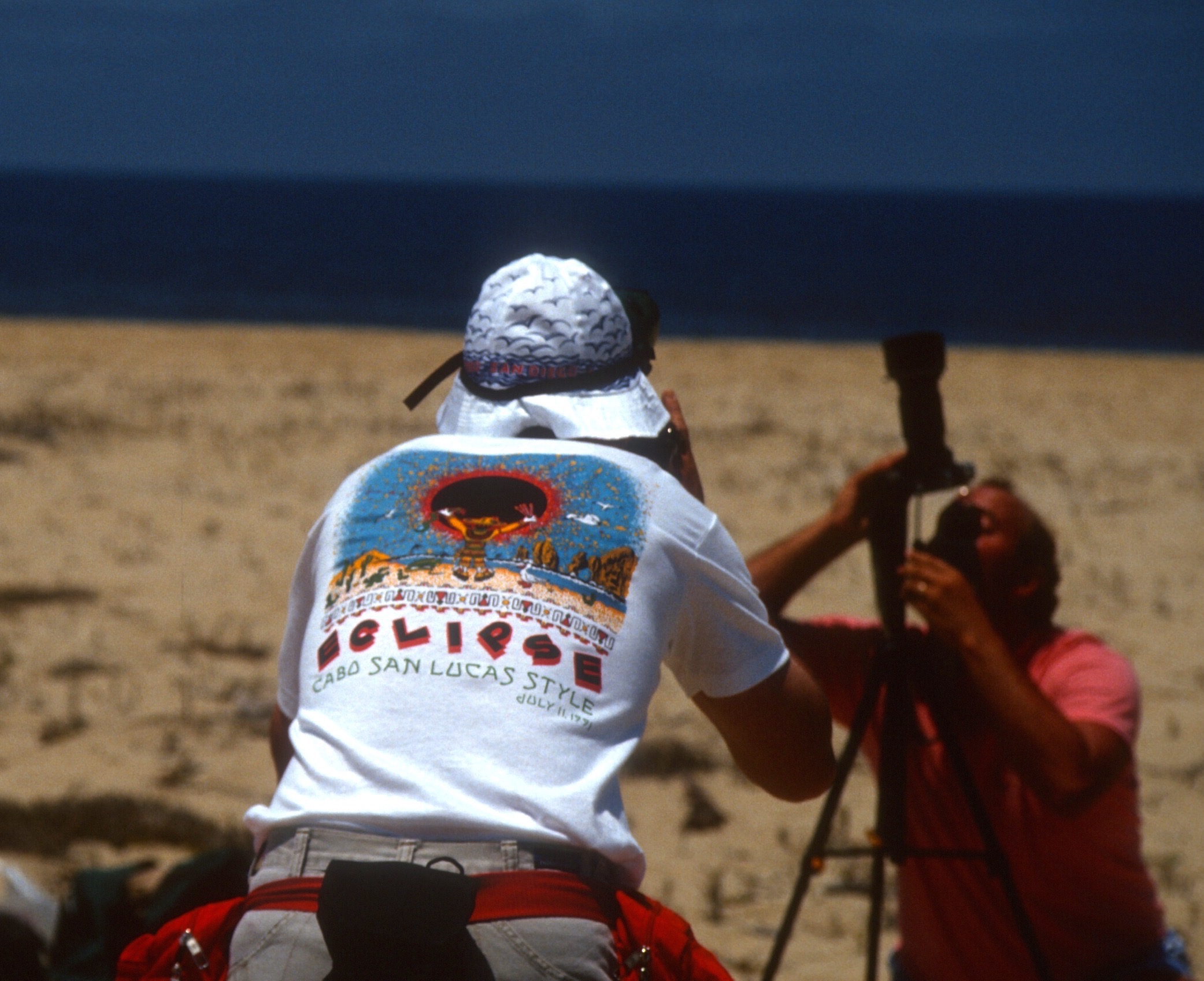
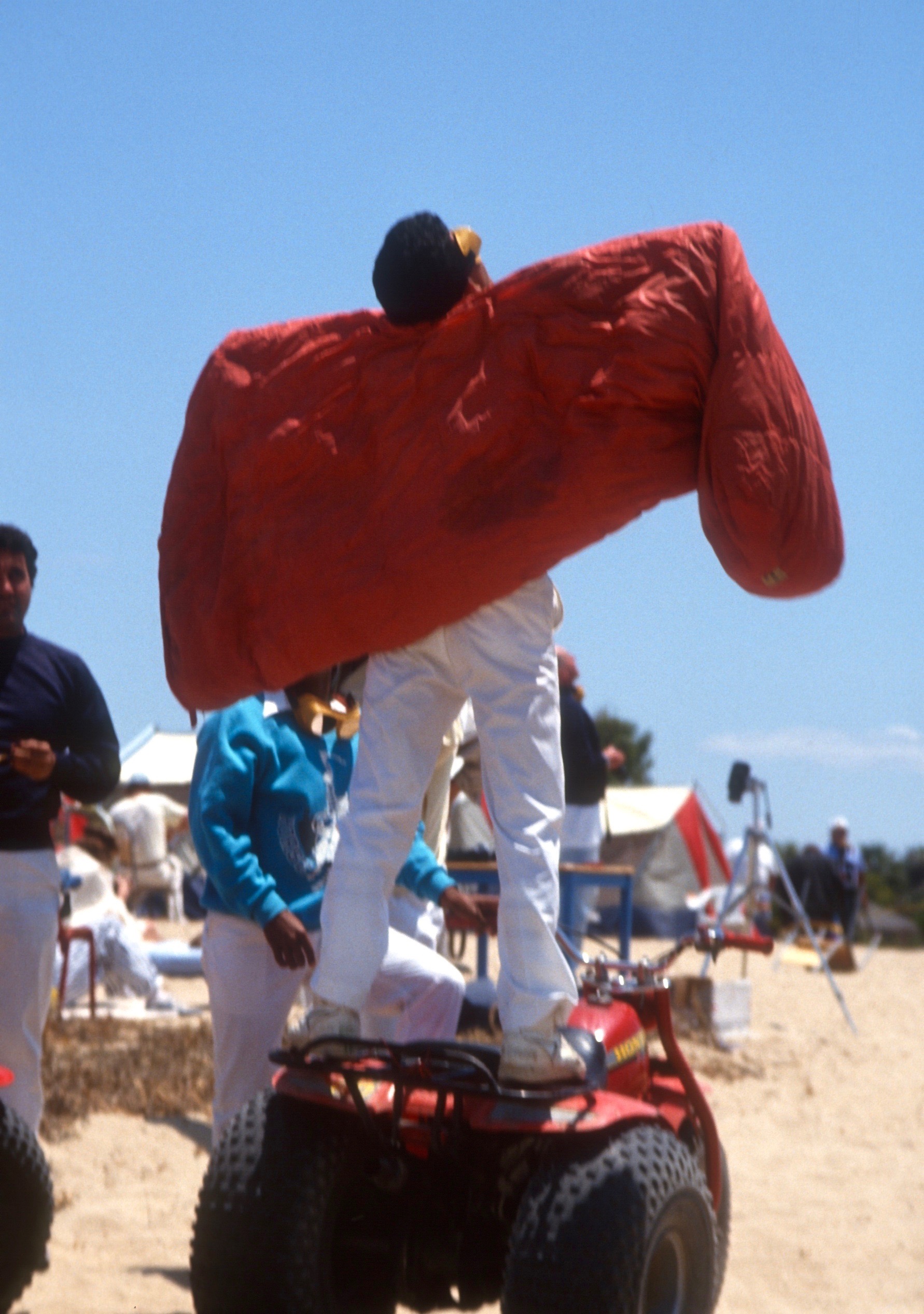
 In the early 90s the little town of Todos Santos (where we observed totality) was a sleepy fishing village; just look at that “arcade”. It was also said to be the alleged home of the original Hotel California of the Eagles song (but so are a dozen others, including the Church of Satan in San Francisco, the Camarillo State Mental Hospital, and, most reasonably, simply the Beverly Hills Hotel that’s pictured on the album cover and where the band hung out).
Since visiting 26 years ago I hear that Todos has gentrified into a tasty little artist’s haven, like Bisbee, Taos, and Jerome, Oregon—with prices to match.
We were lucky to be allowed to camp at El Zapote, a gentle, substance-free co-op where the residents raised organic produce before it was called “artisinal” and puttered around administering acupuncture to their pets and whatever else sweet reclusive hippies do. We never met any of the inhabitants; most were busy practicing the drum circle ceremony they’d perform on eclipse morning, or had fled in terror of the annual aerial malathion-spraying helicopters that were scheduled to fly over that week to bomb their crops.
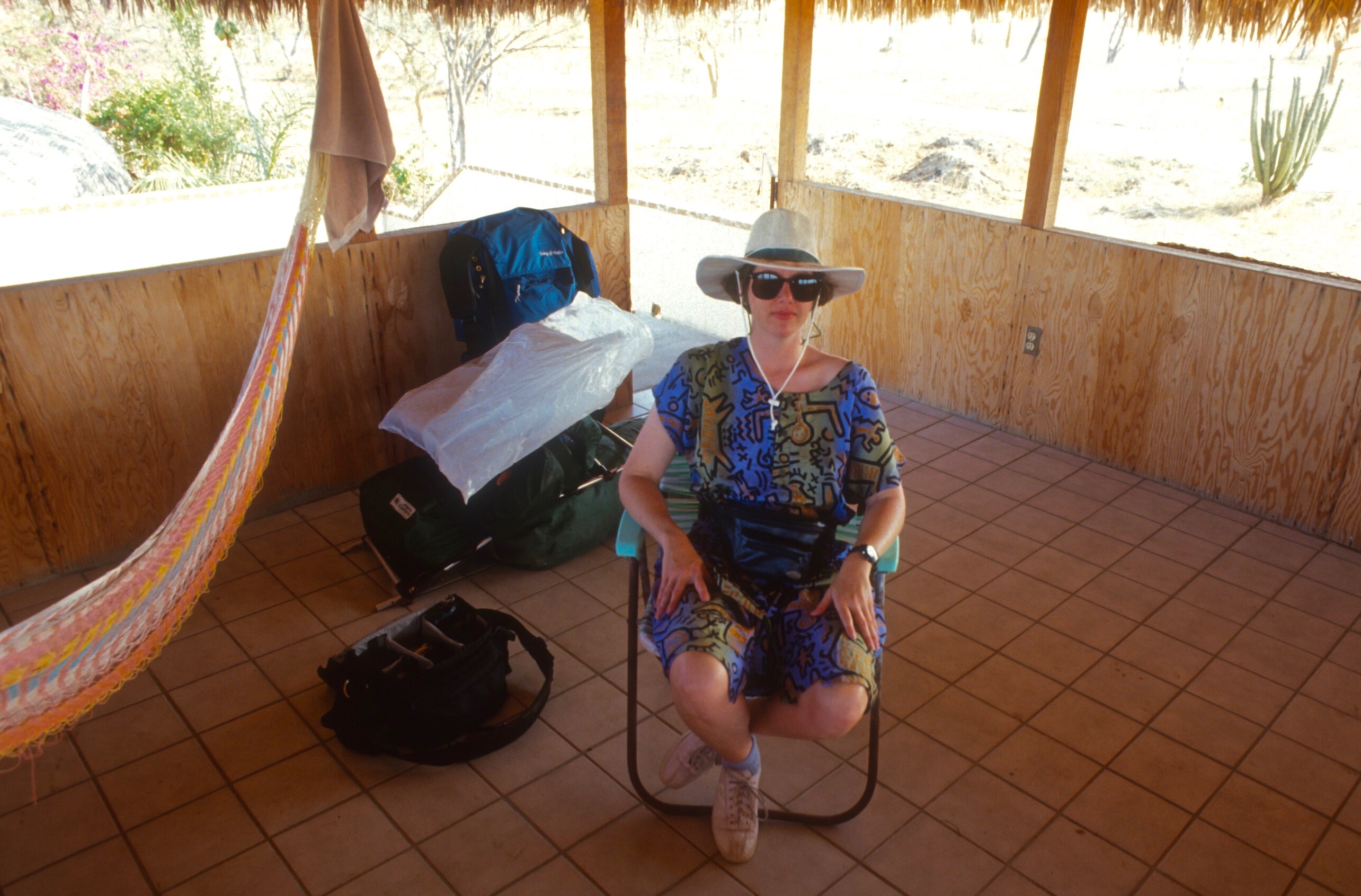
We pitched a tent on the property and paid for access to the bathroom and shade palapa, where we sorted our gear and prepared our packs for eclipse day.
Above: El Zapote campsite
Below:
Todos at night
Kids playing Mexican Pong
Main street corner
El Zapote farm
Margs at the bar, Hotel California
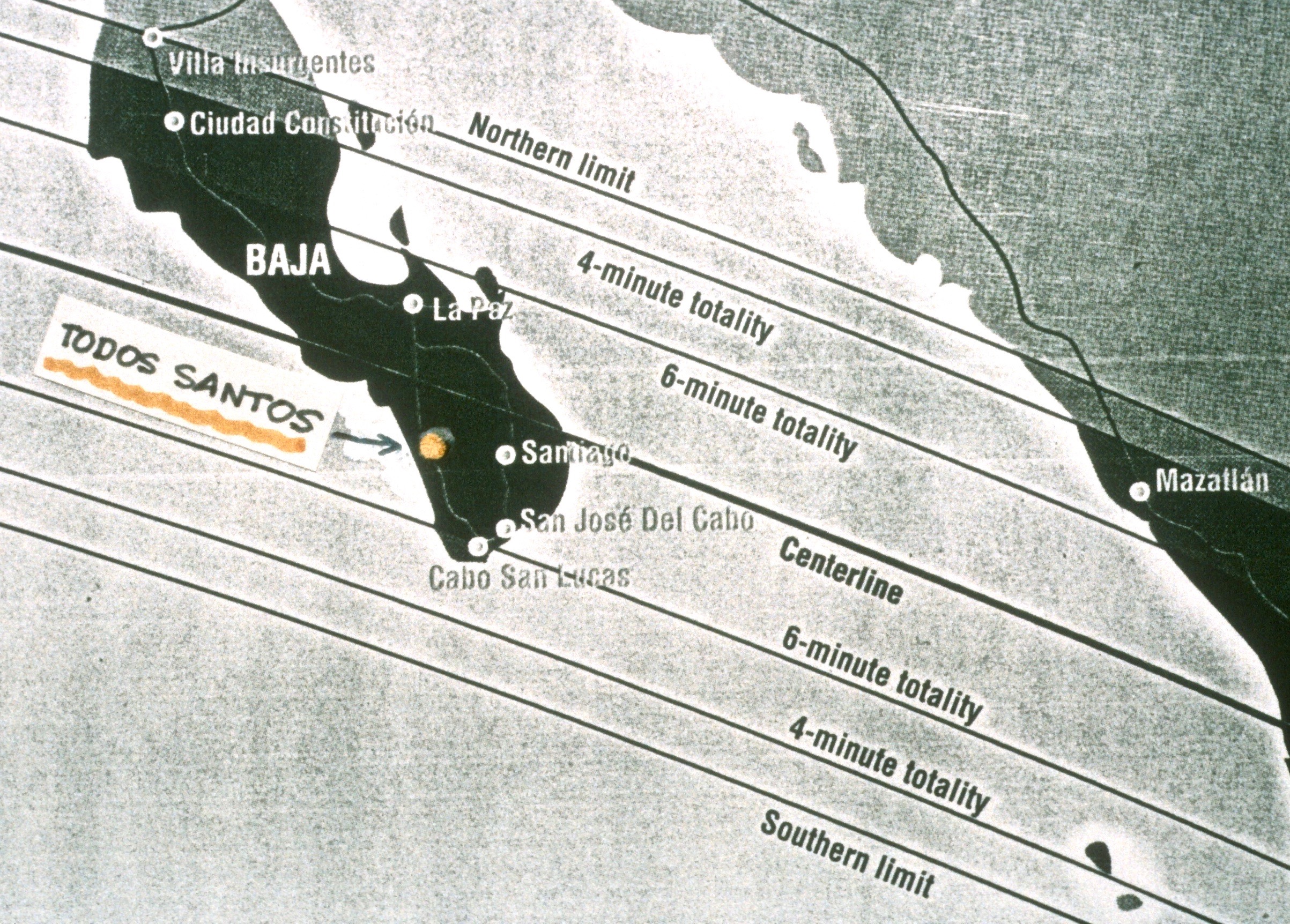
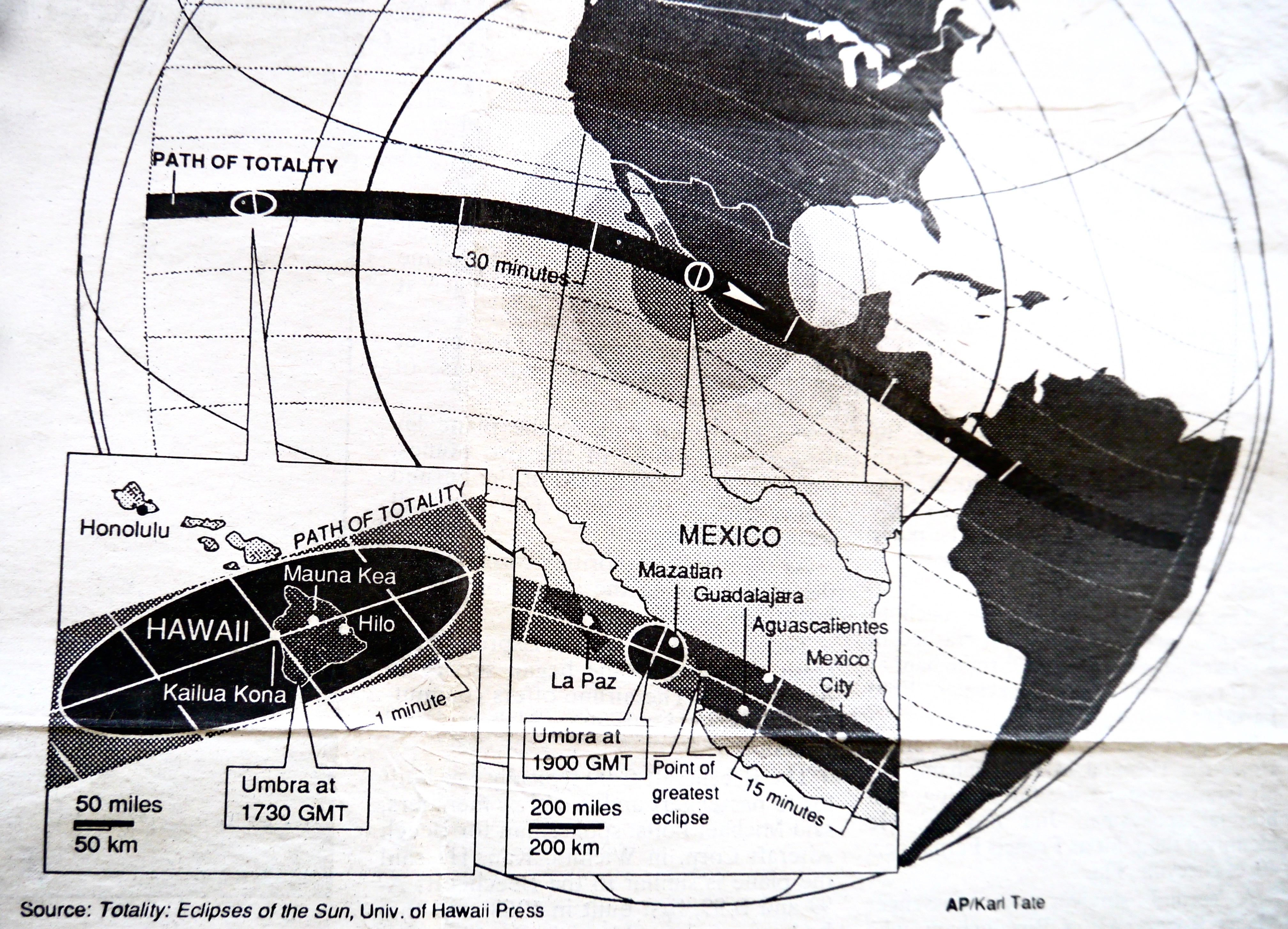
Centerline near Todos Santos




 I started planning far too late, as I only heard about the event for the first time in January 1991, when a fellow Rotarian approached me during our morning meeting with a folded copy of Discover. Inside was Bob Berman’s “Night Watchman” astronomy column and his article “The Great Baja Eclipse”.
Bob described “chasers”—lunatics (literally) who traveled the world to stand for a few scant minutes in the shadow of the moon. I recall the phrase “better than sex” was used.
The Great One of 1991 was less than a year away, and I decided there and then I’d be attending—though everyone else in the world had already booked and confirmed their travel plans. In May I was still scrambling for transportation and accommodations. Eclipse mania had swept the country and every flight, hotel room, youth hostel, B&B, barn and backyard was reserved—even books about the eclipse were impossible to find.
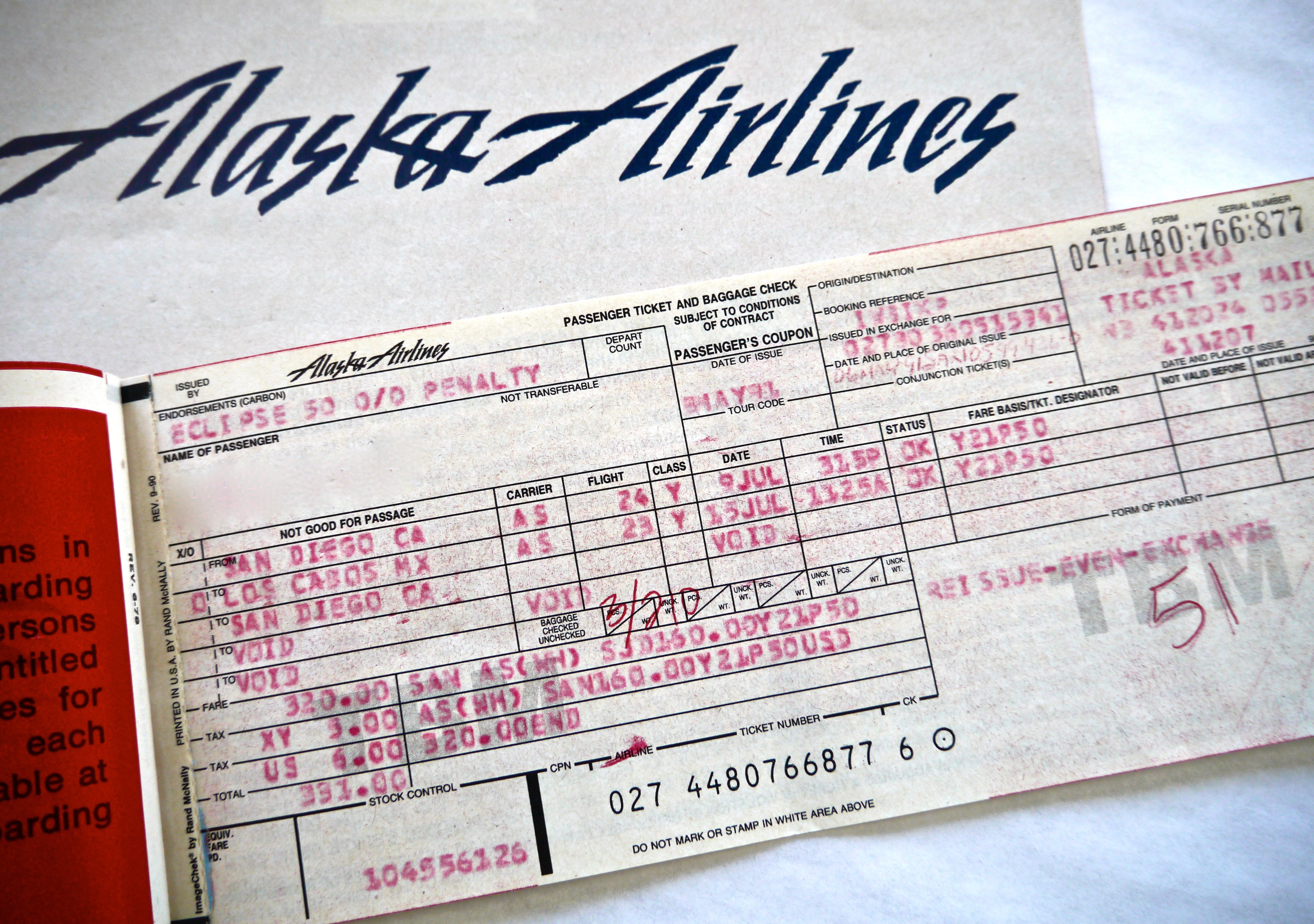
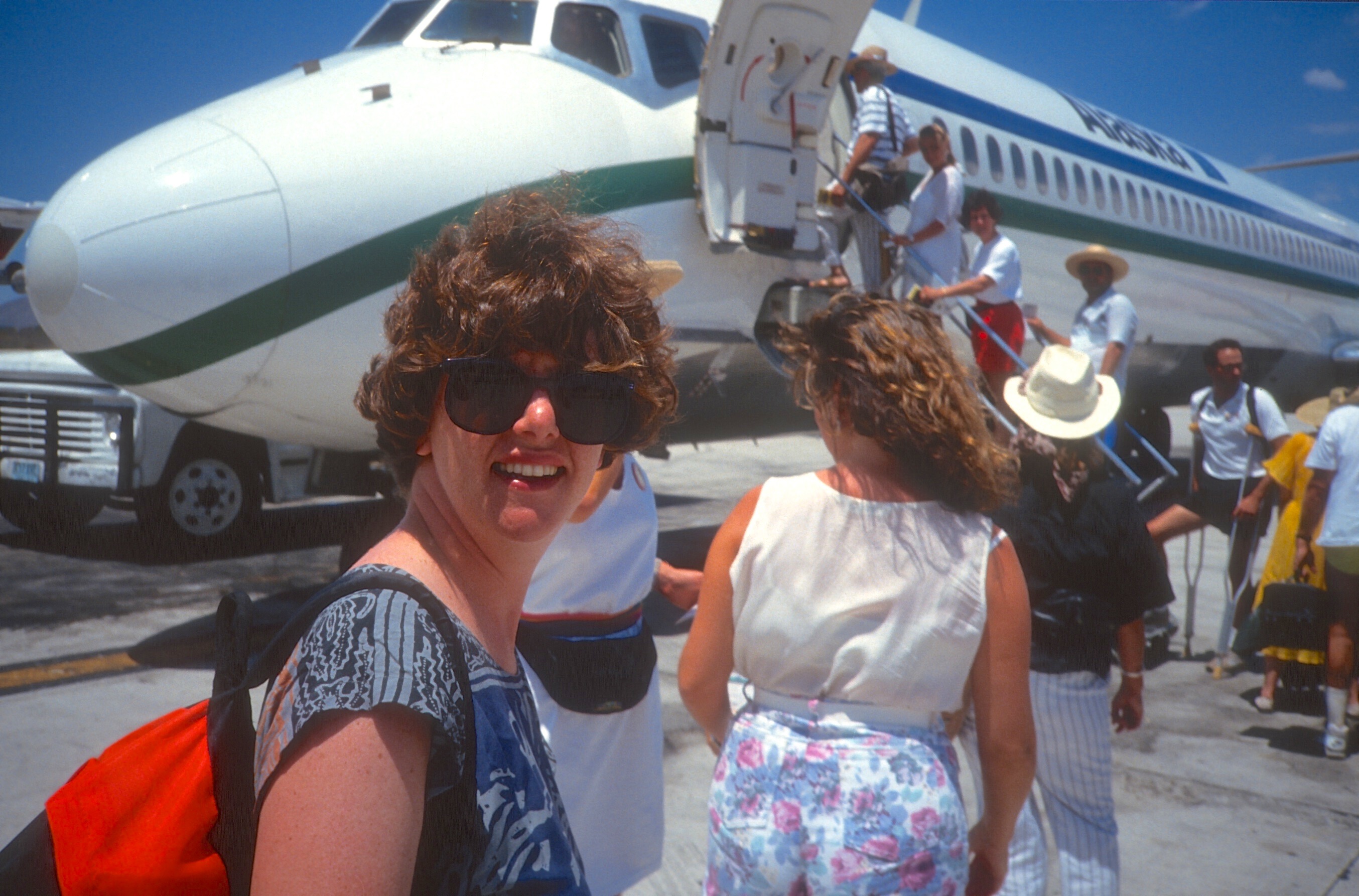
As I lived in Southern California, the logical and subsequently luckier viewing destination was Mexico. A San Diego travel agent—remember those?—took pity on me (or tired of my relentless begging) and made it his quest to put me in the shadow. He worked zealously to find a flight for my then-boyfriend and I—hello Tom at Hillcrest Travel, thinking of you fondly wherever you are—and after a long waitlist period eventually sold us roundtrip tickets from San Diego to Cabo San Lucas.
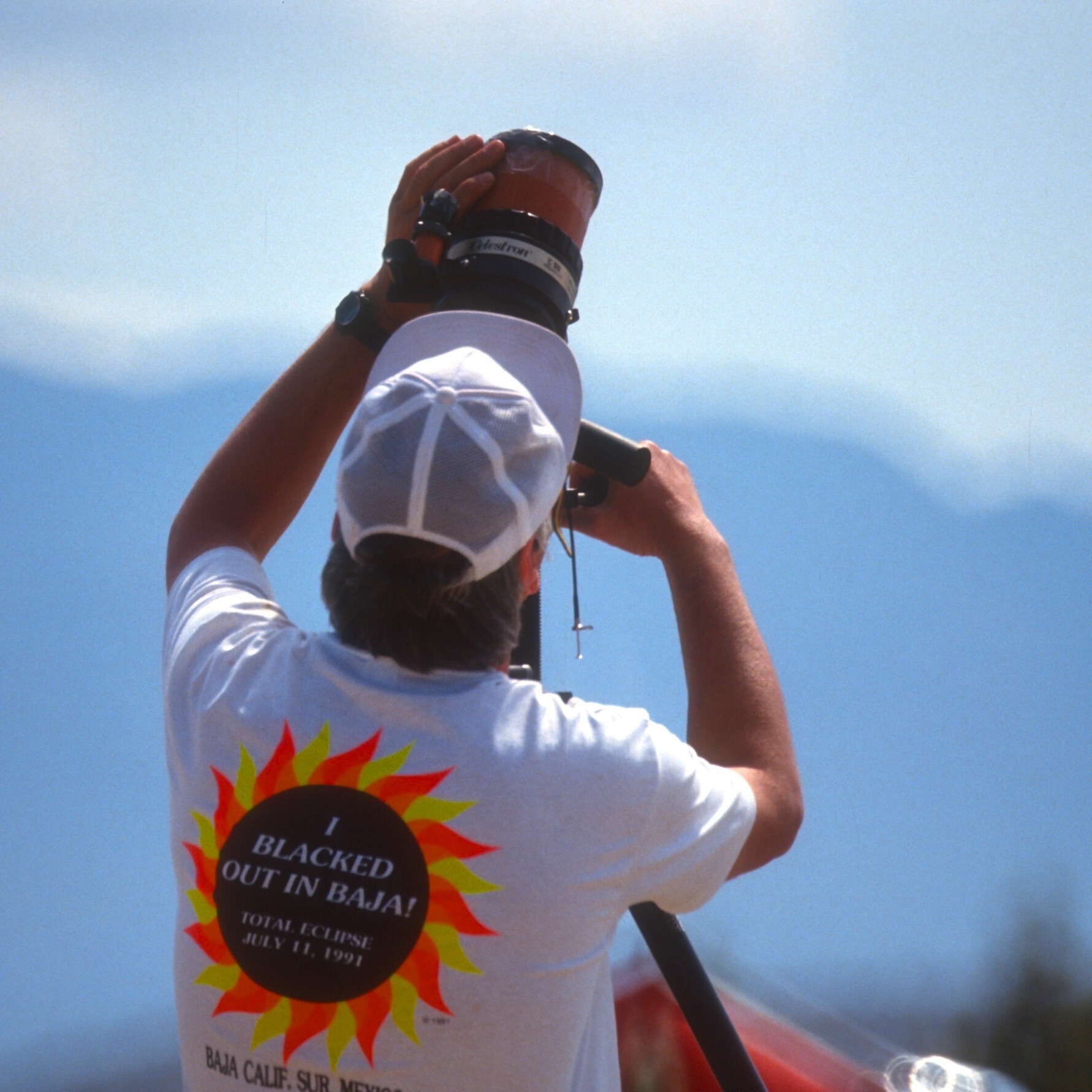
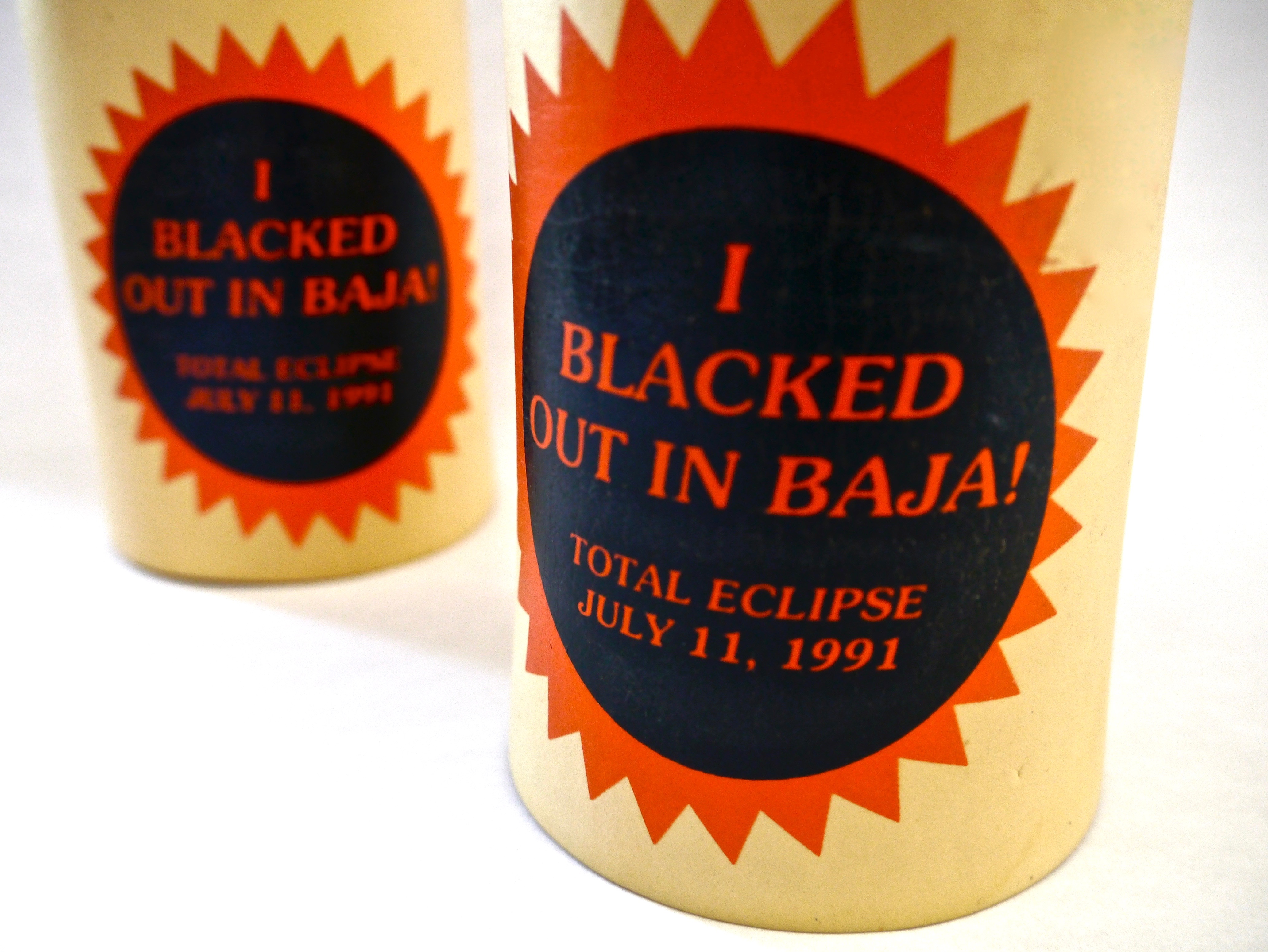
Above: Tee logo
Below:
Surprisingly, fares today are about the same or lower
Astronomer luggage
Haircut, 1991

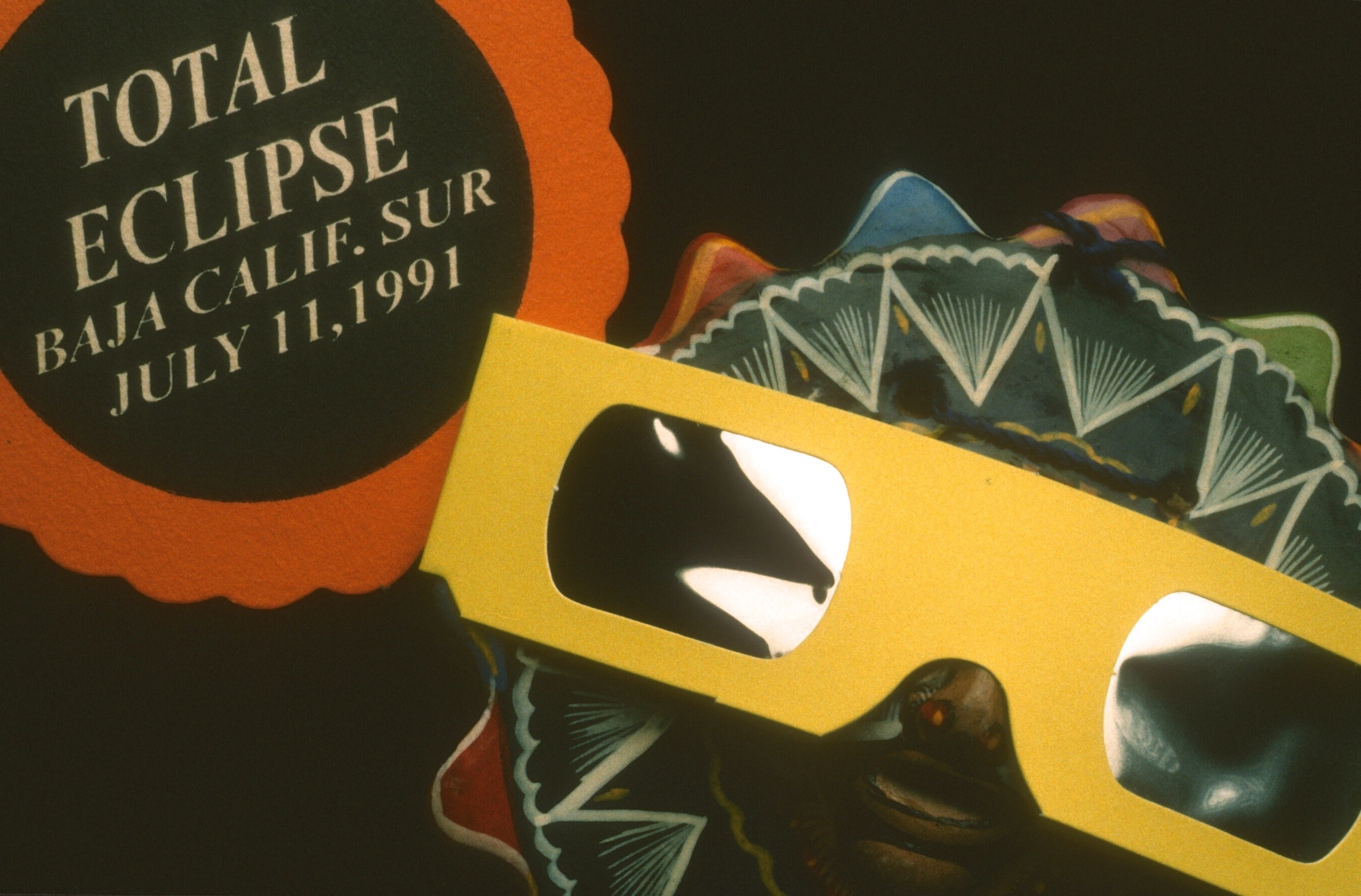
July 11, 1991
11:48 a.m.
6 minutes, 53 seconds


 …said my friend David, at the La Jolla Sunrise Rotary meeting, as he handed me a copy of Discover magazine.
In it: Bob Berman’s “Night Watchman” column about the upcoming Great Eclipse of 1991.
“Rainbows, the Northern Lights, good sex—all nothing,” he wrote, quoting a traveler who had recently seen a total eclipse of the sun. “Nothing compares with totality.” I still have that article, one of the most accurate and beautifully written descriptions of what it feels like in the shadow of a total solar eclipse (TSE). There really is “a powerful presence that transcends the visual beauty.”
I hadn’t thought much about eclipses before or realized there was such a thing as “eclipse chasing”, but that morning at the Rotary meeting, within seconds, I knew I was in. And I subliminally grokked that I was already a member of an eccentric international family who would share the urge to sacrifice personal resources—cash, spare time, family obligations, sometimes even health—to stand in the umbra of totality.
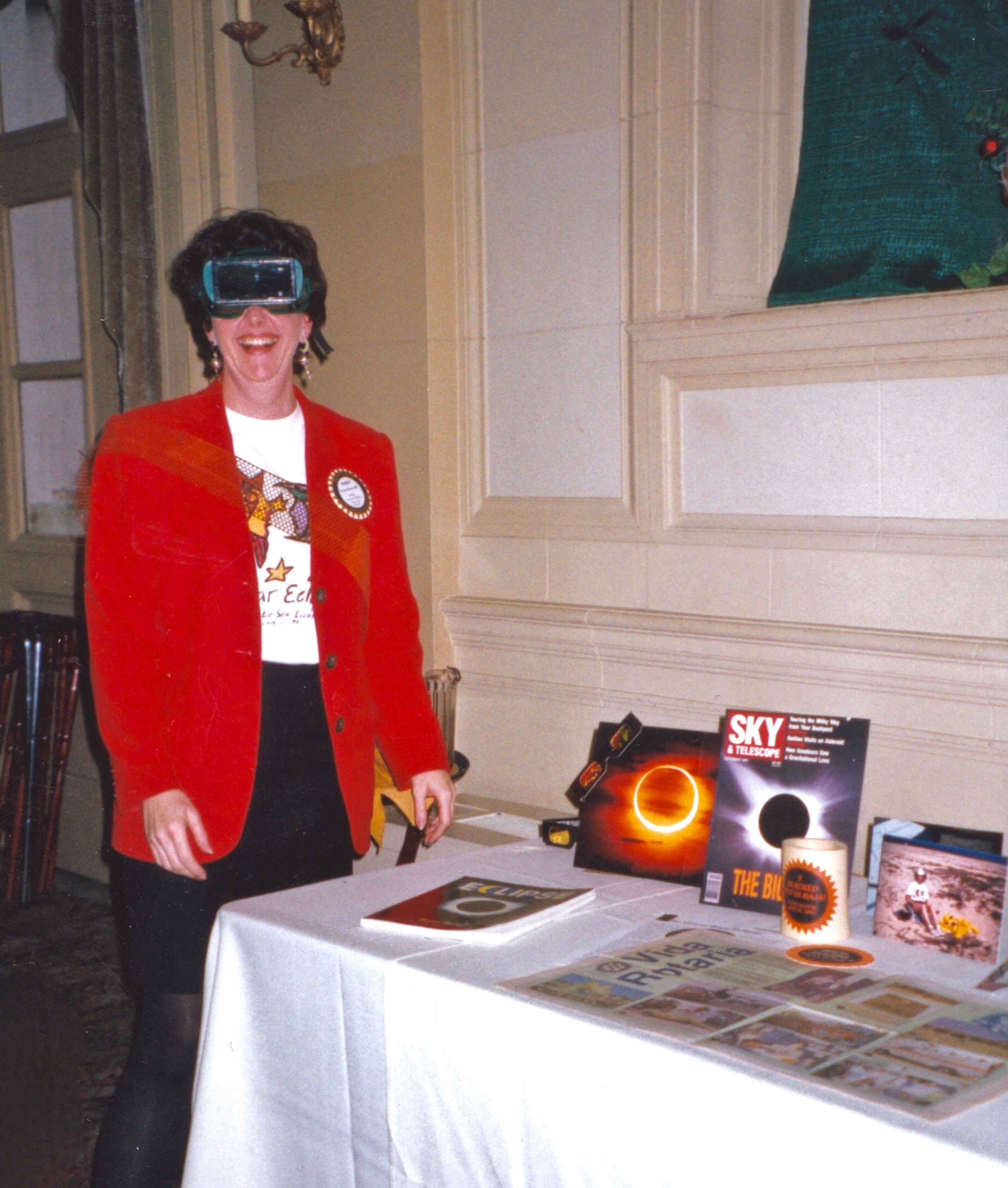
Above: Totality by Fred Espenak, 1973
Below:
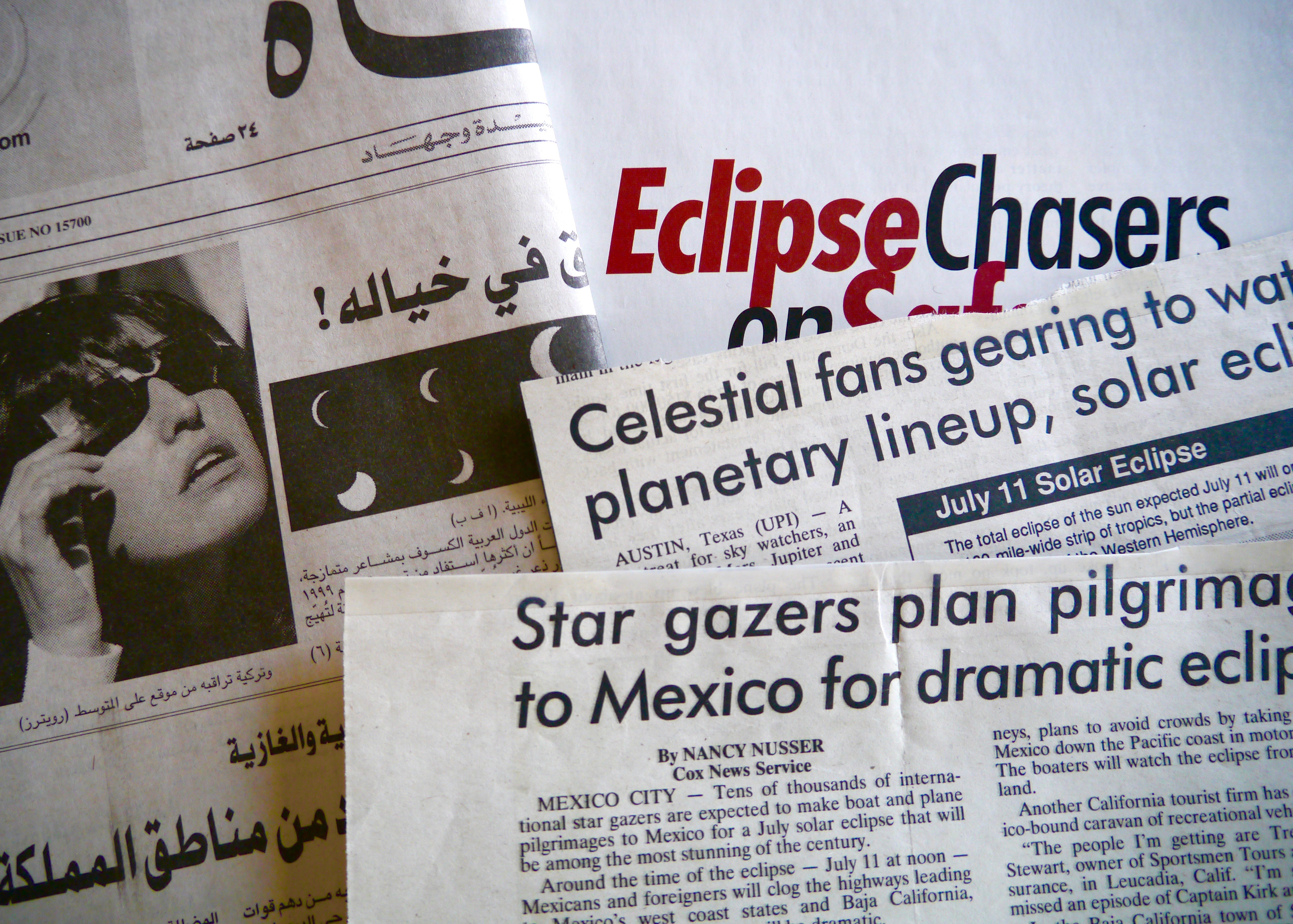
Chasers make headlines
50-year vacation planner
Presenting about eclipse travel at community clubs (and at Winter Star Fest in Washington, 1993)


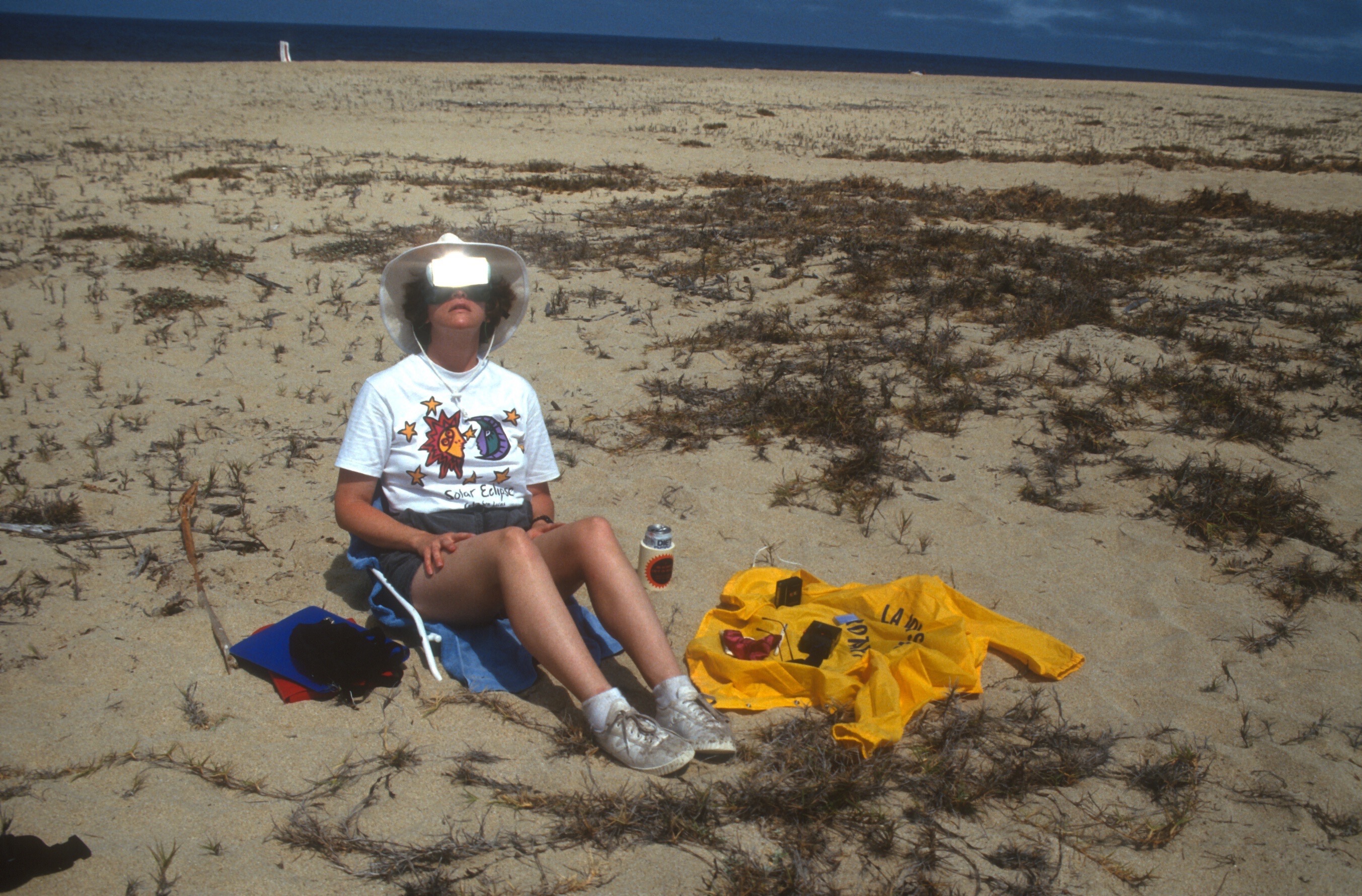
If you’re an eclipse chaser, you probably have a t-shirt commemorating each one. They pile up, don’t they? I’ve only been to six totalities but decided it was time to have my tees made into a quilt.
Yes, this is a thing. Any repetitive behavior that generates t-shirts—marathon running, attending the Sturgis rally, visiting Hard Rock Cafes—can be commemorated with a quilt made from the associated shirts you never wear but can’t bear to part with.
HOW AWESOME DID THIS TURN OUT? I was planning to sew it myself, but realized after I cut the shirts into squares that I had neither the skills nor the tools to proceed. Enter Master Quilt Maker Diane Ottenfeld of Bend, Oregon—a lovely local lady whose number I got from the fancy quilt shop in town.
Diane specializes in creating custom t-shirt (and necktie) quilts, and quilt completion and repair. She finished the quilt I started and worked with me to select the background fabric to tie it all together: blue—for the sky and sea—and yellow for Sol.

For the back she used a fabric souvenir banner I found in a village market in Madagascar in 2001. And look how the stitching on the Egypt square is a flaming sun.
Here’s her contact information. You’re welcome!
Diane Ottenfeld
541-318-7425
dddianeo@gmail.com
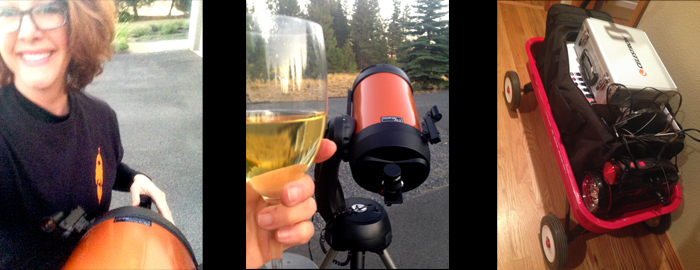
Telescope positioned in the driveway? Check. Camera charged and lens changed? Check. Wagon full of filters, extension cords and PowerTank? Check. Drink poured? Check. And…no moon. Where are you, moon? I doublechecked her position with StarChart and—after arguing with a neighbor who said he just saw it out his window and it’s rising in this direction not that direction—I concurred and moved the whole awkward shootin’ match to the back yard. Still no moon.
After much hiking around our tree-lined property we finally glimpsed the dim, fully eclipsed moon, almost completely obscured by the tall pines to the northeast. Crap.
What’s that old adage I just made up? “The worst night for astronomy can turn into the best night for drinking.” The evening was mild, the rest of the universe was on glorious display, and the moon finally rose between two trees shortly after totality, letting us enjoy a few minutes with the telescope.
No time to experiment with the camera—the bright white crescent at the bottom was rapidly pushing away the red eclipse and Ms. Moon was hurrying to move behind another tree. (Why do I even try? Others capture these events beautifully. Nerdist published some pretty shots.)
I barely had time to try a lunar sketch. Guess what? Drawing a supermoon is not super easy. I wasn’t using the scope drive so the damn image kept MOVING out of the viewfinder, and juggling the red flashlight on my iPhone, my eyeglasses, three drawing tools and a pad was like a Mr. Bean episode.
Well, I have eighteen years to practice.
 Chasing Totality