
 Step one: find a flight. Check. Step two: now what? Every hotel room had been snapped up months, nay, years ago by tour organizations and more skillful chasers. An entirely different travel agent—children, a travel agent was once the person who Googled your flights before Expedia—tried to secure a place for us to stay.
The Mexican government wisely decreed that no travelers would be allowed to board any aircraft into their country without proof of lodging in hand, to prevent people from doing exactly what we were attempting—show up with our backpacks in Todos Santos and flop where we could.
We eventually made arrangements with a hotel in Cabo San Lucas so we were allowed to enter Mexico, but the centerline was where we needed to be. The hotel in Todos (rumored to be the original Hotel California in the Eagles’ song) was booked to capacity long ago.
There was unsubstantiated hearsay of a condo further north (that required an expensive rental car to get to the eclipse), waiting lists on cruise ships, friends-of-friends with expat ranch houses, and a hotel with bare beachfront for rent. Someone now long forgotten suggested a destination we were delighted to settle on: pitching a tent on the grounds of “El Zapote”, an alternative co-op an hour west of La Paz in Todos Santos, just a short 1/2 mile hike to the water and prime viewing of The Big One.
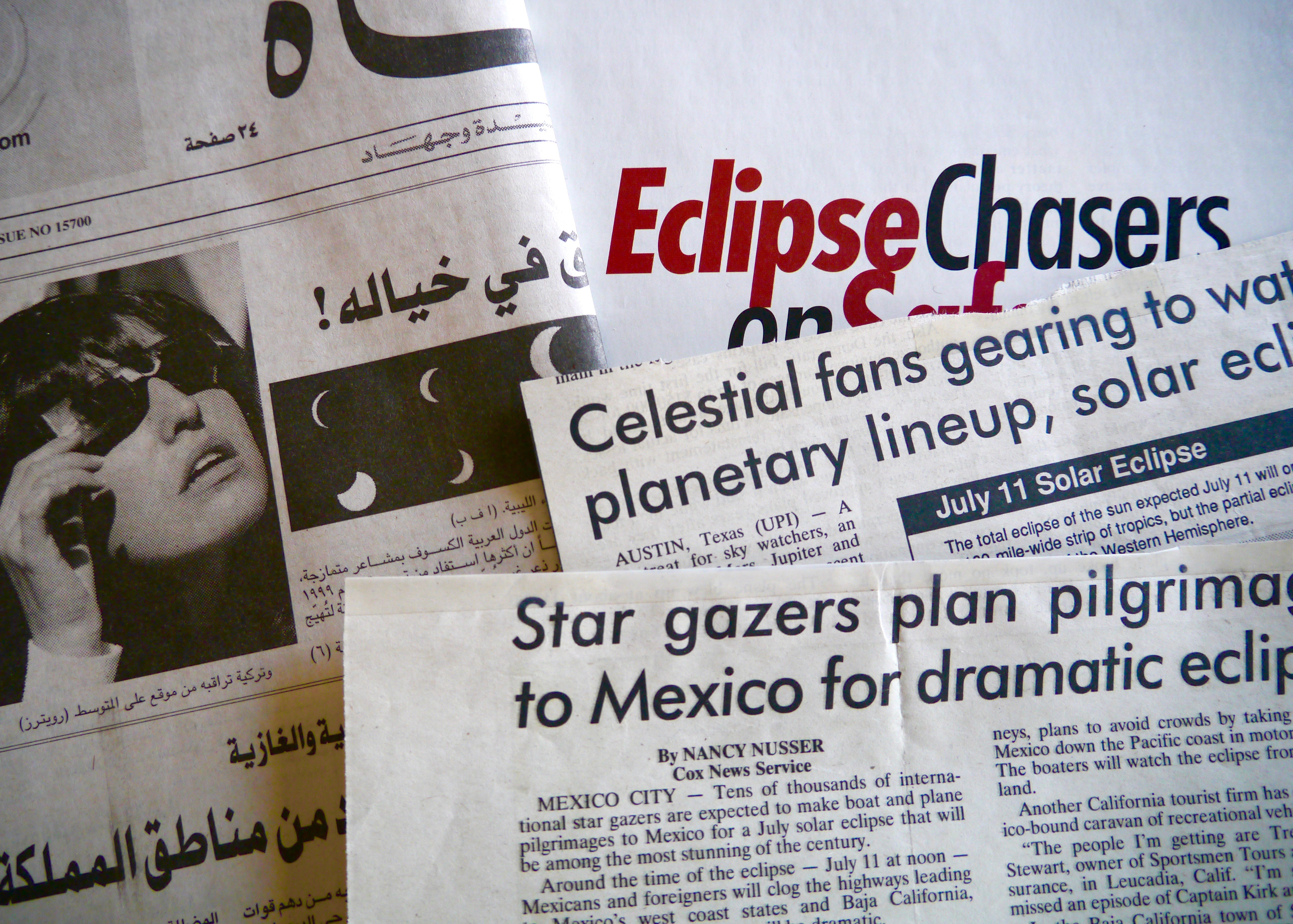
As it turned out, the expected gridlocked highways and chaotic crowds were overestimated. The Mexican government, various authorities, newspapers and science magazines cautioned that an exaggerated 120,000 tourists would be crushing Mexican resources that week in July. Travelers were advised about stern checkpoints that would allow a random number of visitors past undisclosed points, and warned so strongly against the possibility of being stranded without petrol on a remote Baja road that many chasers were frightened into choosing Hawaii—where the clouds rolled in on July 11 (as well as airborne particulates from volcanic eruption) that obscured totality for many.
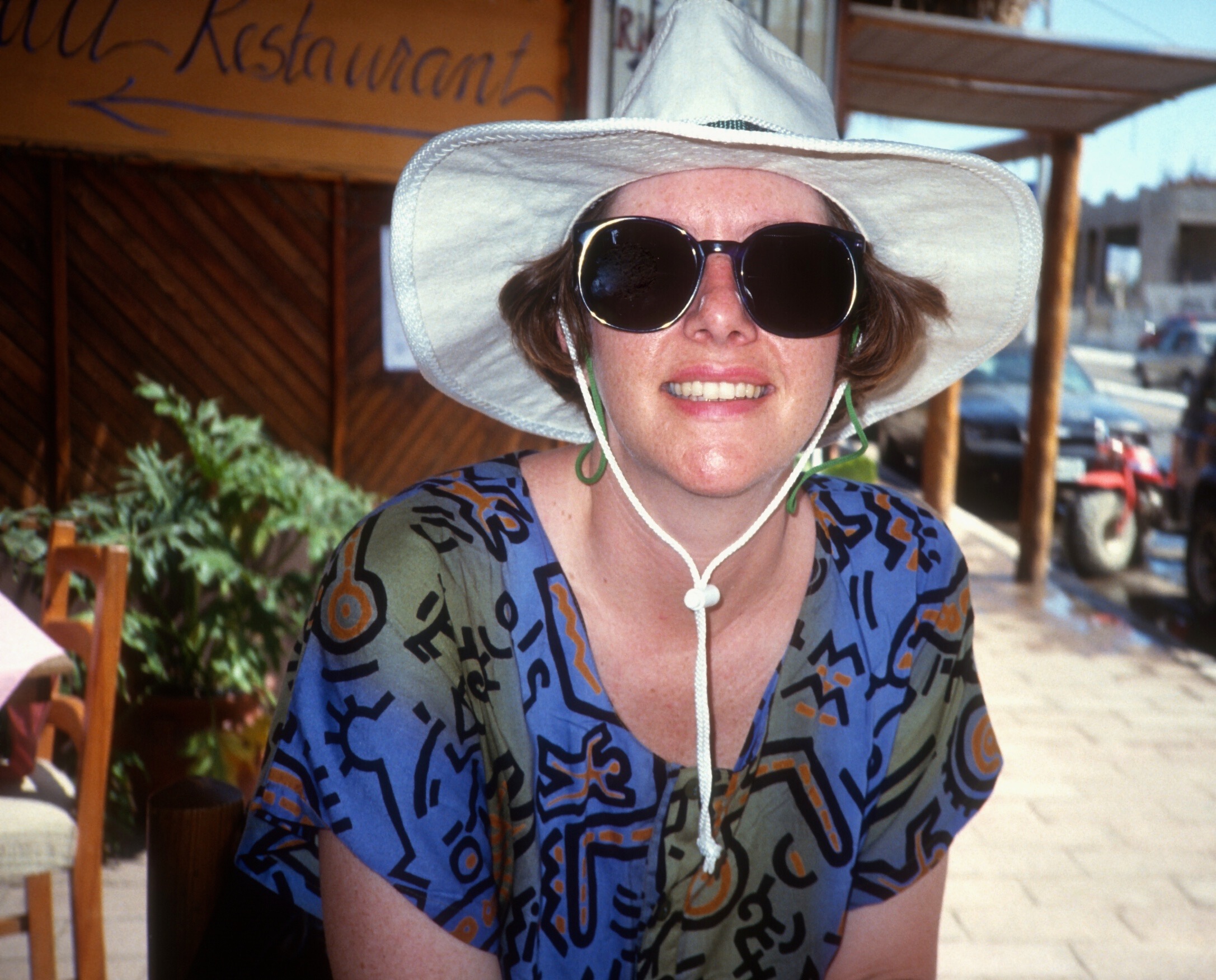
We flew in a couple of days before the eclipse and partied pretty hardy in Cabo, the nearby tourist town. The year of my first TSE I was 26 years old, sporting big 90s eyeglasses, pale legs, and a dweeby mop of curly hair under an unflattering crusher hat.
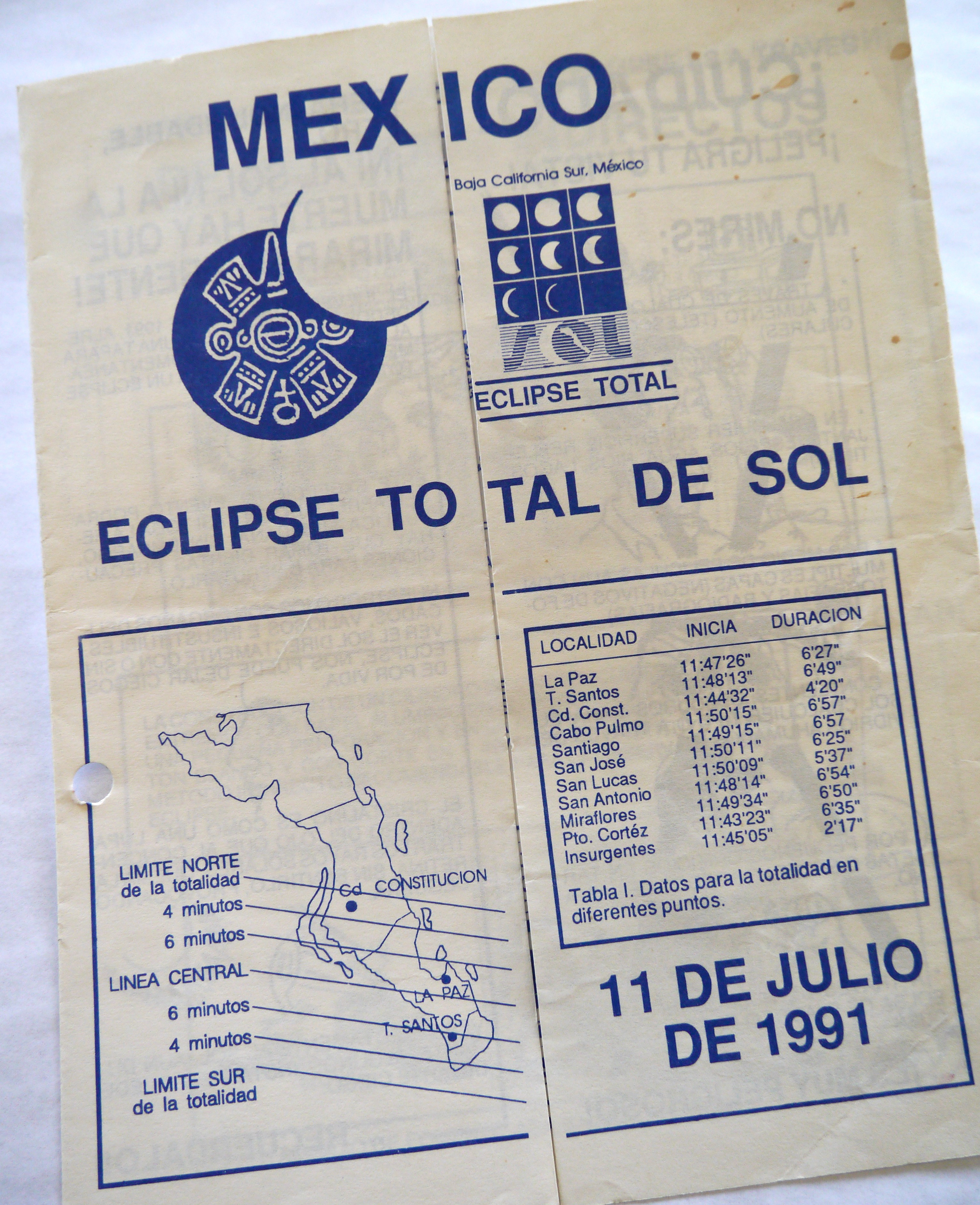
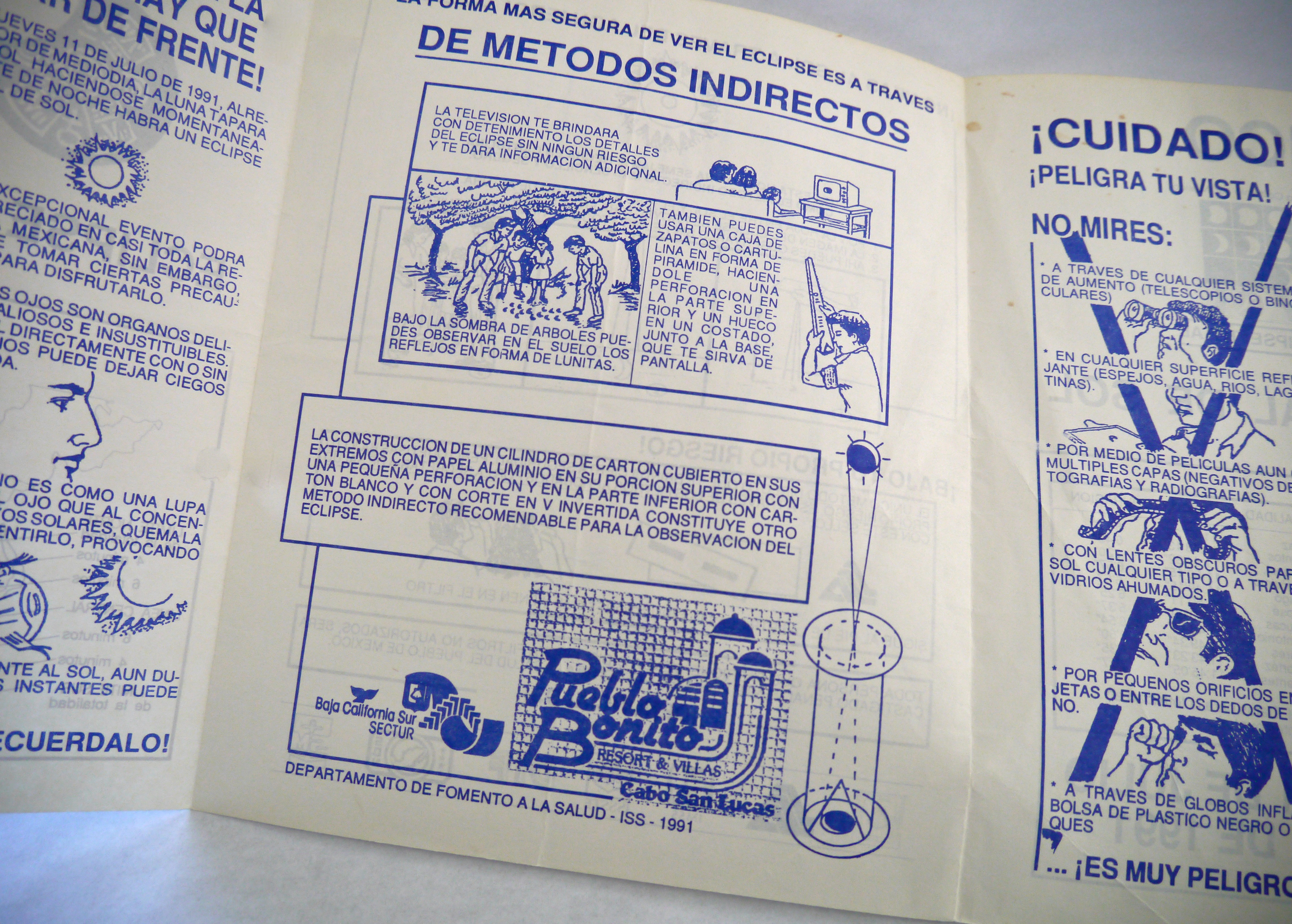
In advance of every eclipse, the local government distributes safety information which is always a hoot to read. “Viewing through balloons and black plastic bags es muy peligroso!”






 Chasing Totality